
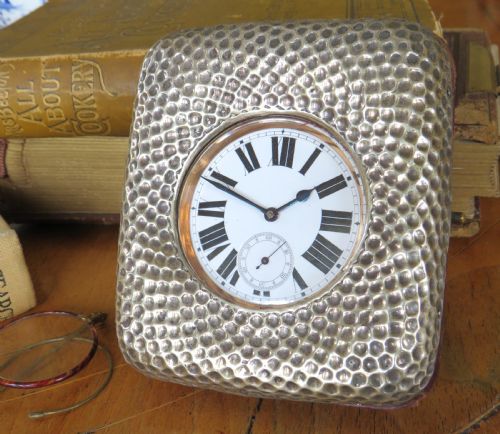


Edwardian Enamel Clock
These pieces combine timekeeping with coloured metalwork, offering an edwardian enamel clock that sits neatly on a desk or travels in a case.
Edwardian Enamel Clock
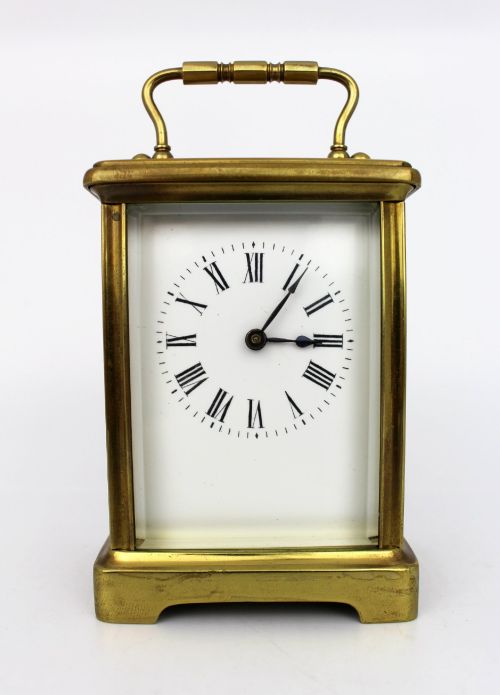
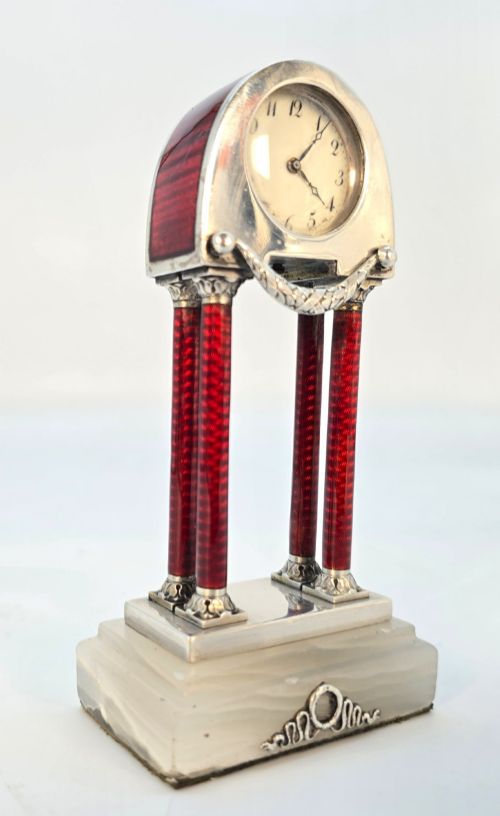
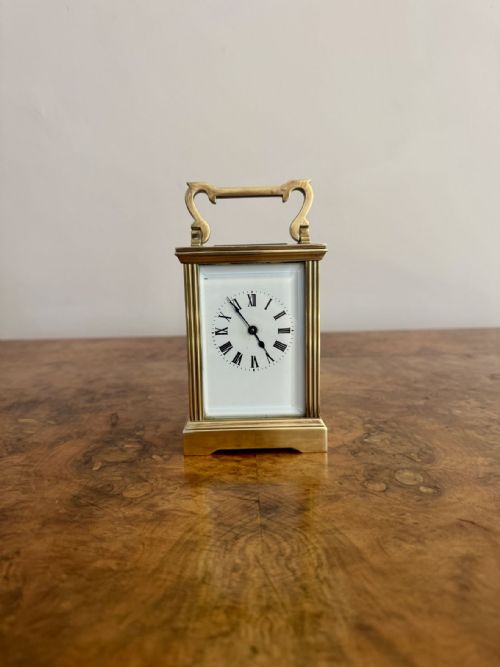
An edwardian enamel clock typically takes the form of a brass or silver carriage clock, a desk timepiece, or a pocket watch fitted into a case. You will frequently encounter brass carriage clocks with enamel dials or panel bandings, alongside smaller silver boudoir pieces.
The materials span from straightforward brass and glass to sterling silver and pewter, often paired with guilloche or champleve enamel work. The periods stretch from the late nineteenth century into the 1920s, capturing Victorian, Edwardian, and Art Nouveau aesthetics.
Makers and retailers range from Liberty & Co and individual silversmiths to French horologists and Swiss movement suppliers. Most examples serve as portable timepieces or decorative mantel and desk accessories.
Materials and construction
Metals such as brass, silver, and gilt brass form the structural casings and travel cases, housing mechanical movements driven by springs and escapements. Glass panels enclose crystal regulators and carriage clocks to display the internal mechanics.
Enamelwork is applied to dials, bezels, and exterior panels using techniques like guilloche, champleve, and painted decoration. Pewter and mahogany also appear in specific Arts and Crafts or mantel formats.
Listings feature carriage clocks, crystal regulators, and goliath pocket watches spanning the late nineteenth century through to the 1920s.
Evaluating craftsmanship
Quality rests in the crispness of the chased metal mounts, the regularity of engine turned dial masks, and the depth of the enamel work. Finer pieces demonstrate precision in the Swiss or French mechanical movements and complete original housing.
The presence of named makers, hallmarked sterling silver cases, and intact travel or desk stands elevate an example above standard commercial production.
Georg Adam Scheid·David Veasey for Liberty·Latshea and Sons Edinburgh·Samuel Marti et Cie·Mappin and Webb·Henry Matthews·James Grohe
The Edwardian Enamel Clock Glossary
- Carriage clock
- A portable spring driven timekeeper with a carrying handle, originally designed for travellers in the nineteenth century. These frequently feature brass frames and glass sides.
- Guilloche
- A decorative mechanical technique whereby a precise repetitive pattern is engraved into metal beneath a translucent layer of enamel. It produces a shimmering geometric background.
- Crystal regulator
- A mantel clock housed in a brass frame with four bevelled glass panels that reveal the interior movement and pendulum. They often incorporate painted or enamelled dials.
- Champleve
- An enamelling technique where troughs or cells are hollowed out of a metal surface and filled with vitreous enamel before firing. The metal partitions remain visible as part of the design.
- Goliath watch
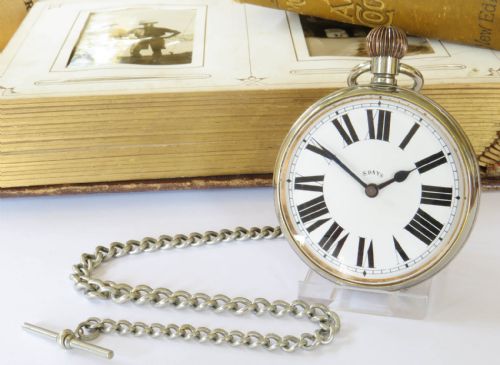
- An oversized pocket watch, typically measuring around eight days in movement duration, housed in a dedicated leather travel case or metal desk stand.
Edwardian Enamel Clock: Frequently Asked Questions
How do I wind an edwardian clock?
Use the appropriate key on the winding squares at the back of the movement, turning gently until resistance is felt. Avoid over-winding to protect the mainspring.
Ensure you know whether the clock requires daily winding or runs for an eight-day duration before adjusting the mechanism.
Can these travel clocks still be used?
Many carriage clocks and travel timepieces remain functional for daily use if they have been serviced recently. Their mechanical movements are designed for portability.
Keep them away from direct sunlight and extreme temperature fluctuations to preserve the enamel and internal springs.
How do I clean enamel clock dials?
Wipe metal and glass surfaces gently with a dry, lint-free cloth to remove dust and fingerprints. Avoid harsh chemical polishes near the enamel work.
Professional care is recommended if the movement requires cleaning or oiling to maintain accurate timekeeping.
What is a goliath pocket watch?
A goliath is an extra-large pocket watch that usually requires a fitted travel case or standing mount for display on a desk. They often feature eight-day movements.
These pieces bridge the gap between pocket watches and small carriage clocks.