
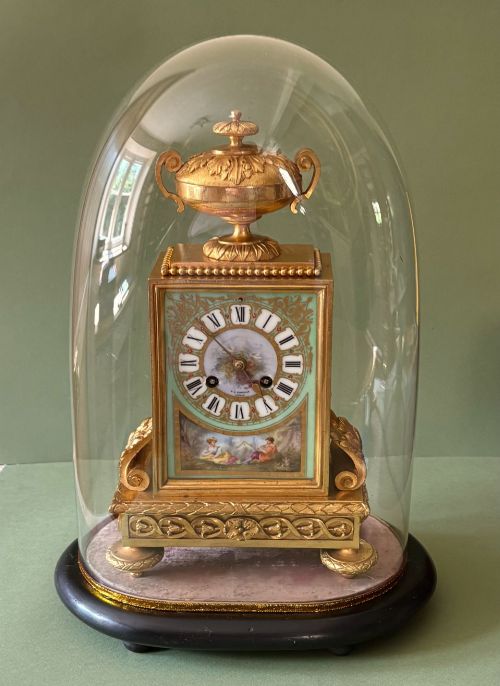
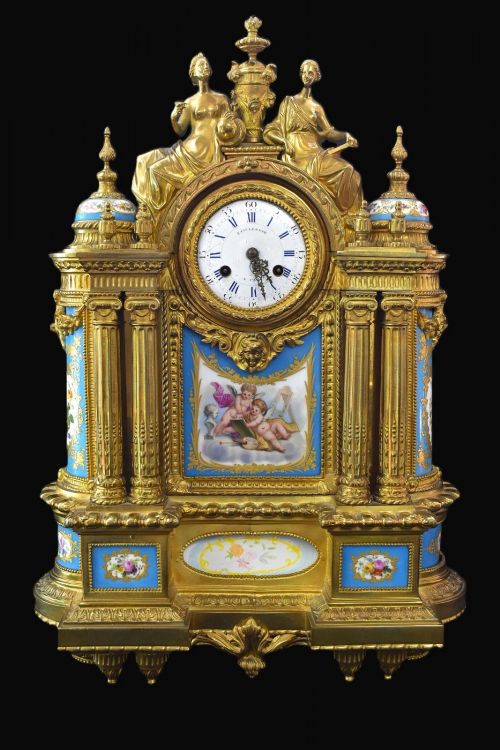


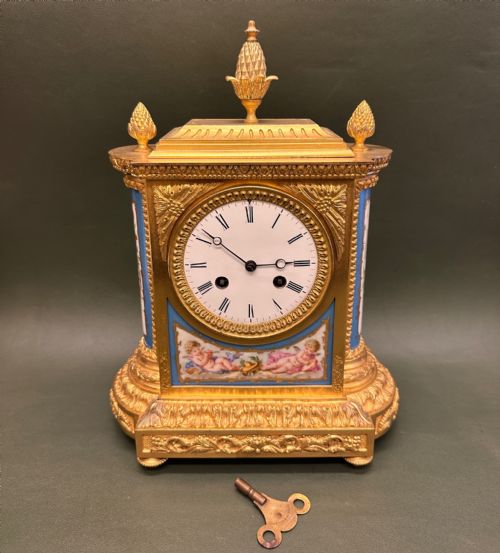


Ormolu Mounted Porcelain Clock
An ormolu mounted porcelain clock brings together gilt bronze and ceramic body in domestic timekeeping.
Ormolu Mounted Porcelain Clock
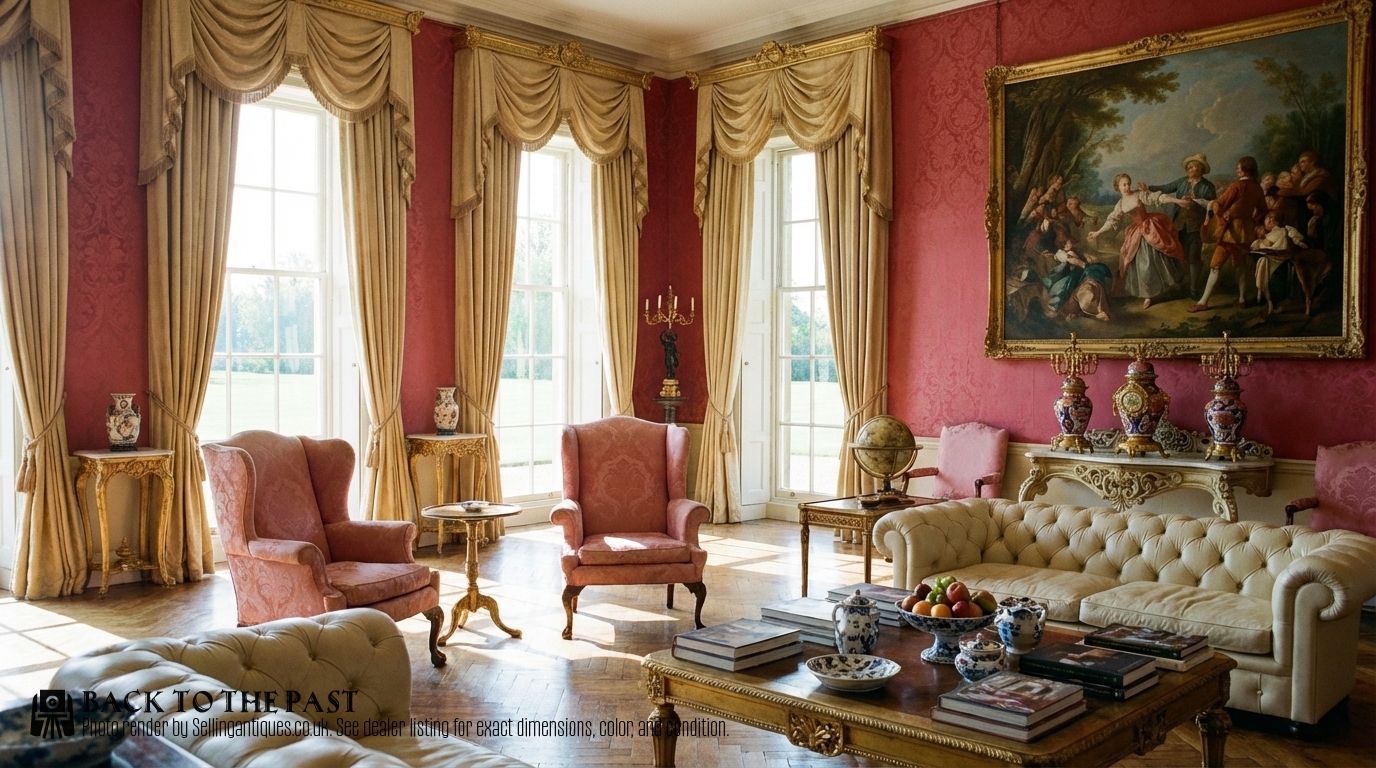
When searching for an ormolu mounted porcelain clock, one encounters decorative objects designed for the mantelpiece, often paired with matching garniture sets. The pieces span the Victorian era, the nineteenth century, and specific decades such as eighteen seventy and eighteen ninety.
The most common version on this page is the French mantel clock, drawing on Rococo Revival, Louis XVI Revival, and Napoleon III styles. These creations combine glazed ceramic bodies with cast gilt metal mounts.
Makers and makers' marks occasionally appear on dials or movements, connecting individual pieces to nineteenth-century workshops in France. Alongside standard mantel clocks, variations include lyre-shaped designs, bracket clocks, and sculptural figures incorporating animals or human characters.
Materials and construction
The construction relies on porcelain bodies, sometimes associated with Sevres, Paris, Meissen, or Chinese blue and white ceramics, mounted with cast ormolu and gilt bronze. Enamel dial faces carry numerals, while brass movements govern the mechanical timekeeping.
Secondary elements involve marble, glass, wood, and straw, supporting the primary ceramic and metal structures. Ormolu mounts are chased and gilded, wrapping around the ceramic vessels and clock housings to accentuate the revival styles.
A brass movement ticks quietly behind hand-painted porcelain panels while an ormolu monkey perches near the dial.
Assessing the craftsmanship
Quality rests in the crispness of the ormolu chasing and the painting upon the porcelain plaques or panels. Finer examples display deeper gilding and more articulate modeling in the bronze mounts.
The integration between the ceramic body and the metal armature determines the overall cohesion of the object. Heavier casting and signed movements by known makers elevate the standing of a clock.
Etienne Lenoir·JP Delettrez·Miroy Frères·J.B. Delettrez
The Ormolu Mounted Porcelain Clock Glossary
- Ormolu
- Gilt bronze produced by applying a mercury-gilding process to cast brass or bronze. This technique creates a rich golden surface that resists tarnishing.
- Garniture set
- A matched grouping consisting of a central clock flanked by matching vases or candelabra. Such sets decorate mantelpieces and sideboards in formal interiors.
- Sevres style
- Ceramic decoration imitating the soft-paste porcelain and hand-painted pastoral scenes associated with the royal French factory. Pieces often feature cobalt blue grounds and gilded highlights.
- Lyre clock
- A timekeeper shaped like the ancient musical instrument, with a symmetrical frame enclosing the pendulum and dial. The design gained popularity during the late eighteenth and nineteenth centuries.
- Mantel clock
- A domestic timekeeper designed to sit on the shelf above a fireplace. These objects function as both horological instruments and decorative sculpture.
Ormolu Mounted Porcelain Clock: Frequently Asked Questions
What is an ormolu mounted porcelain clock?
It is a decorative timepiece featuring a ceramic body housed within or framed by cast and gilded bronze mounts. These objects originated largely in nineteenth-century France during revivalist periods.
They combine timekeeping mechanics with sculptural ceramics, utilising materials like porcelain, enamel, and gilt bronze to create ornamental focal points for domestic rooms.
How do I identify a Sevres style clock?
Sevres style clocks typically display hand-painted ceramic panels showing pastoral scenes or floral motifs against rich coloured backgrounds, often cobalt blue, accented with gilding. The porcelain component dominates the visual appearance of the clock case.
Markings on the dial or internal movement can also provide clues to the origin and period of manufacture, linking the piece to nineteenth-century French workshops.
Where should I place a garniture set?
Garniture sets suit wide surfaces such as mantelpieces, console tables, or large sideboards where the central clock and flanking objects can sit together. The matching vases or side pieces balance the composition.
Placement should account for the weight and size of the objects, ensuring sturdy support away from direct sunlight and moisture to protect the gilding and porcelain.
How do I care for gilt bronze mounts?
Maintenance involves gentle dusting with a soft, dry cloth to prevent the accumulation of dirt within the chased details of the metal. Avoid abrasive cleaners or chemical polishes which can strip the gold layer from the bronze.
Handling the clock requires care to avoid stressing the joints where the porcelain and metal meet, as these materials respond differently to pressure.