


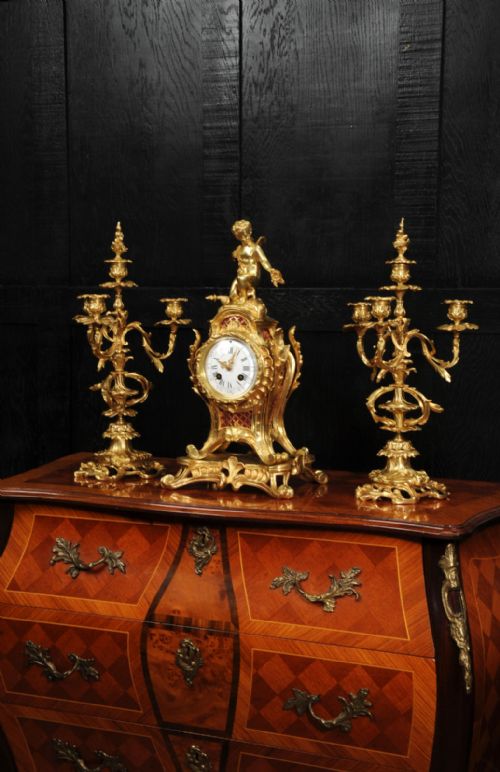


Rococo Bronze Clock Set
A rococo bronze clock set brings the extravagant curves and gilt brilliance of nineteenth-century French interiors directly onto a mantelpiece.
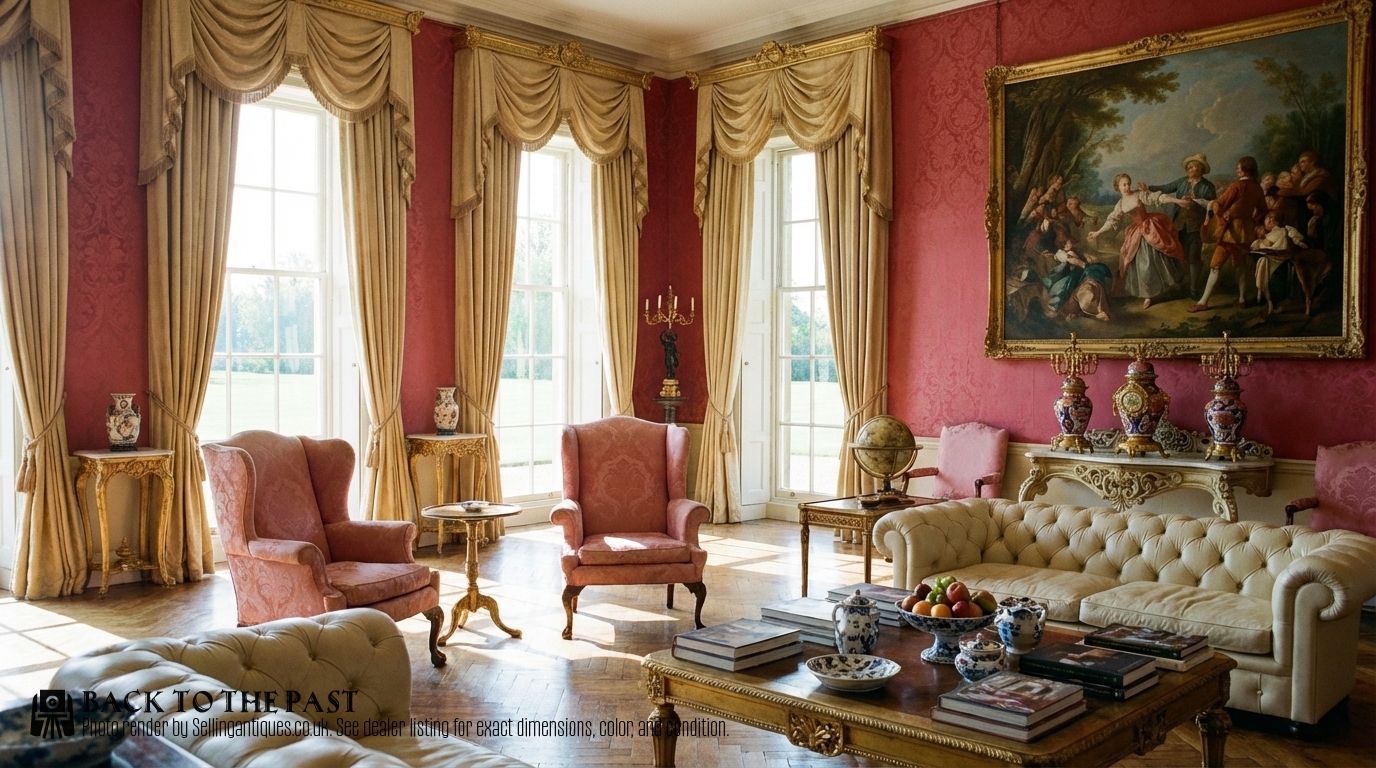
Rococo Bronze Clock Set
A rococo bronze clock set combines a central mantel timepiece with matching garnitures such as candelabras or urns, following French styles from the nineteenth century. These assemblies frequently emerge in Louis XV Revival and French Sevres style configurations.
Buyers encounter forms categorised as clock garnitures, clock sets and mantel clocks. The physical composition typically pairs cast bronze and ormolu with contrasting elements like enamel dials and porcelain panels.
Originating predominantly from French workshops during the Victorian era and the broader nineteenth century, these pieces deliver substantial decorative presence. The sculptural elements often incorporate figures like cherubs, cupids and dolphins alongside classical ornamentation.
Materials and construction
The manufacture relies heavily on cast bronze and ormolu, employing fire gilding techniques to achieve a bright golden surface finish. These metallic structures are frequently paired with white marble, red marble, glass and brass components.
Decorative panels utilise painted porcelain and enamel dials, often referencing Sevres aesthetic traditions. Structural assemblies combine heavy metal casting with intricate hand-chasing to define the flowing scrollwork characteristic of the revival styles.
Several clock sets feature playful marine motifs, incorporating sculpted dolphins alongside the customary cherubs and floral scrolls.
Assessing quality and execution
The standard of the chasing and the crispness of the cast bronze ornament dictate the aesthetic success of the piece. Finer examples display deeply undercut foliage and sharply defined figurative details rather than soft, generalized contours.
The integration of the side garnitures with the central clock determines the coherence of the set. High-grade assemblies demonstrate consistent patination across the gilt bronze and meticulous matching of the porcelain or marble elements.
VINCENTI of PARIS·Raingo Fres, Paris·Japy Freres·Verger Freres of Paris·Samuel Marti
The Rococo Bronze Clock Set Glossary
- Ormolu
- Gilded bronze produced by applying a mercury-gold amalgam to a base metal, creating a brilliant golden finish. This technique defines the metallic highlights of nineteenth-century French mantel pieces.
- Clock garniture
- A set comprising a central clock accompanied by matching side ornaments such as candelabras, urns or vases. These suites create a symmetrical arrangement on a mantelpiece.
- Sevres style
- A decorative manner imitating the soft-paste porcelain produced by the royal French manufactory. It is characterised by painted floral panels and rich coloured grounds framed in gilt metal.
- Louis XV Revival
- A design movement of the nineteenth century that revived the asymmetrical scrolls, C-curves and naturalistic motifs of the mid-eighteenth century French court.
- Chasing
- The manual process of refining a cast metal surface using hammers and punches to sharpen details and textures. Superior execution yields crisp edges and distinct ornamental depth.
Rococo Bronze Clock Set: Frequently Asked Questions
What is included in a clock set?
A standard set includes a main mantel clock paired with matching side pieces known as garnitures. These companion pieces frequently take the form of candelabras or decorative urns designed to create a symmetrical display.
Such matching suites were intended to anchor the visual weight of a grand interior mantelpiece. The components share identical decorative vocabulary, materials and foundry marks.
How do I identify French revival styles?
Nineteenth-century revival pieces display characteristic asymmetrical scrolls, shell motifs and organic leaf patterns drawn from earlier court aesthetics. The presence of ormolu mounts and cast bronze figures signals this decorative lineage.
Examining the dial construction, enamel work and backplate signatures helps confirm the nineteenth-century manufacturing period. Many pieces incorporate Sevres style porcelain panels within the overall bronze framework.
Where were these clocks made?
The majority of these pieces originate from French workshops and Parisian foundries active during the nineteenth century. Prominent clockmakers and bronze-casters stamped their movements and cases accordingly.
Export demand during the Victorian era brought these elaborate gilt metal suites into British and European homes. Parisian firms dominated both the mechanical movement production and the ornamental casting.
How should I clean gilt bronze?
Dusting gently with a soft, dry brush is the safest method to remove accumulated particles from intricate scrollwork. Avoid commercial metal cleaners that can strip the delicate gold surface layer.
Moisture and harsh chemicals damage both the ormolu finish and the underlying bronze substrate. Professional conservation is recommended if deeper cleaning becomes necessary.