


French Mantel Garniture Set
A french mantel garniture set brings together a central clock and matching side pieces to anchor a room with balanced symmetry.
French Mantel Garniture Set
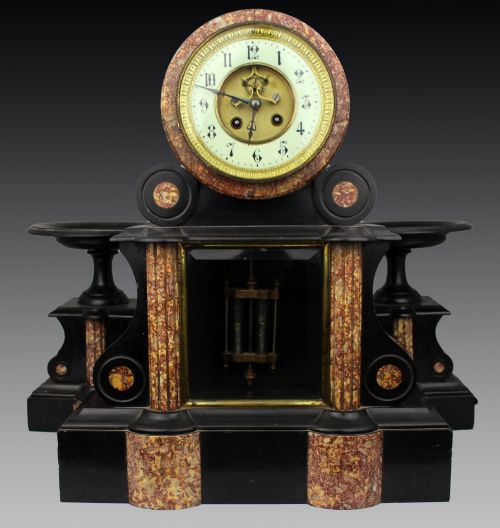
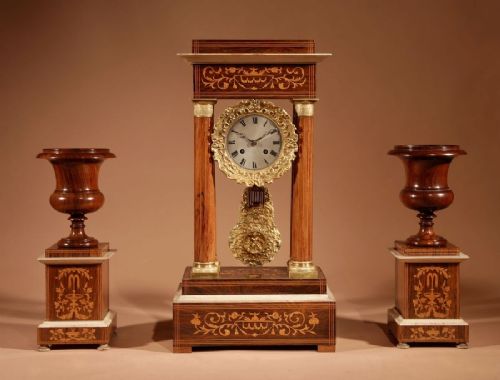
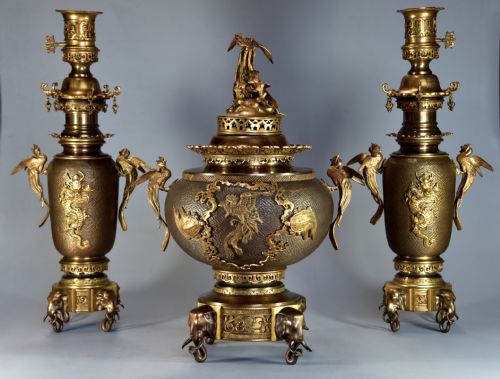
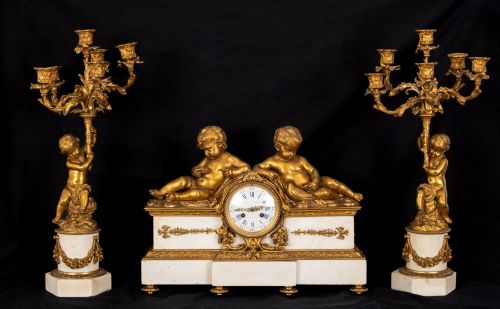
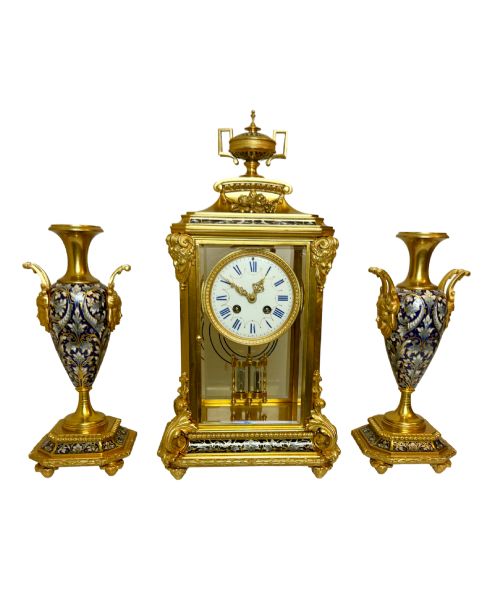
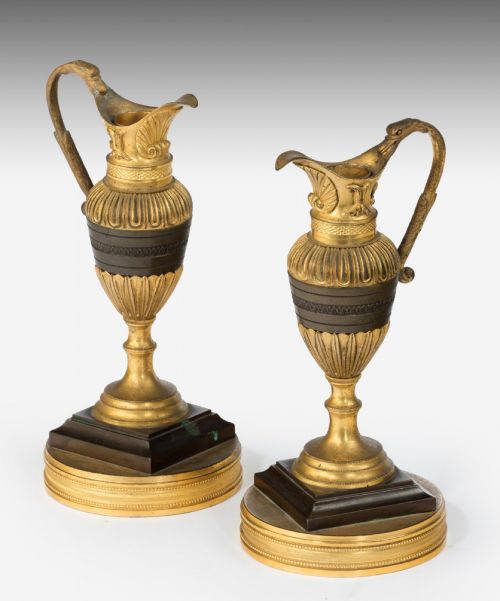
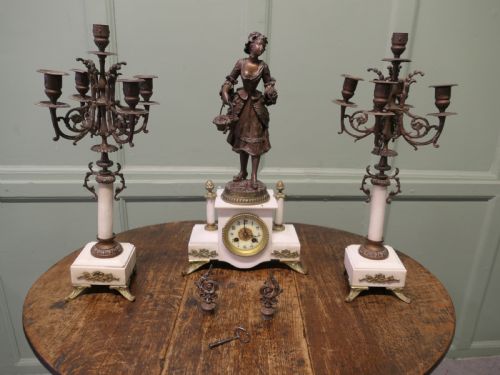
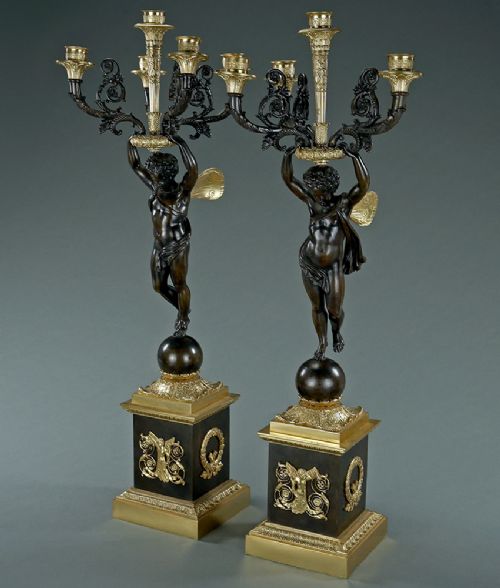
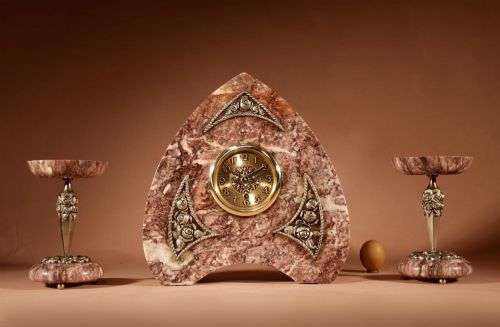
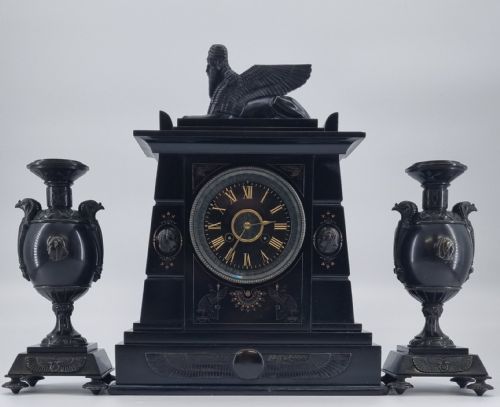
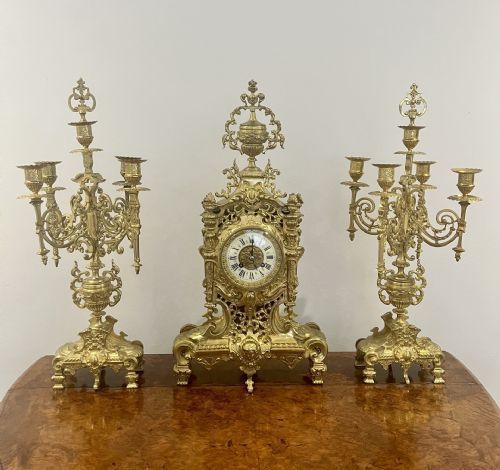
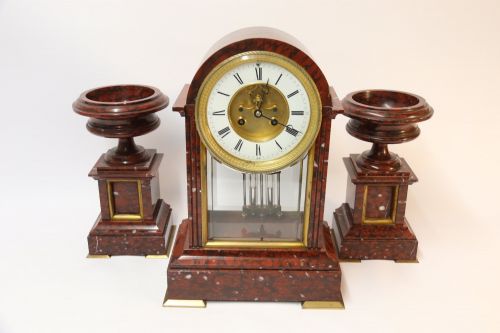
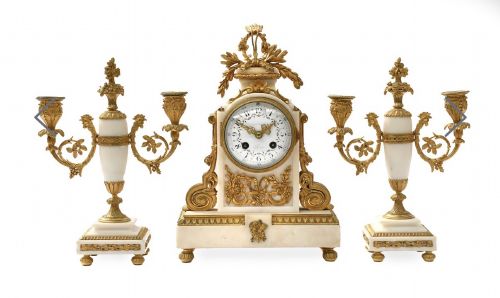
A french mantel garniture set comprises a central mantel clock paired with matching side objects such as candelabra, urns, or ewers designed to sit together on a fireplace mantel or console table. Most examples seen here date from the nineteenth century, ranging from mid-century neoclassical and Louis Philippe designs through to late-period Art Deco pieces.
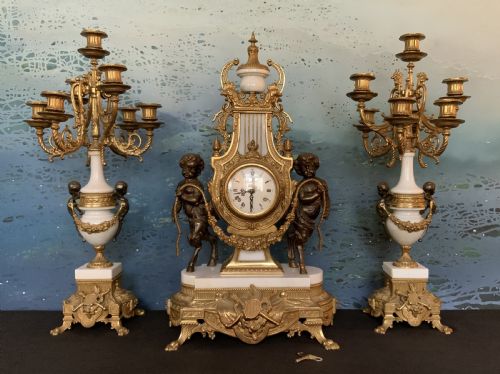
The configurations vary from traditional marble and ormolu clock sets with cherub figures to Japonisme bronze incense burner sets and portico clocks. Matching side garnitures repeat the materials, cast ornament, and stylistic motifs of the central timepiece to create a unified decorative arrangement.
Materials and construction
Foundry workers shaped these objects using cast metals such as bronze, brass, and gilt ormolu, often combining them with natural materials like black marble, white marble, onyx, and porcelain. Skilled artisans chased and patinated the metal surfaces by hand, applying fire-gilding to create the deep, warm lustre seen on ormolu mounts.
Enamel work frequently appears on clock dials and champlevé decorative panels, requiring precise firing techniques to fuse powdered glass into recessed metal channels. Stonework elements were sawn, turned, and polished to form the architectural bodies of the clocks and matching side garnitures.
Several sets feature sculpted greyhounds or cherubs keeping watch beside the clock face.
Factors determining quality
The crispness of the metal casting and the depth of the subsequent hand-chasing separate standard production pieces from finer studio work. Sharp detailing in foliate scrolls, figures, and architectural mouldings indicates superior craftsmanship by skilled founders and bronze-workers.
The selection and combination of materials also govern the grade of a french mantel garniture set, with solid marbles, heavy fire-gilded ormolu, and integrated porcelain or enamel plaques representing higher tiers of period production.
Japy Frères·Samuel Marti·Henry Dasson
The French Mantel Garniture Set Glossary
- Garniture
- A set of ornamental objects designed to match and display together, typically consisting of a central clock flanked by two matching vases, candelabra, or urns.
- Ormolu
- Gilt bronze produced by applying an amalgam of gold and mercury to a bronze base and heating it to drive off the mercury, leaving a durable golden coating.
- Champlevé
- An enamelling technique where recessed cells are gouged out of a metal surface, filled with enamel paste, and fired.
- Portico clock
- A mantel clock featuring an architectural case supported by four or more columns, often housing a suspended pendulum.
- Japonisme
- A nineteenth-century artistic style heavily influenced by Japanese art, incorporating asymmetric compositions and motifs from nature.
French Mantel Garniture Set: Frequently Asked Questions
How do I set up a french mantel garniture set?
Place the central clock on a level surface and steady the base so the movement beats evenly. Position the matching side pieces symmetrically on either side.
Ensure the pendulum is securely hooked onto its suspension spring before winding the movement. Use the key provided to adjust the time carefully without forcing the hands.
What periods do these clock sets come from?
The pieces span the nineteenth and early twentieth centuries, encompassing Victorian, Art Deco, and various revival movements. Mid-century examples often feature neoclassical or portico forms.
Later Victorian and turn-of-the-century sets frequently incorporate champleve enamel or porcelain panels. Art Deco versions shift towards streamlined marble and geometric bronze silhouettes.
How were garniture sets originally used?
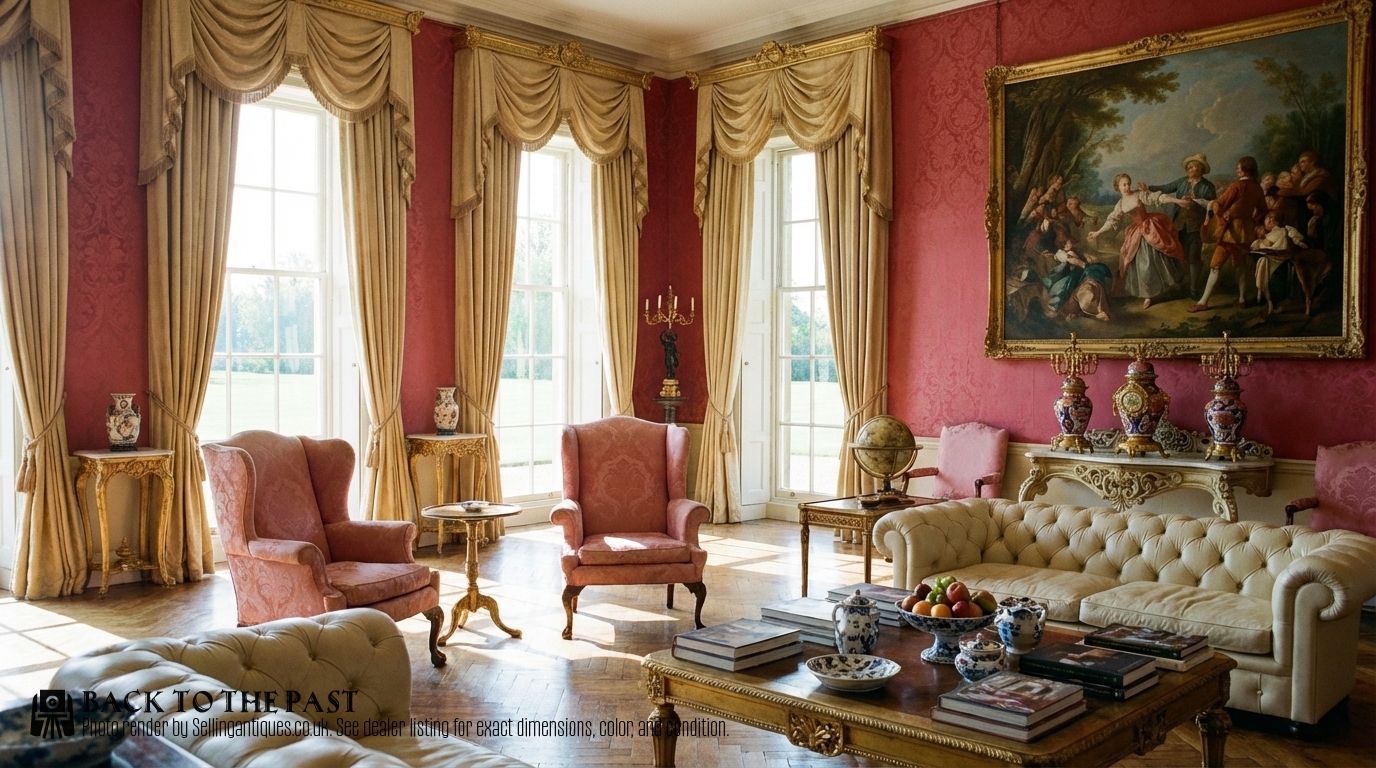
These assemblies served as both timekeepers and decorative centrepieces for formal reception rooms and drawing rooms. The balanced arrangement provided visual harmony across a chimney breast or sideboard.
Candelabra and urns accompanying the clock could be functional lighting devices or purely ornamental objects displaying wealth and taste.
How do I care for marble and bronze?
Dust the marble and bronze surfaces regularly with a soft, dry cloth to prevent grime accumulation. Avoid harsh chemical cleaners that can strip patination or damage polished stone.
Bronze benefits from occasional gentle treatment with neutral wax to protect the metal. Keep stone and metal components away from direct heat sources and excessive moisture.