


Hand Painted Mantle Clock
A hand painted mantle clock brings movement, colour and domestic scale to a room, combining decorative art with mechanical timekeeping.
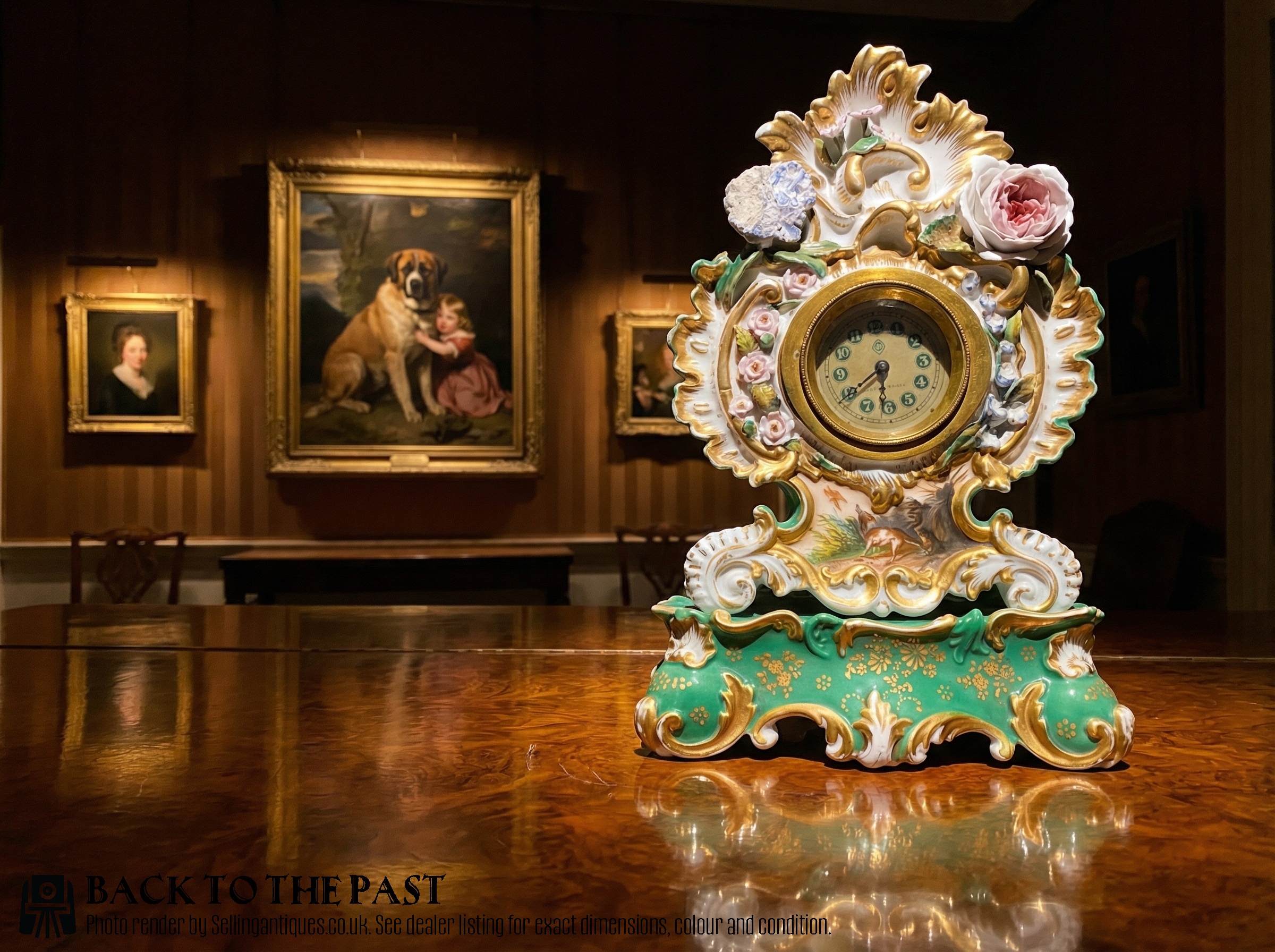
Hand Painted Mantle Clock
When you search for a hand painted mantle clock, you encounter decorative timepieces designed to sit on a fireplace shelf or a sideboard. These objects merge timekeeping mechanics with miniature painted panels, dials or ceramic cases.
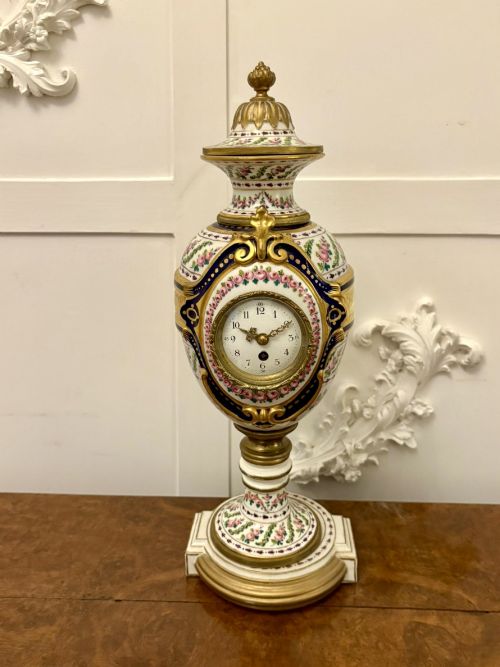
The pieces on this page span the Victorian era, the late nineteenth century, and the early twentieth century. You find mantel clocks, carriage clocks, clock garniture sets, and urn-shaped porcelain designs originating from French and English workshops.
The most frequent examples are French porcelain-cased clocks and carriage clocks featuring enamel or porcelain painted surfaces. They range from small travelling clocks to large garniture sets complete with matching side ornaments.
Materials and construction
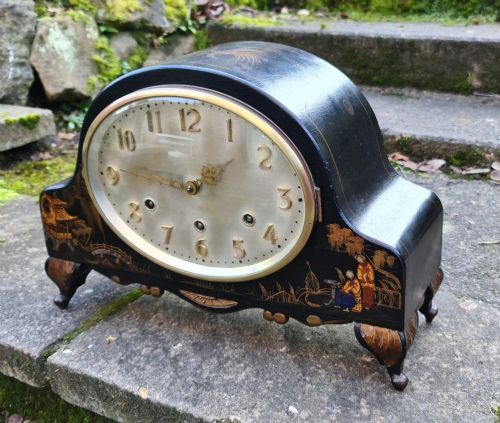
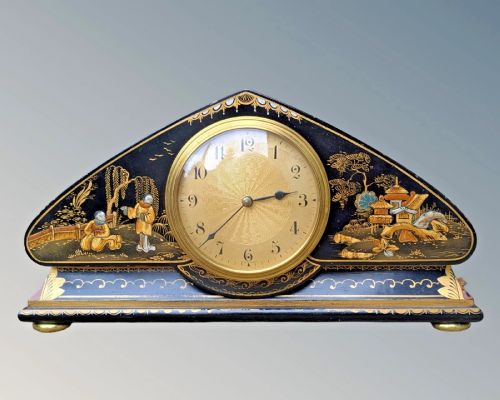
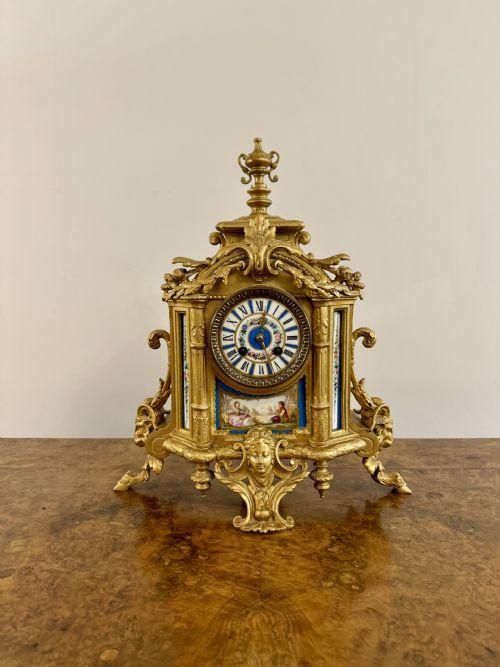
Makers built these clocks using porcelain, glass, brass, gilt bronze, ormolu, and lacquer. Porcelain provided a smooth ground for hand-painted floral scenes, landscapes, and figures, while gilt metal and ormolu formed decorative mounts and bezels.
Movements were housed within solid frames of brass and steel, often accompanied by glass panels in crystal regulators to reveal the oscillating escapement. Enamel dials carried painted numerals, sometimes paired with independent miniature enamel paintings set into the case.
Travellers once carried miniature enamel clocks in leather cases, trusting miniature painted dials to keep them punctual on bumpy coach rides.
Assessing quality
Quality rests in the execution of the painting and the substance of the case. Finely rendered brushwork on porcelain panels or enamel dials separates superior examples from mass-produced wares.
Heavier metal casting, crisp chasing on ormolu or gilt brass mounts, and complete garniture sets elevate the status of a clock. The integration between the decorative case and the mechanical movement defines the standing of the piece.
The Hand Painted Mantle Clock Glossary
- Garniture set
- A clock accompanied by a matching pair of side ornaments, such as urns or vases, designed to display together on a mantelpiece. These matched suites create a balanced decorative arrangement.
- Ormolu
- Gilded bronze applied to clock cases and mounts to provide a rich gold-coloured finish. The technique involves coating bronze with a mercury and gold amalgam.
- Crystal regulator
- A clock constructed with glass panels on all sides to expose the mechanical movement and pendulum. This style gained popularity during the late nineteenth century.
- Repeater
- A carriage clock mechanism that strikes the hours and quarters upon demand when a lever is pressed. This complication allowed the user to check the time in the dark.
- Sevres style
- A descriptor for porcelain decorated in the manner of the French royal factory, typically featuring rich blue grounds, gilt borders, and painted panels of romantic subjects. It denotes an aesthetic rather than a factory of origin.
Hand Painted Mantle Clock: Frequently Asked Questions
Where should I place my hand painted mantle clock?
These clocks sit naturally on a mantelpiece, a chest of drawers, or a console table where the painted details receive adequate light. Keep them away from direct heat sources and damp walls to protect the delicate enamel and porcelain surfaces.
Ensure the surface is level so the pendulum swings evenly and the movement maintains reliable timekeeping.
How do I wind an antique mantle clock?
Use the correct winding key for the clock and turn it gently until you feel resistance, taking care not to overwind the mainspring. Most traditional spring-driven clocks require winding every eight days.
Consult the specific mechanism type to determine whether the clock has a time-only train or a striking train that requires separate winding.
What is a clock garniture?
A clock garniture is a set consisting of a central clock flanked by two matching decorative objects, such as urns, vases, or candelabra. They were manufactured as a cohesive suite to decorate a mantelpiece.
Complete sets share identical materials, painted motifs, and gilt mounts.
Are carriage clocks different from mantel clocks?
Carriage clocks are portable timepieces originally built for travellers, fitted with a carrying handle and a glass case. Mantel clocks are heavier, stationary pieces designed to remain in one room.
Carriage clocks often use a platform escapement instead of a pendulum.