
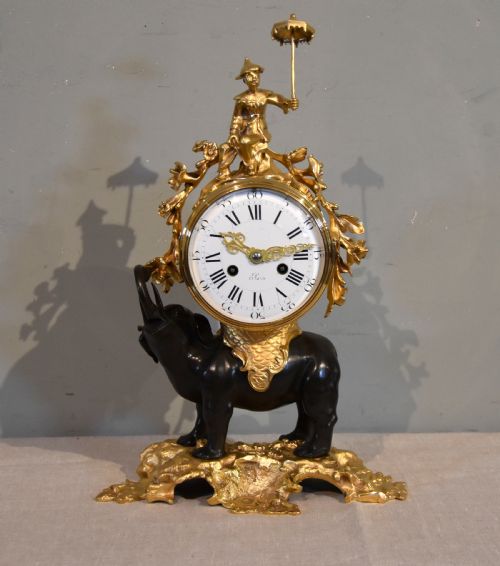


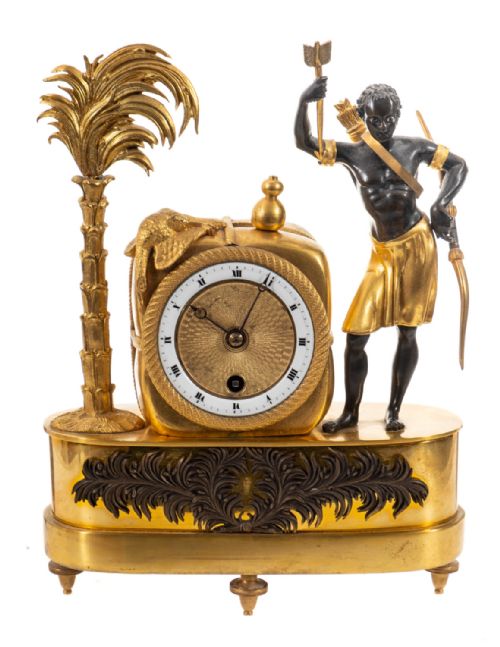


Black and Gold Clock
A black and gold clock brings striking contrast and rich metallic warmth to a room, drawing the eye with dark lacquer and gilt detail.
Black and Gold Clock
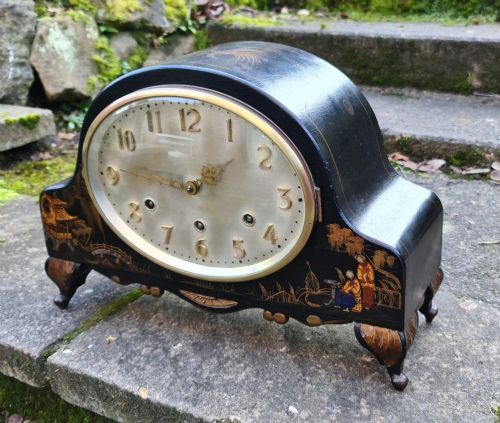
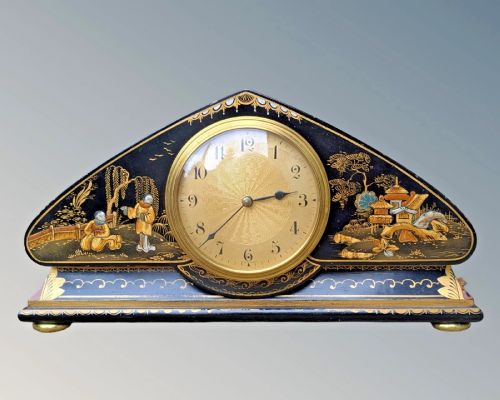
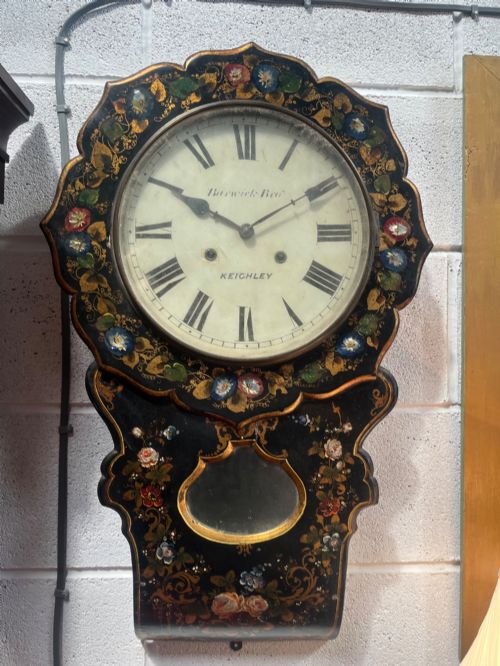
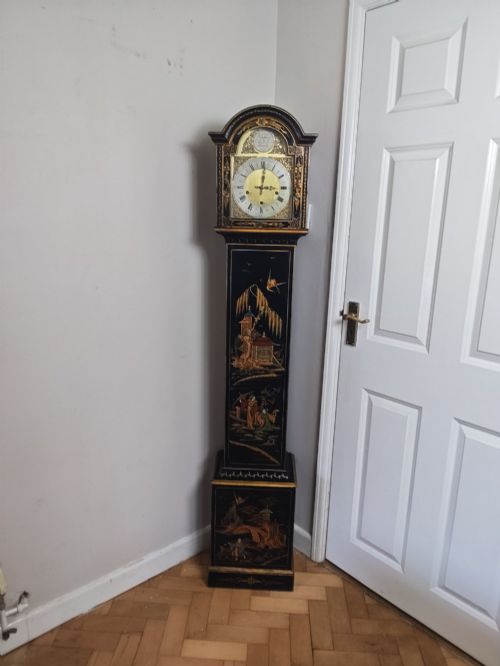
When you search for a black and gold clock, you encounter pieces spanning from the eighteenth century to the twentieth century, with the nineteenth century heavily represented. The selection ranges from compact mantel clocks and elaborate French portico designs to tall longcase clocks and wall-hanging timepieces.
Chinoiserie examples dominate the decorative styles, featuring hand-painted motifs on lacquered wood, alongside formal French Empire and Victorian pieces utilising ebonised wood, bronze, and ormolu. You find domestic English bracket clocks sitting alongside decorative French glass and marble designs.
Materials and construction
Cases combine ebonised wood or dark lacquer with cast bronze, brass, and ormolu mounts, creating the characteristic dark and metallic palette. Artisans applied layers of lacquer for Chinoiserie finishes or used fire-gilding on bronze and brass elements.
Dial construction involves enamel, brass, and painted metal, often paired with glass panels in four-glass cases to display the internal mechanical movements. Movements themselves rely on brass gears, with fusee or pendulum mechanisms driving the timekeeping and striking trains.
Listings feature pieces spanning the eighteenth, nineteenth, and twentieth centuries, utilising brass, glass, lacquer, wood, ormolu, enamel, and patinated bronze.
Assessing craftsmanship
Quality rests in the crispness of the cast ormolu and bronze mounts, where sharper chased details distinguish superior work from softer secondary casting. The depth and execution of the lacquer and hand-painted Chinoiserie decoration set the visual standard for the case.
Mechanical refinement dictates the standing of a movement, visible in the finish of the brass components and the integration of specialised chimes or musical functions. Harmony between the decorative case and the original movement preserves the integrity of the piece.
Jaeger LeCoultre·Pons De Paul·Wm Gilbert·Robert Berry·Henri Dasson
The Black and Gold Clock Glossary
- Ormolu
- Gilded bronze, where a layer of gold amalgam is applied to a bronze base through heat. This technique creates a durable, rich golden surface frequently seen on French Empire and nineteenth-century clock mounts.
- Chinoiserie
- European artistic interpretation of Chinese and East Asian decorative motifs, popular in furniture and clockmaking. It typically involves painted or raised gold designs laid over a dark lacquered ground.
- Fusee
- A conical pulley used in mechanical clocks to maintain an even pull on the gear train as the mainspring unwinds. This mechanism improves timekeeping accuracy across the power reserve.
- Four Glass Clock
- A mantel clock housed in a brass or gilt frame with glass panels on all four sides. This design allows an unobstructed view of the pendulum and movement from multiple angles.
- Portico Clock
- A architectural clock style shaped like a classical portico with columns, popular during the French Empire period. They frequently utilise bronze, ormolu, and striking symmetrical forms.
Black and Gold Clock: Frequently Asked Questions
Where should I place a black and gold clock?
These clocks anchor mantelpieces, sideboards, and dedicated wall brackets where their dark cases and metallic highlights catch the light. Tall longcase versions suit hallways and landings.
Keep them away from direct sunlight and damp environments to protect delicate lacquer work, painted decorations, and internal brass movements.
How do I wind a mechanical clock?
Use the designated key to wind the springs or pull the cords gently until you feel resistance, taking care not to overwind the movement. Most traditional eight-day clocks require attention once a week.
Consult the specific movement type, whether fusee or spring-driven, to ensure you engage the winding arbors correctly without disturbing the pendulum.
How do I tell the periods apart?
Eighteenth-century examples often display intricate Chinoiserie lacquer on tall cases, while nineteenth-century pieces lean towards architectural bronze, ormolu, and ebonised wood. Victorian and Edwardian iterations frequently blend these influences with regional case designs.
Examine the style of the numerals, the casting of the bronze mounts, and the construction of the wooden carcass to identify the manufacturing era.
How do I care for the lacquer and gilt?
Dust the exterior regularly with a soft, dry lint-free cloth to prevent particulate buildup on the lacquer and metallic surfaces. Avoid commercial chemical cleaners that can strip fragile gilding or damage painted decoration.
Professional servicing every few years ensures the mechanical movement remains clean and properly lubricated for reliable timekeeping.