


Ebonised Wooden Clock
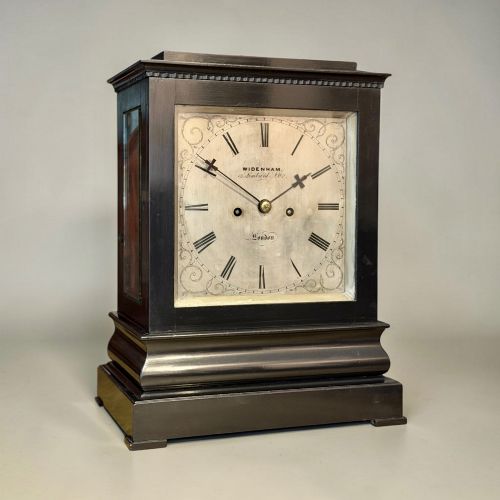
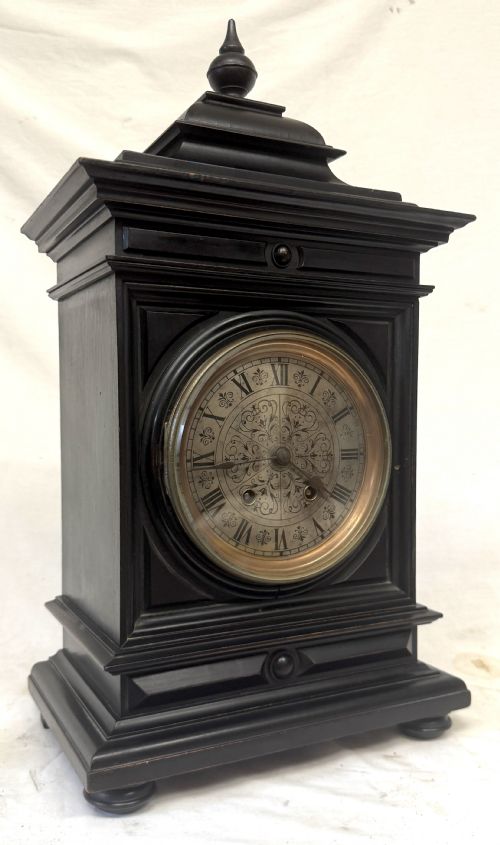
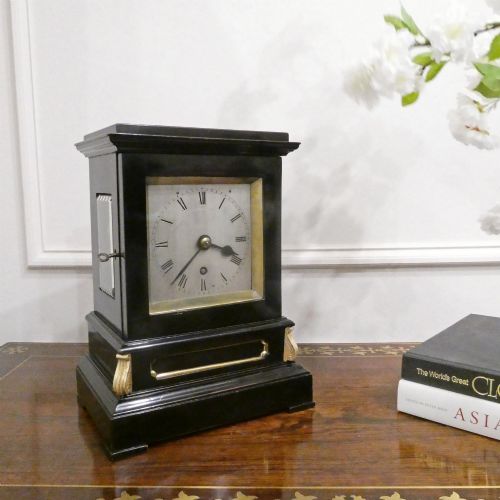
An ebonised wooden clock brings dark elegance to a room, offering striking contrast with its pale dial and brass details.
Ebonised Wooden Clock
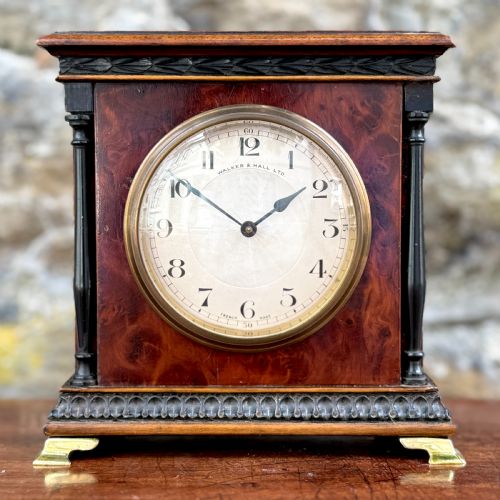
An ebonised wooden clock is a timepiece housed in wood treated to resemble ebony, drawing on periods from the eighteenth century to the early twentieth century. You will encounter mantel clocks, bracket clocks, and wall clocks spanning Victorian, Georgian, and Edwardian eras.
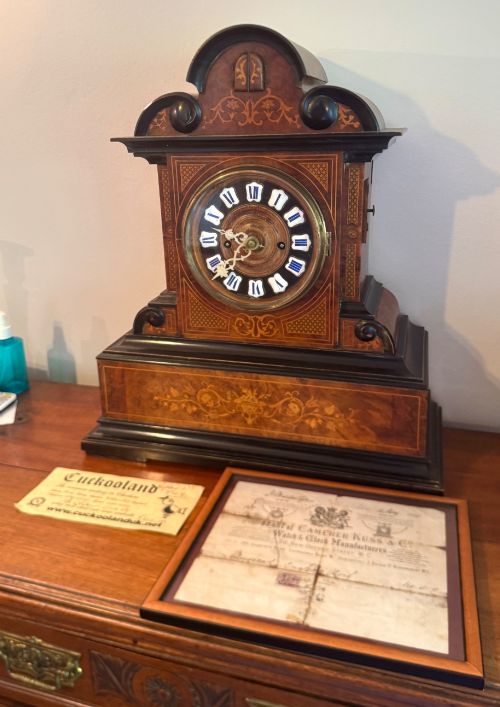
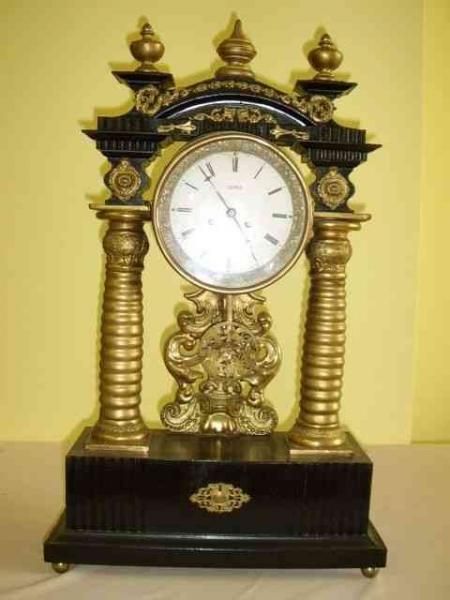
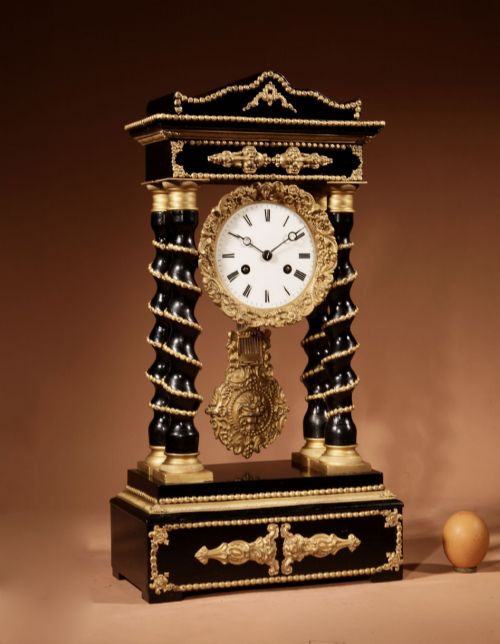
The selection here encompasses diverse forms, from French portico clocks and Vienna regulators to smaller library and desk timepieces. Many incorporate contrasting materials such as walnut or marquetry alongside the ebonised finish.
How they were made
Cabinet makers utilised dense timbers, coating them with dark finishes to mimic costly exotic hardwoods. Cases incorporate glass panels, brass bezels, and detailed ormolu mounts.
Dial construction involves silvered brass, enamel, or gilt components, housing fusee movements, verge escapements, and striking mechanisms driven by brass gears.
Some ebonised clocks share shelf space with Victorian taxidermy domes and glass display cases.
What varies in quality
The integrity of the ebonised surface and the crispness of any applied gilding or brass ornamentation set examples apart. Superior pieces maintain original finishes without heavy modern intervention.
Movement complexity dictates overall execution, with musical chimes, triple fusee setups, and quarter-repeating mechanisms representing advanced horological skill.
Widenham of London·Lenzkirch·Walker and Hall·Des Granges of London·Andrew Marchant of London·John Leroux·Barraud and Lunds·Joseph Lum of London·Wm Gilbert
The Ebonised Wooden Clock Glossary
- Ebonised wood
- Timber stained or painted black to imitate ebony. This technique was popular in Victorian and Aesthetic Movement design.
- Fusee
- A conical pulley used in clock movements to maintain even tension on the chain as the mainspring unwinds. This mechanism improves timekeeping accuracy.
- Portico clock
- A mantel clock designed with architectural columns supporting the movement case. They often date from the late eighteenth and nineteenth centuries.
- Vienna regulator
- A precision wall clock featuring a long glazed case and a compensated pendulum. Originating in Austria, these clocks display intricate internal mechanics.
Ebonised Wooden Clock: Frequently Asked Questions
Where should I place an ebonised wooden clock?
These clocks suit mantelpieces, bracket shelves, or prominent wall locations where their dark cases contrast against lighter plaster. Ensure the surface is stable and level to keep the pendulum swinging truly.
Keep them away from direct sunlight and sudden temperature shifts to protect both the timber finish and the delicate internal brass mechanics.
How do I wind a fusee clock?
Insert the key into the dial winding square and turn it gently clockwise until resistance indicates the mainspring is fully tensioned. Take care not to overwind older movements.
Consult the specific requirements of fusee or spring-driven mechanisms before adjusting, as regular maintenance ensures the longevity of the gear train.
What is an aesthetic movement clock?
Aesthetic movement clocks reflect late nineteenth-century design principles that prioritised visual harmony and simplified forms over heavy historic revivalism. They often feature clean ebonised cases with subtle gilded highlights.
These pieces bridge Victorian formality and modern simplicity, fitting neatly into eclectic domestic interiors.
How can I date an ebonised clock?
Dating relies on stylistic clues, such as the architectural symmetry of portico cases, the presence of Aesthetic Movement motifs, or Georgian bracket proportions. Movement types like verge escapements or anchor recoil provide further chronological markers.
Maker signatures engraved on the dial or backplate offer definitive clues to the period of manufacture.