


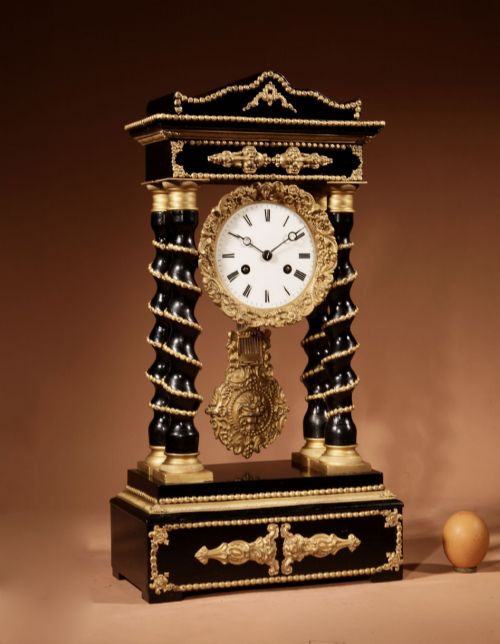


Black Ebonised Clock
A black ebonised clock brings deep, dark timber tones and precision mechanics together, offering both striking visual contrast and reliable timekeeping.
Black Ebonised Clock
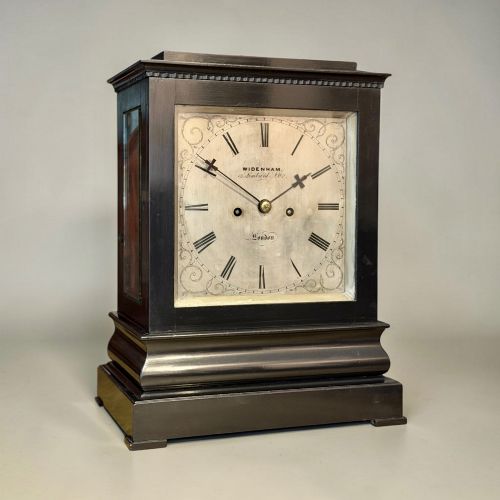
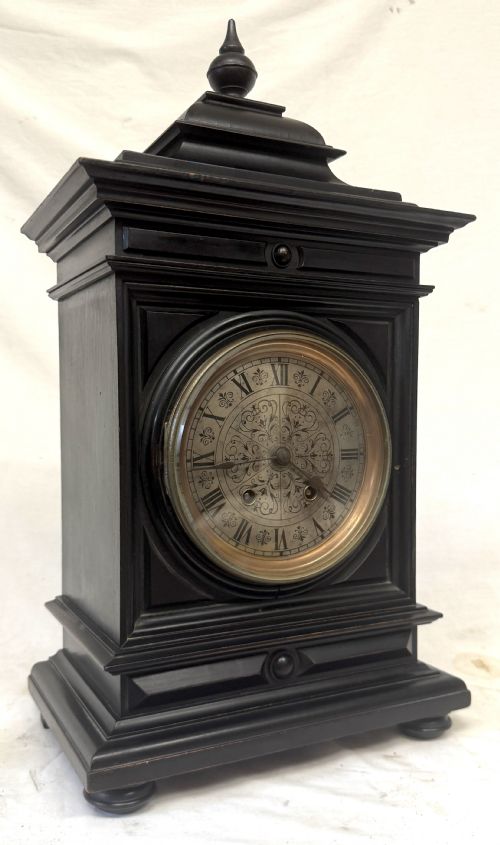
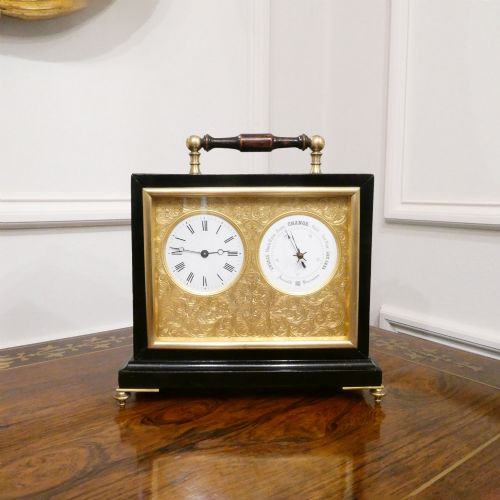
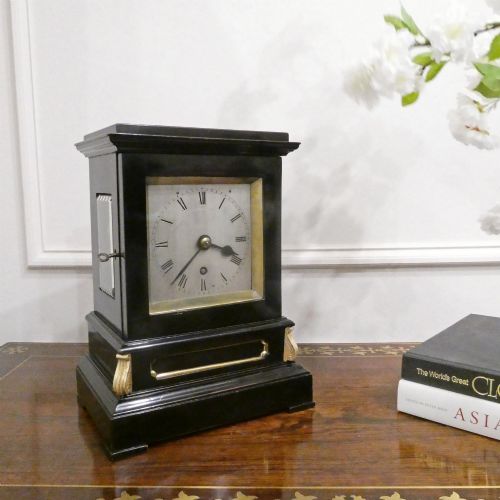
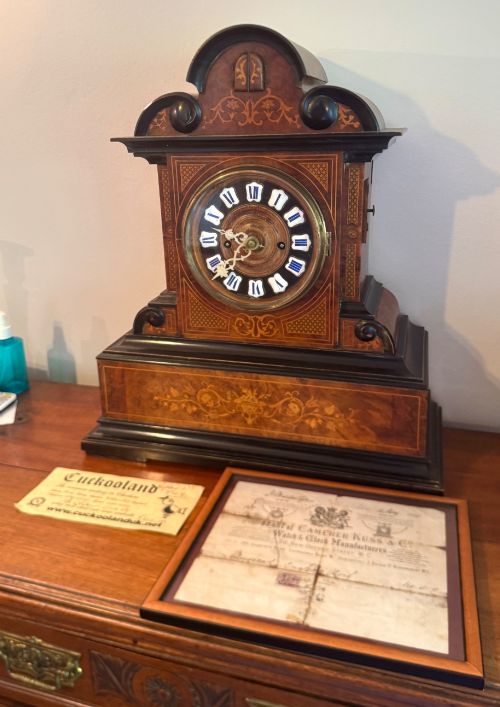
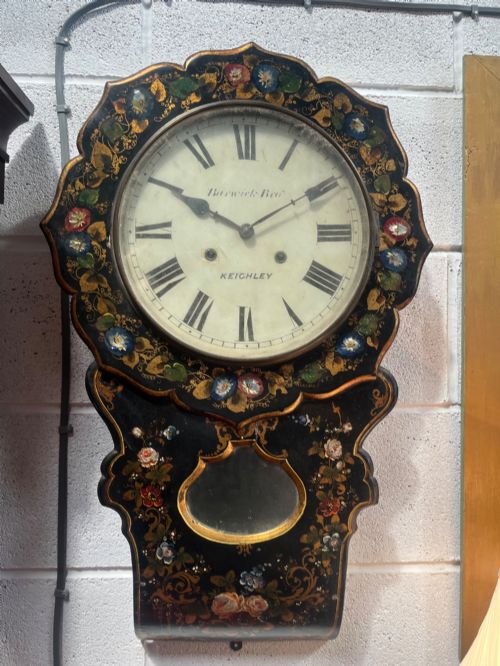
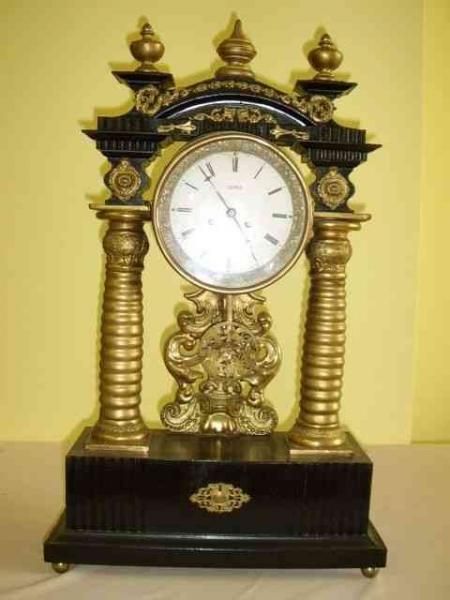
A black ebonised clock is a timepiece finished to simulate ebony, appearing in forms ranging from substantial bracket clocks to architectural portico models and wall hung timepieces. The selection leans heavily towards Victorian and nineteenth century examples, alongside eighteenth century bracket clocks and longcase pieces.
Makers housed these dark timber cases in styles spanning Georgian simplicity, Regency restraint, and elaborate French Napoleon III or Empire designs. Buyers encounter everything from simple library timepieces to musical bracket clocks with multiple bells and chiming trains.
Materials and construction
Craftsmen built these clock cases using timber treated to achieve a deep black ebonised finish, frequently mounting them with cast or chased ormolu, gilt bronze, and brass decorative elements. Many examples incorporate glass panels, silvered dials, enamel chapter rings, and delicate inlay of mother of pearl or marquetry.
Movements rely on fusee mechanisms, spring driven trains, and verge escapements, housed securely within heavy wooden structures designed to support complex chiming and striking complications.
One exceptional listing records an eighteen seventy four marine timepiece bearing the name of an ocean steamship.
Evaluating quality and execution
Quality rests in the crispness of the ebonised finish, the weight and detail of the ormolu or gilt bronze mounts, and the sophistication of the dial work. Finer examples display meticulous marquetry, finely engraved backplates, and robust movements signed by accomplished horologists.
Simpler timepieces rely on straightforward timber cases and standard painted dials, whereas top tier pieces integrate complex musical trains, quarter repeating mechanisms, and architectural marble or bronze accents.
Widenham of London·Lenzkirch·Henry Jones·Des Granges of London·Phillips Brothers·Thomas A Paris·Richard Rooker·Payne & Co. London·Grimaldi and Johnson·Somersall London·William Tomlinson·Andrew Marchant·Berguer of the Strand·William Withers
The Black Ebonised Clock Glossary
- Ebonised wood
- Timber treated with stain or paint to imitate the dark, dense grain of natural ebony. This finish became popular in various periods to achieve a formal, dramatic appearance.
- Fusee
- A conical pulley used in spring driven clocks to maintain even power delivery as the mainspring unwinds. This mechanism ensures consistent timekeeping accuracy throughout the running cycle.
- Bracket clock
- A portable clock designed originally to sit upon a matching wall bracket or table. These pieces often feature sophisticated striking or chiming trains.
- Ormolu
- Gilt bronze ornamentation applied to furniture and clock cases. The technique involves creating a finely chased bronze base coated in gold amalgam.
- Verge escapement
- An early type of clock escapement controlling the release of power from the gear train. It works with a balance wheel or pendulum to regulate time.
Black Ebonised Clock: Frequently Asked Questions
How do I wind a fusee clock?
Wind the clock slowly using the designated key, taking care not to overwind the mechanism. Most fusee movements require attention at regular weekly intervals to maintain accurate time.
Keep the key engaged firmly and turn smoothly until resistance signals the spring is fully tensioned.
How do I distinguish between Regency and Victorian styles?
Regency ebonised clocks lean towards classical restraint, clean architectural lines, and refined gilt bronze mounts. Victorian examples frequently display heavier proportions, elaborate ormolu enrichment, and diverse material combinations like mother of pearl.
Examining the dial typography and internal movement construction helps confirm the specific period.
What is the difference between a timepiece and a clock?
A timepiece indicates the hours and minutes without incorporating striking or chiming mechanisms. Clocks include additional gear trains designed to sound the hours or quarters on bells or gongs.
Both share similar external ebonised and gilded case designs depending on the period.