
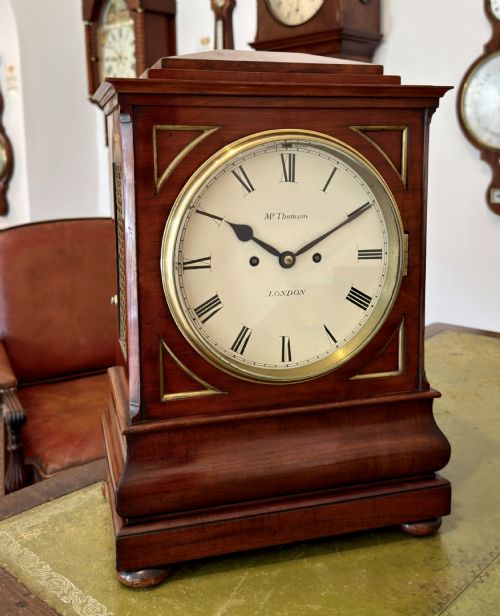
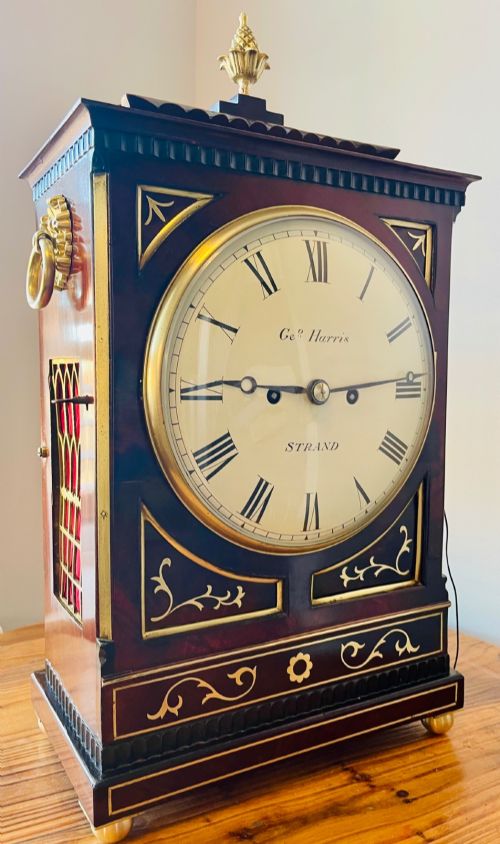
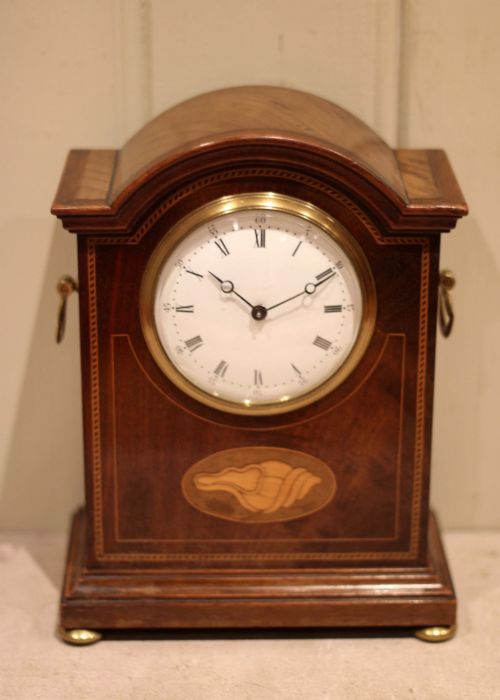
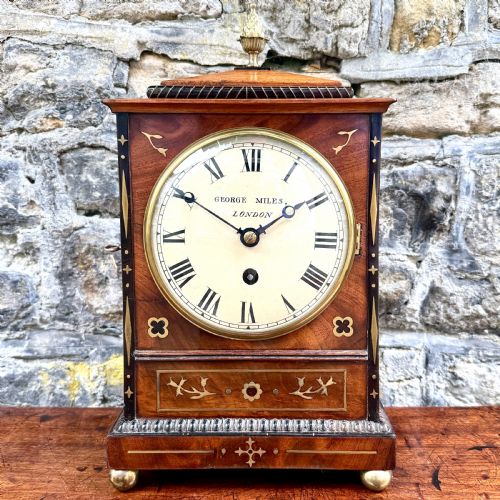
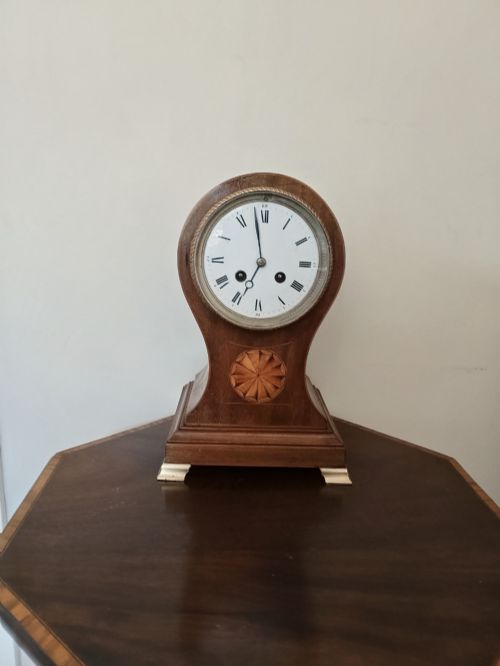
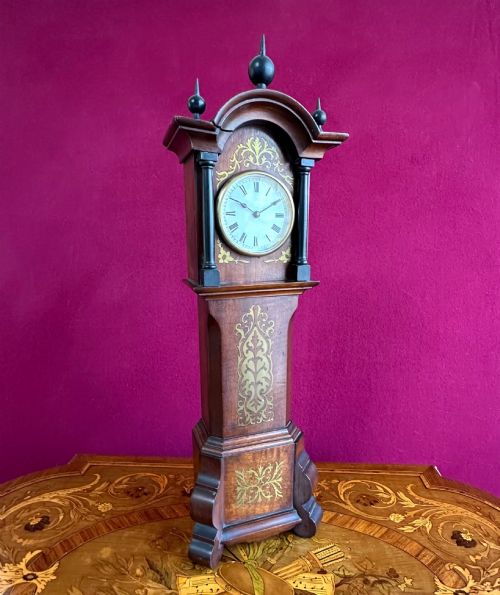
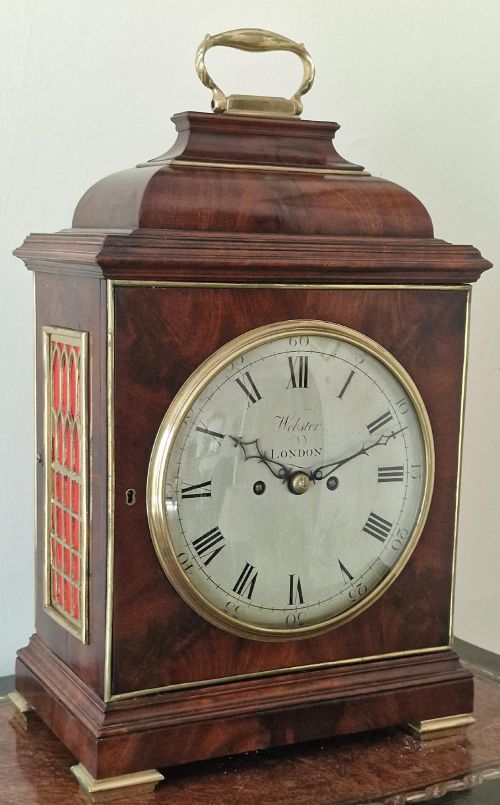
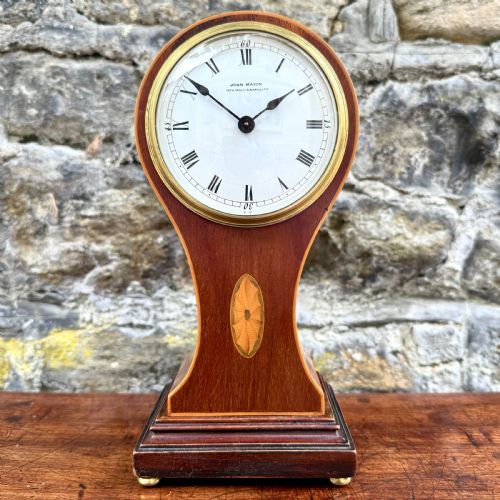
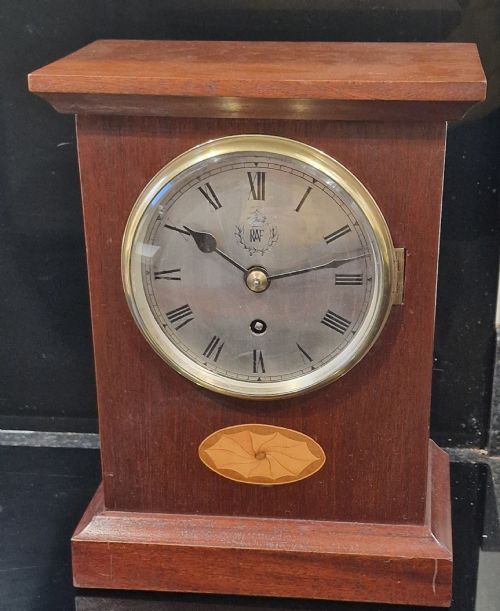
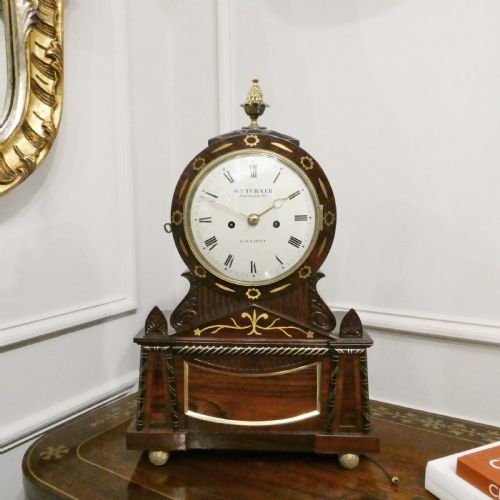
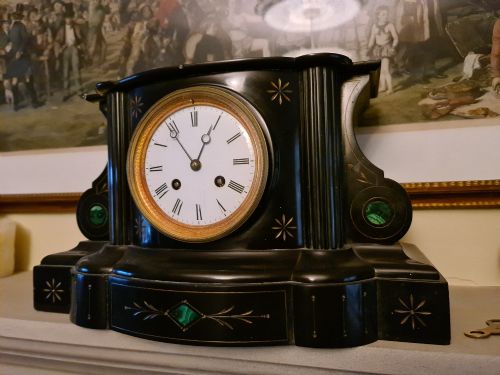
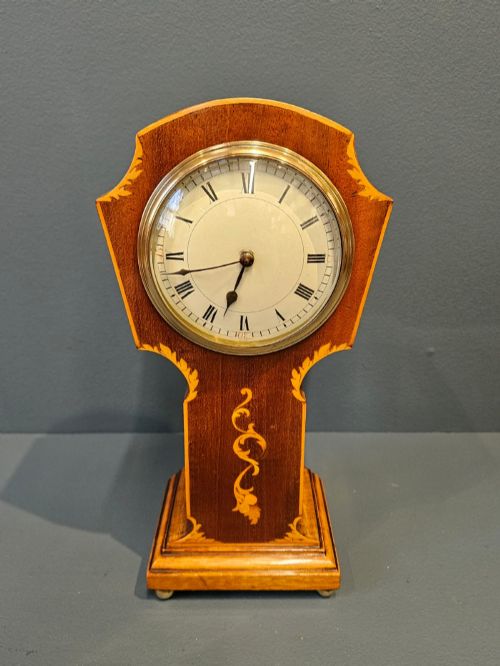
Brass Inlay Table Clock
A brass inlay table clock brings precision and proportion to a desk or mantelpiece, combining fine timber cases with polished metalwork.

Brass Inlay Table Clock
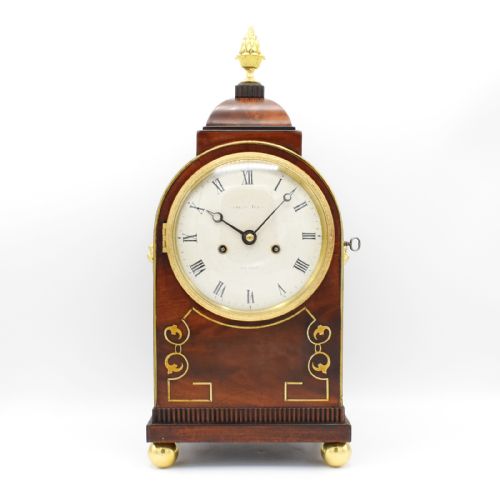
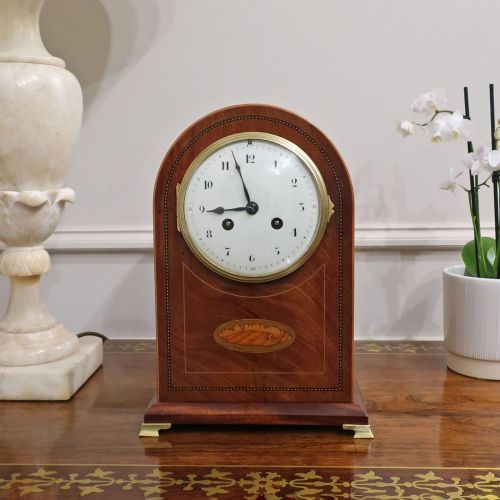
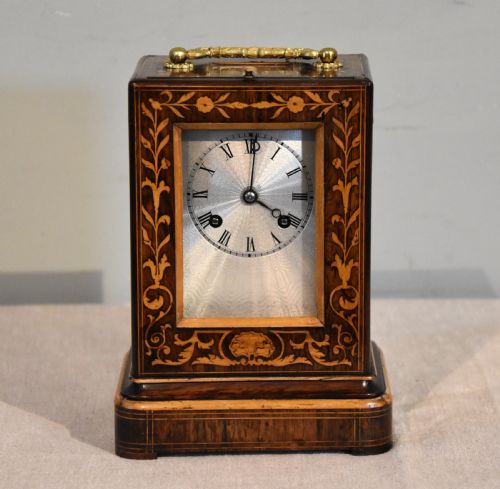
A brass inlay table clock sits comfortably on surfaces rather than standing on the floor, functioning as both a timepiece and a decorative object. When browsing this selection of brass inlay table clock examples, you will encounter pieces spanning the Georgian, Regency, and Victorian periods, alongside Edwardian and French designs.
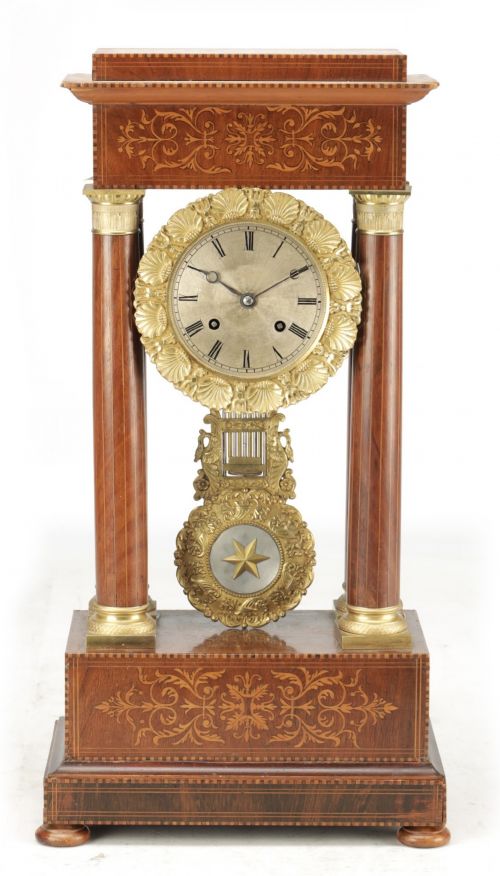
The primary forms take shape as bracket clocks, library clocks, and balloon mantel clocks. English makers favour architectural mahogany and rosewood cases, while continental examples often introduce portico and Boulle styles.
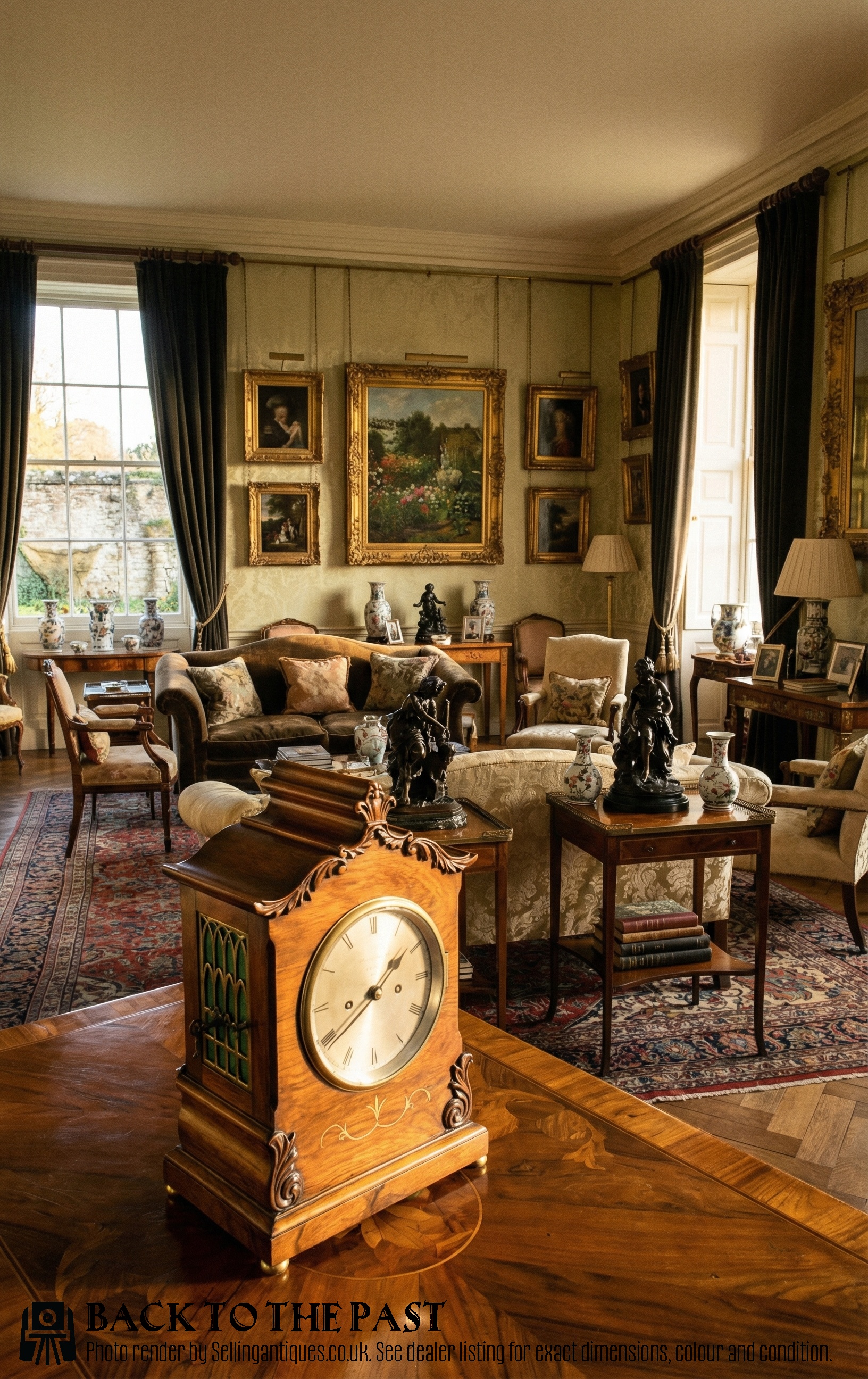
Materials and construction methods
Cases rely on dense timbers such as mahogany and rosewood, chosen for stability and deep grain patterns. Craftsmen then channel the wood to embed delicate brass inlay, sometimes accompanied by boxwood, lemon wood, or ebony stringing.
Movements are housed behind glazed bezels, utilising fusee mechanisms or striking trains. Ormolu mounts and enamel dials complete the construction, balancing metallic lustre with warm timber tones.
Brass Inlay Table Clock Retail Price Guide 2026
Typical asking prices for brass inlay table clock among the pieces listed under this phrase on Sellingantiques today, from the lower quarter to the upper quarter. They describe what is for sale here now, not the wider market.
Listings feature mahogany, rosewood, and satinwood cases accented with brass inlay, glass panels, and enamel dials.
Differentiating quality in execution
Quality rests in the crispness of the brass cutting and the precision with which the metal sits flush into the timber ground. Finer examples display meticulous geometric or floral inlay work that remains level with the surrounding wood.
The choice of secondary woods and the refinement of cast or chased ormolu mounts further separate standard production from superior work. A well-balanced dial with clean enamel lettering also indicates a higher standard of craftsmanship.
Thomson of London·Webster London·Charles Pratt London·George Orpwood·Bush of London·L Vick of Stroud·Seller of Reading·Thomas Moss·S Simpson Southampton·Cording of London·Bryson Edinburgh·John Bull of Bedford
The Brass Inlay Table Clock Glossary
- Bracket clock
- A portable timekeeper originally designed to sit on a wall bracket to aid projection of sound and visibility. These clocks typically feature sturdy wooden cases with carrying handles.
- Fusee
- A conical pulley used in spring-driven clocks to equalise the diminishing power of the mainspring as it unwinds. This mechanism ensures consistent timekeeping accuracy across the running period.
- Boulle
- A form of marquetry employing brass and tortoiseshell inlay, popular in French furniture and clock cases. Named after the cabinetmaker André-Charles Boulle, it creates a striking tortoiseshell and metal contrast.
- Portico clock
- An architectural style of clock featuring columns or pillars supporting the upper entablature. These French pieces often showcase prominent pendulum movement within a symmetrical facade.
- Bezel
- The metal ring that holds the glass protecting the clock face. It is commonly hinged to allow easy access for winding and hand-setting.
Brass Inlay Table Clock: Frequently Asked Questions
What is a fusee movement?
A fusee movement uses a conical drum to regulate the pull of the mainspring. This keeps the driving force steady as the spring loses tension.
It is a hallmark of better quality English bracket clocks from the Georgian and Regency eras.
Where should I place a table clock?
These clocks suit mantelpieces, sideboards, desks, and library tables where they can be viewed closely. Avoid spots near direct heat sources or damp exterior walls.
Ensure the surface is level so the pendulum or balance wheel keeps an even beat.
How do I wind an antique clock?
Use the correct matching key to turn the winding arbors located on the dial face. Turn gently and stop immediately when you feel firm resistance.
Over-winding can snap the internal springs or damage the delicate teeth of the gear train.
How do I distinguish Regency from Victorian styles?
Regency pieces lean towards classical restraint, clean architectural lines, and precise brass inlay on mahogany or rosewood. Victorian examples often introduce bolder carving, marble accents, and French-influenced Boulle work.
Examining the secondary woods and dial typography helps confirm the period of manufacture.