
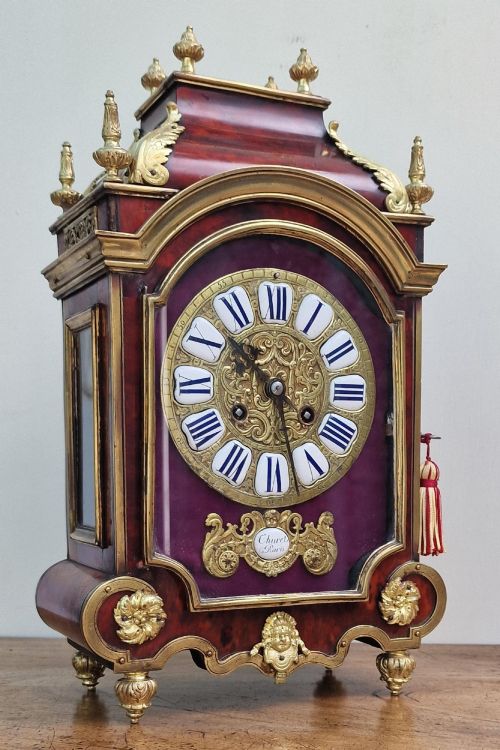
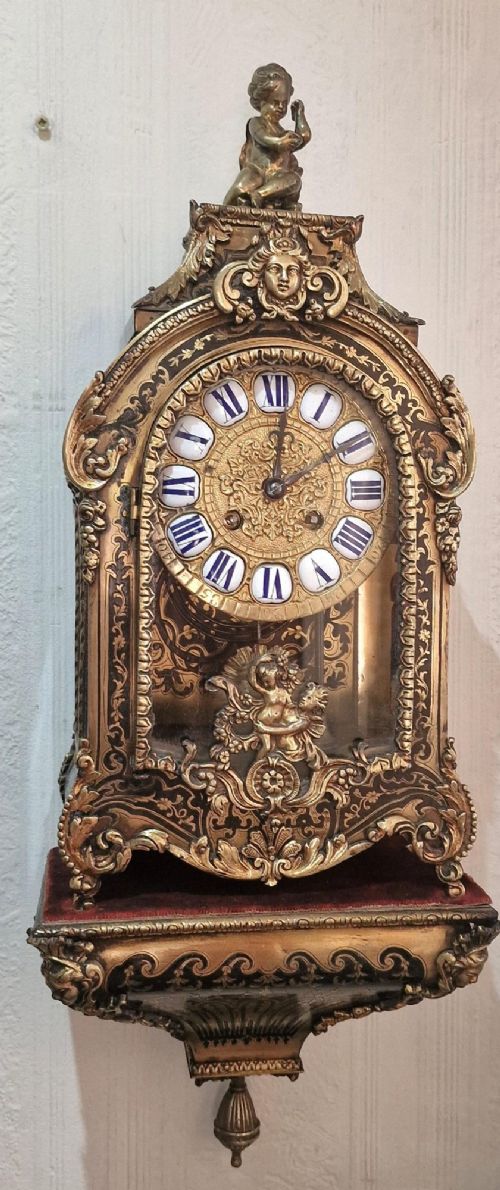
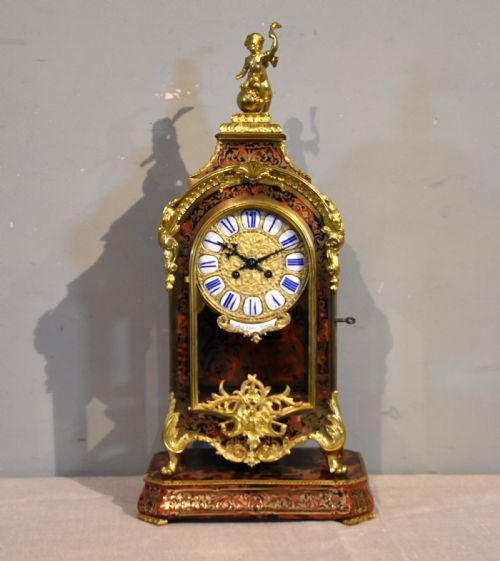
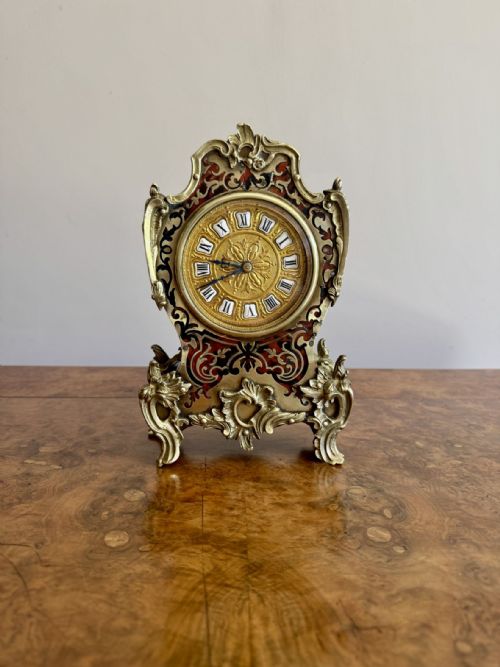

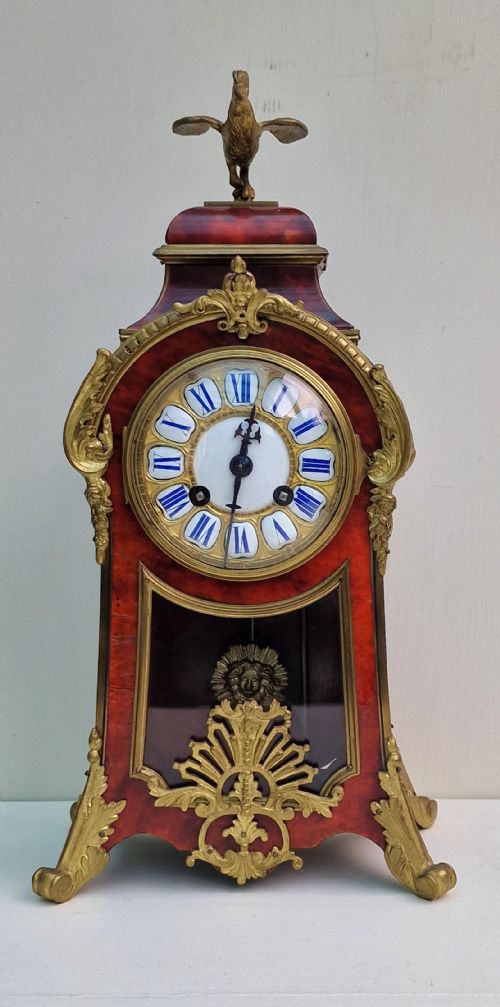


Brass Tortoiseshell Clock
A brass tortoiseshell clock brings rich French marquetry and glowing metal into a room.
Brass Tortoiseshell Clock
A brass tortoiseshell clock combines intricate metalwork with warm organic shell to form striking timepieces designed for prominent display. When you search for a brass tortoiseshell clock, you encounter mantel clocks, bracket clocks with matching wall supports, and taller longcase variations from nineteenth-century France and Britain.
The prevailing examples on this page are French mantel clocks executed in the Boulle style, often featuring elaborate gilt ormolu mounts and enamel dials. Makers working in Paris during the Victorian era produced these ornate pieces alongside occasional Regency English bracket clocks.
How they were made
The distinctive marquetry involves cutting interlocking patterns from sheets of brass and tortoiseshell, a technique traditionally known as Boullework. Craftsmen glued these materials onto wooden carcases and applied cast ormolu mounts, glass bezels, and detailed enamel clock faces.
Movements within these cases typically use eight-day mechanisms, sometimes with fusee or quarter-striking capabilities, housed securely inside elaborate wooden structures finished in red, green, or faux tortoiseshell.
Materials recorded across the inventory include brass, tortoiseshell, ormolu, glass, and wood.
What varies in quality
The fineness of the brass inlay work separates standard production from superior pieces, with tighter joints and more intricate scrolling indicating a more skilled hand. The quality of the cast ormolu mounts and the depth of the tortoiseshell colour also determine the standing of an individual clock.
Proportion and the inclusion of original matching brackets or pedestals elevate certain pieces above simpler mantel clocks. The complexity of the movement, particularly when signed by known Parisian makers, adds further distinction.
Thuret Paris·Henri Marc·Samuel Marti·William Hardy London·A.D. Mougin·Payne London
The Brass Tortoiseshell Clock Glossary
- Boullework
- A marquetry technique of inlaying brass and tortoiseshell developed in France. It creates contrasting metallic and organic patterns across the clock case.
- Ormolu
- Gilded bronze used for decorative mounts and feet. This material adds metallic lustre and sculptural detail to the clock design.
- Fusee
- A conical pulley used in clock movements to maintain even tension on the chain as the mainspring winds down. It ensures consistent timekeeping.
- Bracket clock
- A portable clock originally designed to sit on a wall bracket. Many examples retain their original matching wooden supports.
Brass Tortoiseshell Clock: Frequently Asked Questions
Where should I place a brass tortoiseshell clock?
These clocks look best on a sturdy mantelpiece or a dedicated console table where light can catch the polished brass and shell. Keeping them away from direct sunlight and dampness protects the delicate organic materials.
Pairing a bracket clock with its original wall support allows it to hang securely at eye level as a primary wall feature.
How do I wind an antique brass tortoiseshell clock?
Use the appropriate key provided with the clock to turn the winding arbors gently on the enamel dial face. Take care not to overwind the movement, as this can strain the historical spring mechanisms.
Consulting a professional horologist for initial setup ensures the pendulum and escapement run at the correct beat.
Are these clocks suitable for daily timekeeping?
Many nineteenth-century movements remain reliable for daily use after a professional service and clean. Eight-day movements require winding once a week to maintain accurate time.
Gentle handling and regular minor adjustments help preserve the delicate internal brass gears over decades of continuous running.
How do I distinguish between French and English styles?
French examples often feature elaborate Boulle marquetry, ormolu mounts, and Louis-style revival shapes. English bracket clocks tend to focus on architectural wooden cases with single chain fusee movements.
Signatures on the dial or backplate often confirm the origin of the maker and the workshop traditions they followed.