



Vintage French Bracket Clock
A vintage french bracket clock brings architectural presence and mechanical precision to a room, uniting timber casecraft with heavy cast metal mounts.
Vintage French Bracket Clock
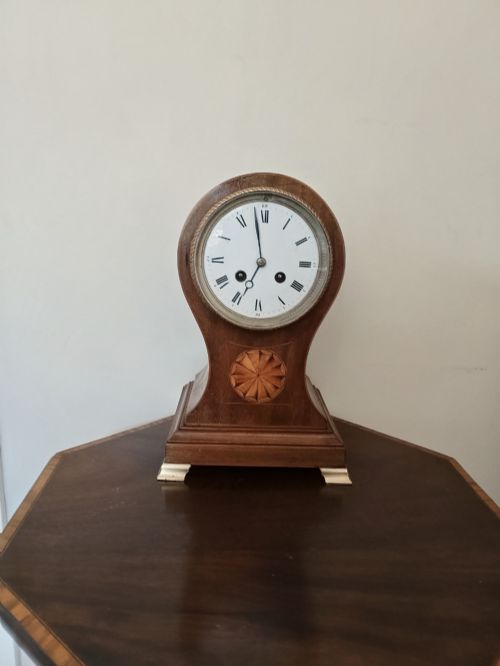
A vintage french bracket clock combines table timepieces and wall-mounted models set on dedicated wooden or ormolu shelves, often spanning the nineteenth century into the Edwardian era. These pieces draw on French Empire, Rococo Revival, and Louis XIV styles, manifesting in forms from tall waist clocks to compact balloon shapes.
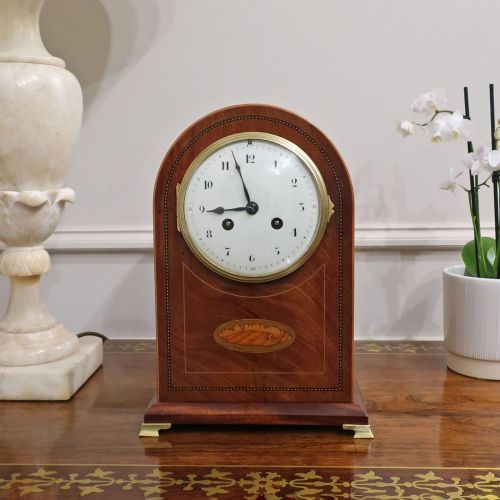
The objects on this page range from simple mahogany cases to elaborate tortoiseshell finishes and glass-panelled four-glass designs. Buyers encounter everything from small boudoir pieces to grander compositions accompanied by matching pedestals or wall brackets.
Makers and movements vary across the selection, with works bearing French mechanical signatures alongside English or Swiss adaptations housed in continental cases. The aesthetic leans heavily into decorative excess, employing marquetry, gilt bronze, and enamel dials to catch the eye.
Materials and construction
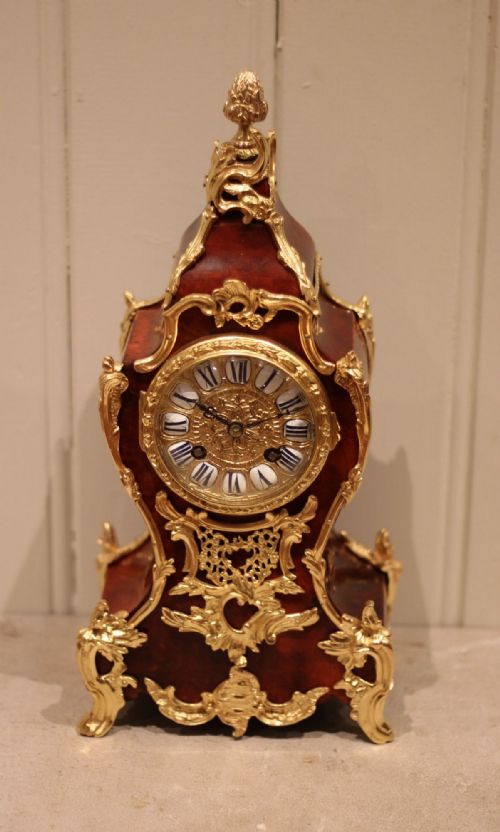
Cabinetmakers constructed the wooden housings using timbers such as mahogany, rosewood, and burr walnut, frequently applying tortoiseshell veneer or boulle work. Artisans then fitted these structures with cast brass, ormolu, and gilt bronze mounts, finials, and bezels.
Movements inside these units rely on brass gear trains, often driven by pendulum regulation and spring-wound mechanisms like fusee or striking setups. Enamel dials, sometimes painted with delicate numerals or detailed scenes, sit behind bevelled glass panes to complete the assembly.
Several models feature tortoiseshell cases that demand zero dusting compared to real pets.
The markers of quality
Superior examples separate themselves through the crispness of the gilt bronze chasing and the depth of the tortoiseshell or marquetry inlay across the timber body. Heavier brass castings and finer hand-painted enamel dials indicate workshops that invested greater labour in the initial fabrication.
The integration of the movement with the case matters profoundly, where original signed mechanisms match the proportions of the timber housing without awkward gaps. Clocks that retain matching stands, pedestals, or wall brackets command attention for their complete domestic ensemble.
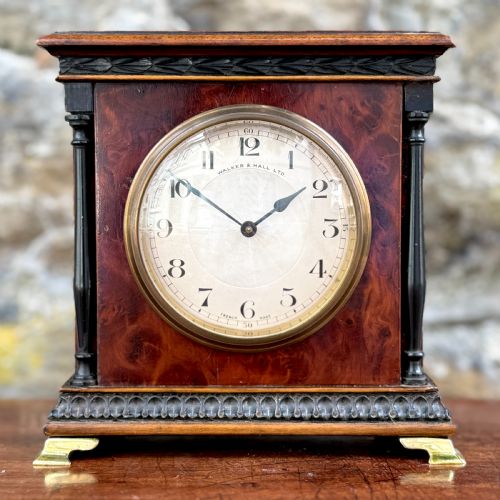
Walker and Hall·henry Marc·Lenzkirch·AD MOUGIN·Hay London·Payne London·Malecot of Paris·Marti
The Vintage French Bracket Clock Glossary
- Ormolu
- Gilt bronze mounted onto furniture or clock cases through a mercury amalgamation process. This technique yields a deep, warm metallic lustre distinct from modern electroplating.
- Boulle
- A form of marquetry employing brass and tortoiseshell inlaid in contrasting patterns. Named after the French cabinetmaker Andre-Charles Boulle, it defines opulent nineteenth-century case design.
- Fusee
- A conical pulley used inside mechanical clocks to equalise the drive force of the mainspring as it unwinds. This mechanism improves timekeeping consistency across the running cycle.
- Champleve
- An enamelling technique where troughs are dug into a metal surface and filled with vitreous paste before firing. The resulting coloured patterns sit flush with the surrounding brass.
Vintage French Bracket Clock: Frequently Asked Questions
How do I wind a mechanical French clock?
Use the designated key on the winding arbours of the dial face, turning gently until resistance stops the movement. Do not overwind, as this damages the internal mainspring.
Ensure you match the correct key size to avoid wearing down the brass winding squares over years of regular use.
Where should I place a bracket clock?
Position the piece on a sturdy mantelpiece, sideboard, or dedicated wall bracket where vibrations remain minimal. Stable surfaces help the pendulum swing evenly and maintain accurate timekeeping.
Keep the clock away from direct sunlight and damp walls to protect timber veneers and fragile tortoiseshell finishes from warping.
How do I identify the period of these clocks?
Look to the decorative vocabulary, such as exuberant Louis XIV scrollwork or restrained Edwardian proportions, alongside the materials utilised in the case. Nineteenth-century examples often lean heavily into Rococo Revival motifs.
Inspect the backplate of the movement for maker signatures, serial numbers, or exhibition stamps that narrow down the exact decade of manufacture.
What is the difference between a mantel and bracket clock?
A bracket clock historically required a matching wooden wall bracket for support, while mantel clocks sat directly upon fireplace ledges. Over time, the terms merged as clock forms evolved.
Many listings on this page use the terms interchangeably for portable domestic timepieces housed in decorative wooden or metallic cases.