




Regency Period Bracket Clock
Regency period bracket clocks are striking table timepieces in architectural wooden cases that bring precision and period presence to a room.
Regency Period Bracket Clock
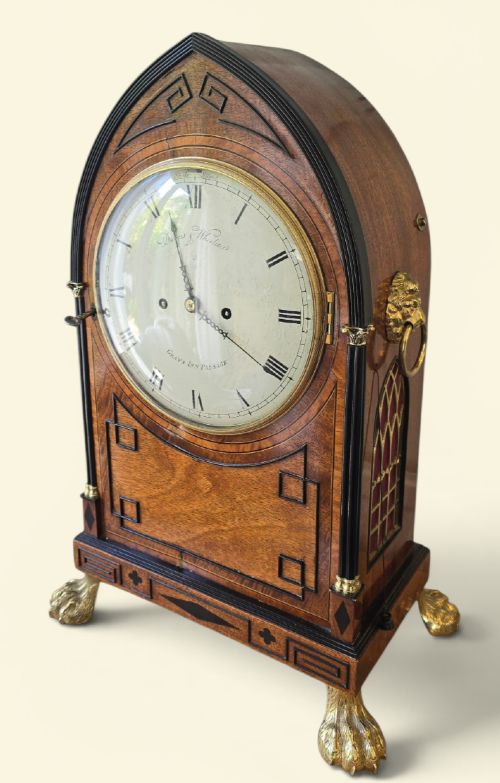
A regency period bracket clock is a portable timekeeper designed to sit on a bracket, shelf or mantelpiece within a domestic interior. These clocks date primarily from the Regency era, the reign of George IV, and the wider Georgian period.
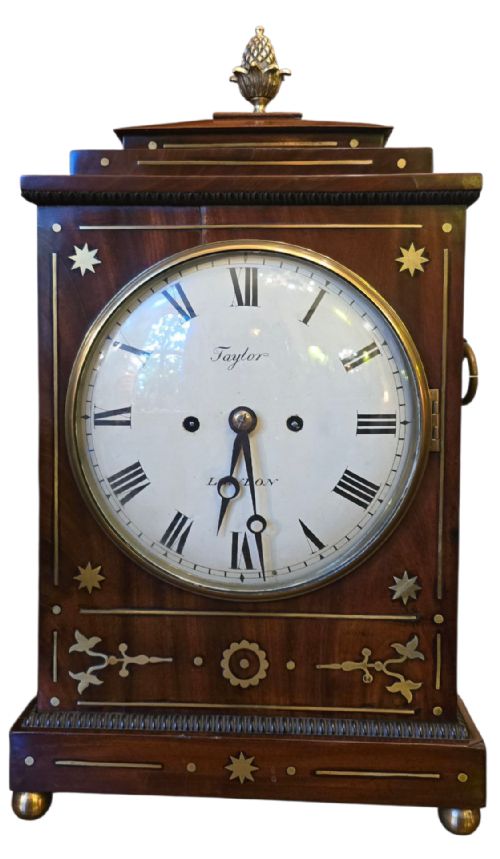
The version most commonly met on this page is housed in a mahogany case, often inlaid with brass or constructed from rosewood and ebony. Dial variations include white enamel with Roman numerals, paired with materials such as glass, brass mounts, and gilt or patinated bronze.
Object types span mantel clocks and formal bracket clocks, with specific architectural forms ranging from chamfer-top and lancet-top designs to Gothic revival variants.
Materials and Construction
Cases rely heavily on dense hardwoods like mahogany, rosewood, and ebony, frequently detailed with intricate brass inlay or cast bronze mounts. Dial faces use enamel over a metal substrate, protected behind glazed bezels and brass bezels.
Mechanisms are driven by fusee movements, commonly utilising single or double chain fusee setups to maintain even tension on the gear train as the mainspring unwinds. Verge and anchor escapements regulate the beat, while striking trains sound the hours.
Case forms include lancet tops, chamfered roofs, and Gothic revival profiles housing single or double chain fusee movements.
Distinctions in Quality
Quality separates in the crispness of the cabinetmaker's joinery, the choice of timber grain, and the precision of the brass inlay work. Finer examples display meticulous execution in both the wooden case and the cast bronze ornaments.
On the movement side, distinction lies in the complexity of the gear train, such as double fusee striking or chiming arrangements, and the signature of a reputable London maker engraved on the backplate.
Desbois & Wheeler·L. Vick of Stroud·Taylor of London·Baetens London·Fatton Eleve De Breguet London·Finer & Nowland
The Regency Period Bracket Clock Glossary
- Fusee
- A conical pulley used in clock movements to equalise the torque of the mainspring as it runs down. This mechanical addition improves timekeeping accuracy across the power reserve.
- Chamfer top
- A cabinet style featuring bevelled edges along the upper corners or roof of the clock case. This form softens the blocky silhouette of early nineteenth-century timepieces.
- Lancet top
- An arched, pointed clock case profile reminiscent of Gothic window architecture. It is a distinctive design frequently seen on Regency and Georgian mantel clocks.
- Verge escapement
- An early type of clock escapement controlling the release of the gear train. It interacts with the pendulum or balance wheel to regulate the ticks.
- Enamel dial
- A fused glass-on-metal clock face providing a smooth, durable surface for painted numerals. These dials require careful handling to prevent chipping.
Regency Period Bracket Clock: Frequently Asked Questions
What is a bracket clock?
A bracket clock is a portable mechanical timekeeper originally built to sit upon a matching wall bracket or a sturdy surface in a principal room.
These clocks were designed to be moved easily between rooms while housing complex striking or time-only movements.
How do fusee movements work?
A fusee movement uses a conical pulley connected to the mainspring via a chain or cord to regulate power delivery.
As the spring unwinds and loses tension, the chain rides higher on the wider part of the cone, maintaining steady force on the gears.
Where should I place a mantel clock?
Mantel clocks sit best on level, stable surfaces away from direct sunlight, dampness, and rapid temperature fluctuations that affect wood and metal.
Placing them on a firm mantelpiece or sideboard ensures the pendulum or balance wheel beats evenly.
How do I wind an antique clock?
Winding requires using the appropriate key on the winding holes in the dial face until light resistance indicates the mainspring is fully tensioned.
Care must be taken not to overwind the movement, turning steadily clockwise or counter-clockwise depending on the specific gear setup.