






Decorative Desk Clock
These decorative desk clock pieces bring mechanical precision and sculptural presence to a study, drawing on nineteenth-century French and British workshops.
Decorative Desk Clock
A decorative desk clock serves as both a timekeeper and a sculptural object for a writing surface or mantle. The pieces found here span the nineteenth century and the early twentieth century, drawing heavily on French and British origins.
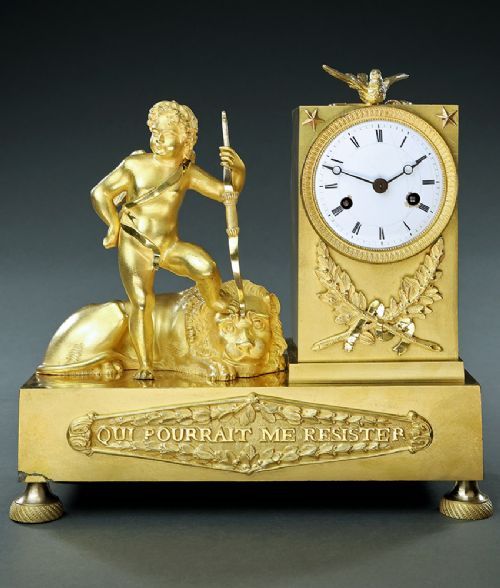
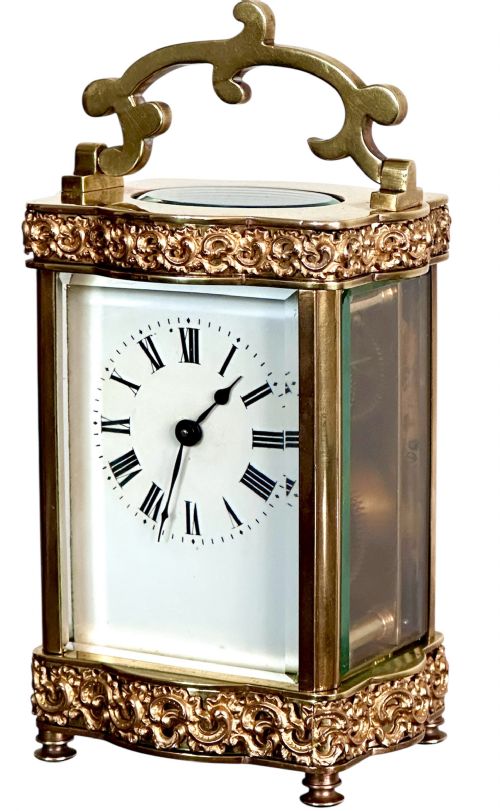
Most examples originate from French workshops, taking forms such as carriage clocks, mantel clocks, and four-glass regulators. Ormolu, gilt bronze, and champlevé enamel frequently define the housing of these items.
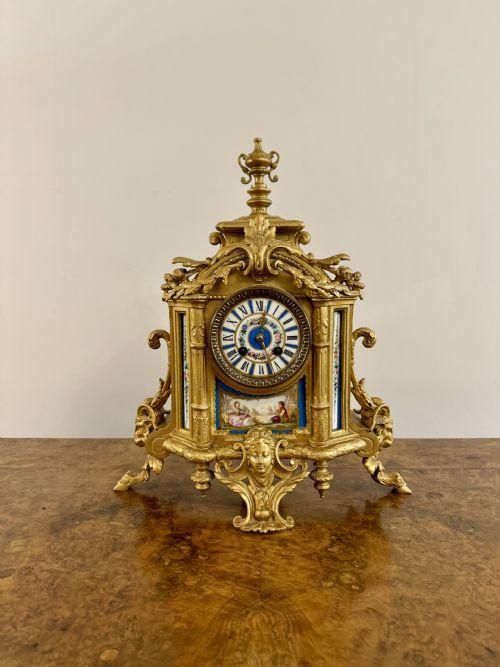
Makers housed these movements in cases shaped by Victorian, Rococo Revival, and Empire styles. Buyers encounter everything from small travel timepieces to large gilt bronze table clocks.
Materials and construction
Craftsmen utilised cast brass and bronze, often applying heavy fire gilding or ormolu to create a durable, lustrous surface. Enamel dials and champlevé panels add colourful detail to the metallic frames.
Glass panels feature prominently in carriage clocks and regulator models, allowing a clear view of the escapement and gear train. Marble and hand-carved wood also serve as structural plinths and cases.
Movements rely on brass gear trains, pinions, and springs, housed securely within the heavy metal or wooden outer shells. Hand-painted ceramic elements frequently decorate the visible dial faces.
Decorative Desk Clock Retail Price Guide 2026
Typical asking prices for decorative desk clock among the pieces listed under this phrase on Sellingantiques today, from the lower quarter to the upper quarter. They describe what is for sale here now, not the wider market.
Listings feature materials such as ormolu, champlevé enamel, marble, and gilt bronze across nineteenth-century and early twentieth-century periods.
Indicators of quality
Quality rests upon the crispness of the cast bronze or ormolu decoration and the depth of the gilding. Superior examples display sharp relief work on figures and floral motifs rather than soft, worn edges.
The complexity and finish of the clock movement dictate the higher tier of pieces. Intricate escapements, signed maker plates, and supplementary striking trains elevate an item above standard production models.
Le Roy Paris·Duverdrey and Bloquel·Tiffany·Henri Jacot·Paul Garnier
The Decorative Desk Clock Glossary
- Ormolu
- Gilded bronze produced by applying a mercury and gold amalgam to a bronze base and heating it. This technique creates a rich, durable golden finish found on many nineteenth-century pieces.
- Champlevé
- An enamelling technique where troughs or cells are hollowed out of a metal surface and filled with vitreous enamel. The piece is then fired and polished flat.
- Carriage clock
- A small, spring-driven timekeeper equipped with a handle, originally designed for travel by officers and nobility. They often feature glass sides to display the internal escapement.
- Fusee
- A conical pulley used in clock movements to maintain an even pull on the gear train as the mainspring unwinds. It represents a marker of British horological quality.
- Four-glass clock
- A mantle clock housed in a brass or gilt frame with bevelled glass panels on all four sides. This design provides an unhindered view of the mercury pendulum and gear mechanism.
Decorative Desk Clock: Frequently Asked Questions
Where did decorative desk clocks originate?
Many examples originate from French horological centres such as Paris, alongside contributions from British workshops.
Maker signatures on dials and movements often point to specific urban ateliers of the nineteenth century.
How do I wind a mechanical desk clock?
Mechanical pieces utilise a dedicated key inserted into winding squares on the dial or backplate. Turning the key tensions the mainspring to power the gear train.
Care must be taken not to over-wind the movement.
What is a carriage clock?
A carriage clock is a portable timekeeper featuring a folding handle and a protective travel case. Nineteenth-century travellers utilised them on coaches and trains.
Their brass frames typically incorporate glass panels.
How do I identify a Victorian clock?
Victorian pieces often display revival styles such as Rococo, Gothic, or Neoclassical motifs cast in brass or ormolu. Date markers frequently align with the reign of Queen Victoria during the nineteenth century.
Materials commonly include marble, porcelain, and gilt bronze.