
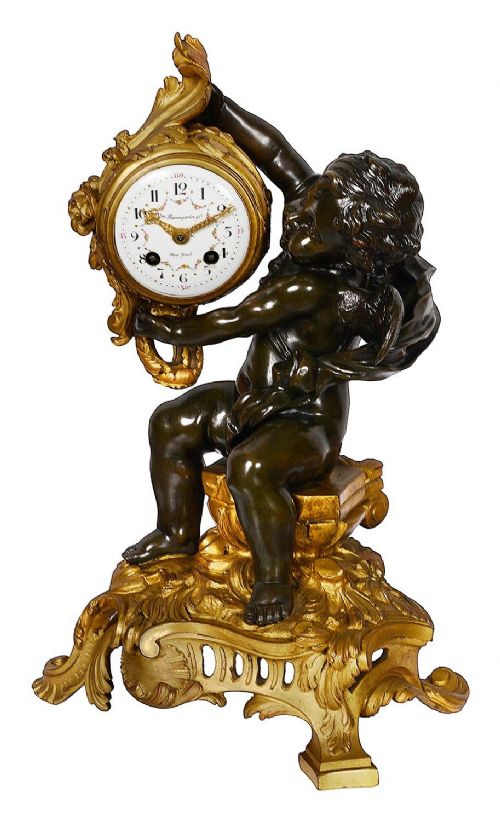


Cherub Table Clock
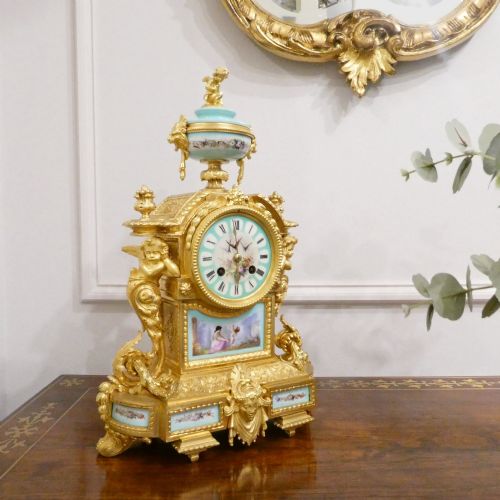
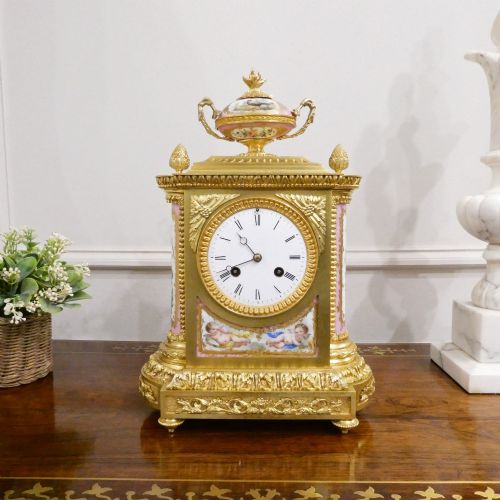
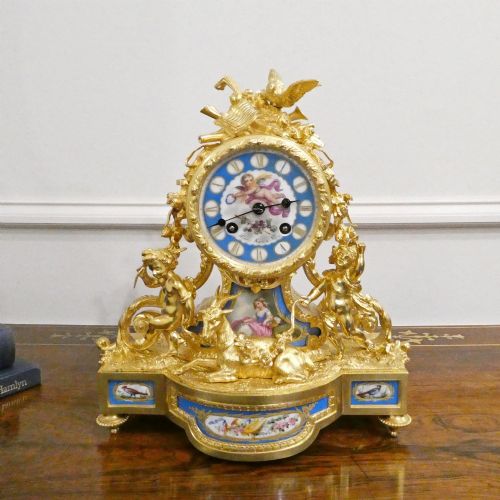
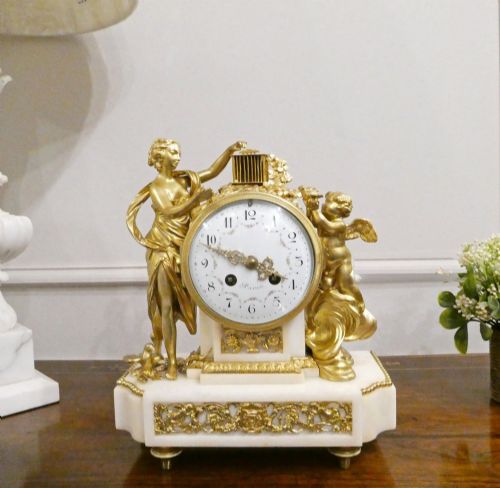
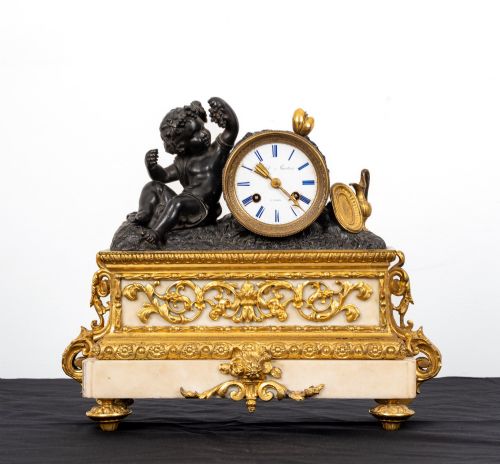
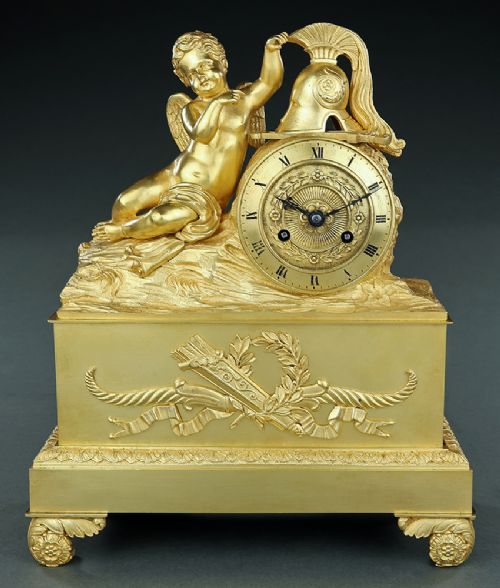
These pieces unite timekeeping with figurative sculpture, depicting cherubs or putti in gilded bronze, ormolu, and marble.
Cherub Table Clock
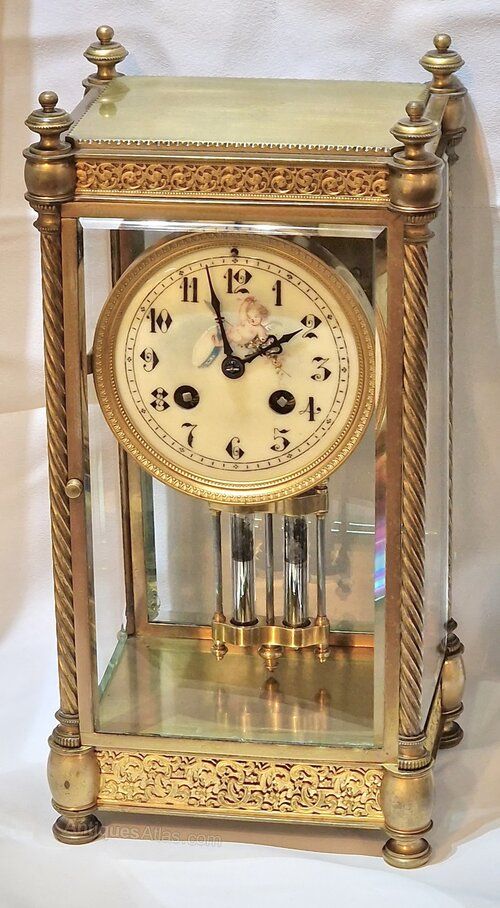
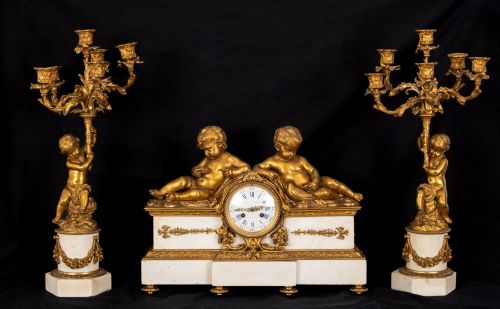
A cherub table clock combines a functional timepiece with classical figural sculpture, typically taking the form of mantel clocks and clock garnitures. These objects emerge predominantly from nineteenth-century French workshops, spanning styles from Rococo Revival and Louis XVI to Empire.
The buyer meets pieces featuring cast bronze, ormolu, and marble housings where putti or cherubs recline beside or support the dial. Many incorporate painted porcelain panels alongside the central movement.
How they were made
Foundries produced the heavy metal elements through sand casting in bronze or brass, afterwards applying mercury gilding or ormolu finishes to achieve a bright golden surface. Sculptors chased the metal by hand to sharpen the feather details on cherub wings and the scrollwork of the case.
Clockmakers fitted eight-day mechanical movements driving enamelled chapter rings or porcelain dials, often mounting the complete bronze assembly onto white or dark marble plinths.
Materials span ormolu, gilt bronze, white marble, porcelain, and glass, reflecting nineteenth-century French manufacturing methods.
What varies in quality
Movement signatures by known makers and integrated porcelain plaques painted with fine detail elevate the standing of the clock within its period.
Jean-Baptiste Delettrez·Henry Marc·Siffel and Cartier·Henry Dasson·Japy Freres·Leon Message·Jollet et Cie·Samuel Marti·Achille Brocot
The Cherub Table Clock Glossary
- Ormolu
- Gilded bronze produced by applying a mercury and gold amalgam to a cast bronze base, then heating it to drive off the mercury. This technique yields a durable, deep golden lustre characteristic of nineteenth-century French pieces.
- Putto
- A plump, winged child figure derived from classical art, frequently depicted on these clock cases acting as cherubs or allegorical figures. Sculptors rendered them in cast bronze or carved marble.
- Garniture
- A set comprising a central clock flanked by matching ornamental pieces such as urns or candelabra. These matched sets shared the same ormolu, marble, and cherub motifs.
- Boulle
- A style of marquetry using tortoiseshell and brass inlaid in patterns across wooden clock cases. It takes its name from André-Charles Boulle and appears on select nineteenth-century revival pieces.
- Chapter ring
- The circular ring on the clock face bearing the numerals for the hours. On these pieces, they are often painted porcelain or enamel set within the ormolu frame.
Cherub Table Clock: Frequently Asked Questions
How do I wind the clock?
Most models utilise an eight-day mechanical movement requiring a key inserted into the dial holes. Winding should be done steadily until gentle resistance indicates the mainspring is fully tensioned.
Care must be taken not to overwind the springs, and handling the delicate ormolu case requires soft gloves to protect the original mercury gilding.
What periods do these clocks come from?
The surviving pieces date largely from the nineteenth century, with strong representation from the eighteen-sixties and eighteen-eighties. They draw heavily on earlier French design motifs including Louis XIV, Louis XV, Louis XVI, and Empire.
Revival styles dominated this Victorian era of production, combining classical sculptural figures with reliable mechanical clockwork.
Are porcelain panels original?
Many models incorporate Sevres style porcelain dials and plaques painted with floral scenes or figures. Examining the reverse of the porcelain often reveals kiln marks or stamps corresponding to the clock production date.
Replacements do occur in antiques of this age, so matching ceramic styles across the dial and case remains an important indicator of integrity.
How should I display a marble clock?
These objects feature heavy bronze and marble construction requiring a sturdy, level surface capable of supporting significant weight. Placing them away from direct sunlight protects the painted porcelain and prevents temperature shifts from affecting the mechanical movement.
Ensuring the surface is completely flat also helps the pendulum swing evenly and keeps the clock ticking accurately.