


Louis XVI Figural Clock
A louis xvi figural clock brings classical bronze figures and marble into a room, offering both decorative presence and traditional timekeeping.
Louis XVI Figural Clock
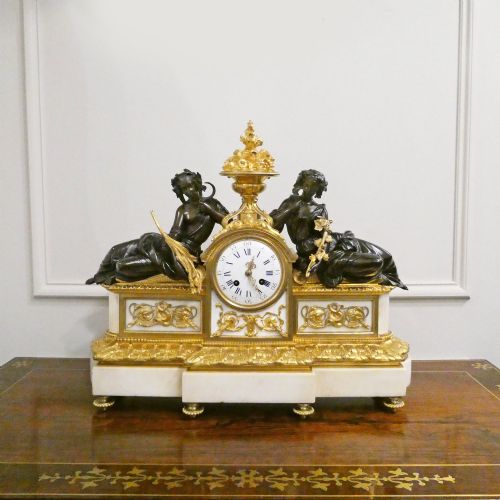
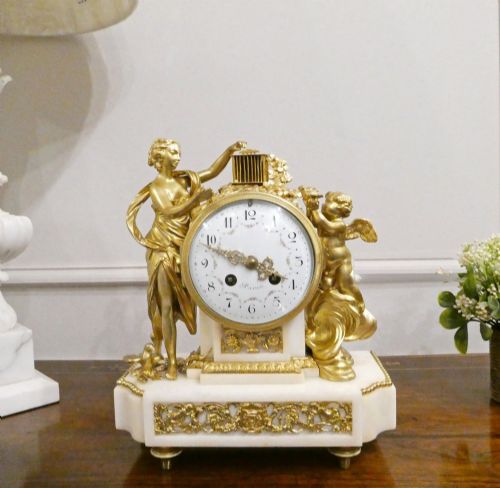
A louis xvi figural clock centres on classical or mythological figures cast in bronze, patinated bronze, or ormolu, often paired with contrasting marble bases. These mantel clocks and clock sets emerge predominantly from the nineteenth century, spanning periods such as eighteen-fifty, eighteen-sixty, and eighteen-eighty in the Victorian era.
Buyers encounter single mantel clocks alongside expansive mantel clock sets, incorporating details like cherubs, maidens, and globes. The predominant design lineage draws upon the Louis XVI style and its nineteenth-century revivals, occasionally touching upon French Empire and French Rococo revival aesthetics.
How they were made
Maker workshops utilised cast bronze, gilt bronze, and ormolu to shape detailed human figures and decorative mounts. These metal elements were combined with polished marble for the architectural body of the clock.
Dials frequently featured painted enamel for the numerals, protected behind glass panels within the metal casing. Clock movements were engineered to strike over eight-day periods, driven by precise mechanical gearing.
Listings feature works spanning the nineteenth century, with specific dates recorded between eighteen-fifty and nineteen-hundred.
What varies in quality
The precision of the bronze casting and the depth of the gilding set superior examples apart from standard production. Sharply chiselled details in the figures and crisp markings on the enamel dials indicate higher workshop standards.
The integration of materials dictates overall harmony, where well-balanced proportions between the bronze work, the marble base, and the movement determine the visual success of the piece.
Vincenti·Japy Freres·Bellenot Paris
The Louis XVI Figural Clock Glossary
- Ormolu
- A technique of applying finely ground high-carat gold to a bronze object using a mercury amalgam. This creates a rich, durable golden surface characteristic of fine French horology.
- Patinated bronze
- Bronze treated with chemical solutions to produce a specific surface colour, ranging from deep brown to near black. It offers a contrasting texture against bright gilt bronze mounts.
- Enamel dial
- A metal dial fused with powdered glass powder fired at high temperatures to create a smooth, glossy white surface. Numerals are painted onto this permanent backing.
- Mantel clock set
- A central clock accompanied by matching garnitures or side pieces such as candelabra or urns. They create a unified decorative arrangement for a fireplace mantel.
- Eight-day movement
- A mechanical clock movement designed to run for approximately eight days before requiring manual winding. This system standardises the maintenance interval for these domestic pieces.
Louis XVI Figural Clock: Frequently Asked Questions
How do I wind a louis xvi figural clock?
Use the designated winding key inserted into the dial holes, turning gently until resistance signals the mainspring is fully tensioned. Care must be taken not to overwind the mechanism.
Ensure the key matches the square arbour precisely to avoid damaging the delicate internal gearing of the movement.
Are these clocks suitable for daily use?
These nineteenth-century pieces function well as daily timekeepers provided they have been recently serviced and cleaned by a professional horologist. Regular maintenance preserves the delicate mechanical components.
Placement should avoid direct sunlight, dampness, and extreme temperature fluctuations to protect the marble, bronze, and enamel dials from deterioration.
What is the difference between ormolu and gilt bronze?
Ormolu specifically refers to the historical mercury gilding process used on high-end French decorative arts, creating a distinctively warm and deep metallic lustre. Gilt bronze is a broader term that can include various modern and historical plating methods.
Both materials yield a golden finish, but seasoned collectors look for the subtle textural nuances typical of authentic nineteenth-century fire gilding.
How should I clean the marble and bronze?
Dust the surfaces regularly with a soft, dry lint-free cloth to prevent particulate accumulation in the intricate recesses of the figures. Avoid all chemical cleaning agents and commercial polishes.
Harsh liquids can strip patination from the bronze or etch the polished surface of the marble base, permanently altering the finish.