






Gold Metal Table Clock
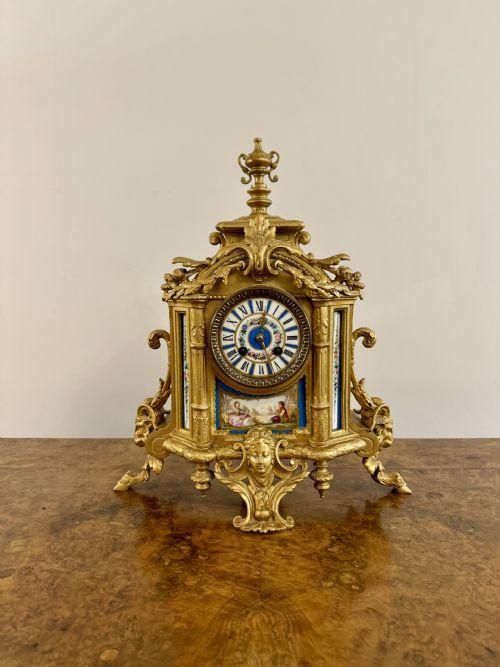
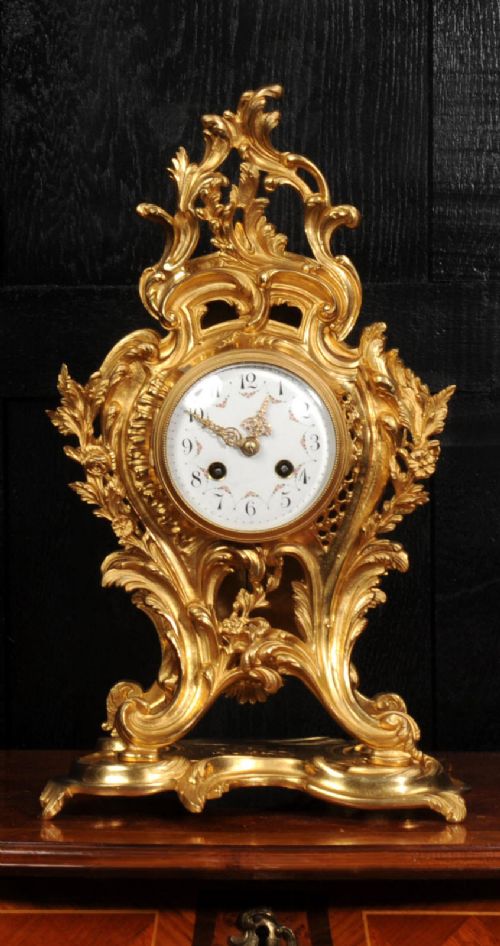
These gold metal table clock pieces bring together heavy gilt metal, brass and porcelain in forms from French Rococo Revival to Art Deco.
Gold Metal Table Clock
When you search for a gold metal table clock, you encounter a wide selection of French and English timepieces spanning the nineteenth century through the mid-twentieth century. The selection ranges from substantial mantel clocks to miniature carriage clocks and small boudoir pieces designed for desks and shelves.
You are most likely to meet ornate French mantel clocks cast in gilt bronze or ormolu, alongside English fusee clocks and Swiss enamel strut clocks. Styles stretch across Rococo Revival, Baroque, Gothic Revival, Art Deco, and Mid-Century Modern designs.
The assortment includes architectural portico clocks, figural pieces depicting classical figures like Diana the Hunter, and specialised forms such as lamp post clocks and alarm clocks. These diverse objects share a foundation of metal construction finished in gilt tones, brass, or bronze.
Materials and construction methods
The bodies of these clocks rely heavily on cast metals such as brass, bronze, gilt metal, and ormolu, often paired with hand-painted porcelain panels or dials. Enamel work, including champlevé, frequently adds colour and intricate detail to smaller strut and carriage clocks.
Movement assembly involved precision engineering by established makers utilising fusee mechanisms, anchor escapements, and later eight-day alarm systems. Gilding techniques applied gold layers over bronze or brass bases to achieve a lasting metallic lustre.
One petite boudoir clock carries an inscription proving it was presented as a prize by Sporting Sketches.
Factors that distinguish the work
Quality rests in the crispness of the bronze or ormolu casting and the depth of the chasing work on the metal surface. Finer examples display sharp, hand-chiselled details rather than softened contours from worn moulds.
The integration of painted porcelain plaques and the complexity of the clock movement set finer pieces apart from standard production. Signed movements by notable makers command greater attention due to their mechanical precision and durability.
Japy Freres·Leon Message·Jollet et Cie·John Barwise of London·Bently and Beck London·P H Mourey·Jaeger LeCoultre·Leroy and Fils
The Gold Metal Table Clock Glossary
- Ormolu
- Gilded bronze produced by applying a mercury and gold amalgam to a bronze base and heating it. This technique creates a rich, matte gold finish characteristic of fine French decorative objects.
- Fusee
- A conical pulley used in clock movements to maintain an even pull on the gear train as the mainspring unwinds. It ensures consistent timekeeping throughout the power reserve.
- Champlevé
- An enamelling technique where troughs are dug into a metal surface and filled with vitreous enamel paste before firing. The metal partitions remain visible between the coloured glass areas.
- Carriage clock
- A small, portable spring-driven clock developed for travelling officers in the nineteenth century. They typically feature glass panels on all sides to expose the escapement.
- Portico clock
- A monumental clock style shaped like a classical temple with columns supporting the top structure. These pieces frequently feature a central pendulum swinging between the vertical supports.
Gold Metal Table Clock: Frequently Asked Questions
How do I wind a mechanical desk clock?
Most mechanical clocks require a key inserted into the dial or back plate to tension the mainspring gently. Turn the key slowly until you feel resistance, taking care not to overwind the mechanism.
Ensure you keep the clock on a level surface before starting the pendulum or balance wheel. Irregular surfaces can cause the escapement to stop beating correctly.
What is the difference between ormolu and gilt brass?
Ormolu specifically refers to mercury gilding applied to a bronze substrate, creating a deep, velvety golden finish. It was the preferred method for high-end French decorative arts.
Gilt brass or gilt metal involves a simpler plating or gilding method on a less expensive alloy base. These surfaces often appear brighter or shinier than traditional ormolu.
How should I clean a gilt metal clock case?
Dust the metal case regularly with a soft, dry artist brush to remove particles from crevices. Avoid all liquid cleaners, commercial polishes, or abrasive cloths, which strip the delicate gold layer.
Leave the gilded surface untouched if it shows stable patination. Professional conservators should handle any deep cleaning or restoration of the metal.
Where should I place a antique table clock?
Position your clock on a stable mantelpiece, desk, or shelf away from direct sunlight and drafts. Extreme temperature fluctuations can affect the metal and wood components inside the movement.
Keep the clock clear of damp exterior walls and radiators to protect the delicate porcelain dials and brass mechanisms from corrosion.