


Art Deco Mantel Garniture
Art deco mantel garniture sets bring balanced symmetry to a chimney piece, pairing a central clock with matching side ornaments.
Art Deco Mantel Garniture
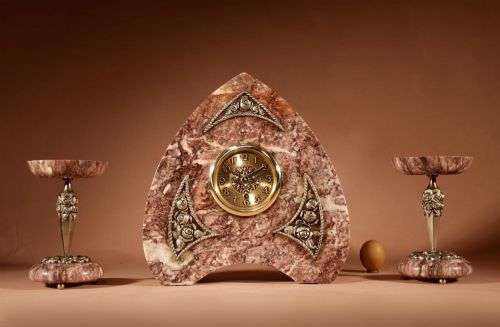
An art deco mantel garniture consists of a central clock accompanied by a matching pair of side ornaments, designed to sit together across a fireplace. These sets date principally from the 1920s and 1930s, though examples also emerge from 1910.
Buyers will encounter three-piece configurations featuring flanking vases, urns, or sculptural figures alongside the main dial. The forms reflect the distinctive geometry and streamlined aesthetic of the period.
French origin dominates the selection, frequently taking the form of coordinated clock sets built around figural subjects or architectural stone bodies.
How they were made
Makers utilised dense natural stones like marble, grey breccia marble, and onyx as the heavy foundation for both clocks and garnitures. These stones were cut and polished to geometric profiles characteristic of the style.
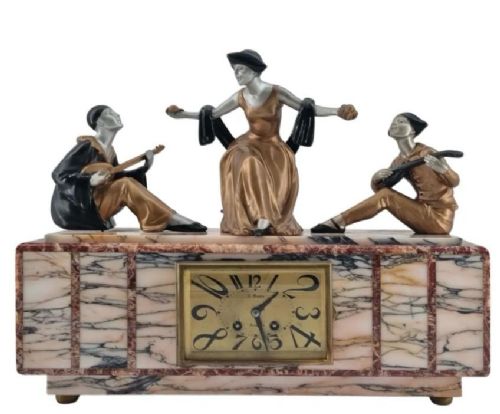
Metal components, including brass, chrome, and silver-plated bronze, were combined with the stone bodies to create sharp contrast and metallic detail. Sculptural elements in spelter often depicted animals such as greyhounds, German shepherds, and elephants, or human figures like Pierrot and Columbine.
The listings show pieces spanning the 1910s, 1920s, and 1930s, constructed from marble, onyx, brass, chrome, and spelter.
What varies in quality
Quality separates simple stone boxes from sophisticated sculptural compositions where artists of note contributed bronze or spelter figures. The choice of materials, such as figured grey breccia marble paired with silver-plated bronze rather than plain stone, elevates the standing of a set.
Cohesion within the three pieces determines the success of the garniture, ensuring the clock and its matching side ornaments share identical pedestals, patination, and decorative motifs.
Sega·Michel Decoux
The Art Deco Mantel Garniture Glossary
- Garniture
- A set of matching ornamental objects designed to be displayed together on a mantelpiece or sideboard, usually consisting of a central clock flanked by two matching vases or figures.
- Spelter
- An alloy of zinc and other metals cast into decorative figures and patinated to resemble bronze, commonly used for the sculptural elements on clock sets.
- Breccia marble
- A composite stone made of angular rock fragments embedded in a fine-grained matrix, prized for its variegated and colourful patterns.
- Dial
- The face of the clock where the hours and minutes are marked, often surrounded by decorative bezels and glass covers.
Art Deco Mantel Garniture: Frequently Asked Questions
How do you display a clock set?
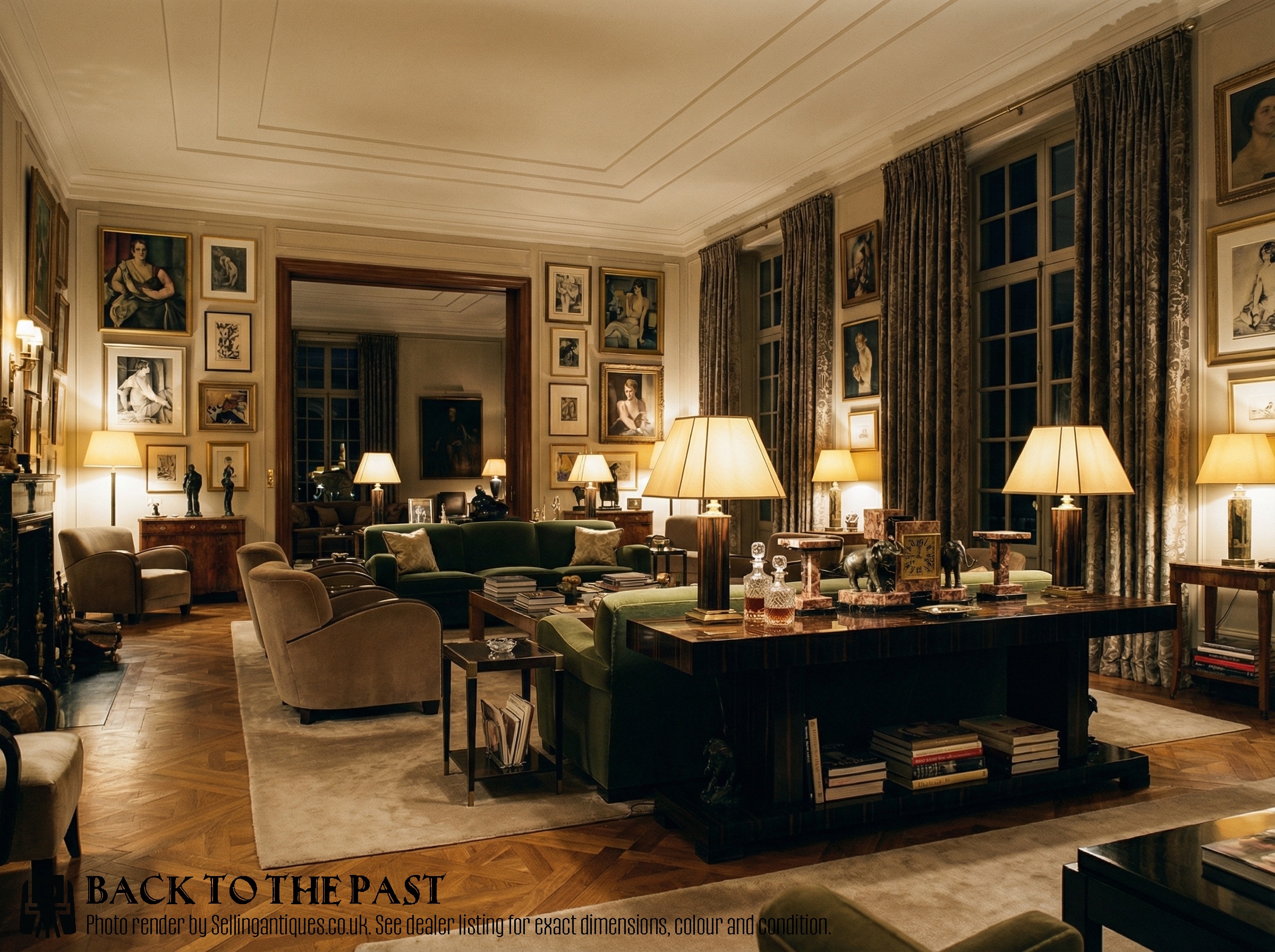
A clock set sits best along the flat surface of a mantelpiece, sideboard, or wide console table. The central clock anchors the middle while the two matching garnitures flank it at equal distances.
Keeping the pieces together maintains the visual symmetry intended by the maker, though the side ornaments can also space out across a wider shelf.
What materials are used in these sets?
These sets rely heavily on polished stones such as marble and onyx for their substantial weight and architectural lines. Metals like brass, chrome, and silver-plated bronze add bright linear accents.
Sculptural figures cast in spelter are frequently mounted to the stone bases, depicting animals or theatrical characters.
How can you tell the period of a clock garniture?
The period is identified through the geometry of the stone housings, the styling of the clock numerals, and the subject matter of any attached sculptures. Pieces from the 1920s and 1930s favour clean architectural steps and stylised figural art.
Materials like chrome and grey breccia marble further anchor the items firmly within the interwar decades.