


Pink Marble Clock Set
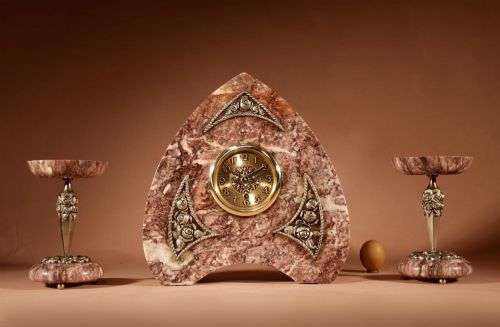
A pink marble clock set brings striking colour and architectural presence to a mantelpiece, combining a central timekeeper with matching garnitures.
What They Are
A pink marble clock set comprises a striking centrepiece timekeeper accompanied by matching side ornaments, traditionally forming a garniture for the mantelpiece. These assemblages emerge primarily from nineteenth-century workshops and subsequent Art Deco productions.
The pieces appearing on this page span the nineteenth century up to the nineteen-thirties. Buyers frequently encounter French models that pair the distinctive stone with contrasting metal mounts.
Mantel clocks dominate the selection, often accompanied by matching garniture pieces. The stone varies in shade, providing a soft or dramatic natural pattern depending on the specific block selected by the mason.
How They Were Made
Masons shaped solid blocks of marble to form the architectural bodies of the clocks and garnitures, smoothing the stone to highlight its natural veining. Workshops combined this heavy mineral with cast brass, bronze, gilt bronze, ormolu, and gilt metal for decorative bezels and feet.
Dials typically feature enamelled numbers protected behind glass, driven by mechanical movements housed within the stone casing. Spelter frequently appears in sculptural figures mounted upon or beside the marble structure, particularly in twentieth-century iterations.
Retail Price Guide 2026
Typical UK retail prices for pink marble clock set, calculated from the Sellingantiques database of over a million retail prices indexed since 2003. This retail price guide relies exclusively on Sellingantiques data; no external sources or auction records are used, so the figures do not describe the wider market.
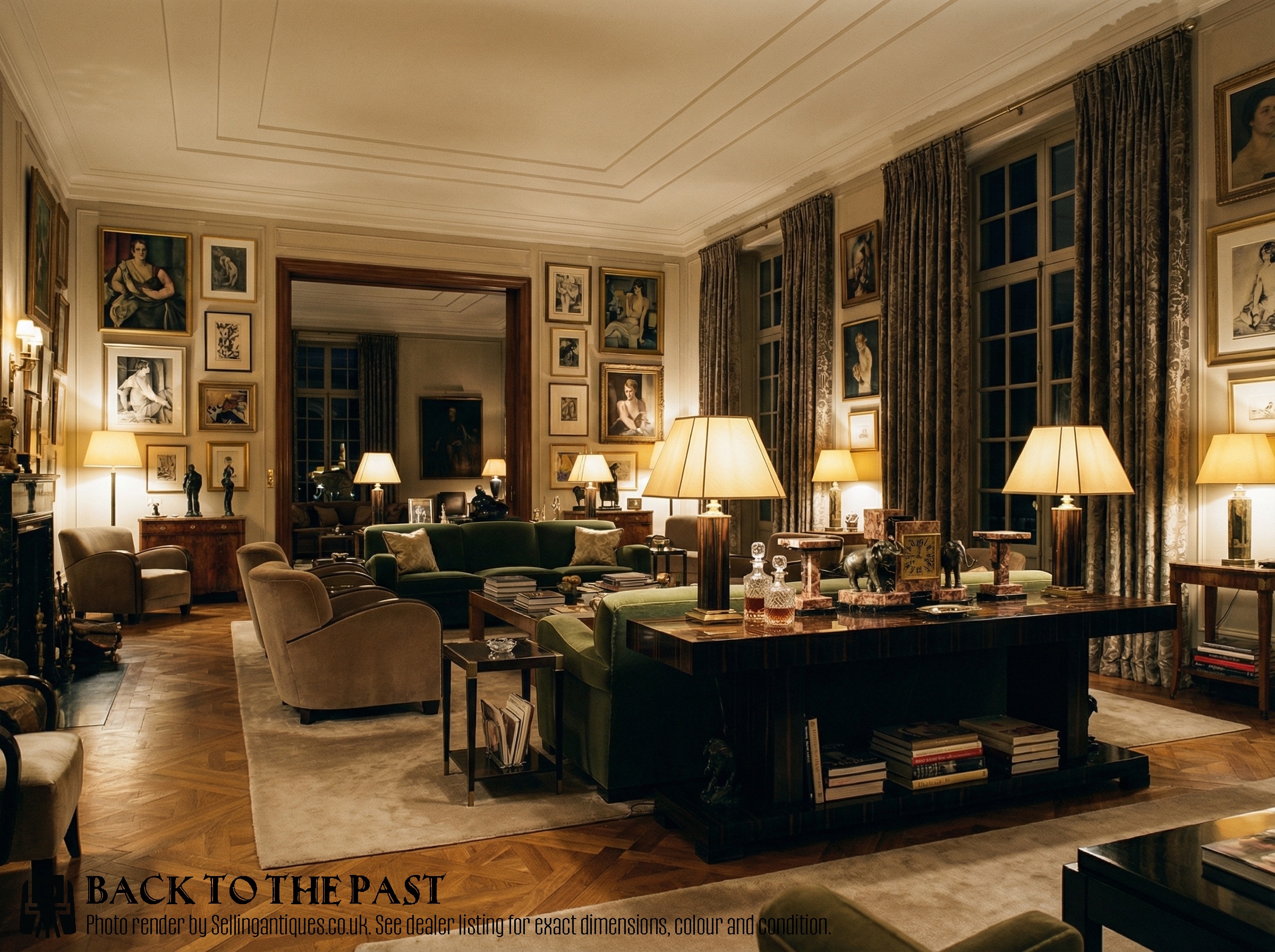
Some Art Deco sets unexpectedly feature heavy stone elephants standing guard beside the dial.
What Varies in Quality
Quality rests upon the architectural ambition of the marble cutting and the precision of the cast metal mounts. Finer examples display crisper chasing on the ormolu or bronze elements and heavier, more carefully selected stone.
Artistic integration separates standard production from superior pieces, particularly where sculptural figures like elephants are cast in spelter or bronze and harmonised with the marble base. The clarity of the enamelled dial and the integration of the garniture pieces complete the visual hierarchy.
The Pink Marble Clock Set Glossary
- Garniture
- A set of matched ornamental objects designed to be displayed together on a mantelpiece. The central clock is flanked by matching side pieces.
- Ormolu
- Finely ground high-carat gold applied to a bronze base using a mercury-gilding technique. This treatment creates a rich, durable golden surface on the metal mounts.
- Spelter
- A zinc alloy frequently used as a substitute for bronze in decorative figures. It accepts patination well and was widely utilised during the nineteenth and twentieth centuries.
- Bezel
- The metal ring that holds the glass protecting the clock face in place. It often hinges open to allow hand-setting.
Frequently Asked Questions
What is a pink marble clock set?
A pink marble clock set is a decorative mantel arrangement consisting of a central clock and matching side ornaments. The pieces share coordinated materials and stone.
These ensembles were designed to sit centrally in a room, creating a balanced display on a fireplace or sideboard.
How do I date a marble clock set?
Dating relies upon stylistic markers such as the transition from nineteenth-century French designs to geometric Art Deco forms. Materials like spelter and specific styles of brass casting also help narrow the period.
Examination of the dial and interior movement mechanism provides further clues to the exact decade of manufacture.
What styles are available?
Listings feature nineteenth-century French designs alongside geometric Art Deco interpretations. Some lean towards classical French styling whilst others incorporate animal figures.
The aesthetic shifts from ornate historical revival forms to streamlined twentieth-century modernism.
How should I clean the marble?
Marble requires gentle dusting with a soft, dry cloth to protect the polished surface. Avoid abrasive cleaners or excess moisture which can harm the stone and metal mounts.
Preserving the natural finish ensures the stone retains its characteristic colour and sheen over time.