
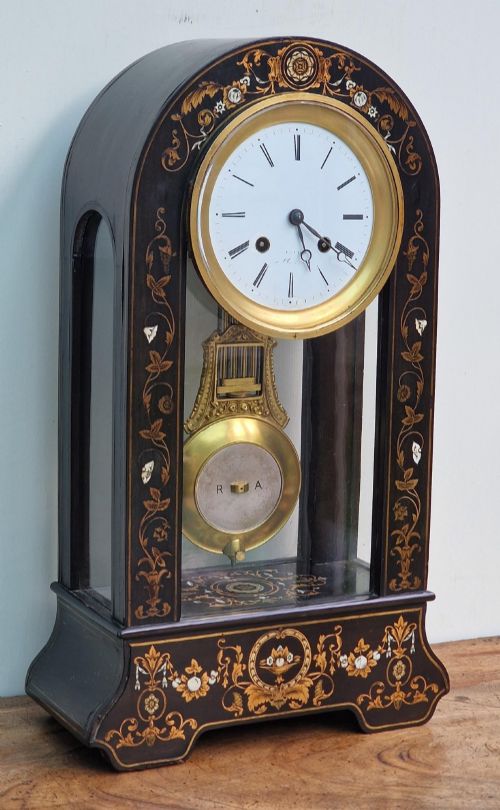
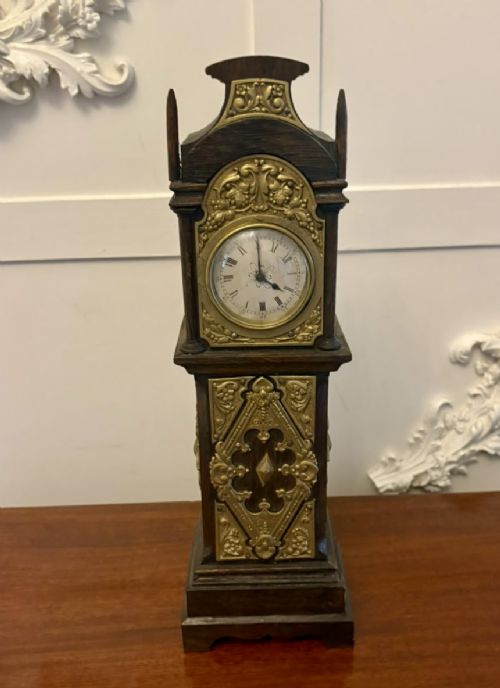
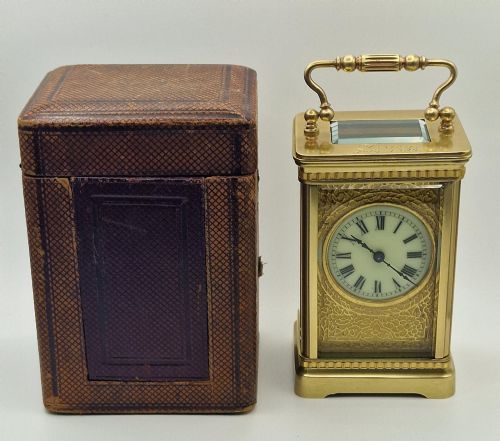
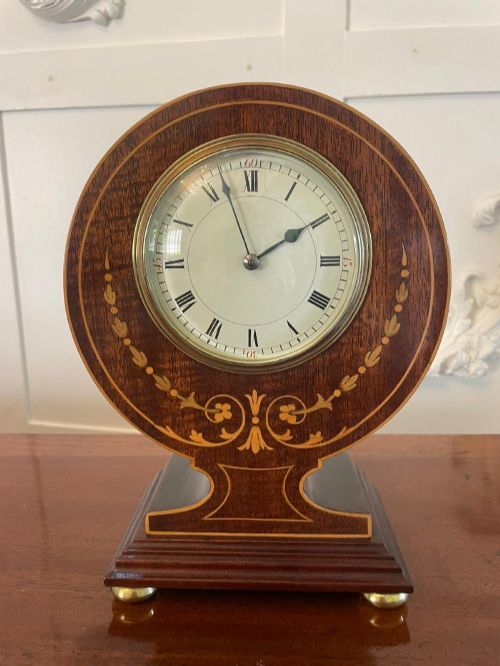
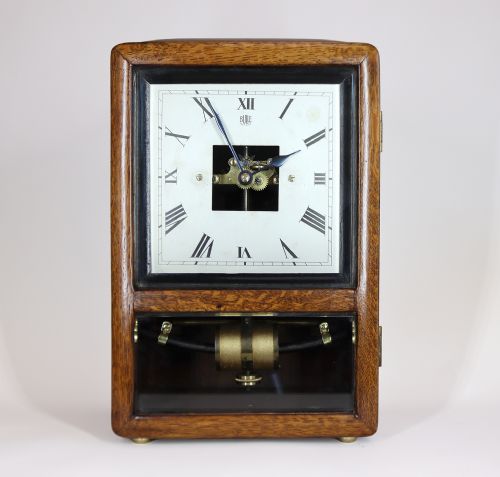
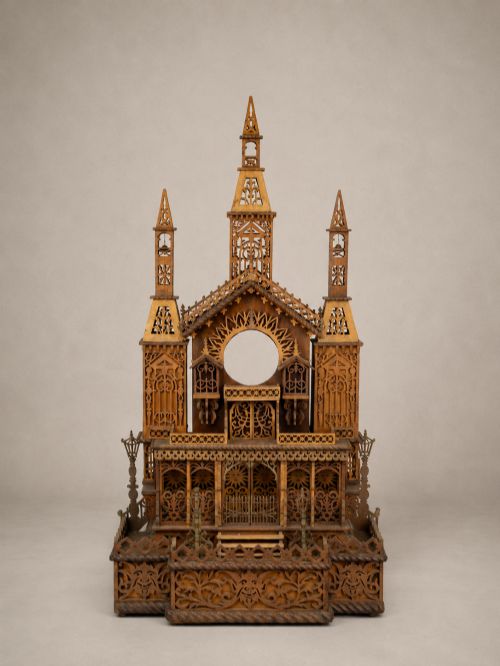
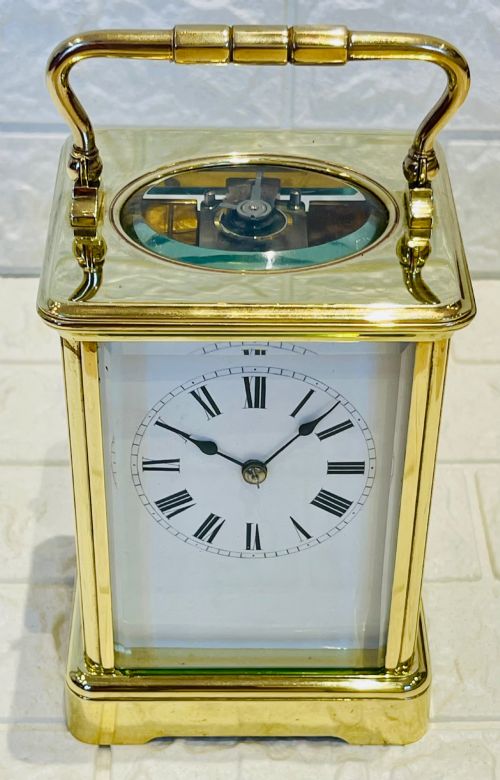
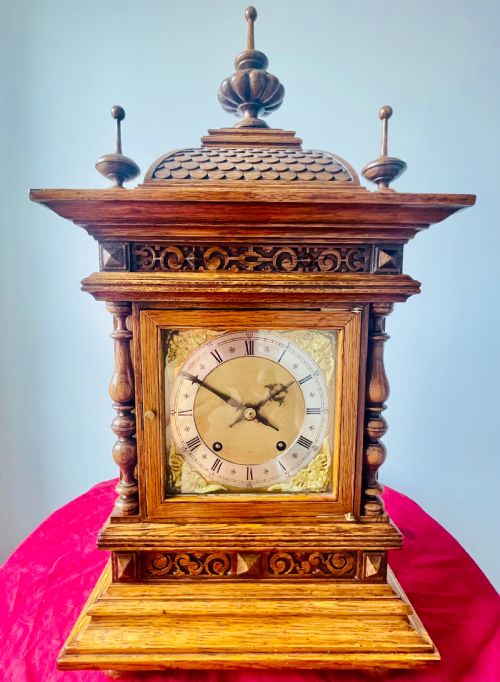
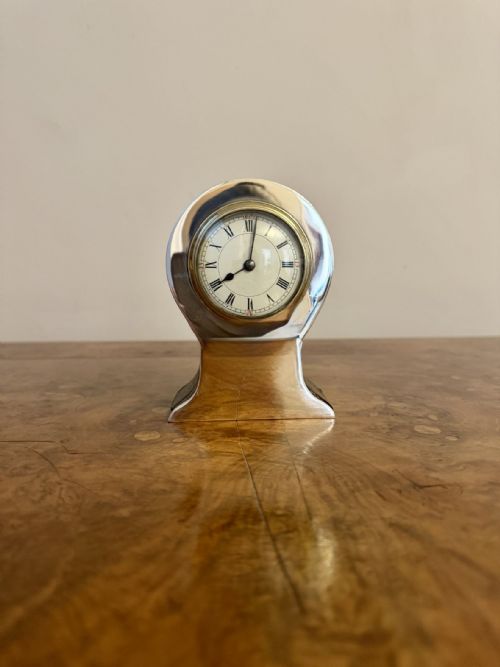

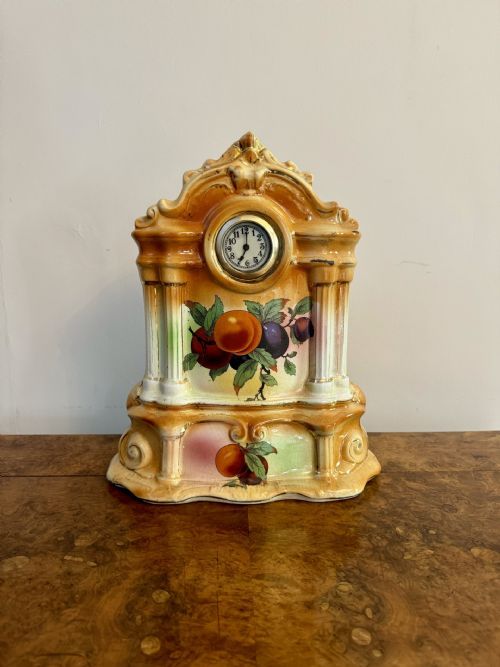

Cased Mantel Clock
A cased mantel clock gathers timekeeping mechanics within protective woodwork, glass, or metal housing designed for display on a shelf or fireplace.
Cased Mantel Clock
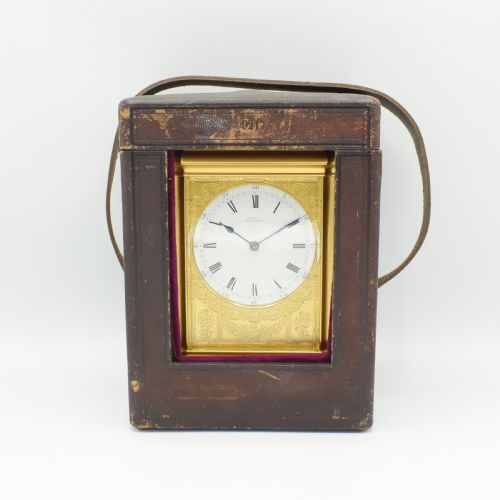
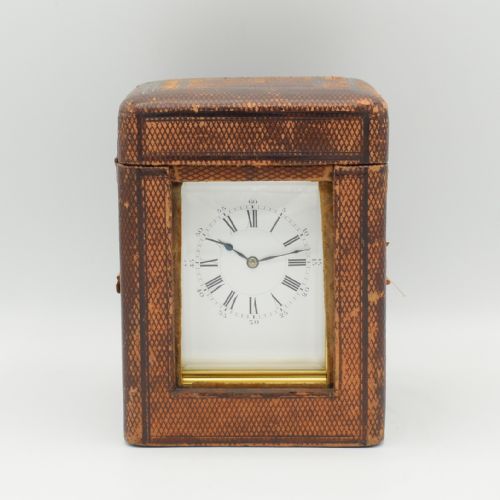
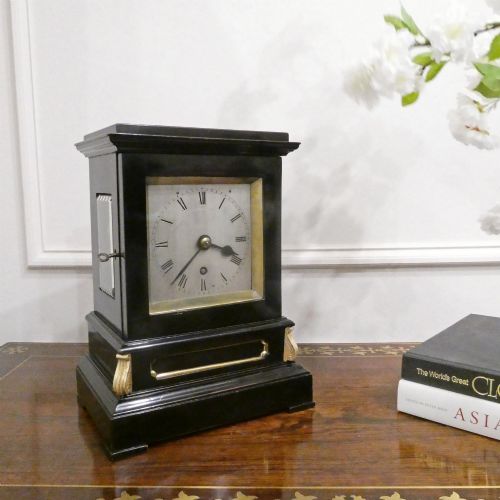
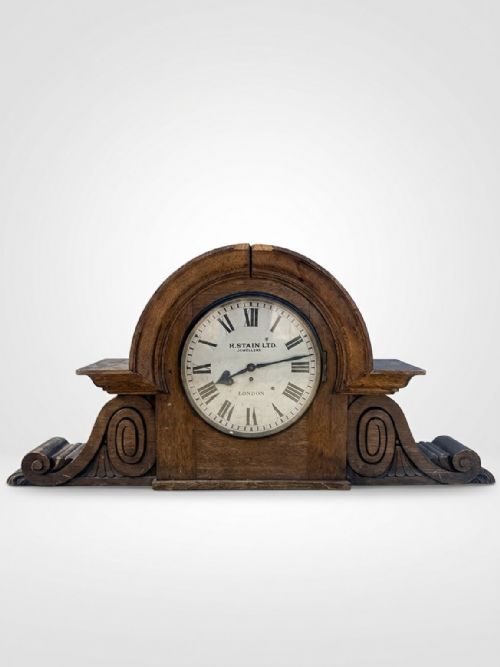
A cased mantel clock is an enclosed timekeeper intended for domestic display upon a shelf or mantelpiece, appearing primarily in nineteenth-century and early twentieth-century formats. These instruments range from portable travel companions housed in leather cases to substantial bracket clocks and architectural wooden housings.
The selections on this page span Victorian, Edwardian, and French periods, frequently taking the form of brass-framed carriage clocks, four-glass styles, and wooden shelf designs. Buyers encounter mechanisms driven by fusee movements, pendulum swings, or torsion springs enclosed within glass, marble, and polished timber.
Makers and workshops from London, Paris, and regional centres utilised diverse materials to construct these protective outer shells, protecting delicate dials and intricate gear trains from dust while providing an ornamental focal point for a room.
How they were made
Cabinetmakers and metalworkers built these housings using dense timbers such as mahogany, oak, walnut, and rosewood, often incorporating marquetry inlays, brass fittings, or gilt ormolu mounts. Glass panels permitted visibility of the moving parts from multiple angles, particularly in four-glass and carriage configurations.
Clockmakers fitted brass movements, white enamel dials, and silvered chapter rings into the frames, employing fusee chains, bell strikes, and lever platforms to regulate the passage of hours. Engraved gilt brass work and cast bronze details frequently adorned the exterior plates and carrying handles.
What varies in quality
The caliber of a cased mantel clock depends on the precision of its movement, the heft and finish of its exterior housing, and the integrity of its dial work. Finer examples display hand-engraved gilt brass, solid hardwood cases without heavy warping, and signed movements from recognised workshops.
Simpler production items rely on standard mass-produced movements and veneered carcasses with minimal exterior ornamentation. The presence of specialty complications, such as quarter-chiming ting-tang mechanisms or repeating strikes, separates standard timepieces from higher-tier horological works.
Henri Jacot·Pickford of London·Drocourt Paris·Margaine Of France·Samuel Marti·Paul Garnier·Winterhalder and Hofmeier·Claude Grivolas
The Cased Mantel Clock Glossary
- Fusee
- A conical pulley used in clock movements to maintain an even pull on the gear train as the mainspring unwinds. This mechanism helps ensure more accurate timekeeping throughout the duration of the wind.
- Gorge case
- A stepped, architectural brass carriage clock case style featuring a flat top and distinct recessed mouldings. It is frequently seen on nineteenth-century French pieces.
- Ting-tang
- A two-hammer striking system that sounds on two different bells or gongs to mark the quarters or the hours. It creates a distinctive dual-tone chime.
- Torsion clock
- A timepiece regulated by a torsion pendulum that rotates back and forth rather than swinging. These clocks often run for long periods, such as four hundred days, between windings.
Cased Mantel Clock: Frequently Asked Questions
How do I wind a mechanical mantel clock?
Most mechanical mantel clocks require a winding key inserted into specific arbors on the dial face to tension the internal springs or weights. Care must be taken not to overwind the mechanism, as this can strain the mainspring.
Different movements require weekly, monthly, or four-hundred-day winding intervals depending on their gear trains and power sources.
Where should I place a cased mantel clock?
These clocks belong on stable, level surfaces such as mantelpieces, shelves, or heavy wooden tables where vibrations are minimised. A stable surface ensures that pendulum and balance wheel mechanisms beat evenly.
Avoid placing them in areas subject to dampness, direct sunlight, or extreme temperature fluctuations that could warp wooden cases or affect internal lubricants.
How can I tell the period of a clock case?
Case styles, materials, and construction techniques offer clear clues to a clock's era, from Victorian ebonised wood to Edwardian inlaid mahogany. Examining the dial design, hinge types, and backplate engravings also helps narrow down the manufacturing decade.
Signatures or serial numbers stamped onto the brass movement plates frequently point directly to the maker and active working years.
What is the difference between a carriage clock and a mantel clock?
Carriage clocks are typically smaller, portable brass-framed timepieces featuring folding carrying handles designed for travel. Mantel clocks are generally larger, heavier shelf clocks housed in wood, marble, or metal intended to remain stationary in a room.
Both styles utilise protective glass casing to display their internal dials and moving gear trains.