

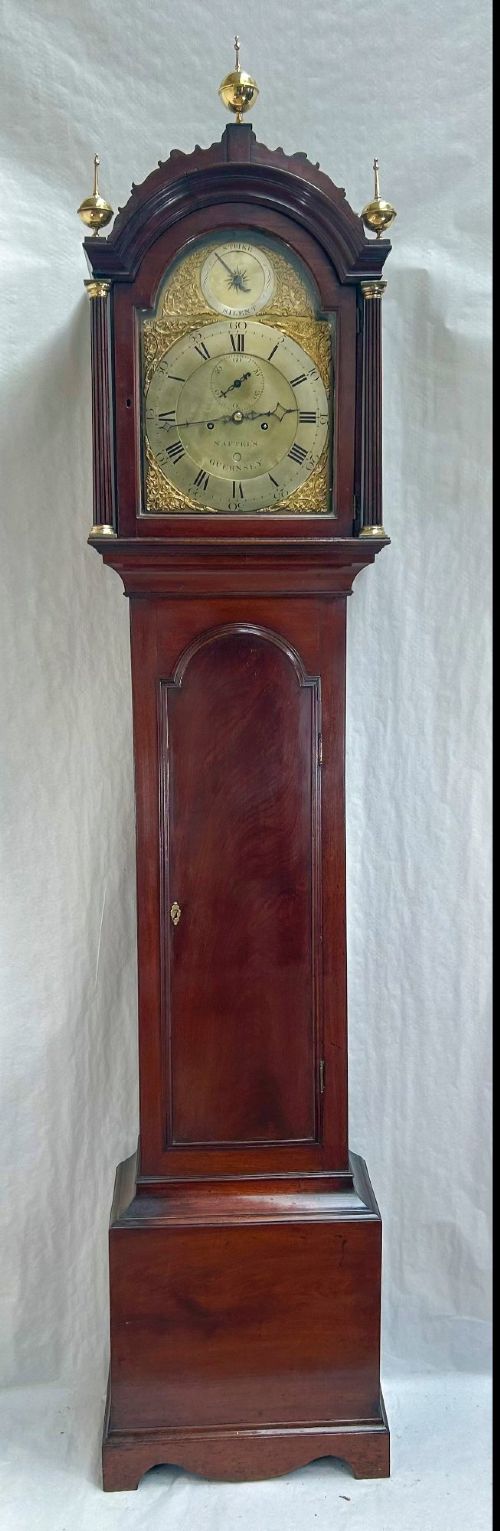
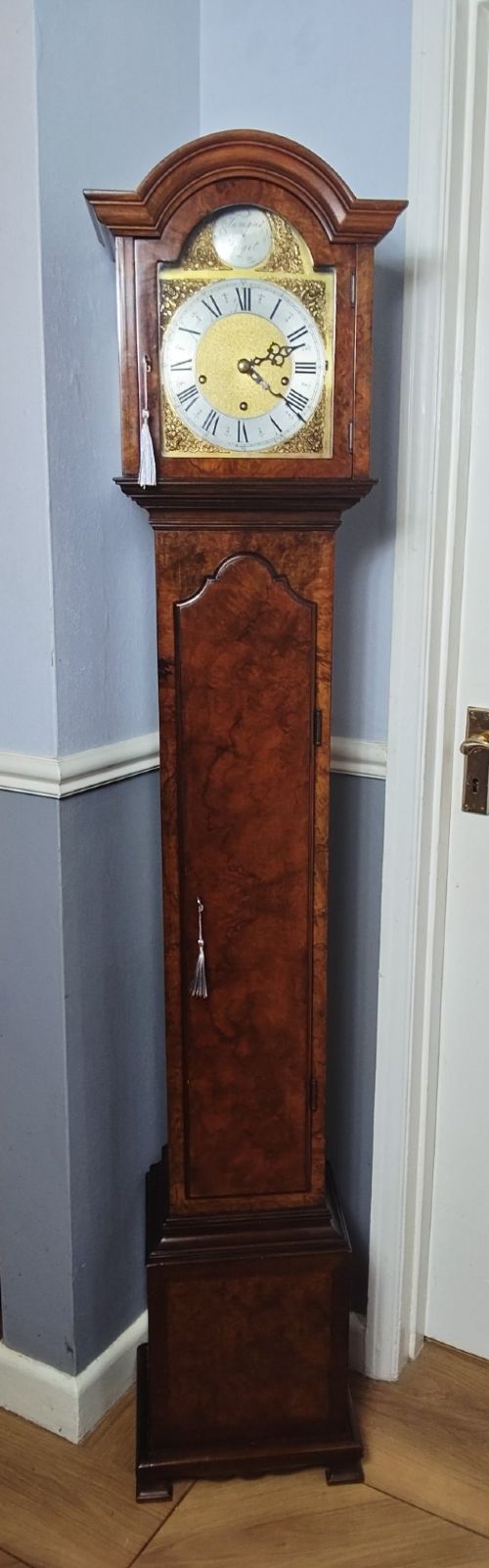
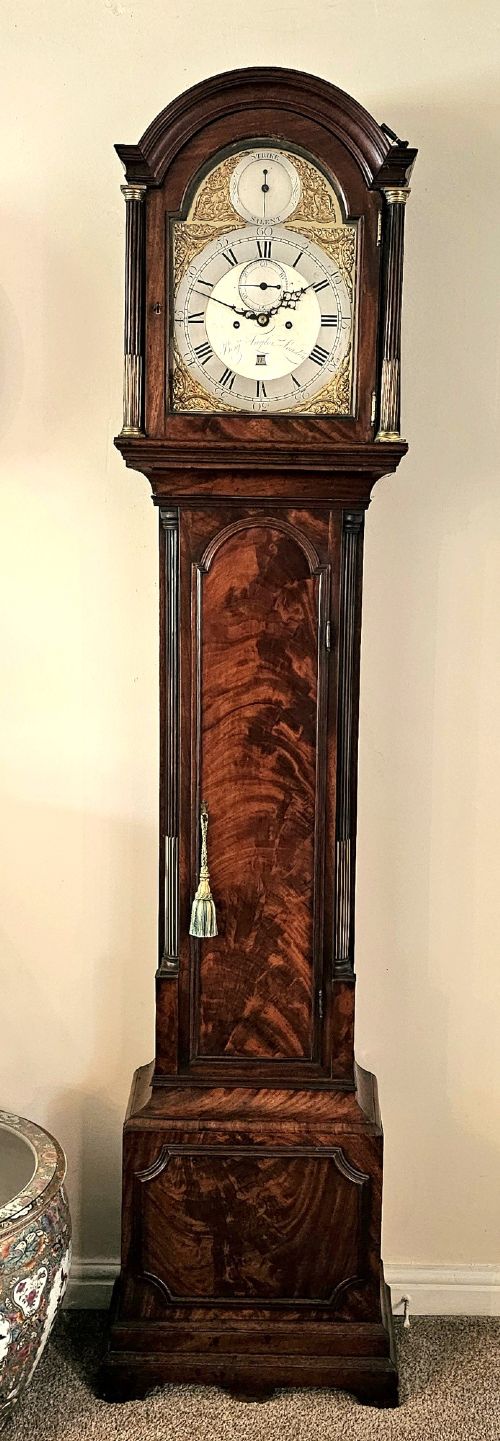
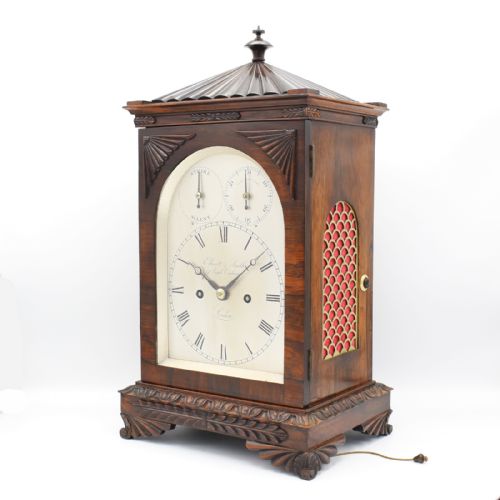
Arched Brass Dial
An arched brass dial sits at the heart of these substantial timepieces, marking hours with polished metalwork and traditional craftsmanship.
Arched Brass Dial
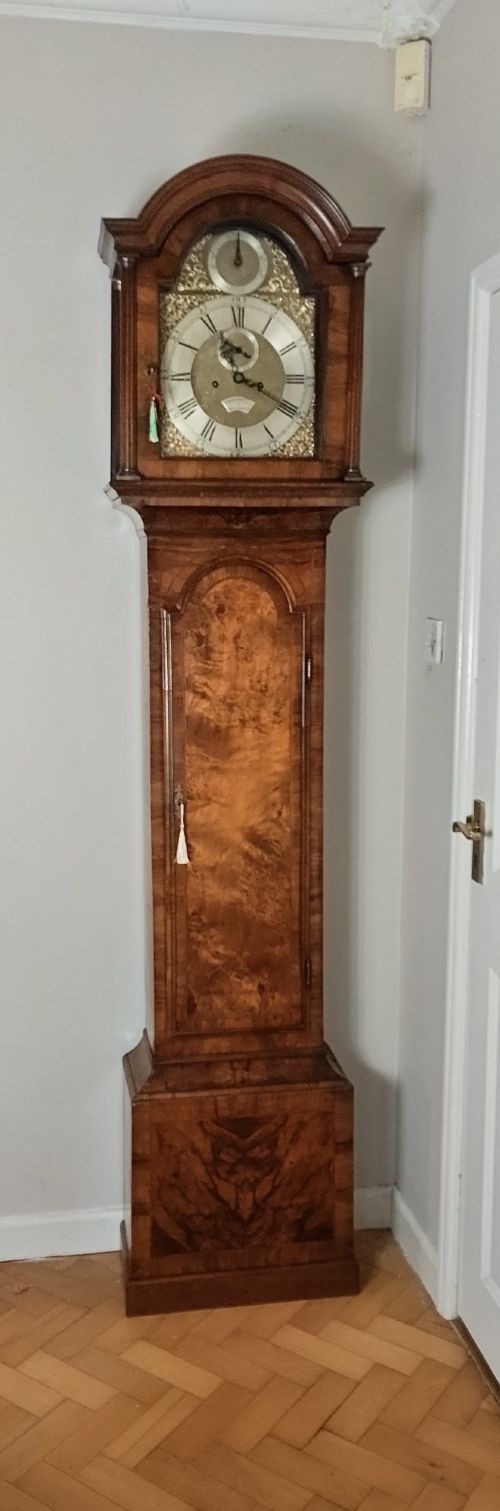
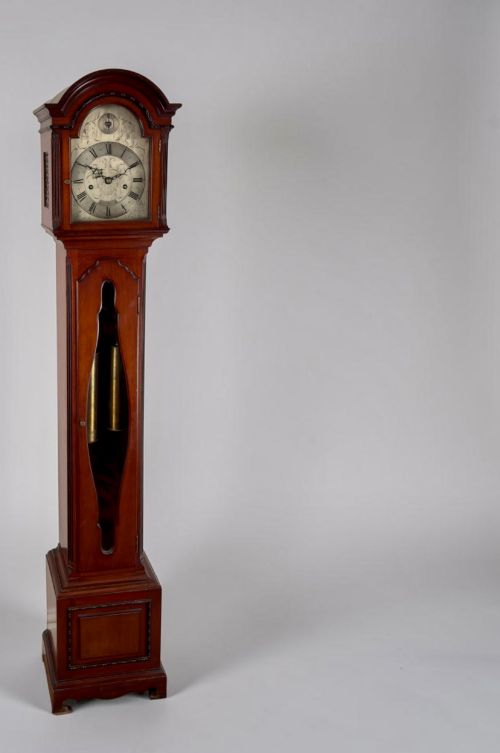
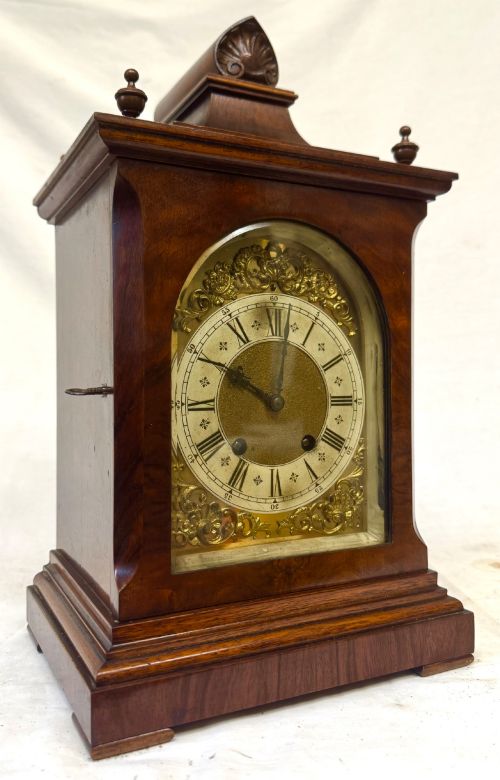
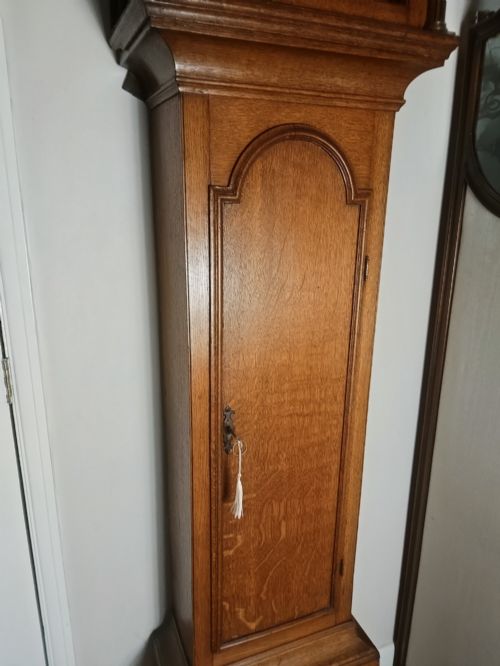
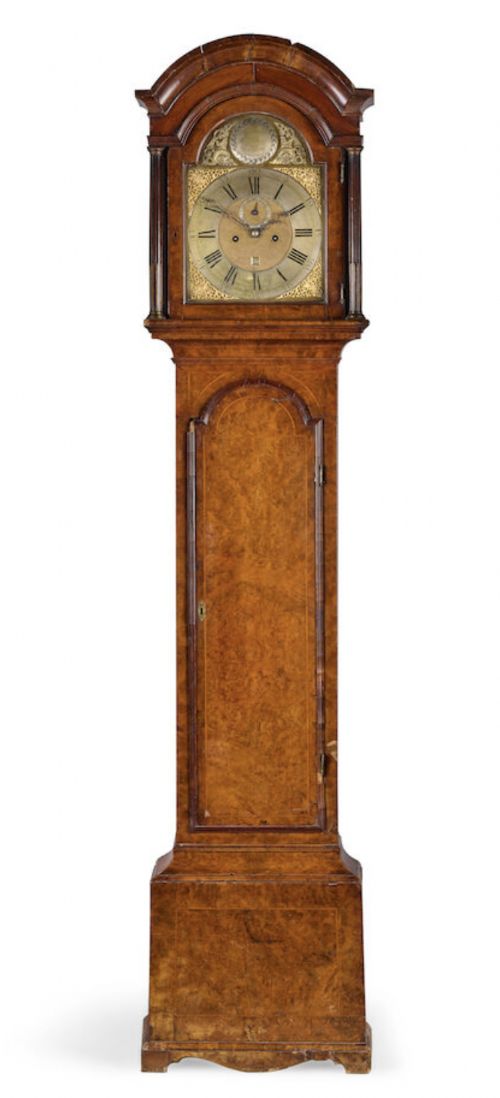
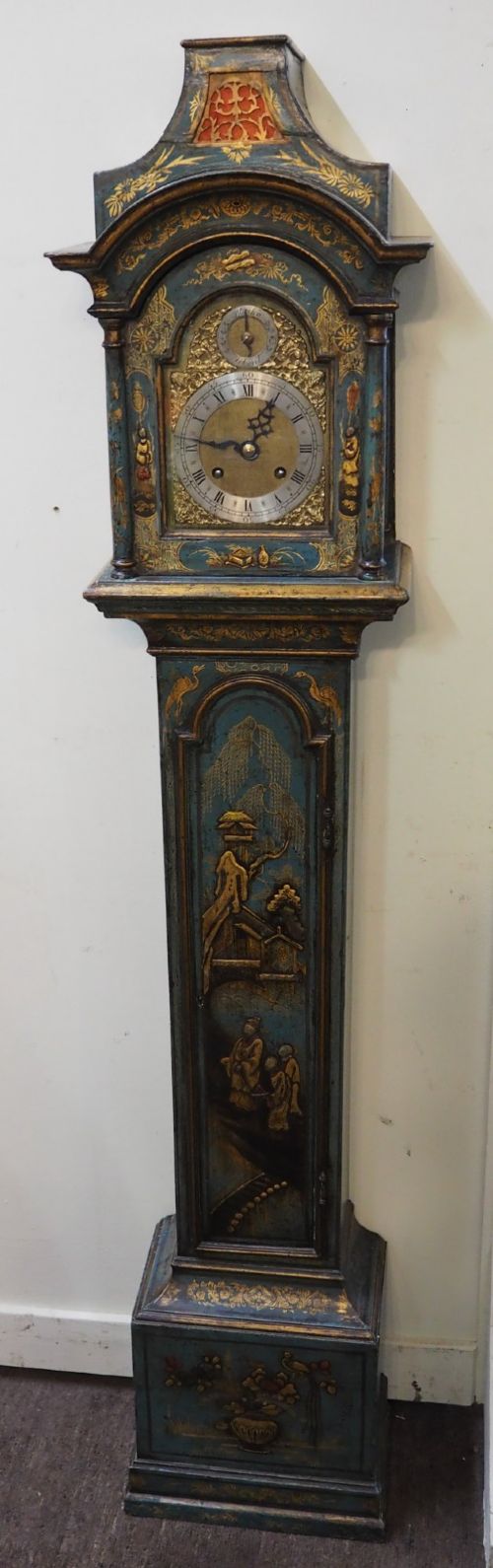
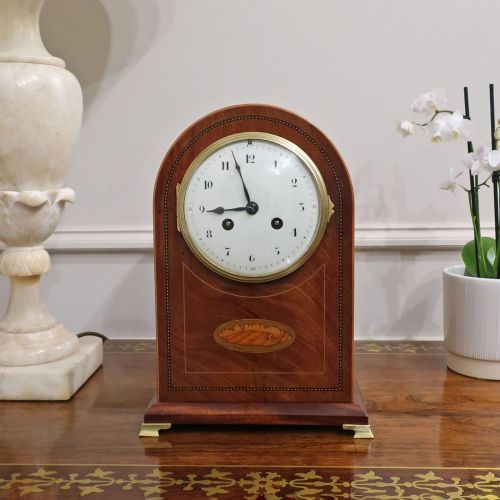
When you search for an arched brass dial, you encounter longcase clocks, bracket clocks, and mantel clocks spanning the eighteenth, nineteenth, and twentieth centuries. These pieces house complex movements behind decorated metal faces, often framed by timber hoods and cases.
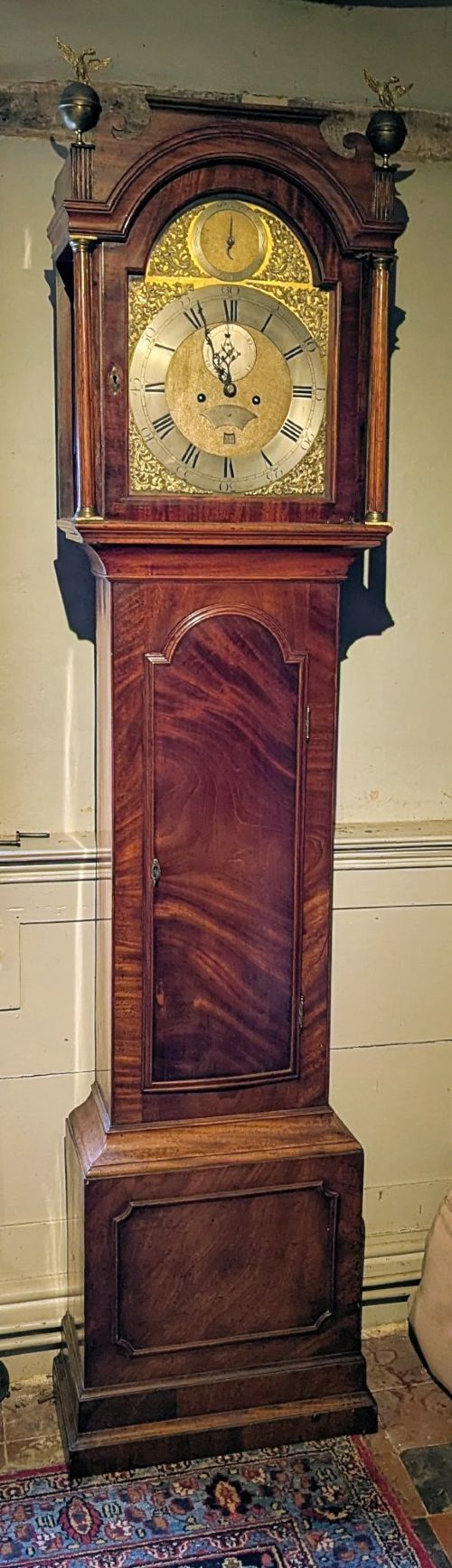
The version you meet most frequently on this page is the Georgian or later longcase clock, frequently cased in mahogany, oak, or walnut. Alongside these tall floor clocks, smaller bracket and mantel clocks appear with matching metal arches.
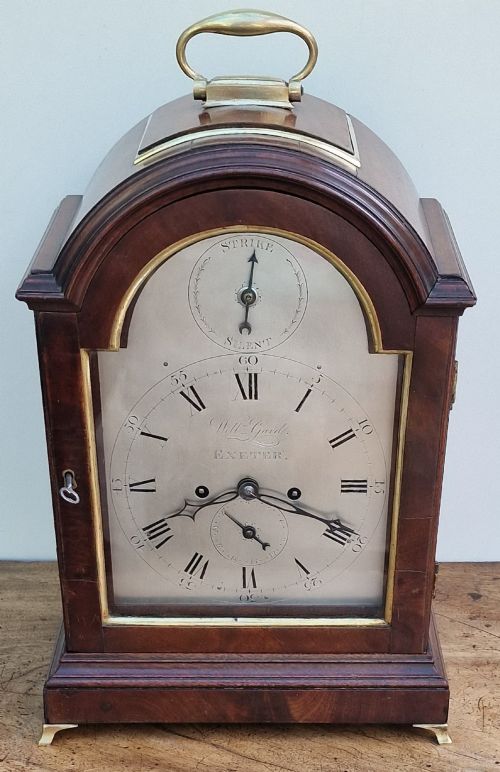
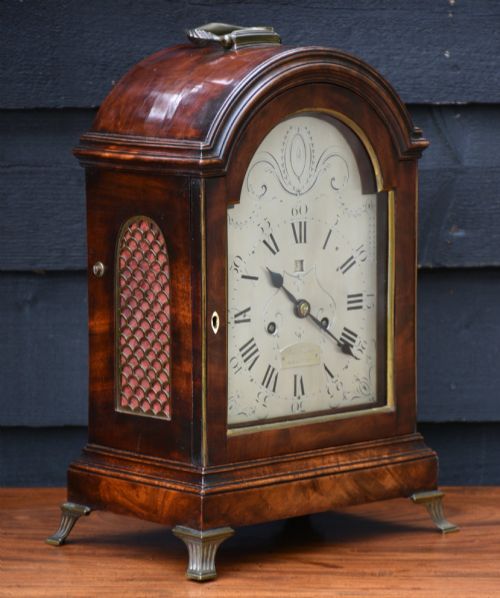
Origins trace across English, Scottish, and continental workshops, incorporating styles from early Georgian through to Edwardian and later revivals. The overarching format remains consistent: a rounded upper metal plate displaying subsidiary dials, moon phases, or decorative spandrels above the main hour circle.
Distinctions in craftsmanship
The distinction between standard examples and the finest work lies in the depth of engraving on the brass plate and the precision of the movement. Superior dials feature intricately cast brass spandrels, finely matted centres, and crisp hand-engraved numerals rather than stamped metal.
Listings feature longcase clocks, bracket clocks, and mantel clocks constructed from mahogany, oak, walnut, and brass.
Gillett & Johnston of Croydon·James Field of Hempstead·Lenzkirch·Benjamin Taylor·Ellicott & Smith·Windmills and Wightman·Priory of Dundee Scotland·Bravingtons·Des Granges of London·James Tregent of London·Junghans
The Arched Brass Dial Glossary
- Arched brass dial
- A clock face featuring a rounded top section above the main chapter ring, frequently housing a moon phase or subsidiary dial. This curved plate defines the architectural proportions of the upper hood.
- Spandrel
- The decorative metal corner ornament placed outside the chapter ring on a clock face. These pierced brass castings often take the form of scrolling foliage or cherubs.
- Longcase clock
- A tall pendulum clock enclosed in a wooden case consisting of a hood, trunk, and base. These floor-standing pieces are frequently referred to as grandfather or grandmother clocks depending on their height.
- Chapter ring
- The circular metal band attached to the dial face that displays the hour numerals. It is usually silvered or engraved to contrast with the surrounding brass plate.
- Bracket clock
- A portable table or mantel clock originally designed to sit on a wall bracket. They commonly feature arched brass dials and protective carrying handles.
Arched Brass Dial: Frequently Asked Questions
What is an arched brass dial clock?
An arched brass dial clock is a timepiece featuring a metal face with a curved upper section, housed within a wooden case or bracket frame. These dials frequently display maker names, calendar work, or lunar indications above the primary hour ring.
They emerged prominently during the eighteenth century on longcase clocks and continued through later centuries in various desk and mantel formats.
How do you wind a longcase clock?
Winding involves using a specific crank key to draw up the weights suspended inside the trunk. Care must be taken not to overwind the mechanism and to ensure the pendulum remains undisturbed during the process.
Most traditional eight-day movements require this attention on a weekly schedule to maintain accurate timekeeping.
Where were these clocks placed historically?
Large longcase clocks stood in the principal hallways, stairwells, or living spaces of domestic properties where their chimes could be heard throughout the house. Smaller bracket and mantel clocks occupied desks, tables, or dedicated wall shelves in private chambers.
Their presence served both a practical domestic function and a display of household status.
How do you distinguish an 18th-century dial from a later one?
Eighteen-century brass dials typically exhibit hand-engraved detailing, cast brass corner spandrels, and separate chapter rings pinned to a solid brass plate. Later nineteenth and twentieth-century reproductions or variants often employ machine stamping or different mounting techniques.
Examining the fixings at the rear of the dial reveals the assembly methods characteristic of specific periods.