
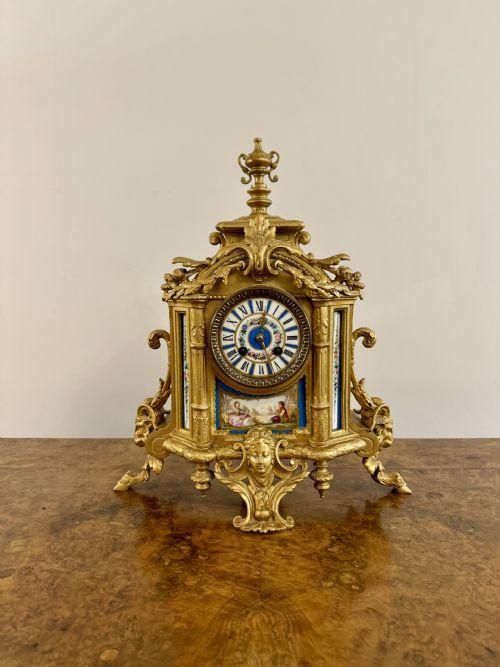


Ornate Shelf Clock
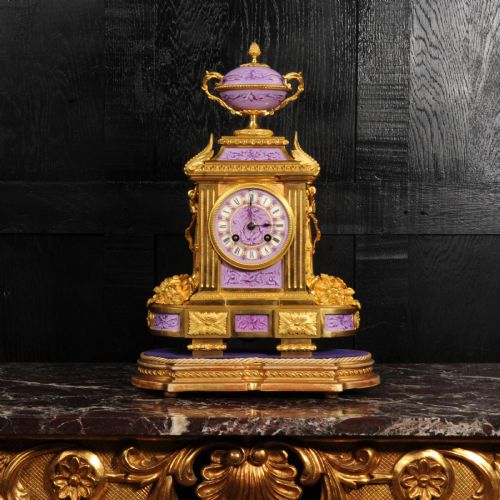
These ornate shelf clock examples bring heavy metal cases and porcelain dials together to anchor a mantelpiece with period weight.
Ornate Shelf Clock
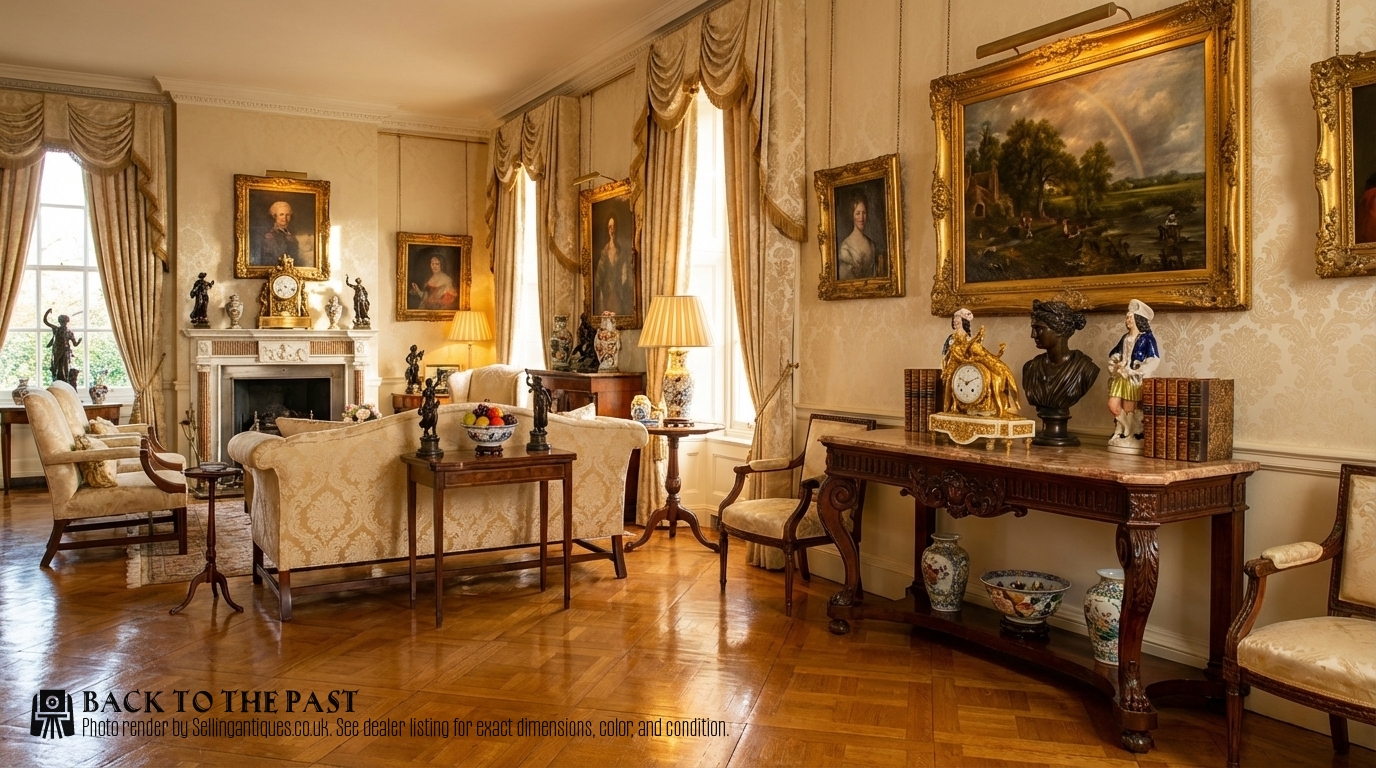
An ornate shelf clock is typically a heavy mantel or bracket timekeeper designed to sit prominently on a fireplace mantel or furniture ledge. When searching for an ornate shelf clock, buyers encounter predominantly nineteenth-century French and Victorian pieces rendered in elaborate revival styles.
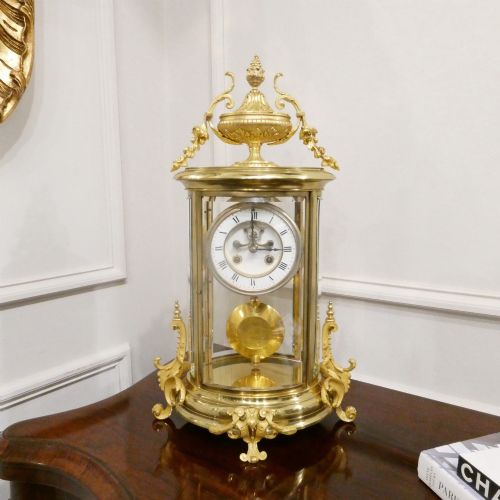
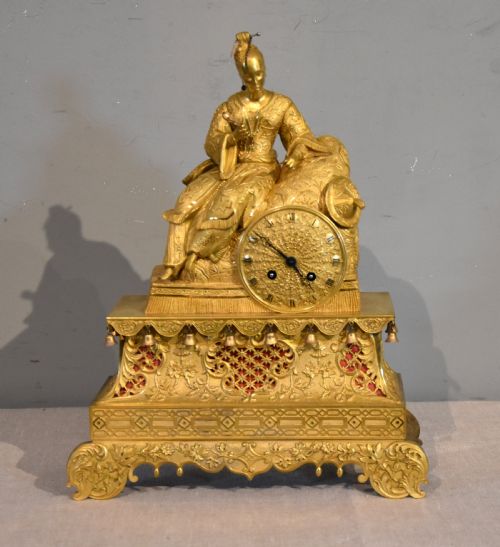
The selection ranges from figural mantel clocks in ormolu and gilt bronze to four-glass crystal regulators and marble cases. Most examples rely on mechanical eight-day striking movements housed within decorative metal or stone structures.
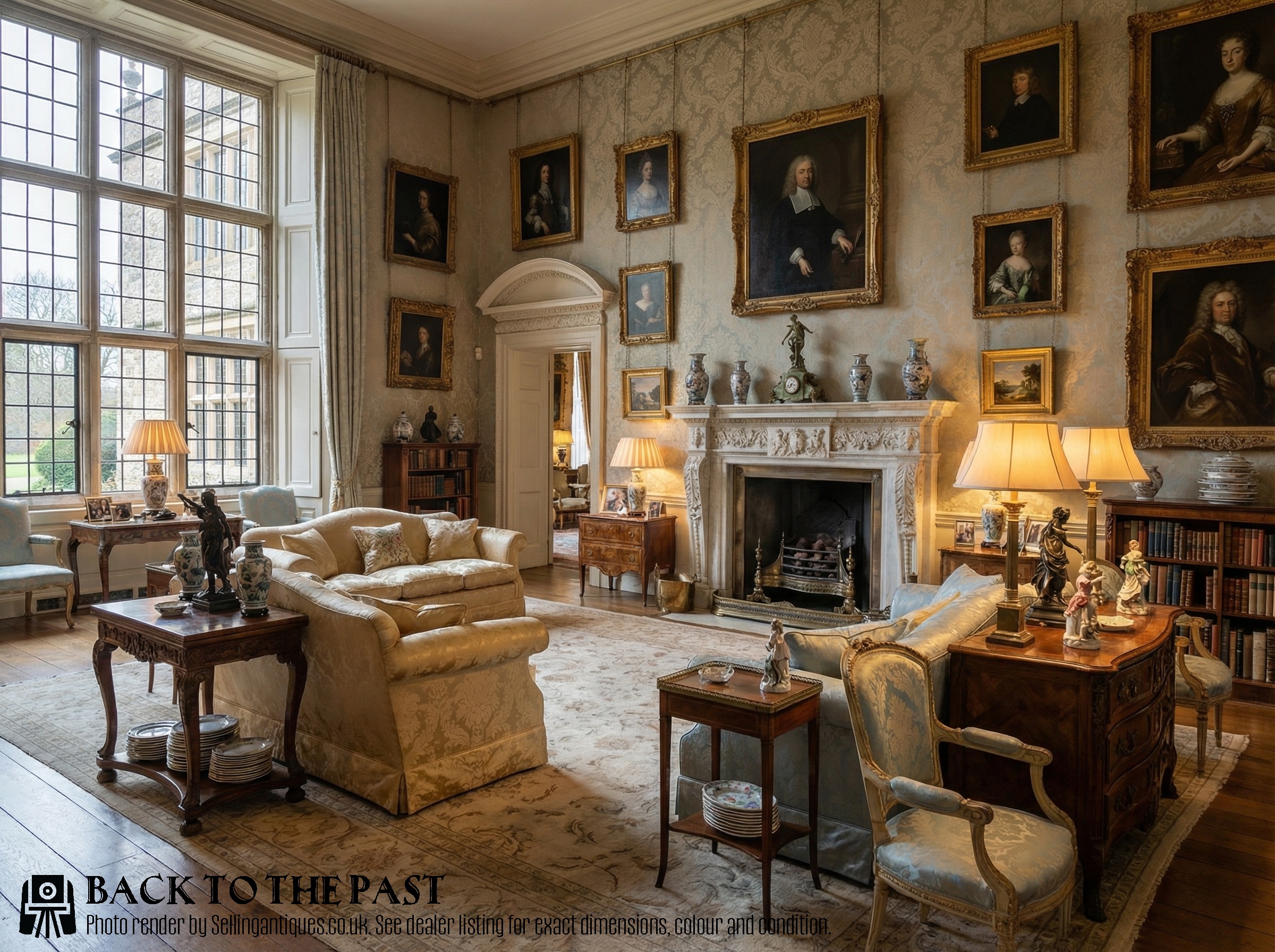
How They Were Made
Maker workshops cast cases in brass, bronze, and ormolu, applying gilt finishes and intricate chasing by hand. Many incorporate painted porcelain panels, champlevé enamel work, or contrasting inserts of red and white marble.
Interiors utilise mechanical brass gear trains, often incorporating striking mechanisms for hours and halves. Clockmakers frequently signed movement backplates, while dial faces combined enamel cartouches with fine metallic hands.
Ornate Shelf Clock Retail Price Guide 2026
Typical asking prices for ornate shelf clock among the pieces listed under this phrase on Sellingantiques today, from the lower quarter to the upper quarter. They describe what is for sale here now, not the wider market.
Materials appearing across the inventory include ormolu, gilt bronze, champlevé enamel, white marble, burr walnut, and Sèvres porcelain.
What Varies in Quality
Quality rests in the crispness of the bronze casting and the depth of the gilding rather than superficial weight. Finer examples display meticulous hand-chasing across foliate mounts and figural elements where lesser pieces show softer, mass-produced contours.
The caliber of the movement dictates long-term performance, with established makers delivering superior gear train finishing and regulated striking accuracy. Integrated materials like hand-painted Sèvres porcelain panels or intact champlevé enamel elevate the overall execution.
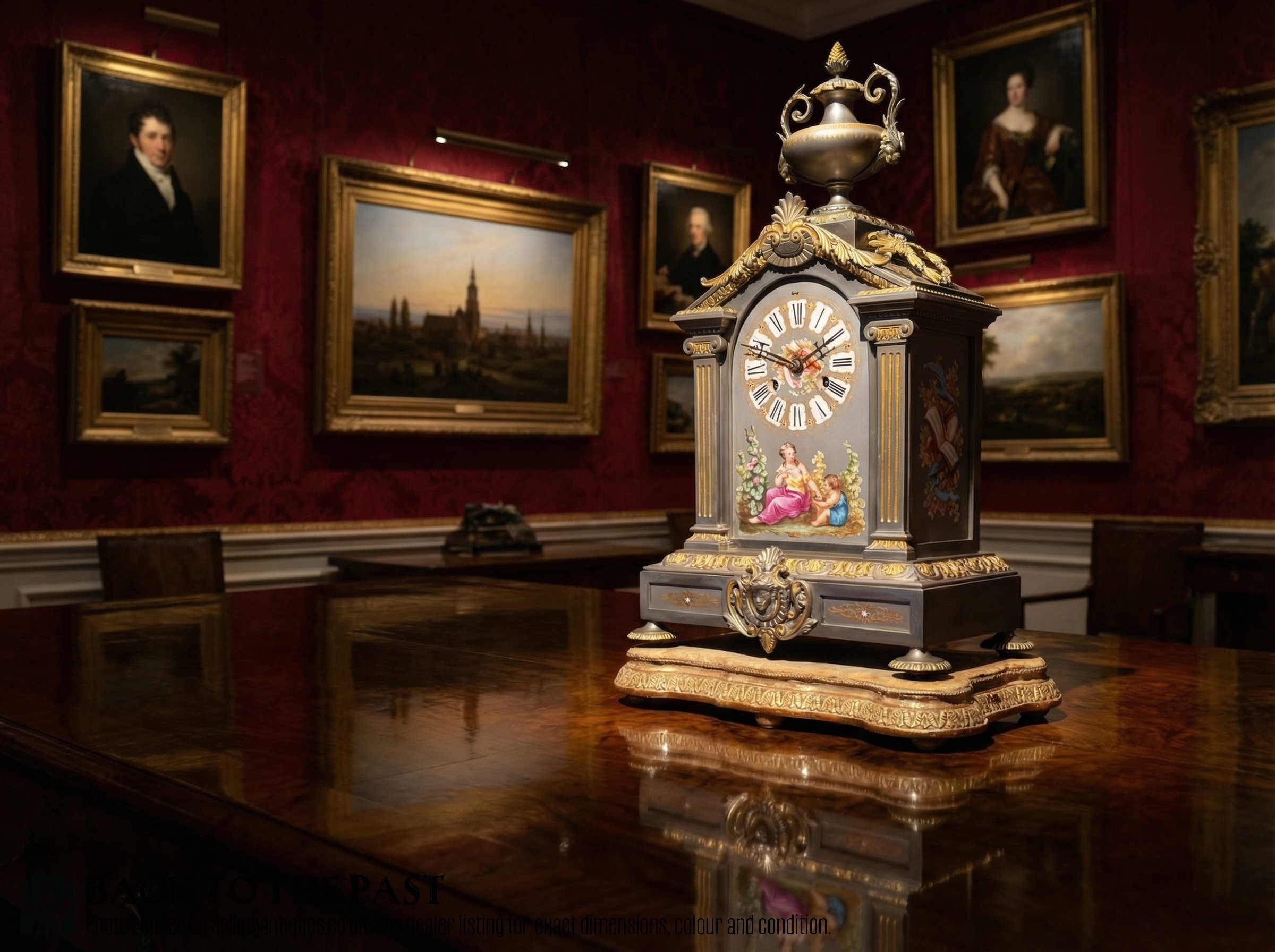
Achille Brocot·Samuel Marti·Howell & James London·Lenzkirch
The Ornate Shelf Clock Glossary
- Ormolu
- Gilded bronze produced by applying a mercury and gold amalgam to a bronze base and firing it. This finish yields a warm, deep lustre characteristic of French mantel clocks.
- Champlevé
- An enamelling technique where troughs are dug into a metal surface and filled with vitreous paste before firing. It adds vibrant colour to clock bezels and dial surrounds.
- Cartouche
- Individual enamelled plates pinned to a clock dial to display Roman or Arabic numerals. They prevent the entire face from cracking under thermal stress.
- Bracket clock
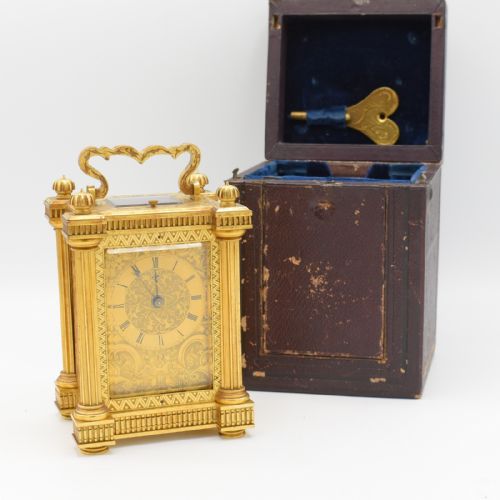
- A portable timekeeper originally designed to sit on a wooden wall bracket rather than a floor. Many later examples function simply as large tabletop mantel clocks.
- Striking movement
- A gear configuration that sounds the hours or quarters on a bell or gong. Eight-day versions require winding roughly once a week.
Ornate Shelf Clock: Frequently Asked Questions
How often should an ornate shelf clock be wound?
Most period examples utilise an eight-day movement requiring a full wind once a week using a matching key. Winding them consistently at the same interval helps maintain timekeeping regularity.
Avoid over-winding the mainsprings, as reaching firm resistance signals the limit. Care must be taken not to force the winding arbors beyond their natural stop.
Where should a heavy mantel clock be placed?
These timepieces require a level, stable surface capable of supporting considerable weight from marble, bronze, and glass components. A solid fireplace mantel or heavy sideboard provides an ideal foundation.
Placement should avoid areas subject to direct sunlight, extreme temperature fluctuations, or damp walls that might tarnish gilt bronze and damage interior springs.
How do I date a French or Victorian clock?
Dating relies on stylistic cues such as Rococo revival scrolls, Louis XVI neoclassical symmetry, or heavy Victorian architectural marble cases. Movement stamps often reveal maker marks and production periods.
Dial construction also aids dating, as individual enamel cartouches and hand-painted motifs shifted in composition from the early nineteenth century into the Edwardian era.
Can these antique clocks be kept running accurately?
Mechanical clocks from the nineteenth century can keep reliable time when properly serviced and adjusted on a level surface. Professional cleaning removes old, congealed oils that hinder the gear train.
Pendulum regulation via the small adjustment nut allows the owner to speed up or slow down the beat over a twenty-four-hour observation window.