
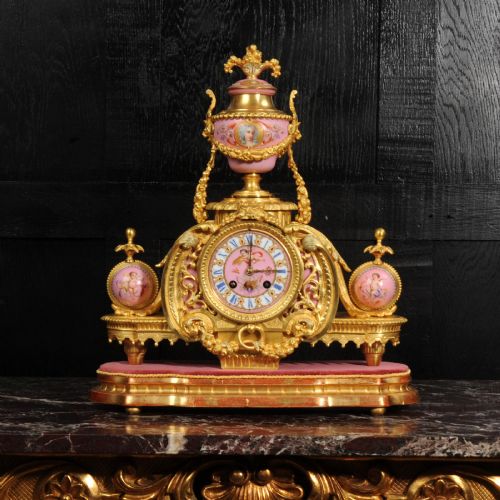

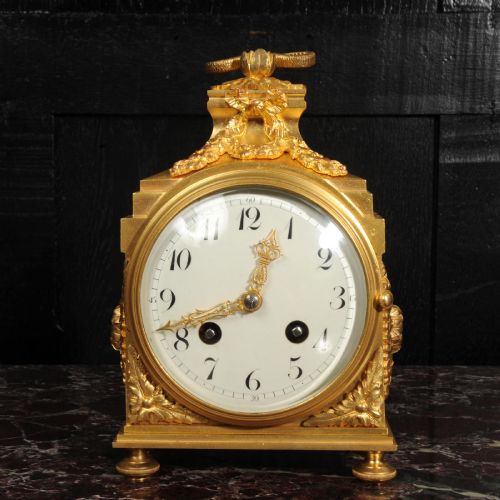
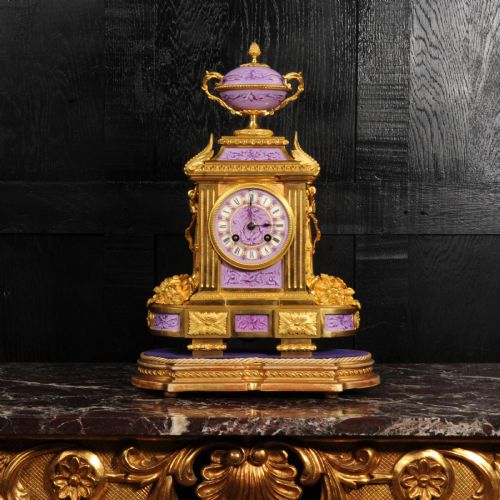
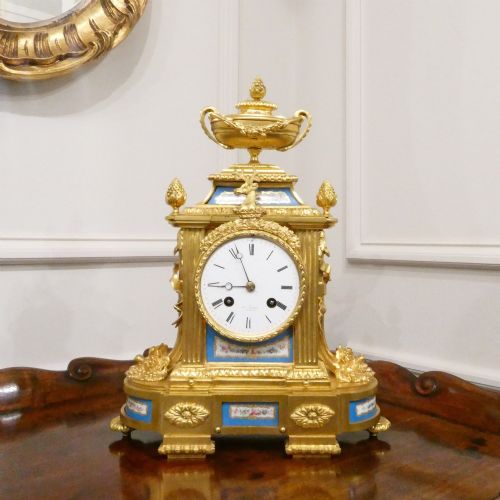
Bronze Table Clock
A bronze table clock brings substantial weight and refined metalwork to a surface, offering the enduring appeal of nineteenth-century and art deco design.
What these bronze table clocks are
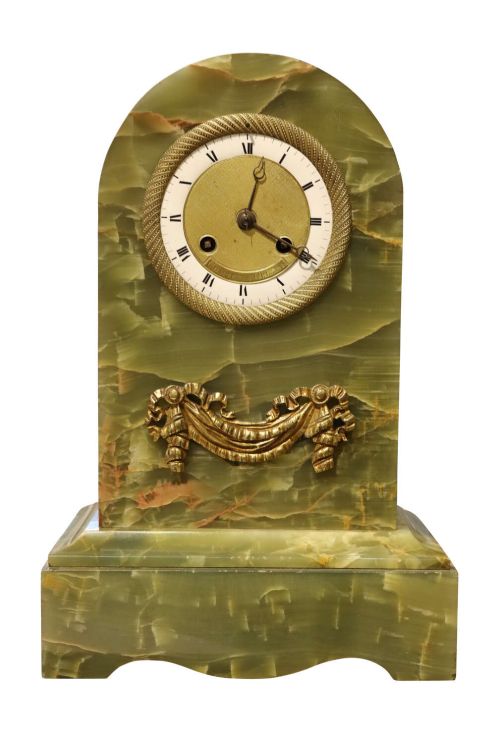
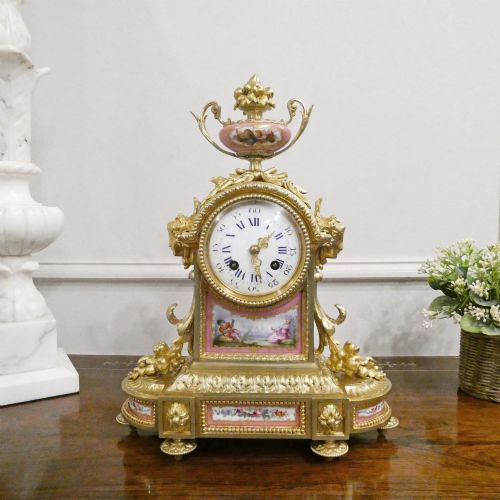
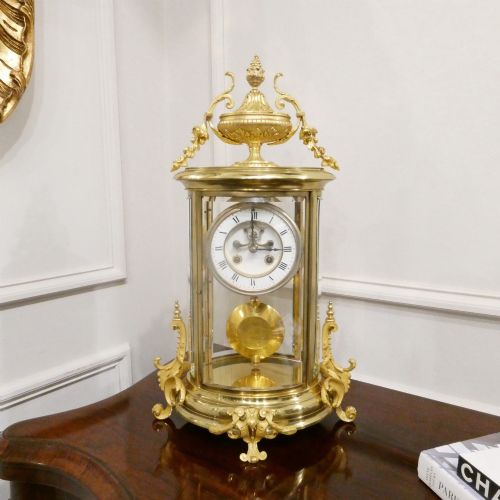
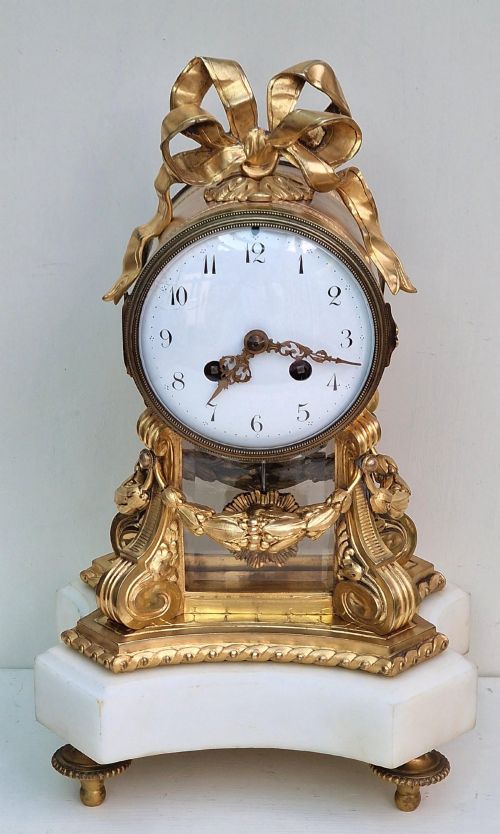
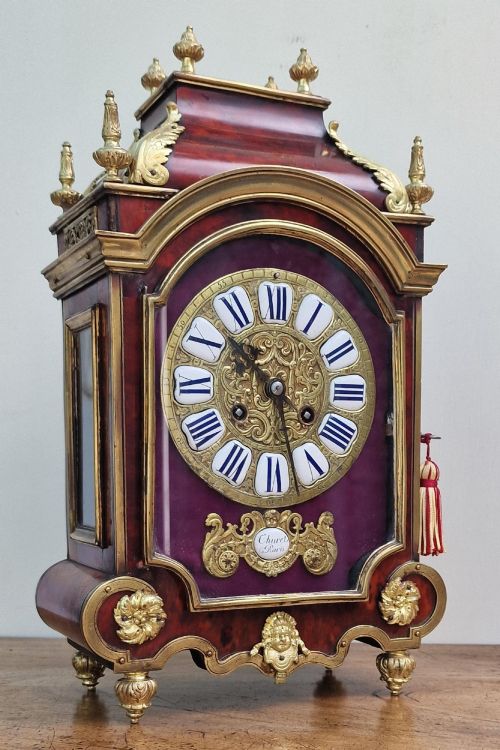
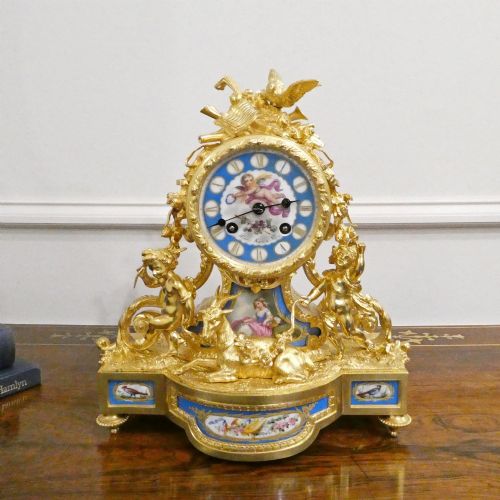
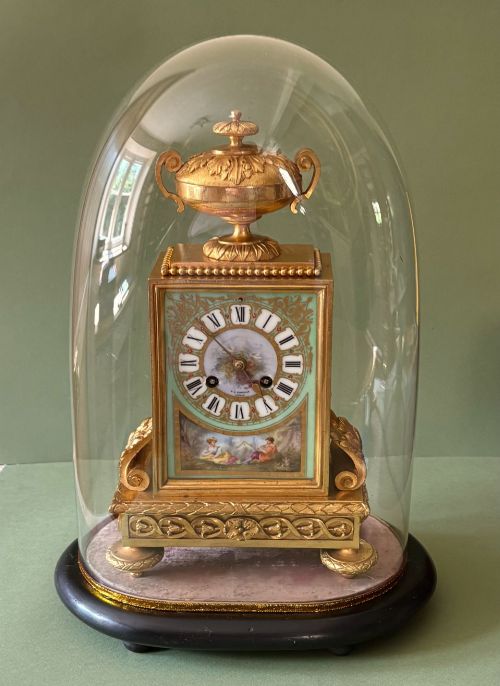
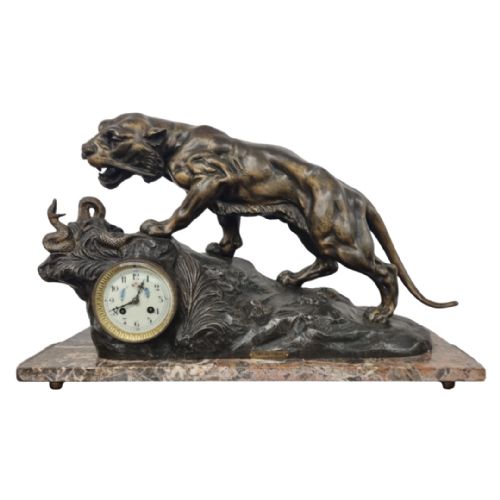
A bronze table clock represents a tradition of sculptural timekeeping, combining cast metalwork with mechanical movements. When searching for a bronze table clock, collectors encounter works dominated by nineteenth-century French production alongside twentieth-century variations.
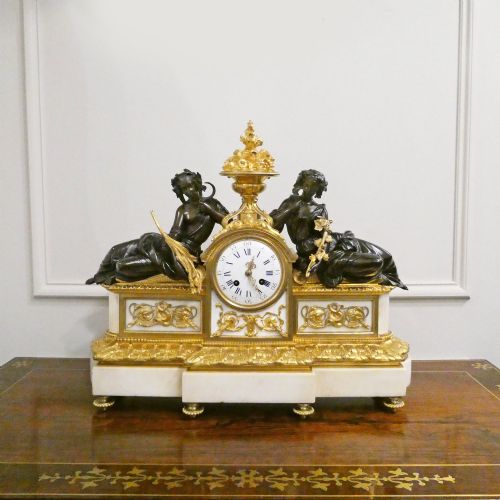
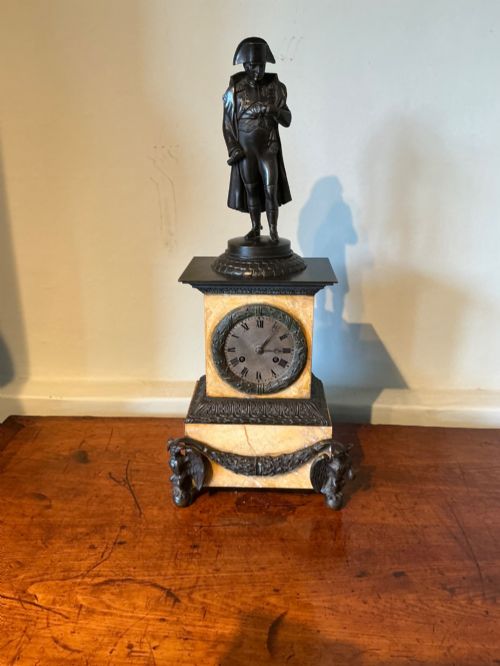
The primary forms on this page include mantel clocks and table clocks housed in architectural, figural, or decorative cases. These pieces range from classical Revival and Empire compositions to Rococo curves and Art Deco novelties.
Nineteenth-century examples frequently feature patinated and gilt surfaces depicting historical figures, mythological subjects, or allegorical scenes. Later pieces from around nineteen-twenty introduce streamlined geometric lines and alarm functions.
Materials and construction
Cases are formed from cast bronze, patinated bronze, spelter, or brass, often enriched with fire-gilded or ormolu finishes. Secondary materials such as marble, onyx, enamel dials, and glass panels complement the heavy metal structures.
Foundries and makers employed lost-wax or sand-casting methods to achieve intricate detail in figural and sculptural elements. Movement assembly involved brass gear trains, escapements, and striking mechanisms designed by established French and English clockmakers.
Retail Price Guide 2026
Typical UK retail prices for bronze table clock, calculated from the Sellingantiques database of over a million retail prices indexed since 2003. This retail price guide relies exclusively on Sellingantiques data; no external sources or auction records are used, so the figures do not describe the wider market.
What separates the standard from the exceptional
Quality in these clocks rests upon the crispness of the bronze casting and the depth of the original mercury gilding or ormolu. Finer examples display sharp chisel work on secondary details that lesser castings lose during production.
The integration of the sculptural subject with the clock case dictates artistic success, where figures like Napoleon or Shakespeare feel naturally proportioned rather than added as an afterthought. Movement quality further distinguishes the work, evidenced by signed mechanisms from reputable nineteenth-century French and London workshops.
Pons De Paul·Lemerle Charpentier·James Murray London·Louis Japy·Japy Freres·Samuel Marti·Jaeger
The Bronze Table Clock Glossary
- Ormolu
- Gilded bronze produced by applying a high-carat gold amalgam to a bronze base and heating it to vaporise the mercury. This technique creates a durable, warm metallic lustre.
- Patinated bronze
- Bronze treated with chemical solutions to darken or colour the surface, creating contrast against gilt highlights. It gives depth to sculptural drapery and foliage.
- Spelter
- A zinc alloy used as a less costly alternative to bronze for cast figures and clock cases. It takes similar patination but lacks the heavy density of true bronze.
- Double fusee
- A mechanical movement using fusee cones and chains to equalise the pull of the mainspring as it unwinds, improving timekeeping accuracy. This system appears in finer English clocks.
- Enamel dial
- A metal dial coated with fused glass powder and fired in a kiln to produce a smooth, white surface for painted numerals. Hairline cracks often develop on older examples.
Frequently Asked Questions
Where do bronze table clocks work best?
These clocks anchor a room when placed on a sturdy mantelpiece, sideboard, or heavy wooden desk. Their substantial weight and reflective metallic surfaces require a stable foundation capable of supporting dense metal and stone.
Positioning them away from direct sunlight and damp environments helps preserve the delicate balance of enamel dials and gilt finishes. They function as both central timepieces and sculptural focal points within a room.
How do French and English clocks differ?
French production on this page leans heavily toward decorative gilt bronze cases featuring mythological or allegorical figures, often driven by prolific French movement makers. These tend to emphasise sculptural presence and decorative impact.
English examples, by contrast, frequently incorporate precise mechanical systems like double fusee movements housed in architectural or refined metal cases. The focus rests equally upon the engineering of the timekeeper and the quality of the exterior metalwork.
What is ormolu on a clock?
Ormolu refers to finely chased bronze that has been coated in a gold-mercury amalgam and fired to leave a rich, golden layer. This finish resists tarnishing and provides the bright, warm highlights seen on nineteenth-century clock cases.
Because the historic mercury gilding process was hazardous, nineteenth-century pieces bearing genuine ormolu display a distinct depth of colour that modern electroplating rarely replicates. It requires gentle dusting rather than liquid metal cleaners.
How do I identify nineteenth-century pieces?
Nineteenth-century examples are distinguished by heavy cast bronze construction, hand-chiseled surface details, and traditional French or English mechanical movements. Case designs frequently reference the Renaissance, Empire, or Rococo revivals popular during that era.
Signatures or stamps on the movement backplate often reveal the maker and working period, while the style of the enamel dial and cast numerals provide further chronological markers.