





Vintage Ormolu Clock
A vintage ormolu clock brings heavy French gilt brass, enamel dials and striking nineteenth-century presence straight onto the mantelpiece.
Vintage Ormolu Clock
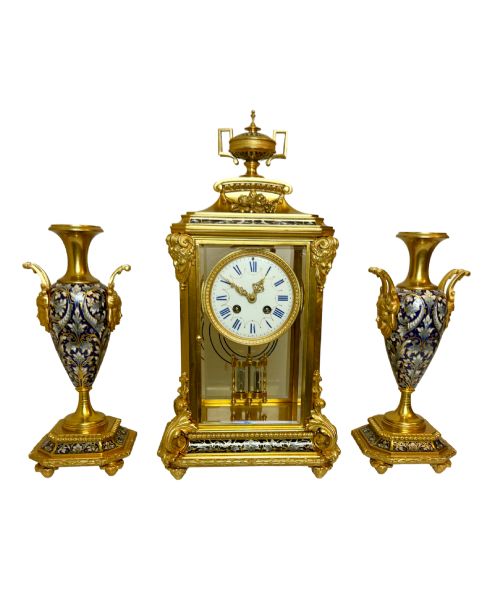
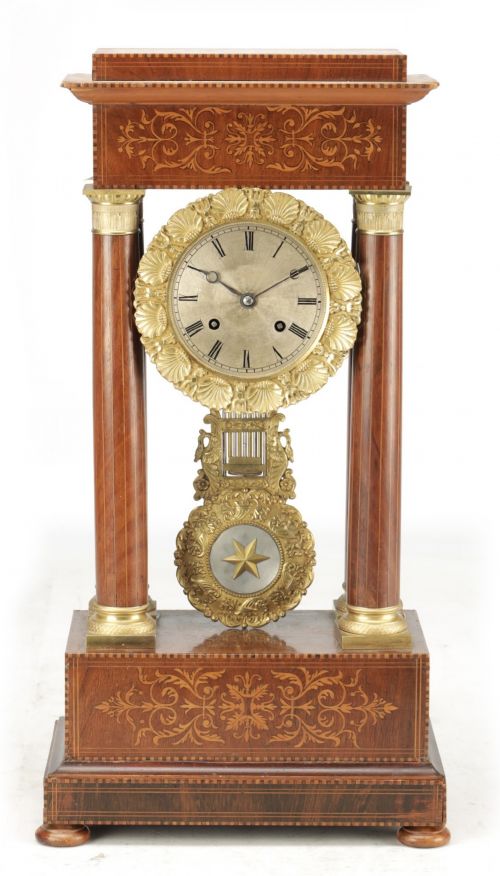
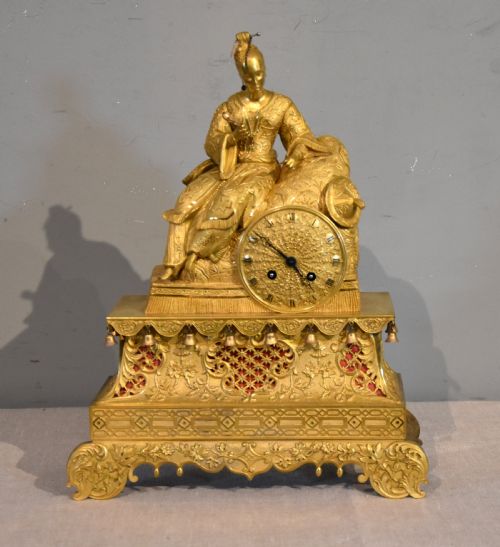
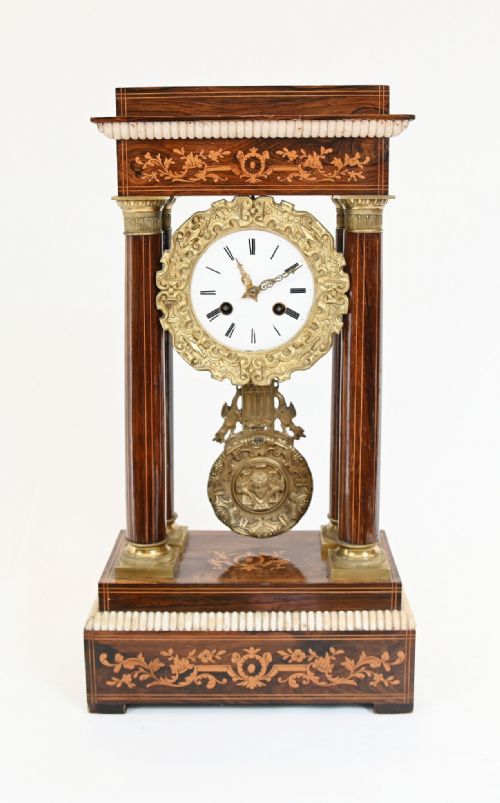
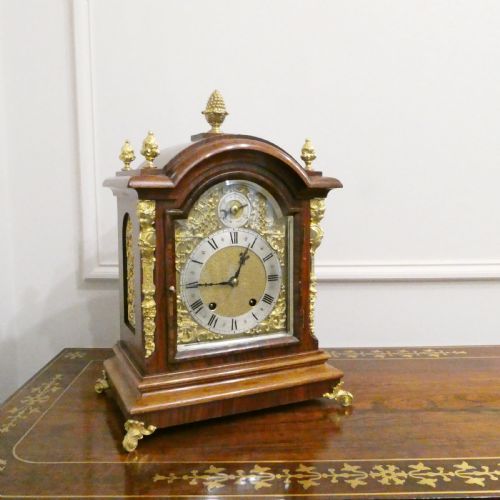
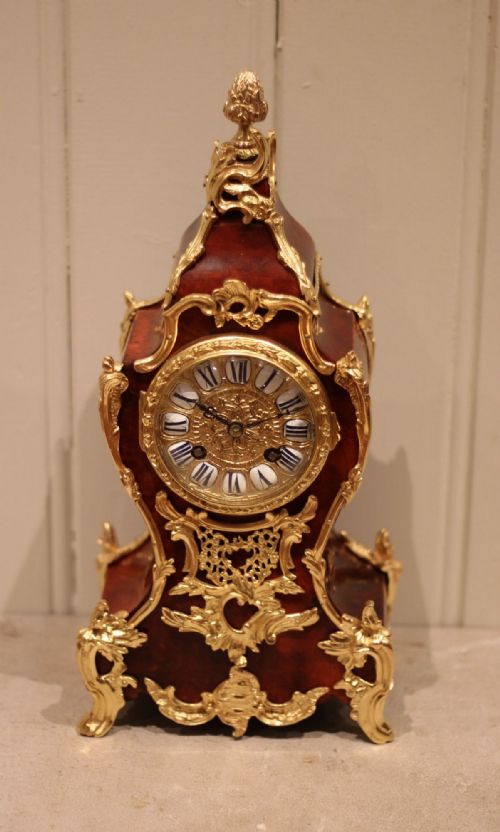
A vintage ormolu clock is typically a heavy nineteenth-century timepiece originating from French workshops, designed to sit prominently on a mantelpiece or shelf. When searching for a vintage ormolu clock, buyers encounter formal mantel clocks, figural pieces, portico designs, and multi-piece garnitures complete with matching side ornaments.
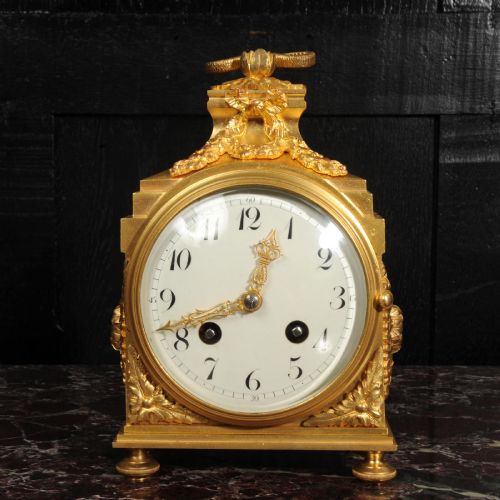
The materials and styles span the Victorian era alongside French Empire, Louis XVI, and elaborate Rococo revivals. Most examples rely on gilt bronze or ormolu mounts paired with contrasting elements such as white marble, red marble, onyx, mahogany, tortoiseshell, and champlevé enamel dials.
Makers and regional origins range from Paris workshops to British fusee timepieces and German bracket clocks, though French horology dominates the selection. These pieces function as both decorative objects of interior architecture and working mechanical timepieces.
How they were made
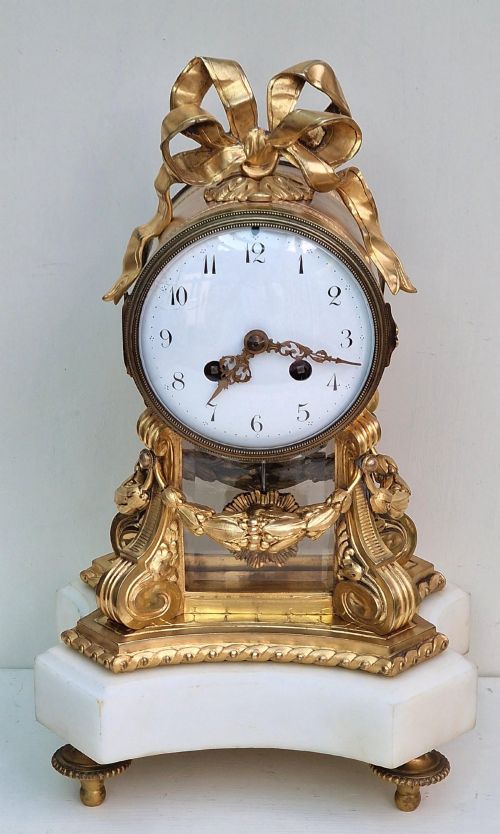
Clockmakers and bronze founders constructed these objects by casting ormolu, gilt bronze, and brass into ornate architectural frames, scrolling foliage, and figural motifs. Fire-gilding or electroplating deposited a rich gold-coloured layer over the base metal, which was then chased by hand to sharpen the surface details.
Enamel dials with painted Roman or Arabic numerals were fitted behind bevelled glass panes within brass bezels. Movement construction involved brass plates, steel pinions, and pendulum regulators, frequently driven by eight-day spring or weight-driven mechanisms housed inside timber, marble, or metal cases.
Some clocks hide their mechanisms entirely inside tortoiseshell cases or suspend pendulums mysteriously within open marble porticos.
What varies in quality
Quality rests upon the crispness of the bronze chasing and the depth of the gilding across the ormolu mountings. Superior examples exhibit finely modelled figures, heavy gauge cast metal, and integrated marble or tortoiseshell rather than thin surface plating.
Mechanical execution distinguishes standard production from high-grade work, seen in signed movements, striking complications, and fully restored mechanisms operating with precision. The architectural harmony of accompanying garniture sets and pedestals further elevates the standing of a piece.
Schneckenburger·Louis Goret·Lenzkirch
The Vintage Ormolu Clock Glossary
- Ormolu
- A method of applying finely ground high-carat gold to a bronze or brass object using mercury amalgam, or the resulting gilded bronze material itself. This finish provides the characteristic warm metallic lustre seen on nineteenth-century decorative hardware.
- Garniture
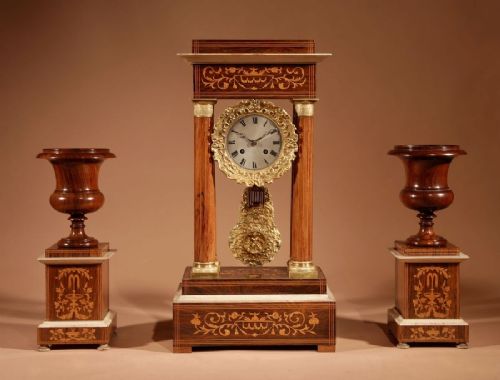
- A set of matching ornamental objects consisting of a central clock flanked by two matching side pieces such as urns, vases, or candelabra. These sets were designed to create a balanced symmetrical display across a fireplace mantel.
- Portico clock
- A mantel clock featuring a architectural case supported by four columns resembling a classical temple facade. This neoclassical form often frames a central suspended pendulum swinging within the open space.
- Champlevé
- An enamelling technique where troughs or cells are hollowed out of the metal surface and filled with coloured vitreous enamel powder before firing. The resulting surface displays intricate geometric or floral patterns flush with the surrounding metal.
- Pendule d'Officier
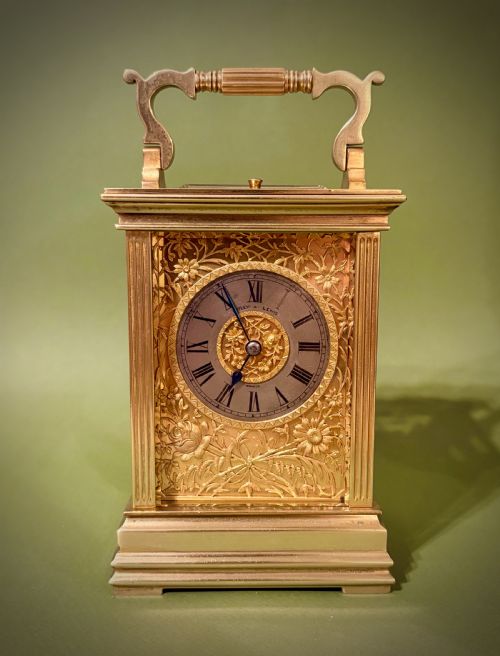
- A portable carriage-style clock fitted with a handle, developed for military officers travelling during the eighteenth and nineteenth centuries. These compact timepieces combine precise movement engineering with robust protective housing.
Vintage Ormolu Clock: Frequently Asked Questions
How do I wind an antique clock?
Most mechanical clocks use a specialised winding key inserted into the dial holes to tension the internal springs or weights. Care must be taken not to overwind the mechanism.
Consulting the specific movement instructions ensures the pendulum remains in beat and the strike train stays synchronised with the time.
Where should I place a heavy marble clock?
These dense stone and metal clocks require a sturdy, level surface such as a fireplace mantel or heavy sideboard to support their substantial weight safely. Securing the base prevents accidental tipping.
Keeping the clock away from direct sunlight and damp walls protects the delicate enamel dials and internal steel components from environmental wear.
What does an eight day movement mean?
An eight day movement indicates that the clock requires winding approximately once a week to maintain continuous operation. This mechanical convenience reduced the frequency of interaction needed from the owner.
Spring-driven barrels store sufficient energy to run the time and striking trains across this designated interval.
How do I identify French Rococo revival styles?
French Rococo revival pieces feature asymmetrical scrolling, C-scrolls, acanthus leaves, and naturalistic shell motifs executed in gilt bronze and ormolu. These designs emulate the ornate decorative arts of the mid-eighteenth century.
Enamelled dial plates and elaborate figural or floral cast mounts distinguish this aesthetic from strict classical symmetry.