




Cherub Gilt Bronze Clock
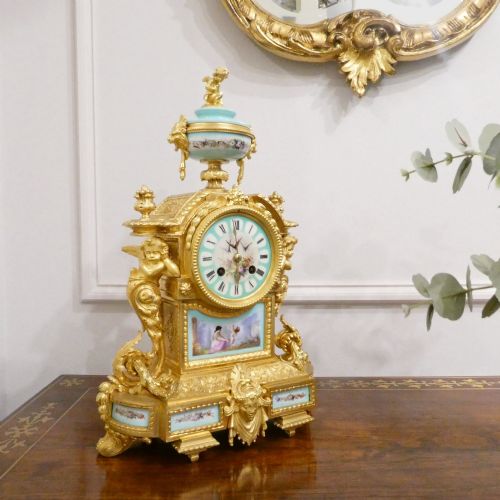
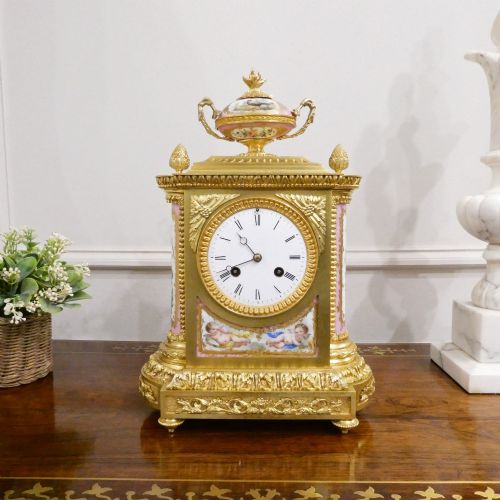
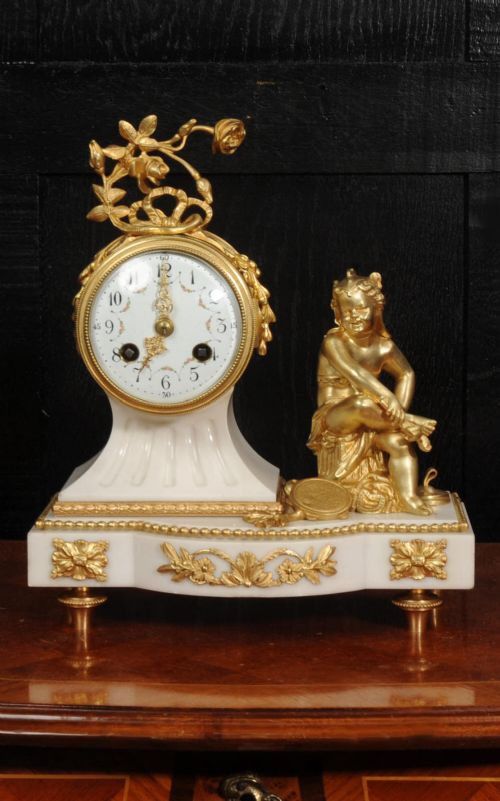
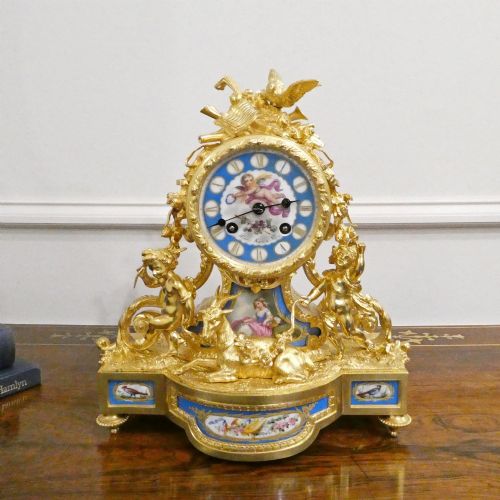
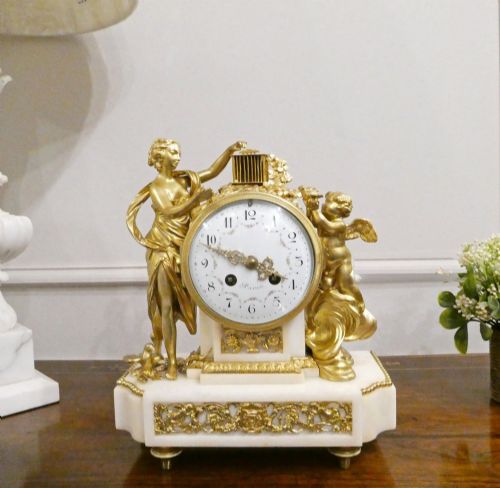
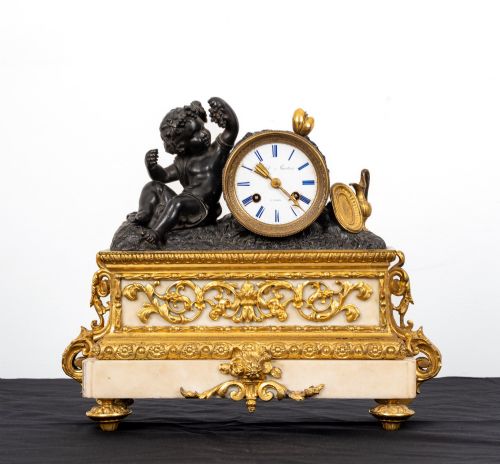
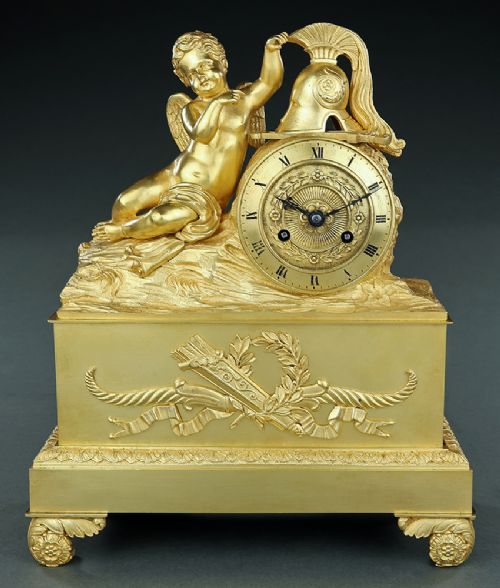
These pieces unite cast metal, hand-painted porcelain and classical figural ornament in a cherub gilt bronze clock.
Cherub Gilt Bronze Clock
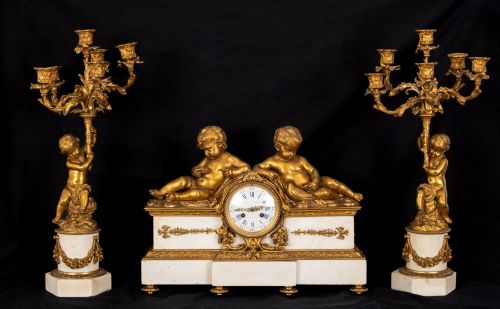
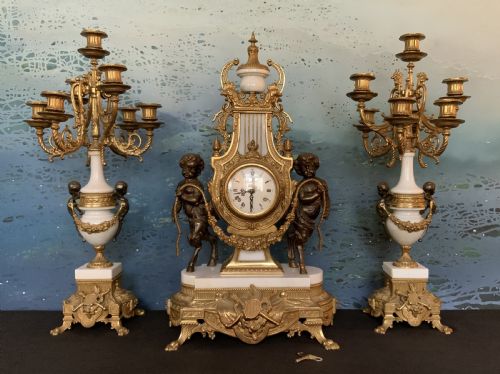
A cherub gilt bronze clock brings together classical figural sculpture and domestic timekeeping, most often appearing as a French mantel clock from the nineteenth century. These pieces frequently incorporate putto finials, cherubic side figures or winged attendants leaning against drums, plinths and glazed dials. Buyers searching this phrase encounter ornate works styled in French Rococo, Louis XVI, Empire and Second Empire revivals, alongside multi-piece garnitures that include matching candelabras.
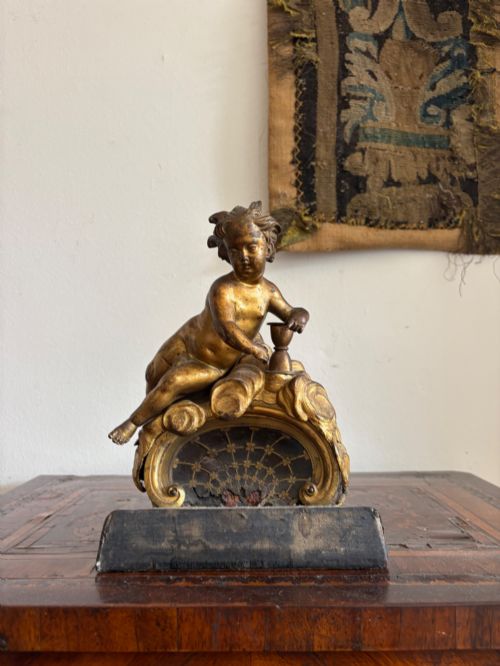
The format ranges from compact table clocks and drum-head timepieces to large architectural marble clock sets complete with bronze mounts. Many examples pair cast metal with white marble or onyx bases, while others integrate porcelain plaques painted with pastoral scenes. Alongside complete mantel clocks, the selection occasionally includes individual gilt bronze putto ornaments and decorative mounts designed for architectural or furniture use.
How They Were Made
Makers fashioned these works using bronze cast in detailed moulds, subsequently fire-gilded to produce the characteristic warm ormolu surface finish. The metallic structure was frequently mounted on bases of white marble, black marble or onyx, providing a dense and stable foundation for the heavy movement.
Timekeeping was driven by mechanical movements, predominantly eight-day striking systems housed within the bronze casing. Dials were constructed from enamel or porcelain, carrying hand-painted numerals and delicate hands protected behind curved glass.
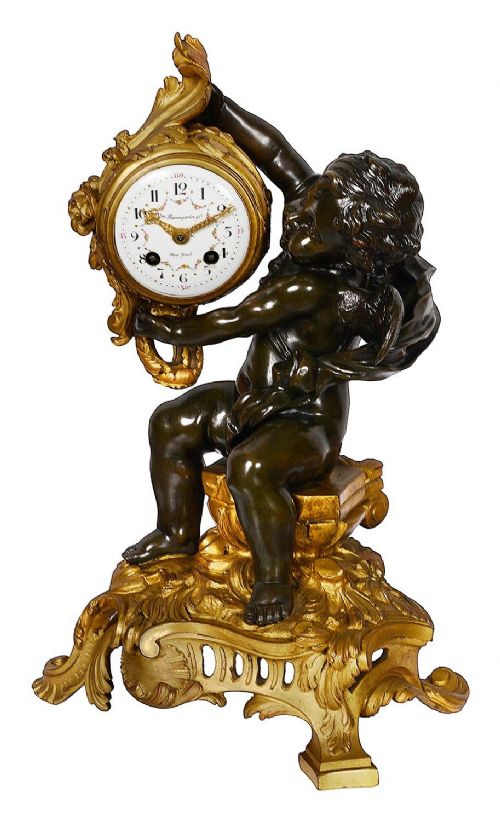
One persistent bronze cherub manages to hold onto a starred globe for eternity while time ticks away beneath its feet.
What Varies in Quality
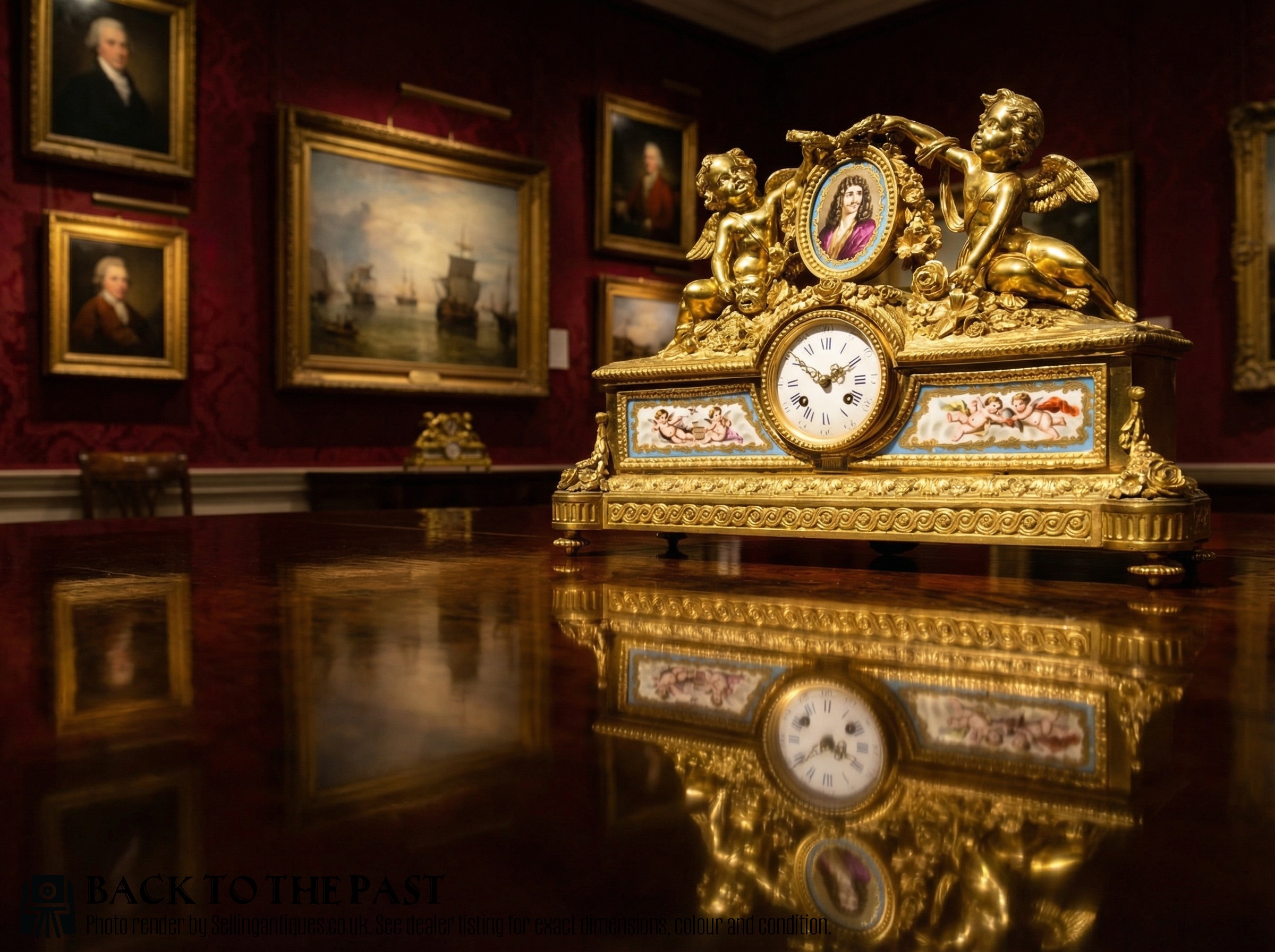
Quality rests upon the crispness of the bronze casting and the depth of the fire-gilding, where sharply chased drapery, hair and feather details distinguish superior work from softer, mass-produced variants. The integration of materials also sets pieces apart, particularly where variegated marble bases and hand-painted Sevres-style porcelain panels align precisely with the metal mounts.
The reputation of the maker's movement further defines the hierarchy, with signed works from established Paris workshops and Paris-exhibited clockmakers commanding greater interest than unsigned or generic movements. The survival of matching garniture sets, such as twin candelabras or side urns retaining their original gilding, elevates the scope of an individual clock.
Jean-Baptiste Delettrez·Henry Marc·Siffel and Cartier·Henry Dasson·Japy Freres·Leon Message·Jollet et Cie·Samuel Marti·Achille Brocot·H Luppens Paris·Gay Vicarino and Co
The Cherub Gilt Bronze Clock Glossary
- Ormolu
- Gilt bronze produced by applying a mercury and gold amalgam to a bronze base and heating it until the mercury vaporised. This technique creates a durable, golden surface finish characteristic of fine nineteenth-century French metalwork.
- Garniture
- A set of matching decorative objects, typically comprising a central clock flanked by two matching candelabras or urns. These sets were designed to sit harmoniously on a mantelpiece.
- Putto
- A plump, naked child figure, often winged, used extensively as a decorative motif in classical and revival art. In clock design, putti frequently support clock faces or hold symbolic items like stars and globes.
- Drum Head Clock
- A clock design featuring a circular, drum-like case housing the movement, usually mounted directly onto a plinth or supported by figural bronze elements.
- Chasing
- The manual finishing of a cast metal object using small chisels and punches to sharpen details like hair, feathers and surface texture before gilding.
Cherub Gilt Bronze Clock: Frequently Asked Questions
How do I wind and run these clocks?
Most of these antique clocks utilise an eight-day mechanical movement powered by a mainspring that requires winding with a matching key via holes on the dial. The pendulum must be properly hooked onto the suspension spring inside the back door for the movement to keep time.
Because antique mechanical movements are sensitive to being out of level, placing the clock on a flat, stable surface is essential for proper operation. Professional cleaning and servicing are recommended to maintain the internal brass gears and escapements.
How can I tell the period of a clock?
Dating relies on stylistic clues, materials, and maker marks stamped on the brass backplate of the movement. Pieces styled in strict symmetry reflect earlier Louis XVI or Empire tastes, while asymmetrical, flowing scrollwork points toward later Rococo revival periods.
The integration of specific materials, such as white marble bases combined with hand-painted porcelain dials, typically aligns with nineteenth-century French manufacturing practices. Maker signatures and exhibition medals stamped on the mechanism provide the most precise chronological markers.
Were these clocks made outside France?
While the majority of gilt bronze and ormolu clocks featuring cherubs originated in Paris workshops during the nineteenth century, production also occurred in other regions. Examples occasionally appear from English makers or Italian foundries influenced by French design styles.
Regional differences can sometimes be identified in the casting style, dial inscriptions, and the type of marble or bronze used in the base structure. French pieces, however, remain the most widely documented in the available record.