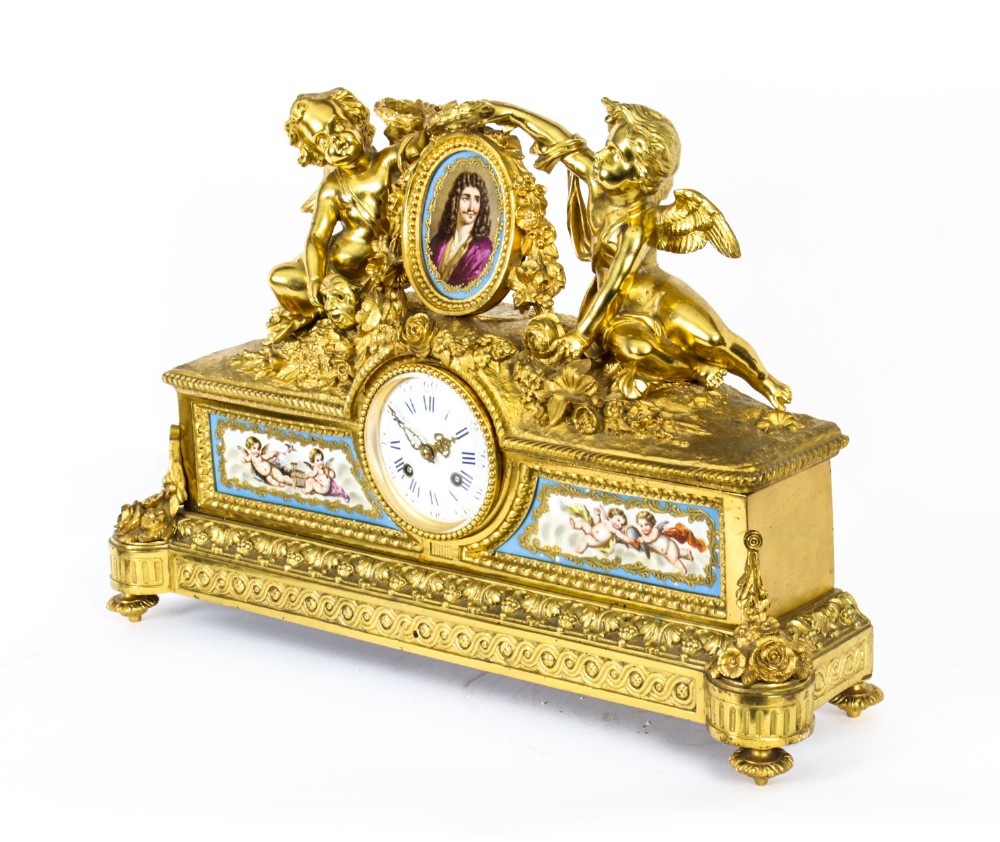
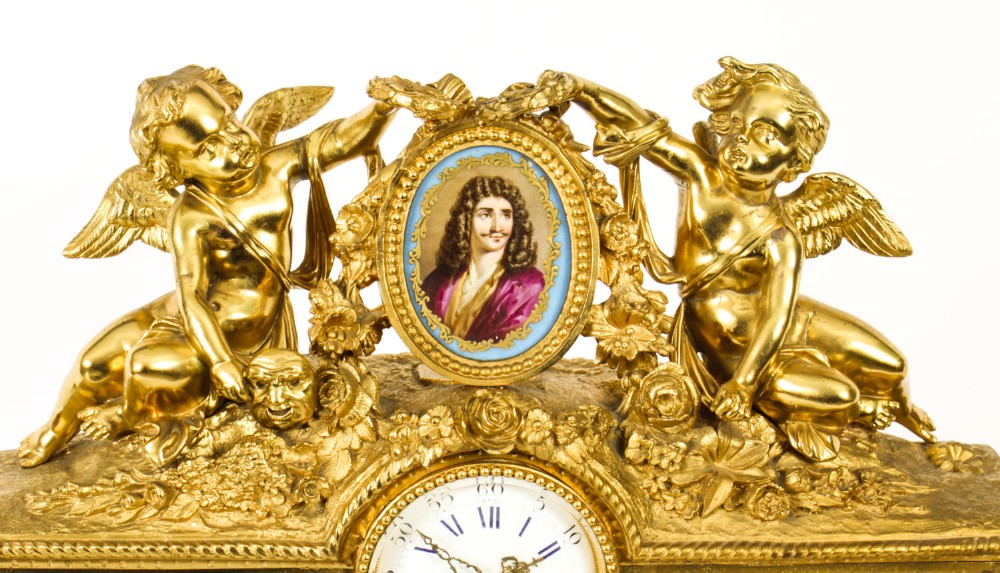
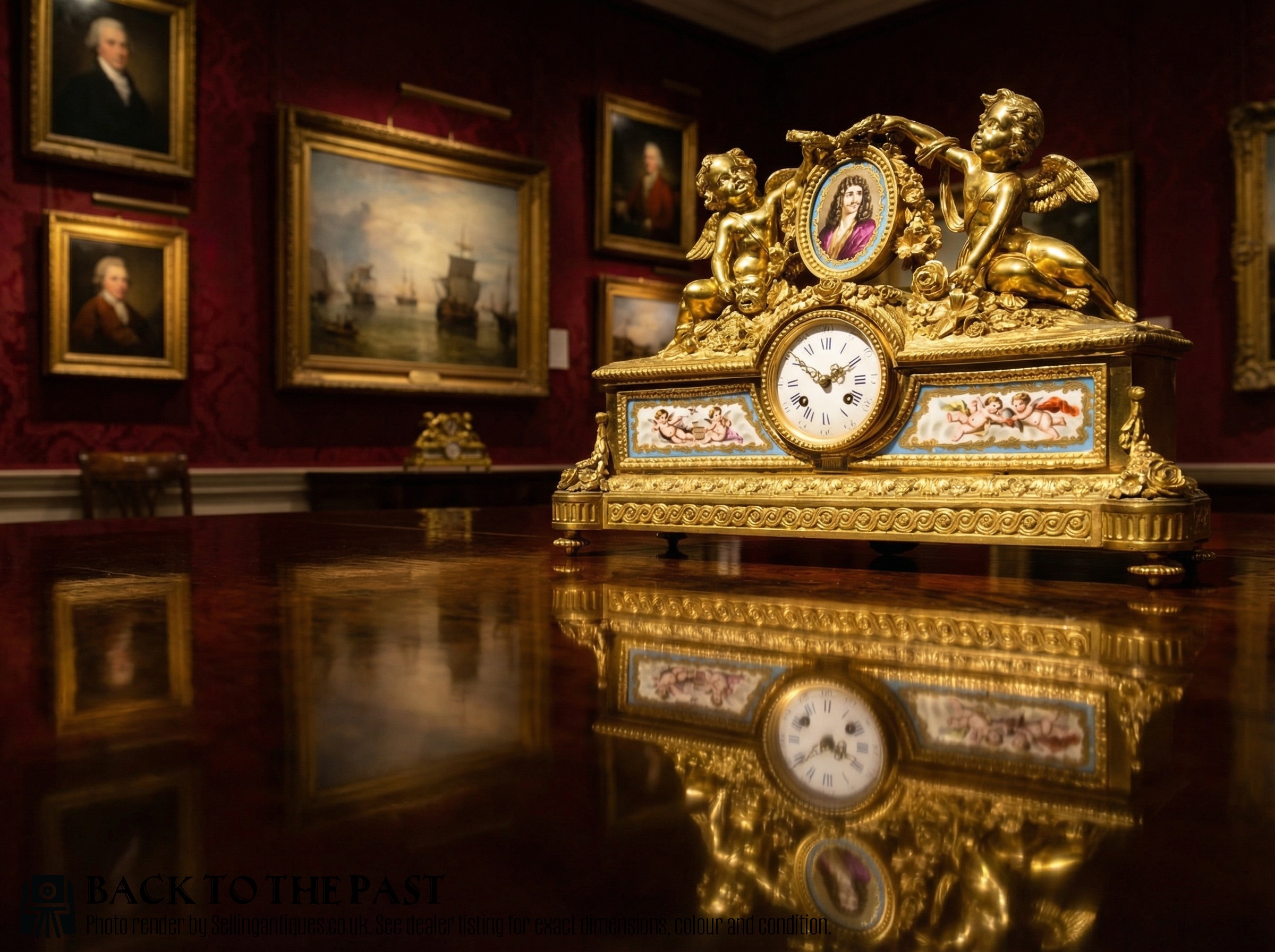
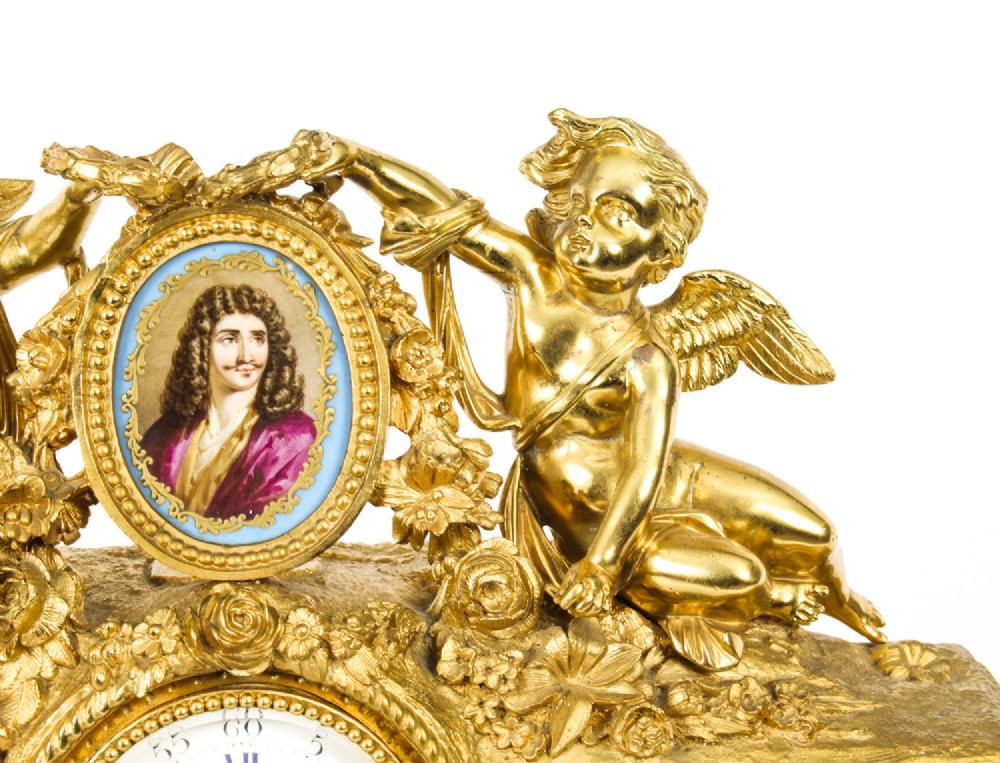
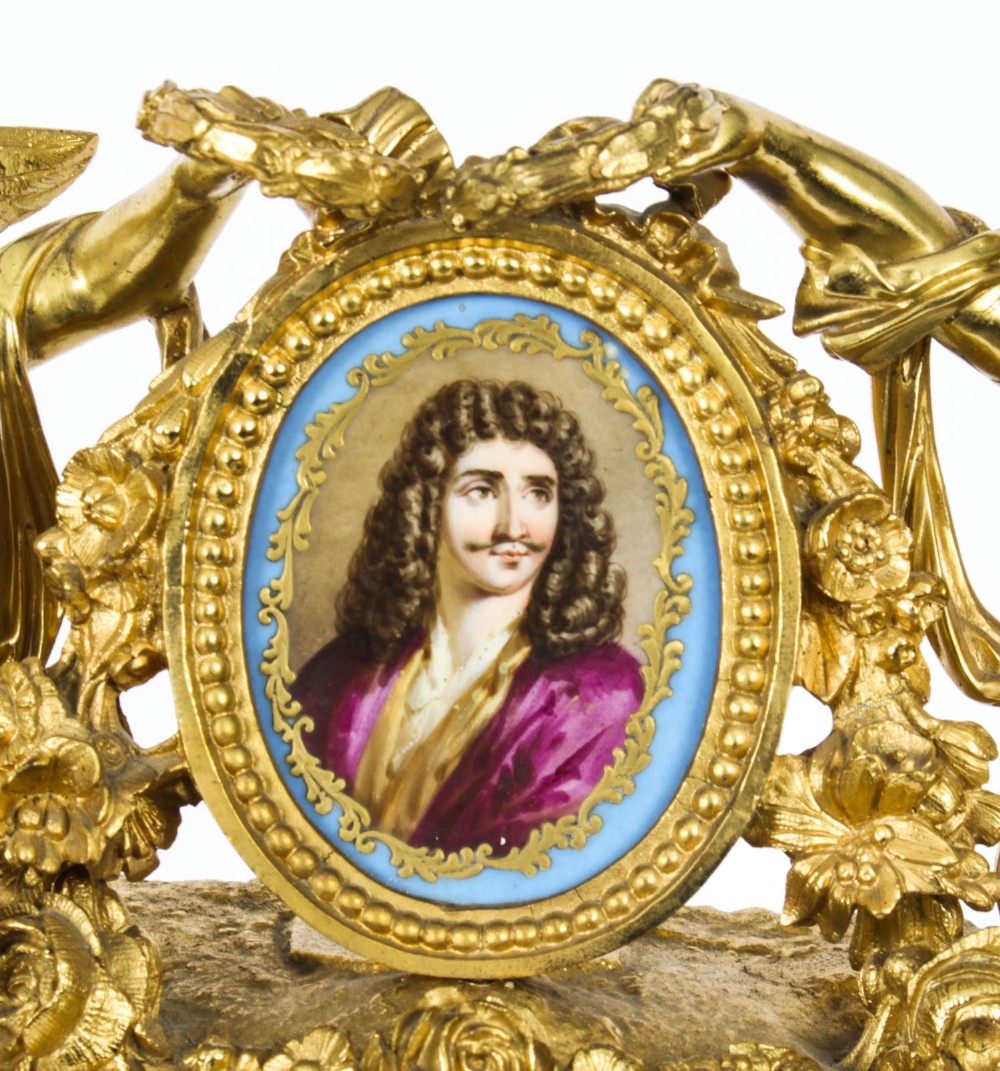
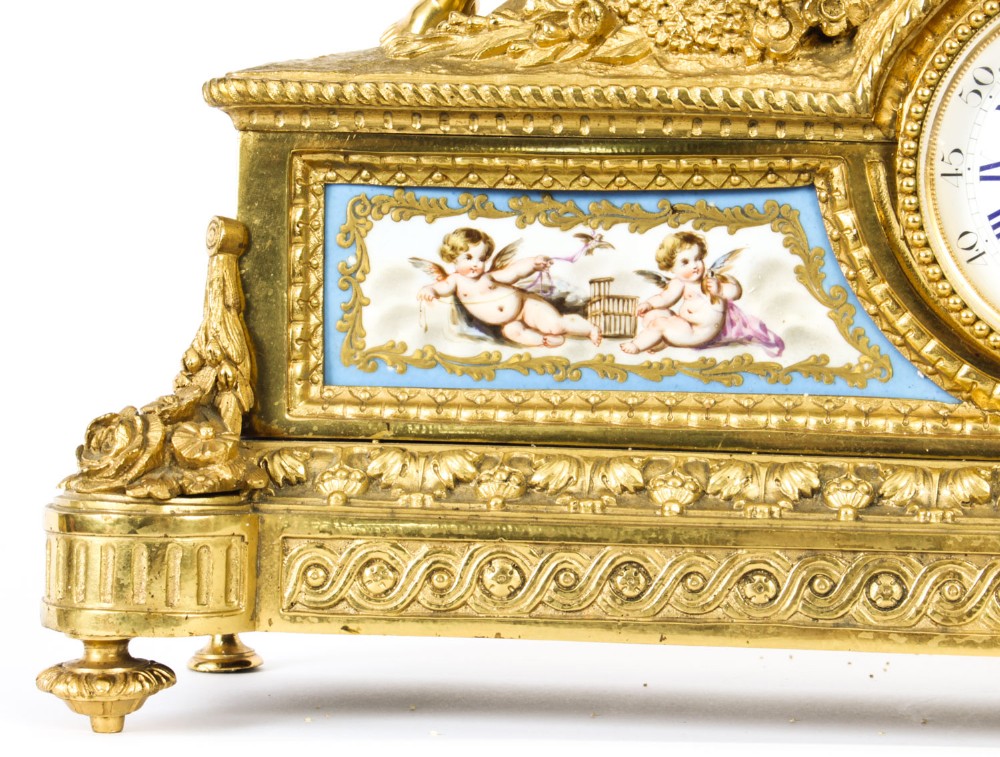
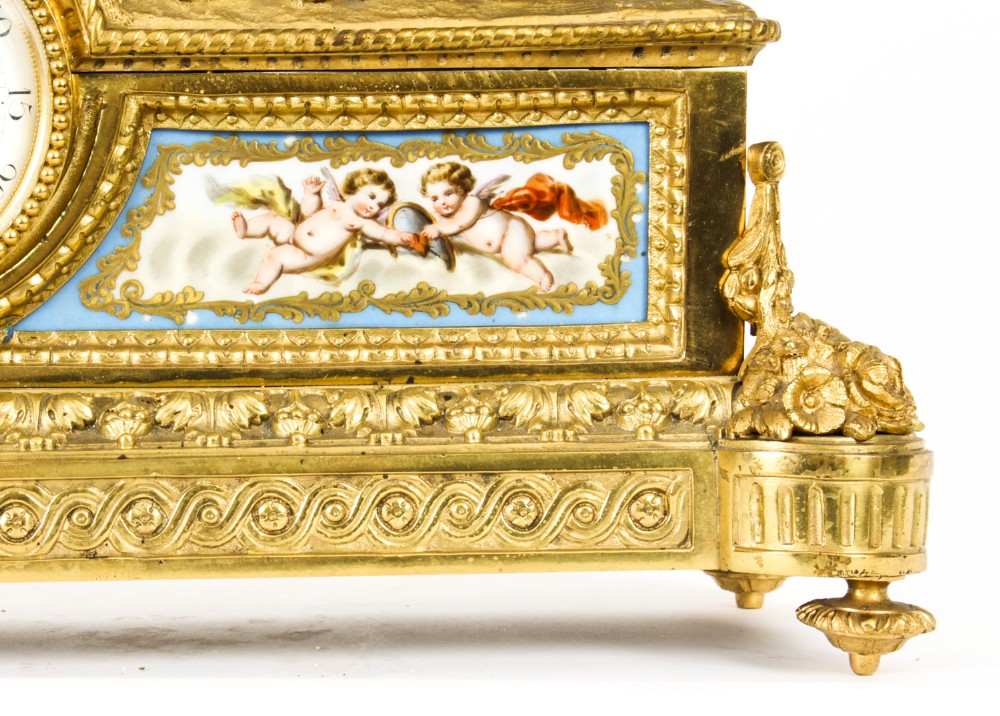
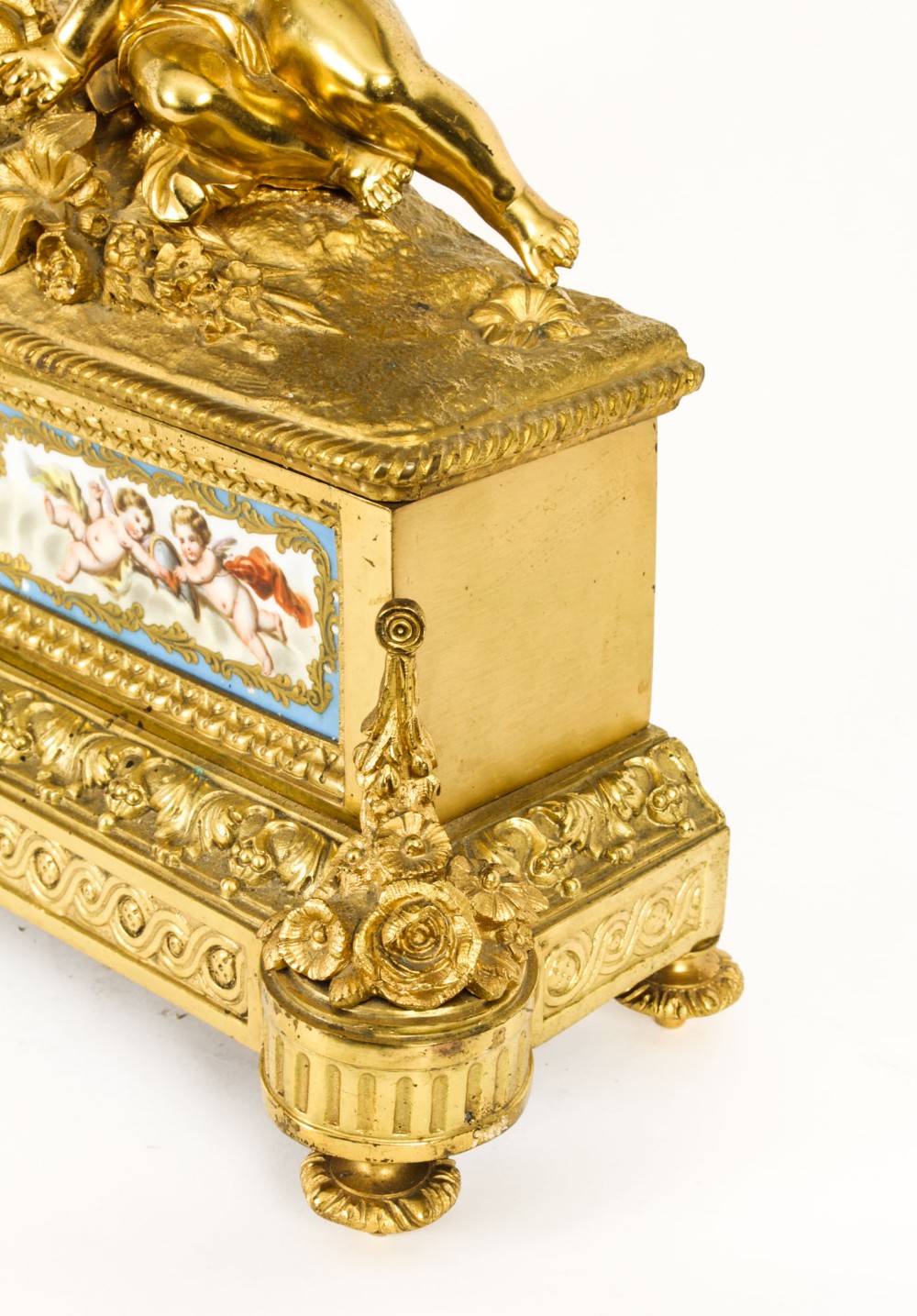
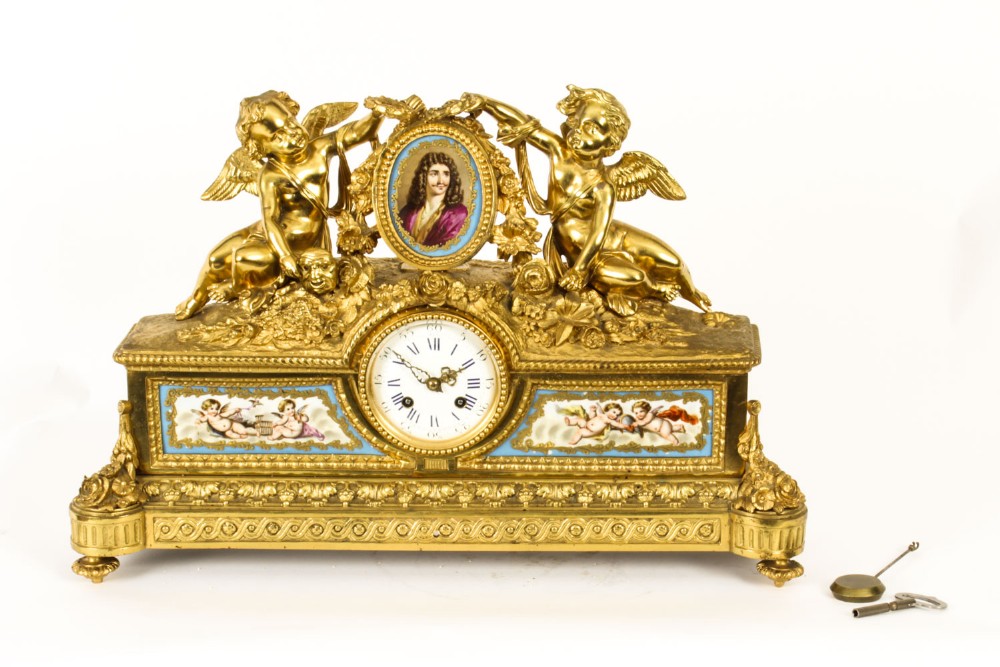
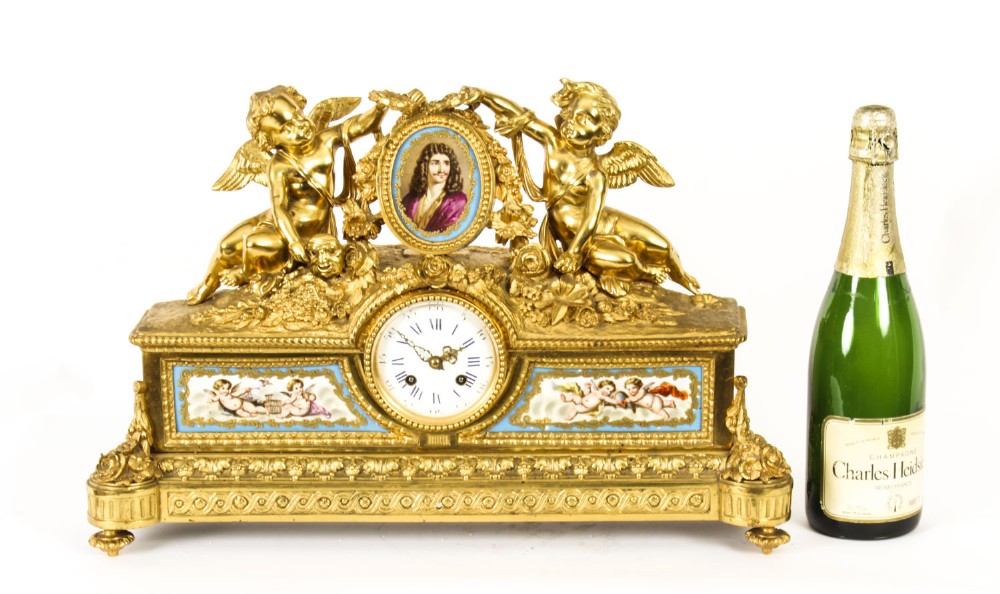
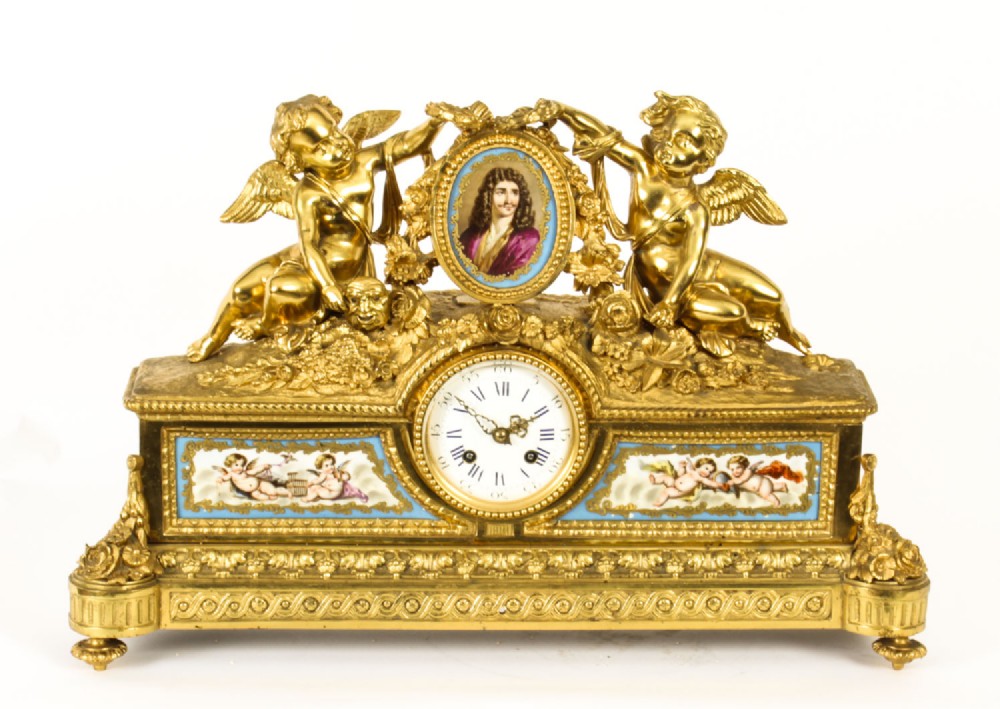
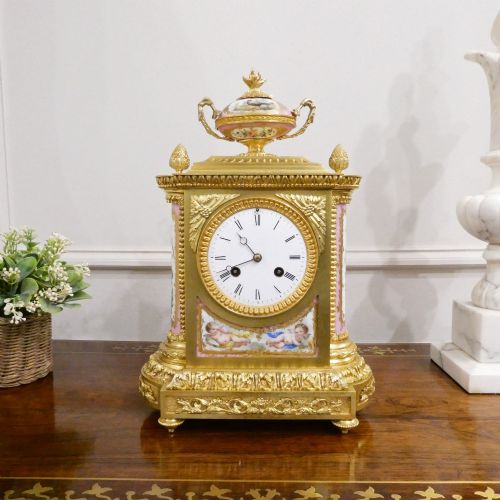
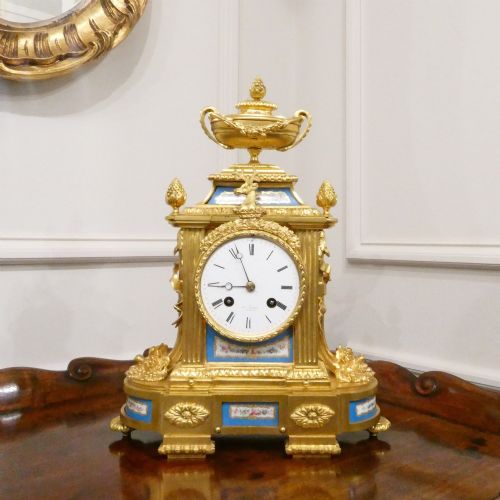
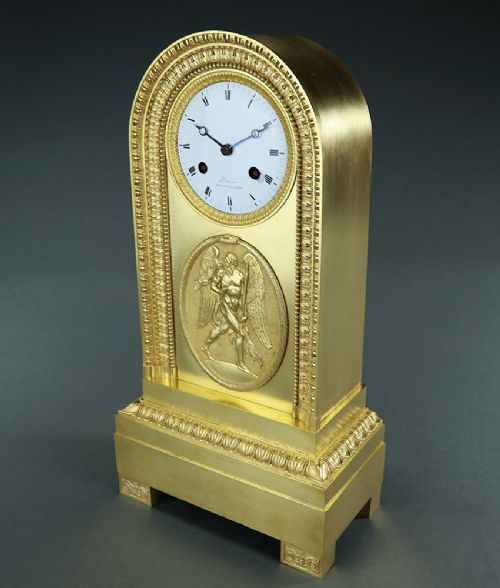
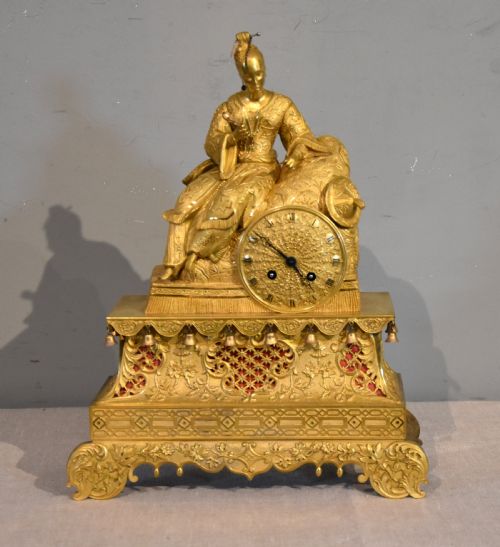
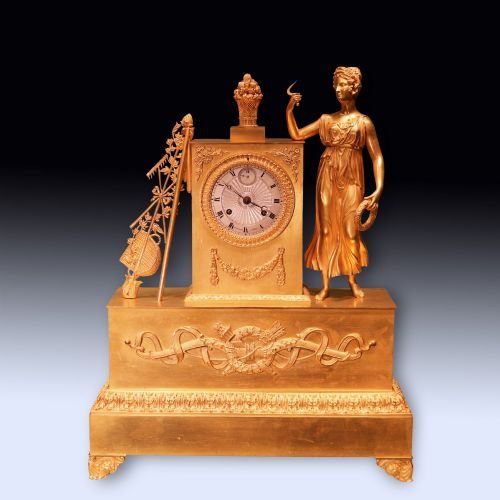
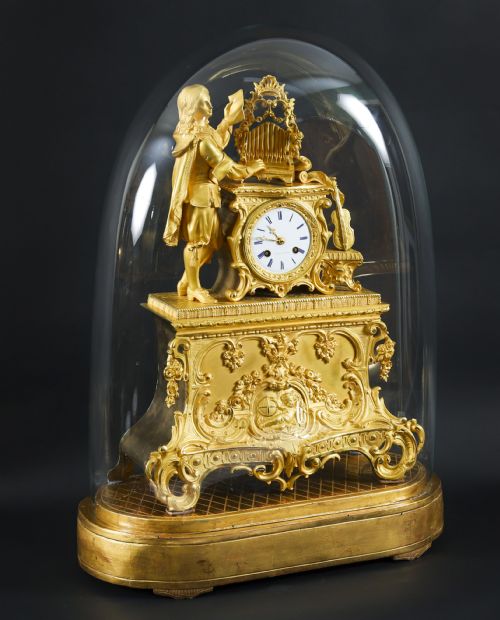
Regent Antiques has dated this French Ormolu Mantel Clock to the 19th Century.
.
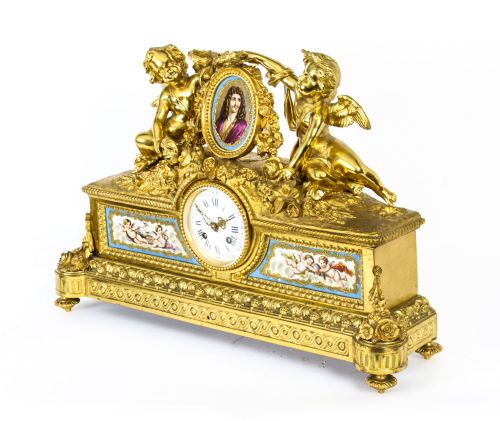
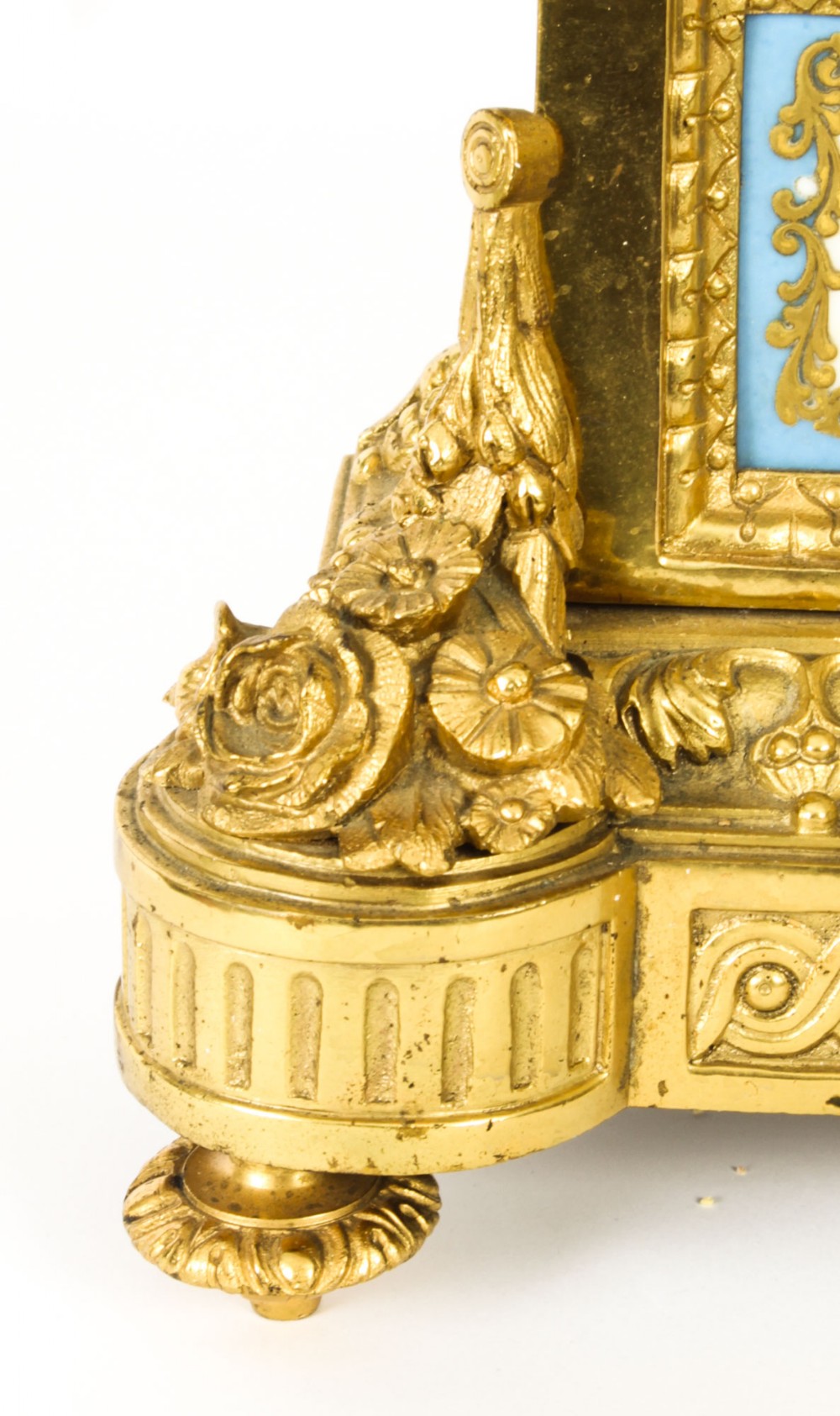
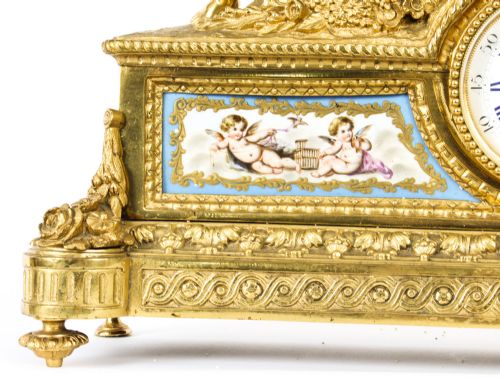
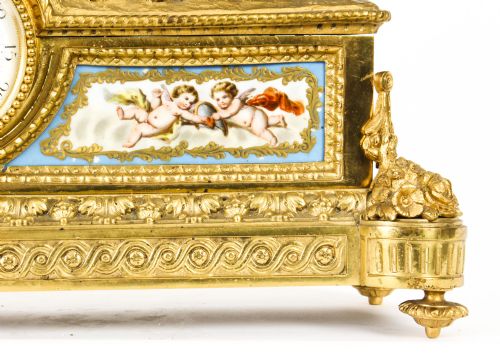
The base decorated with ormolu flowers is raised on turned feet and inset with Sevres plaques decorated with cherubs.
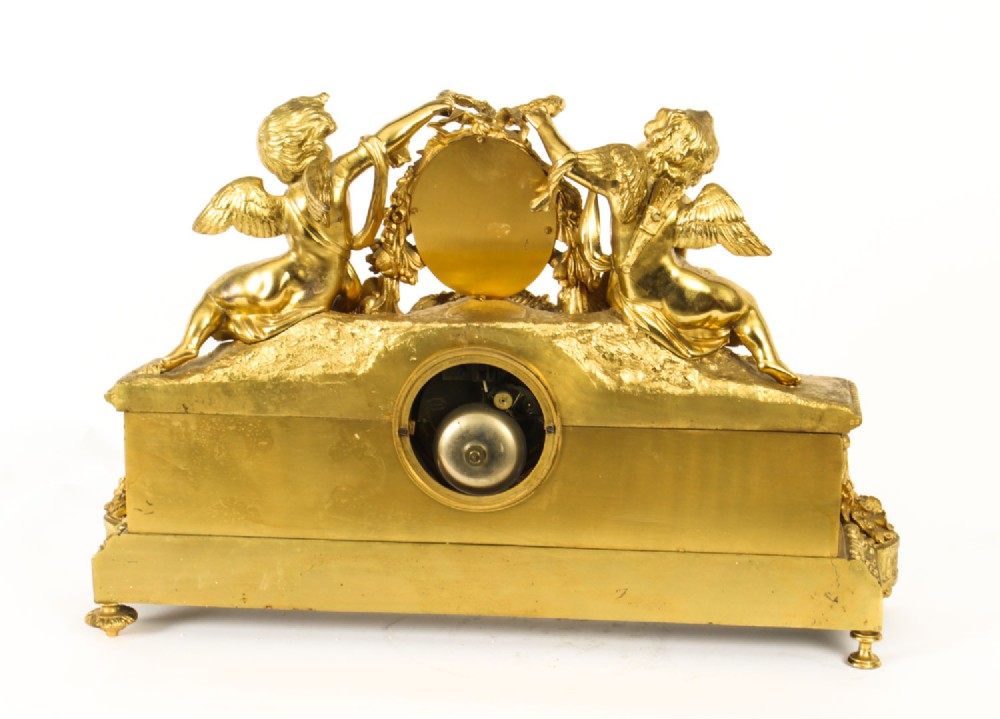
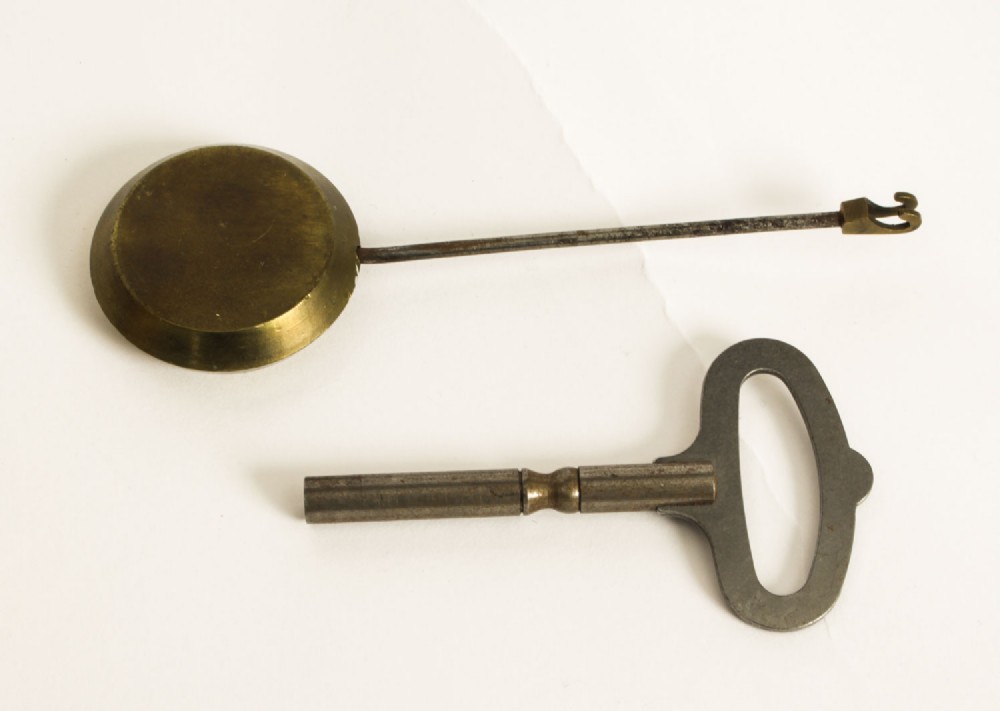
The circular dial has Roman and Arabic numerals and the clock has an 8 day striking movement complete with count wheel strike and bell, stamped with Miroy Freres to back and is complete with original key bell and pendulum
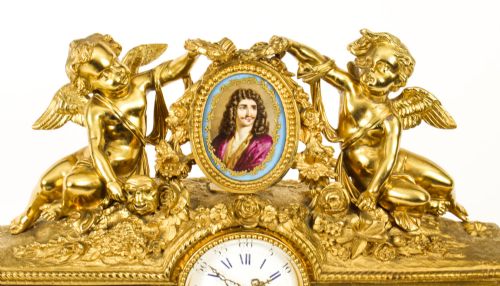
This incredible clock is a must have for any collector of ornamental and decorative pieces.
Condition:
The clock is in excellent working condition the movement having been cleaned and serviced, the ormolu case having been polished, please see photos for confirmation.
Dimensions in cm:
Height 34 x Width 52 x Depth 14
Dimensions in inches:
Height 1 foot, 1 inch x Width 1 foot, 8 inches x Depth 5 inches
Ormolu - Gilt Bronze (from French 'or moulu', signifying ground or pounded gold) is an 18th-century English term for applying finely ground, high-carat gold in a mercury amalgam to an object of bronze.The mercury is driven off in a kiln leaving behind a gold-coloured veneer known as 'gilt bronze'.
The manufacture of true ormolu employs a process known as mercury-gilding or fire-gilding, in which a solution of nitrate of mercury is applied to a piece of copper, brass, or bronze, followed by the application of an amalgam of gold and mercury. The item was then exposed to extreme heat until the mercury burned off and the gold remained, adhered to the metal object.

After around 1830 because legislation had outlawed the use of mercury other techniques were used instead. Electroplating is the most common modern technique. Ormolu techniques are essentially the same as those used on silver, to produce silver-gilt..

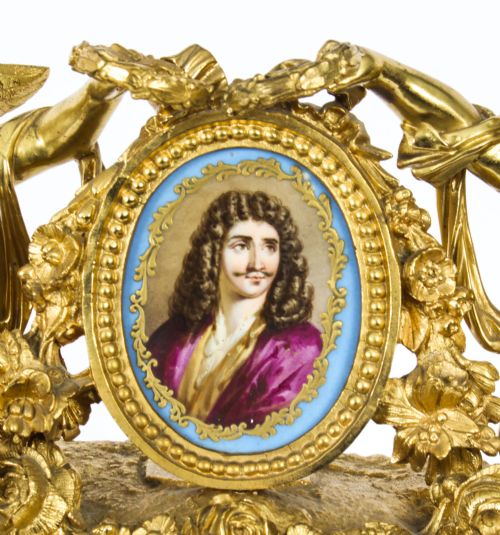
Molière
Jean-Baptiste Poquelin, known by his stage name French: 15 January 1622 – 17 February 1673), was a French playwright and actor who is considered to be one of the greatest masters of comedy in Western literature. Among Molière's best known works are The Misanthrope, The School for Wives, Tartuffe, The Miser, The Imaginary Invalid, and The Bourgeois Gentleman.

Born into a prosperous family and having studied at the Collège de Clermont (now Lycée Louis-le-Grand), Molière was well suited to begin a life in the theatre. Thirteen years as an itinerant actor helped him polish his comic abilities while he began writing, combining Commedia dell'arte elements with the more refined French comedy.
Through the patronage of aristocrats including Philippe I, Duke of Orléans—the brother of Louis XIV—Molière procured a command performance before the King at the Louvre. Performing a classic play by Pierre Corneille and a farce of his own, The Doctor in Love, Molière was granted the use of salle du Petit-Bourbon near the Louvre, a spacious room appointed for theatrical performances. Later, Molière was granted the use of the theatre in the Palais-Royal. In both locations he found success among Parisians with plays such as The Affected Ladies, The School for Husbands and The School for Wives. This royal favour brought a royal pension to his troupe and the title Troupe du Roi ("The King's Troupe"). Molière continued as the official author of court entertainments.
Though he received the adulation of the court and Parisians, Molière's satires attracted criticism from moralists and the Catholic Church. Tartuffe and its attack on perceived religious hypocrisy roundly received condemnations from the Church, while Don Juan was banned from performance. Molière's hard work in so many theatrical capacities took its toll on his health and, by 166
Regent Antiques has dated this French Ormolu Mantel Clock to the 19th Century.
We specialise in english and continental furniture, silver, porcelain and decorative items.
You can view the stock and full dealer information on the Regent Antiques Profile Page
Regent Antiques is a registered member of LAPADA CINOA
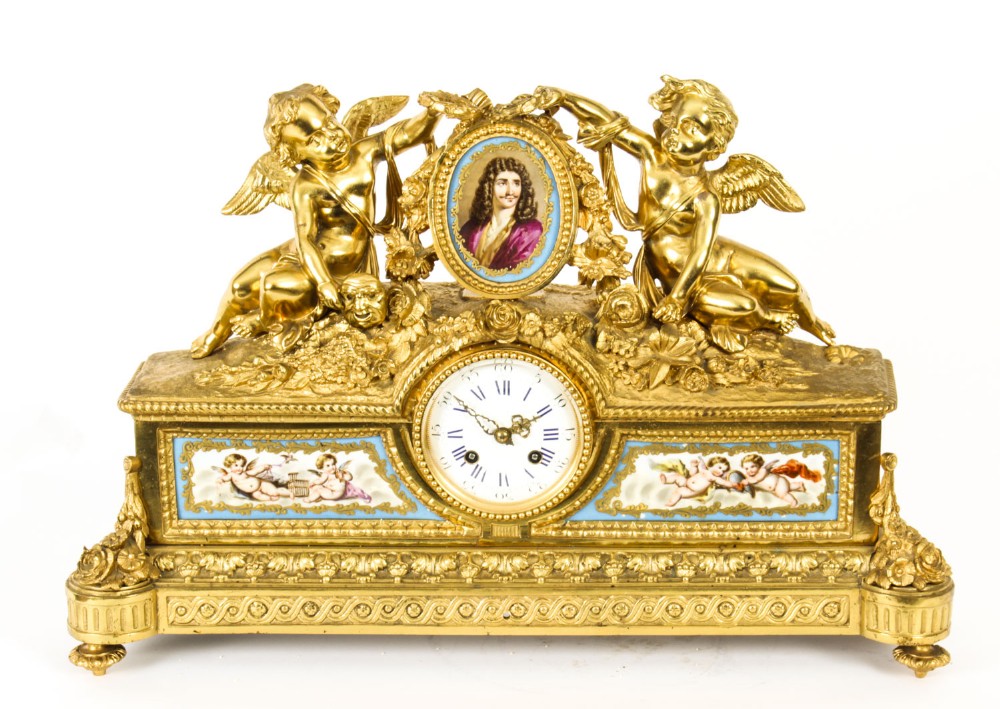
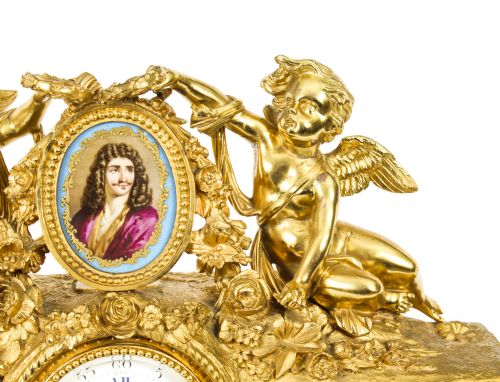
Antique French Gilt Bronze Clock with Portrait Plaque of Molière C.1860