




Putti Ormolu Clock
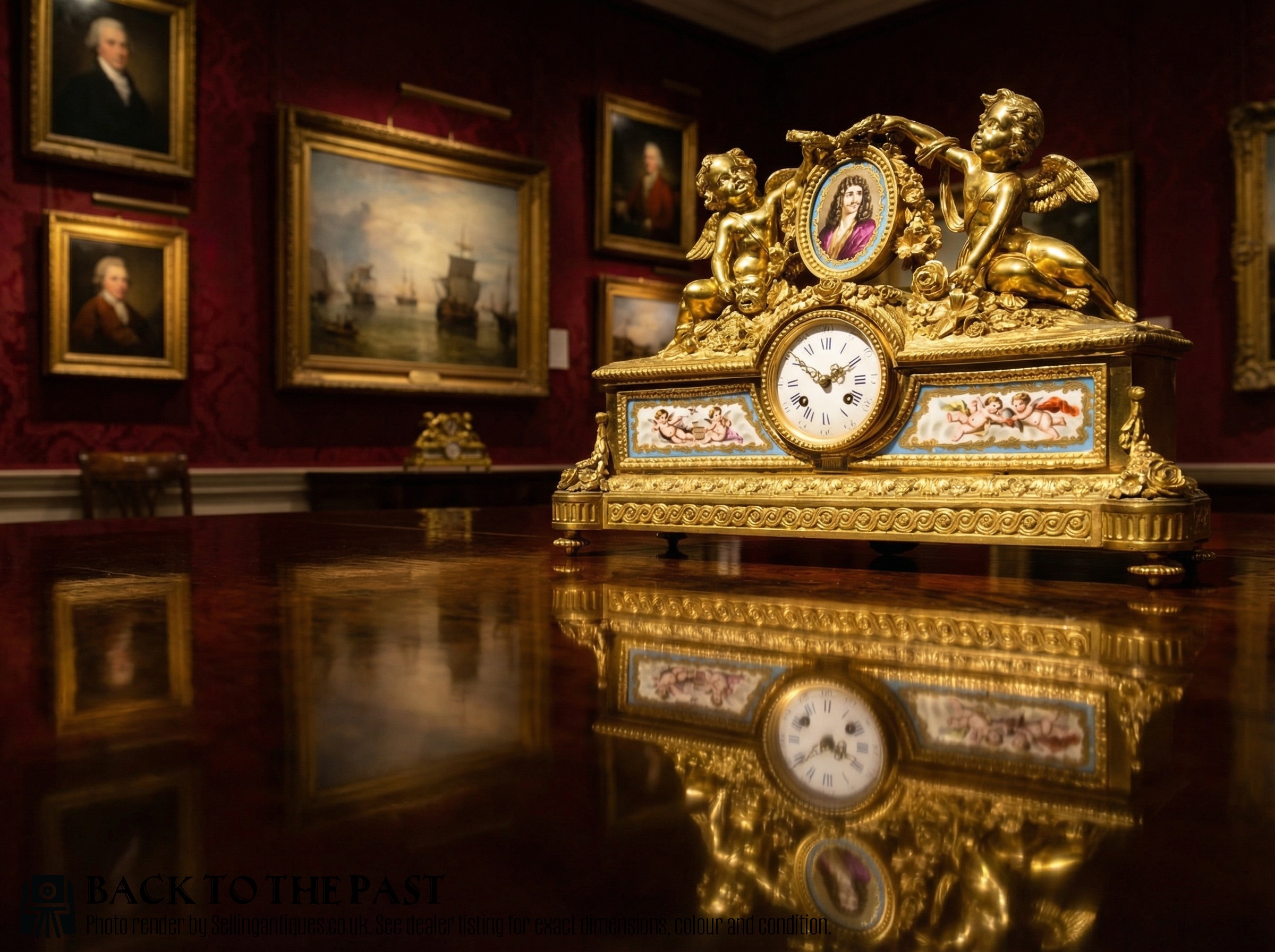
Putti ormolu clock designs combine cast gilt metal figures with mechanical precision, offering a decorative centrepiece for the mantel.
Putti Ormolu Clock
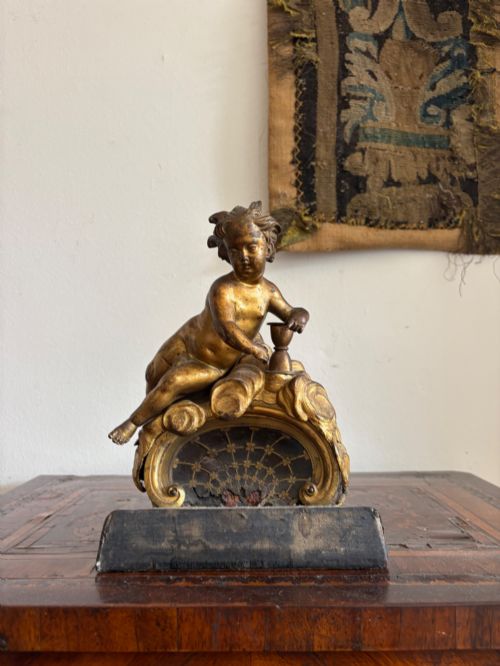
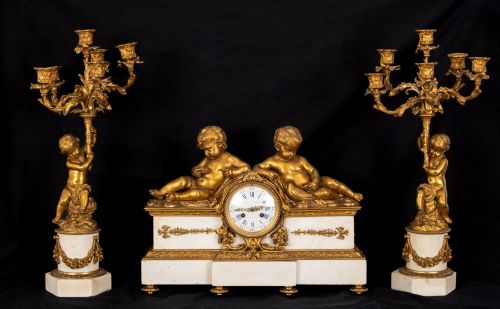
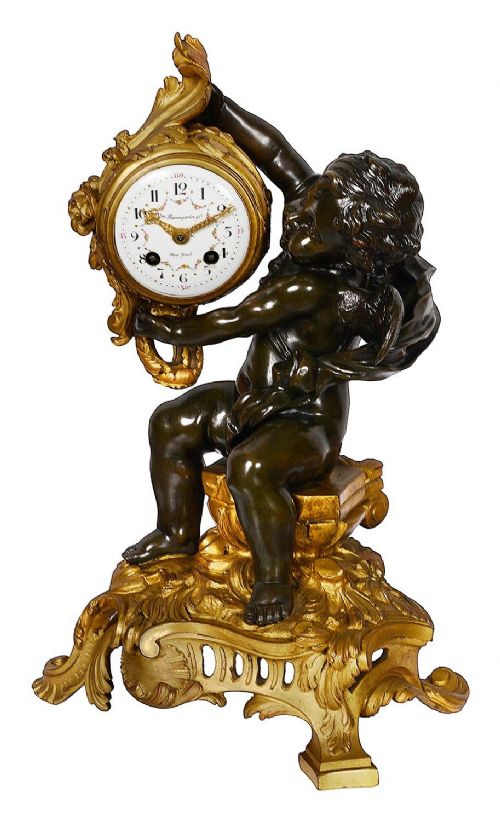
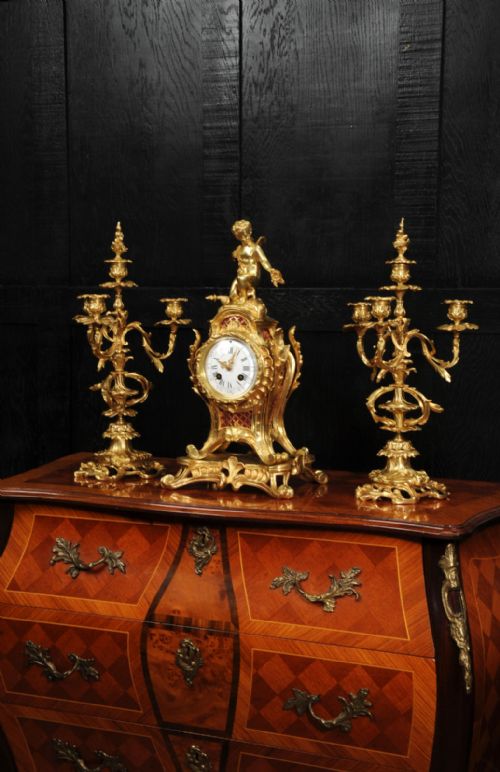
Buyers encounter mantel clocks paired with matching candelabras, figural globe clocks, and ornate cartel wall clocks. The figures appear seated on marble plinths, scaling clock cases, or holding finials above enamel dials.
Materials and construction
Maker workshops cast components in bronze or gilt metal before applying mercury gilding to produce the characteristic ormolu surface. White marble, red marble, and porcelain elements frequently provide contrasting architectural bases and portrait plaques.
Clockmakers fitted mechanical movements driven by springs or fuses behind hand-painted dials of enamel or glass. Detailed patinated bronze elements contrast against the bright gilded mounts across many nineteenth-century examples.
Listings feature Victorian and nineteenth-century pieces utilising ormolu, white marble, porcelain, and patinated bronze.
Determining quality
The crispness of the bronze chasing distinguishes superior castings, where facial expressions and wing feathers remain sharply defined. Softer contours indicate secondary production runs from worn moulds.
Signed movements by known makers and complete matching garniture sets elevate the standing of a piece within the period. Well-maintained original mercury gilding retains a warm depth that inferior modern replating lacks.
Le Roy Paris·Leon Message·Jollet et Cie·Phillipe H. Mourey·John Bennett Cheapside London·Henry Berkeley Square London·F Marti
The Putti Ormolu Clock Glossary
- Ormolu
- Gilded bronze produced by applying a mercury and gold amalgam to a cast bronze base. This technique creates a durable golden finish characteristic of luxury nineteenth-century decorative objects.
- Putto
- A figure of a small winged infant, often representing Cupid or a cherub in classical art. These figures appear frequently perched upon clock cases and candelabras.
- Garniture
- A set of decorative objects designed to be displayed together, typically comprising a central clock flanked by matching candelabras or urns. These sets dominate nineteenth-century mantel displays.
- Cartel clock
- A wall-mounted clock enclosed within an ornate decorative frame of bronze, ormolu, or wood. These pieces utilise secure wall brackets for suspension.
- Fusee
- A conical pulley connected to the mainspring by a chain or cord to ensure even power delivery as the spring unwinds. This mechanical addition improves timekeeping accuracy.
Putti Ormolu Clock: Frequently Asked Questions
How do I wind a mantel clock safely?
Insert the key gently into the winding arbor and turn it steadily until you feel firm resistance. Avoid over-winding, as this can damage the internal tension springs.
Keep the key aligned properly to prevent scratching the surrounding enamel dial or the delicate ormolu surface during maintenance.
Where should I place a marble clock?
Position the clock on a stable, level surface such as a mantelpiece or sturdy sideboard to support the heavy marble and bronze structure. Ensure the location remains away from direct sunlight and dampness to protect the movement and gilding.
Heavy stone bases require adequate weight distribution to prevent tipping or sliding on polished wooden furniture.
How can I tell a nineteenth-century clock from a later copy?
Examine the movement backplate for maker stamps, serial numbers, and casting flaws typical of nineteenth-century production methods. Genuine period pieces show consistent wear patterns on the brass gears and hand-chiselled detailing on the bronze mounts.
Castings from later periods often display softer details and lack the distinctive hand-finished chasing found on nineteenth-century examples.
What is a clock garniture set?
A clock garniture set consists of a central mantel clock accompanied by matching side ornaments such as candelabras, urns, or vases. These matched suites were designed to create a balanced symmetrical display across a fireplace mantel.
Complete sets share identical materials, decorative motifs, and patination, making them desirable for formal interior decoration.