

French Marble Table Clock
A french marble table clock brings architectural weight and precision mechanics together, serving as both a functional timepiece and a sculptural centrepiece.
French Marble Table Clock
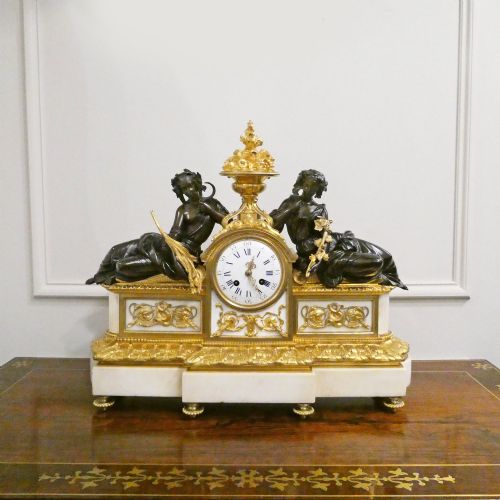
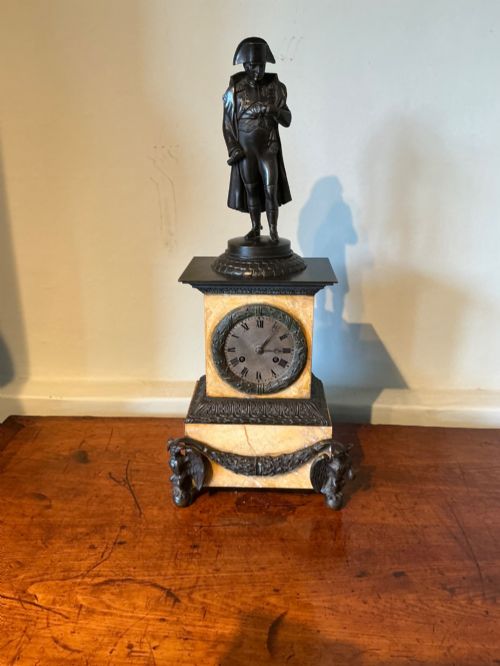
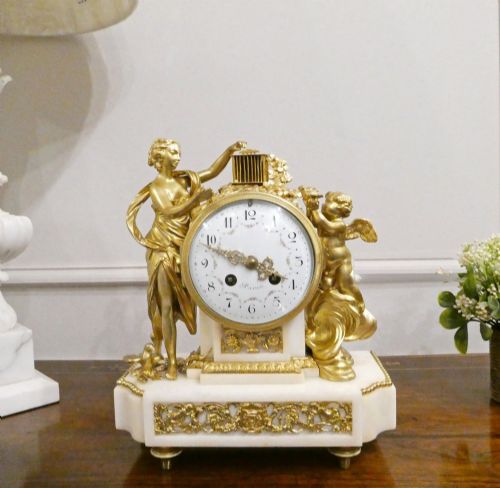
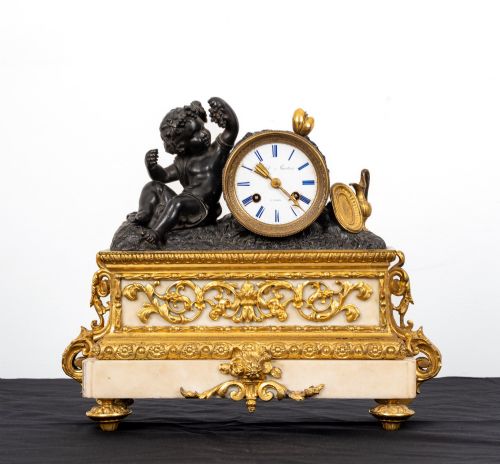
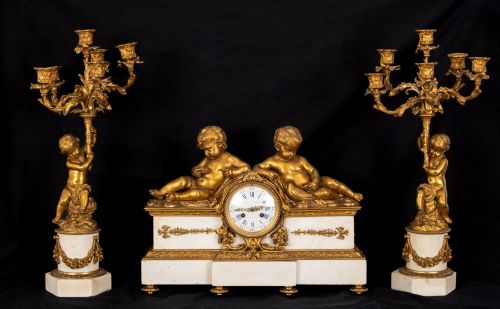
When searching for a french marble table clock, buyers encounter heavy architectural timepieces designed for the mantelpiece or desk, frequently appearing alongside matching garnitures. These objects combine substantial stone bodies with metallic mounts, enamel dials, and glass bezels.
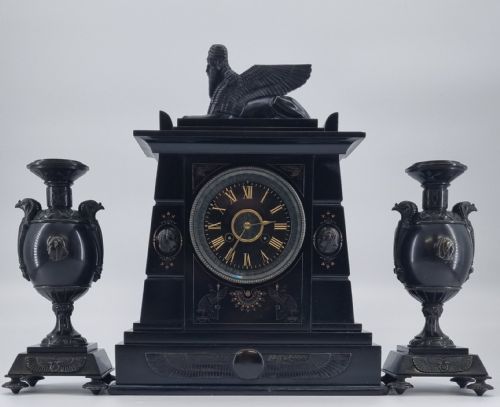
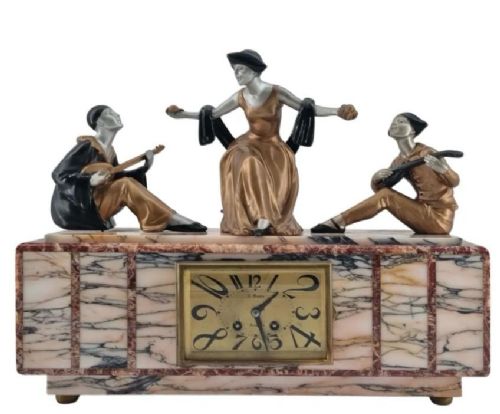
The pieces available originate predominantly from the nineteenth century, spanning Victorian, Second Empire, Louis XVI Revival, and Art Deco aesthetic movements. Most examples function as striking mantel clocks, while occasional desk clocks and specialised calendar or astronomy complications surface in the selection.
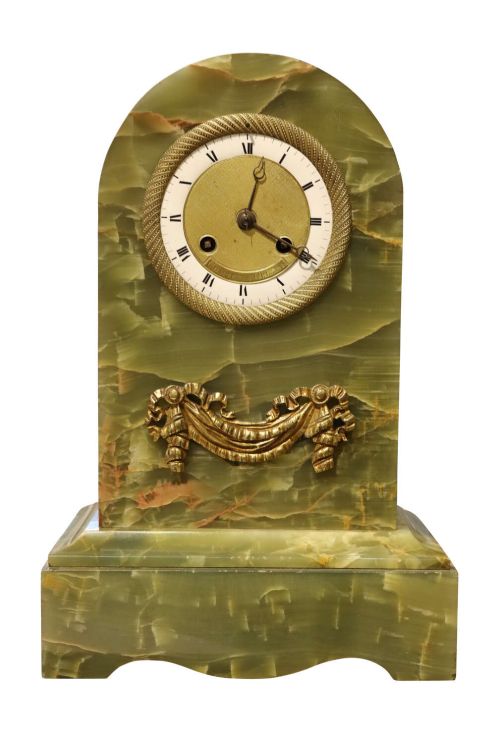
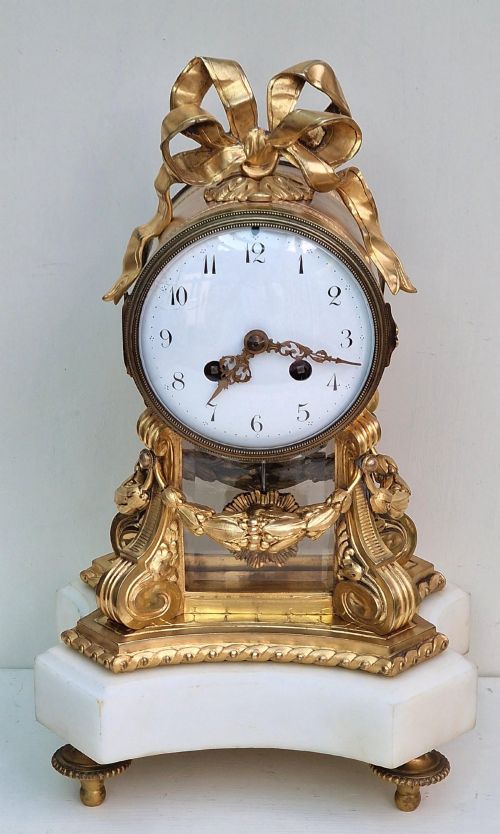
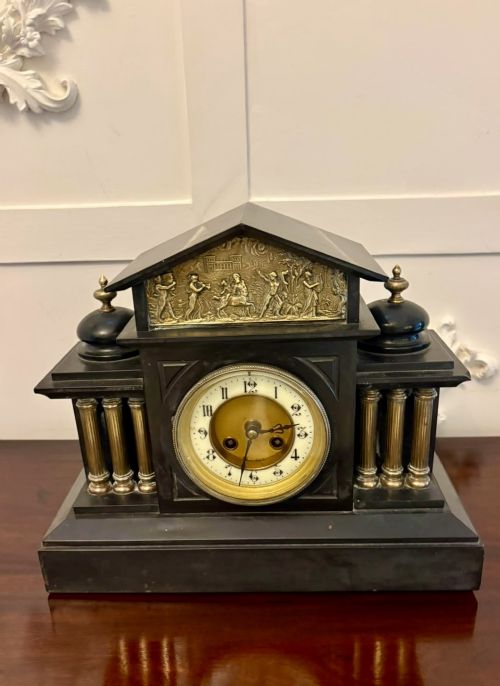
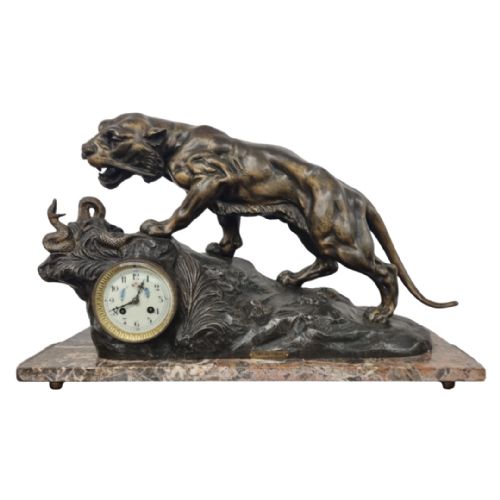
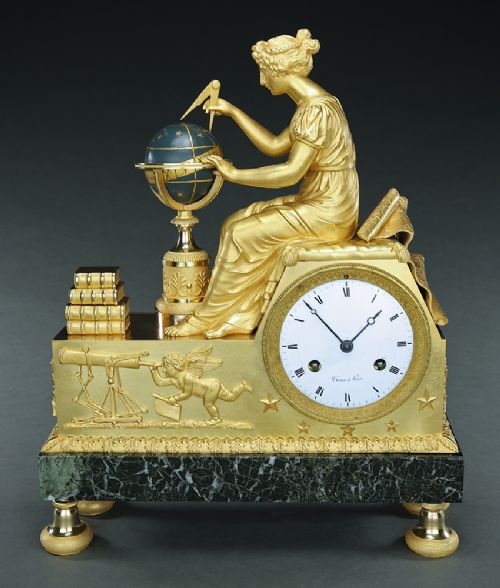
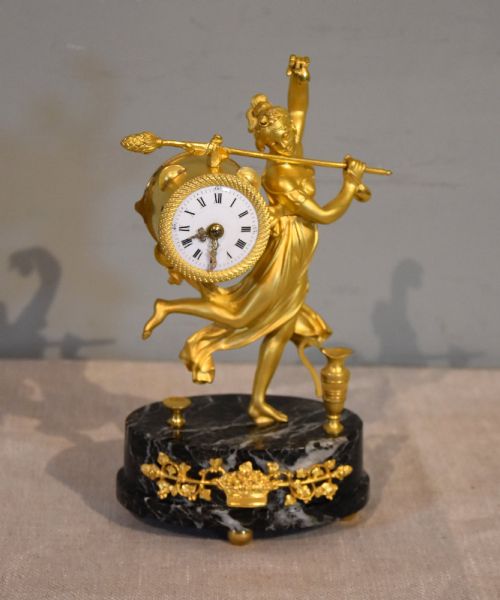
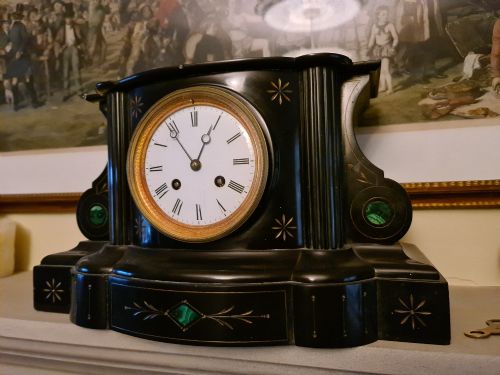
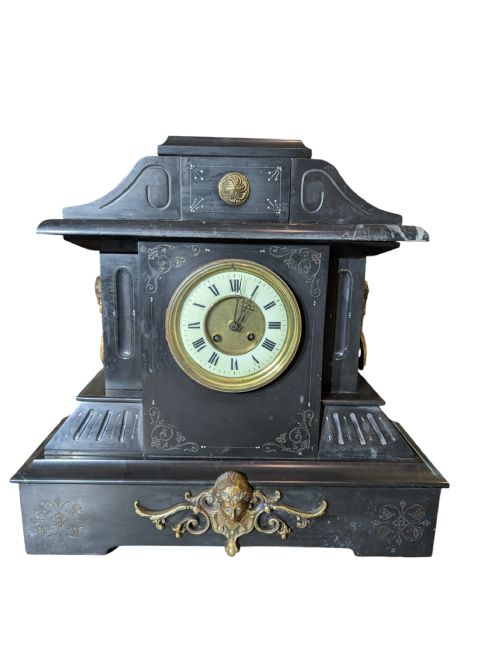
Makers and workshops utilised various stones including black slate, white marble, rouge marble, and green onyx to build these substantial cases. The forms range from simple block structures to elaborate figural compositions featuring bronzes, cherubs, animals, and classical motifs.
Materials and Construction
Stonemasons shaped dense materials like black slate, sienna marble, and white marble into architectural cases, columns, and urns using heavy cutting and polishing techniques. These stone housings provide the stable weight necessary to support mechanical clock movements.
Foundries cast bronze and brass elements, subsequently applying ormolu or gilding to create decorative mounts, bezels, and figural toppieces. Artisans integrated enamel dials featuring delicate numerals, protected behind hinged glass doors.
Clockmakers fitted brass eight-day movements into the stone and metal chassis, incorporating specialised escapements, strike trains, and occasional calendar complications.
Listings feature periods spanning the eighteenth century through the Art Deco era, utilising black slate, white marble, green onyx, and rouge marble.
Distinctions in Execution
The refinement of the cast bronze mounts and figural sculptures separates standard production from exceptional examples, as sharper chiselling and deeper gilding indicate superior workshop standards. The choice of marble also influences the piece, with richly variegated stones or complex architectural assembly demanding greater lapidary skill.
Movement sophistication distinguishes the tier of production, where standard timepieces contrast against models with complex perpetual calendars, striking trains, or signed mechanisms from notable makers. The integration between the stone case and the metal ornamentation determines the overall visual harmony of the assembled clock.
Charles à Orléans·R Varnier·Vincenti·Siffel and Cartier·Sega·Japy Freres·Philippes Paris·Berger Paris·Louis Goret·Sacre
The French Marble Table Clock Glossary
- Garniture
- A set consisting of a central clock flanked by matching decorative objects such as urns or vases, designed to coordinate across a mantelpiece.
- Ormolu
- Gilt bronze produced by applying a mercury and gold amalgam to a bronze casting, creating a durable golden surface finish characteristic of French decorative arts.
- Rouge marble
- A deep red, variegated limestone material quarried in France and utilised for its dramatic coloration in architectural clock cases.
- Bezel
- The metal ring that holds the glass protecting the clock face, frequently hinged to allow access for setting the hands.
- Escapement
- The internal mechanical linkage that controls the release of power from the mainspring, translating energy into the regular beats of the clock.
French Marble Table Clock: Frequently Asked Questions
How do I wind a french marble table clock?
Most of these timepieces utilise an eight-day mechanical movement operated by inserting a key into designated winding holes on the enamel dial. Turning the key clockwise tensions the mainspring until resistance signals the spring is fully wound.
Care must be taken not to overwind the mechanism, and the pendulum should be allowed to settle into an even beat after winding is complete.
What is a clock garniture?
A clock garniture is a decorative matching set comprising a central timepiece accompanied by two side pieces, typically shaped as urns, vases, or architectural ornaments. These sets were designed to create a balanced display across a fireplace mantel.
The side pieces share the exact materials and decorative motifs of the main clock, often featuring matching marble bodies and gilt bronze mounts.
How do I identify the period of a marble clock?
Stylistic indicators such as Neoclassical columns, Empire bronze eagles, or streamlined Art Deco geometric forms help establish the era of manufacture. Examining the signature on the movement backplate or the dial often provides the maker's name and clues to the production decade.
The choice of stone also offers guidance, as black slate and heavy block marbles dominate the Victorian era, while lighter onyx and refined white marble frequently denote earlier nineteenth-century French work.
Where should I place a heavy marble clock?
These timepieces require a sturdy, level surface capable of supporting considerable stone weight, such as a sturdy mantelpiece, a solid sideboard, or a heavy desk. Placing the clock on a level platform ensures the pendulum hangs plumb, which is essential for accurate timekeeping.
Avoiding areas subject to heavy vibrations, direct sunlight, or damp conditions will help preserve the polished stone surface and the internal brass mechanics.