



Nautical Wall Clock
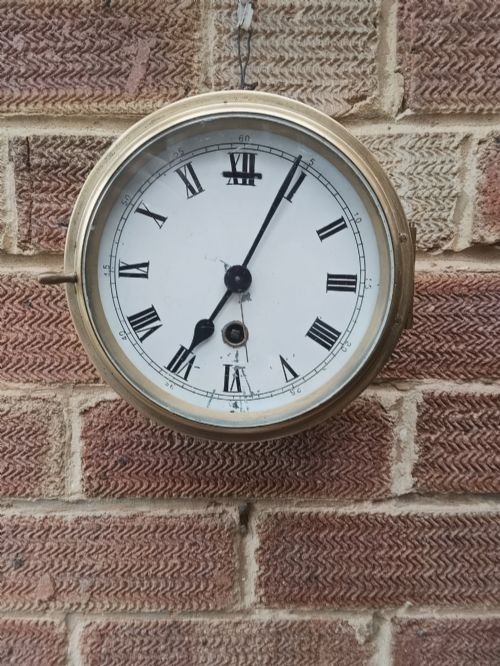
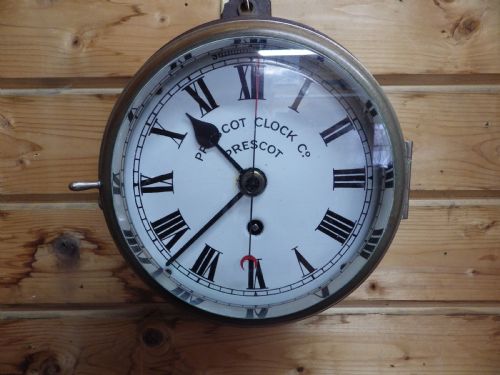
A nautical wall clock brings the functional architecture of a ship into a room, offering robust brass cases and clear enamel dials.
Nautical Wall Clock
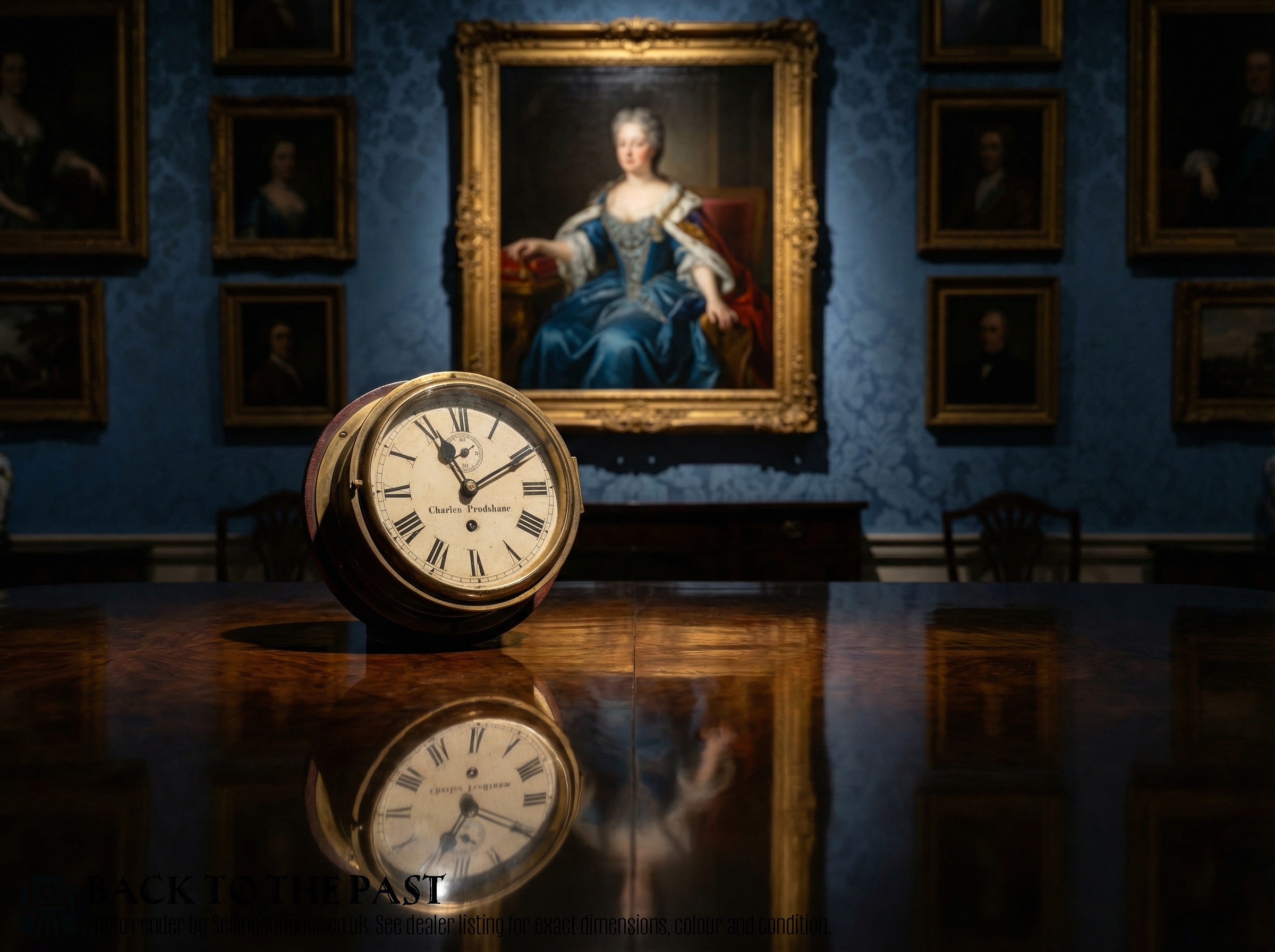
A nautical wall clock is an instrument designed to keep time in the demanding conditions of a ship, often taking the form of a bulkhead clock or a banjo clock barometer. These pieces span periods from the Victorian era through the mid-twentieth century, reflecting maritime, industrial, and Victorian maritime styles.
The version most commonly met on this page is the brass marine ships wall clock, frequently housed in a heavy brass or metal case with a glass face. Alongside these, buyers find carved oak and walnut banjo clock barometers as well as specialised engine room and radio room clocks.
Origins range from British makers to German workshops, encompassing military service pieces like Air Ministry clocks alongside domestic maritime instruments. The object types vary from simple wall clocks and barometers to complex fusee movement clocks and picture clocks.
What varies in quality
Quality separates mass-produced utility instruments from precision marine chronometry through the sophistication of the internal movement, such as the presence of a chain fusee mechanism rather than a standard lever platform. The weight and casting quality of the brass case also mark the distinction.
Finishing details dictate the standing of a piece, including hand-carved wooden cases in oak or walnut compared to plain industrial housings. Crisp enamel work on the dial and the original retention of components elevate certain examples above standard workshop output.
Nautical Wall Clock Retail Price Guide 2026
Typical asking prices for nautical wall clock among the pieces listed under this phrase on Sellingantiques today, from the lower quarter to the upper quarter. They describe what is for sale here now, not the wider market.
Some clocks recorded eight bells to mark the changing watch, turning a simple cabin wall into a mechanical shipboard crewmate.
PRESCOT CLOCK CO·KELVIN WHITE HUTTON LONDON·Schatz of Germany·Smiths Empire·Tempora·Sestrel
The Nautical Wall Clock Glossary
- Bulkhead clock
- A clock specifically designed to be mounted directly onto the structural partition wall of a ship's cabin or bridge. These heavy instruments generally feature secure screw bezels to withstand dampness and vibration.
- Fusee movement
- A mechanical drive system utilising a cone-shaped pulley to equalise the declining power of a mainspring as it unwinds. This mechanism ensures consistent torque and accurate timekeeping.
- Banjo clock barometer
- A wall-mounted instrument shaped like a banjo that combines a timekeeping clock with a weather-measuring barometer. They are frequently carved from dense timbers like oak and walnut.
- Radio room clock
- A specialised timepiece featuring marked red and green sectors on the dial to indicate mandatory silent periods for listening to distress frequencies. These segments are typical of mid-century maritime timing.
- Enamel dial
- A metal dial face covered with a fused glass powder coating, providing a durable and legible surface that resists yellowing. The numbers and chapter rings are typically painted onto this smooth white ground.
Nautical Wall Clock: Frequently Asked Questions
How do I wind a fusee ships clock?
Winding requires a matching key inserted into the dial aperture, turned gently until resistance indicates the mainspring is fully tensioned. Care must be taken not to overwind antique mechanisms.
Fusee movements with chain drives demand steady, deliberate turns to engage the cone pulley properly without slipping the chain links.
Where were bulkhead clocks mounted on ships?
Bulkhead clocks were secured to the interior vertical partitions of the wheelhouse, captain's cabin, or engine room. Their sturdy brass cases protected the internal gears from salt spray and engine vibrations.
Placement prioritized high visibility for crew members managing navigation watches and routine shipboard operations.
What do the coloured segments on radio room clocks mean?
The red and green wedges on the dial denote specific three-minute intervals during which radio operators were required to cease transmission and listen exclusively for distress signals. These silent periods safeguarded maritime communication at sea.
Operators monitored international frequencies during these exact marked windows on the clock face.
How do I distinguish a Victorian model from a mid-century piece?
Victorian examples frequently showcase hand-carved wooden frames in oak or walnut, often built as banjo clock barometers with heavy bezels. The aesthetic leans toward decorative maritime craftsmanship.
Mid-century instruments tend toward utilitarian brass or chrome bulkhead housings and painted metal dials, reflecting industrial production standards from military and commercial fleets.