


Vintage Marine Clock
These vintage marine clock pieces bring maritime history into the room, built for utility on the water and prized today for their robust mechanical heritage.

Vintage Marine Clock
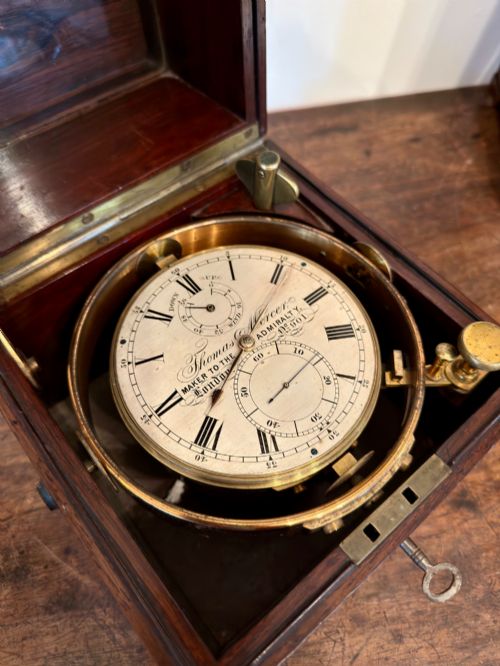
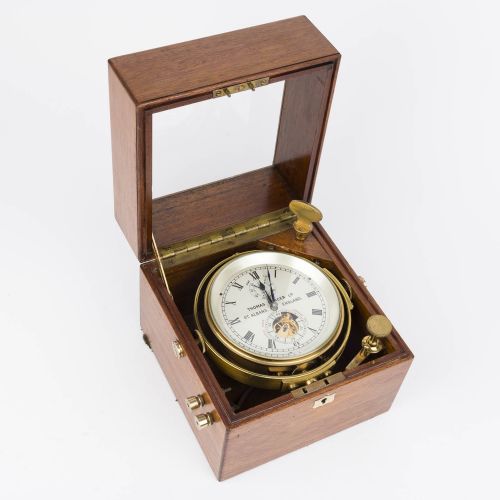
When you search for a vintage marine clock, you look at instruments built for maritime use, ranging from bulkhead clocks to chronometers and desk clocks. The selections on this page span the nineteenth century through the mid-twentieth century, capturing utilitarian designs from workshops in London, Liverpool, and beyond.
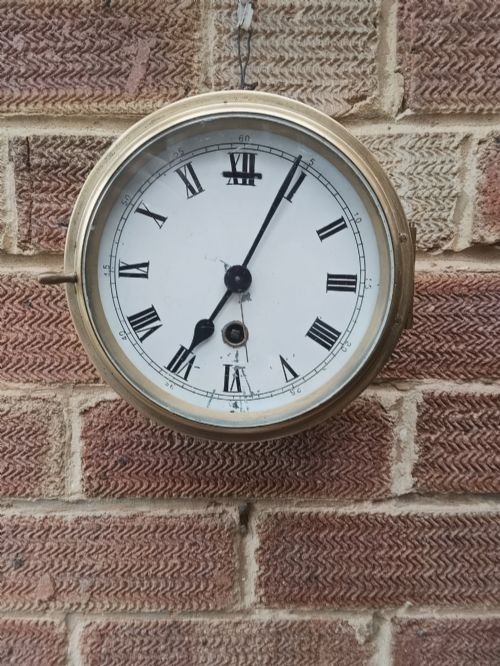
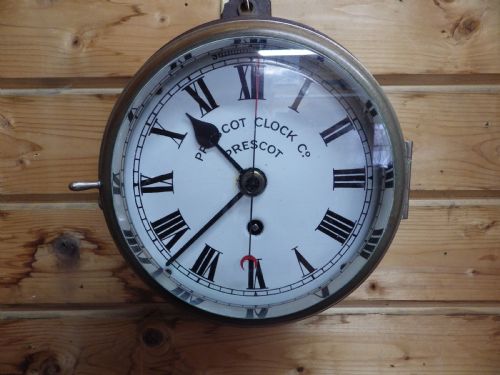
The most common formats you meet here are bulkhead wall clocks and marine chronometers. These objects originate from naval vessels, engine rooms, and radio rooms, reflecting the practical demands of life at sea across Victorian, Edwardian, and later periods.
Makers such as Mercer of London, Thomas Mercer, James McCabe, and Kelvin White & Hutton appear alongside military-issued pieces like Air Ministry clocks. Stylistically, the pieces draw on maritime, industrial, and Victorian maritime traditions, utilising brass, mahogany, and glass.
What varies in quality
The distinction between standard utility items and finer examples rests in the complexity of the movement and the provenance of the maker. Signed pieces by established chronometer makers demonstrate superior precision engineering compared to standard bulk production.
Materials and housing construction also determine standing, with heavy cast brass cases and secondary wooden elements like mahogany showing greater substance. Original components, legible enamel dials, and specialised mechanisms like twin fusee systems elevate individual pieces.
Listings feature 19th-century pieces alongside mid-century items, spanning brass, mahogany, glass, and enamel materials.
Mercer of London·Thomas Mercer·James McCabe·Kelvin White and Hutton·Smiths Empire
The Vintage Marine Clock Glossary
- Bulkhead clock
- A clock designed to be mounted directly to the wall or bulkhead of a ship's cabin or bridge. These heavy casings protect the mechanism from moisture and vibration.
- Chronometer
- A portable, highly accurate timekeeper used at sea for navigation and longitude calculation. They often feature gimbal mountings to keep the dial horizontal.
- Fusee movement
- A conical pulley device connected to the mainspring by a chain or cord, designed to equalise the torque as the spring unwinds. This mechanism ensures consistent timekeeping accuracy.
- Enamel dial
- A metal face fused with powdered glass powder under high heat to create a hard, glossy white surface. These dials remain resistant to discolouration and wear in marine environments.
- Silvered metal
- A brass or copper dial surface treated with a silver finish to provide clear, non-reflective contrast for the engraved numerals and markings.
Vintage Marine Clock: Frequently Asked Questions
What is a bulkhead clock?
A bulkhead clock is a heavy timepiece designed to mount securely to the wall of a ship's cabin or navigation room. Their robust housings protect the internal mechanisms from the constant movement and moisture of life at sea.
These pieces typically feature hinged brass bezels and secure fastenings to prevent shifting during rough weather.
How do I hang a heavy ship clock?
Hanging a heavy brass or wooden-cased timepiece requires anchoring directly into wall studs or using heavy-duty wall fixings. The weight of the metal casing and movement demands secure support.
Ensure the mounting point can bear the sustained load, as these clocks are substantially heavier than domestic wall clocks.
How do I tell an engine room clock apart?
Engine room clocks often feature distinct markings or categorical labels on the dial face, reflecting their specific operational context below deck. They prioritise high legibility and durability under industrial conditions.
Their casings are frequently engineered to endure greater exposure to heat, vibration, and atmospheric moisture.
What is a fusee movement?
A fusee movement uses a conical pulley and a fine chain to regulate the power delivered from the mainspring to the gear train. As the spring unwinds, the leverage changes to maintain even force.
This sophisticated mechanism improves the precision of the timekeeper over the duration of its wind cycle.