


Brass Bulkhead Clock
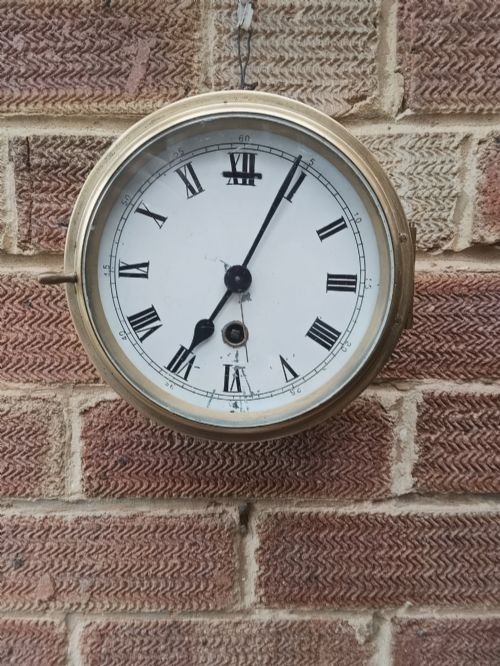
A brass bulkhead clock brings heavy maritime utility into a room with utilitarian form and solid metal construction.

Brass Bulkhead Clock
A brass bulkhead clock is a heavy marine timepiece originally mounted on the walls of ships, engine rooms, and radio cabins. These pieces range from Victorian fusee models to mid-century industrial designs by makers like Smiths and Schatz.
Most examples found here combine solid brass cases with clear glass face covers designed to withstand damp marine environments. They appear in forms such as standard wall clocks, radio room models with coloured segments, and twin fusee striking clocks.
Origins span British and German workshops, with dates stretching from the mid-nineteenth century through the 1960s. Edwardian and 1930s maritime styles dominate the selection, offering robust metal housings built for service at sea.
How they were made
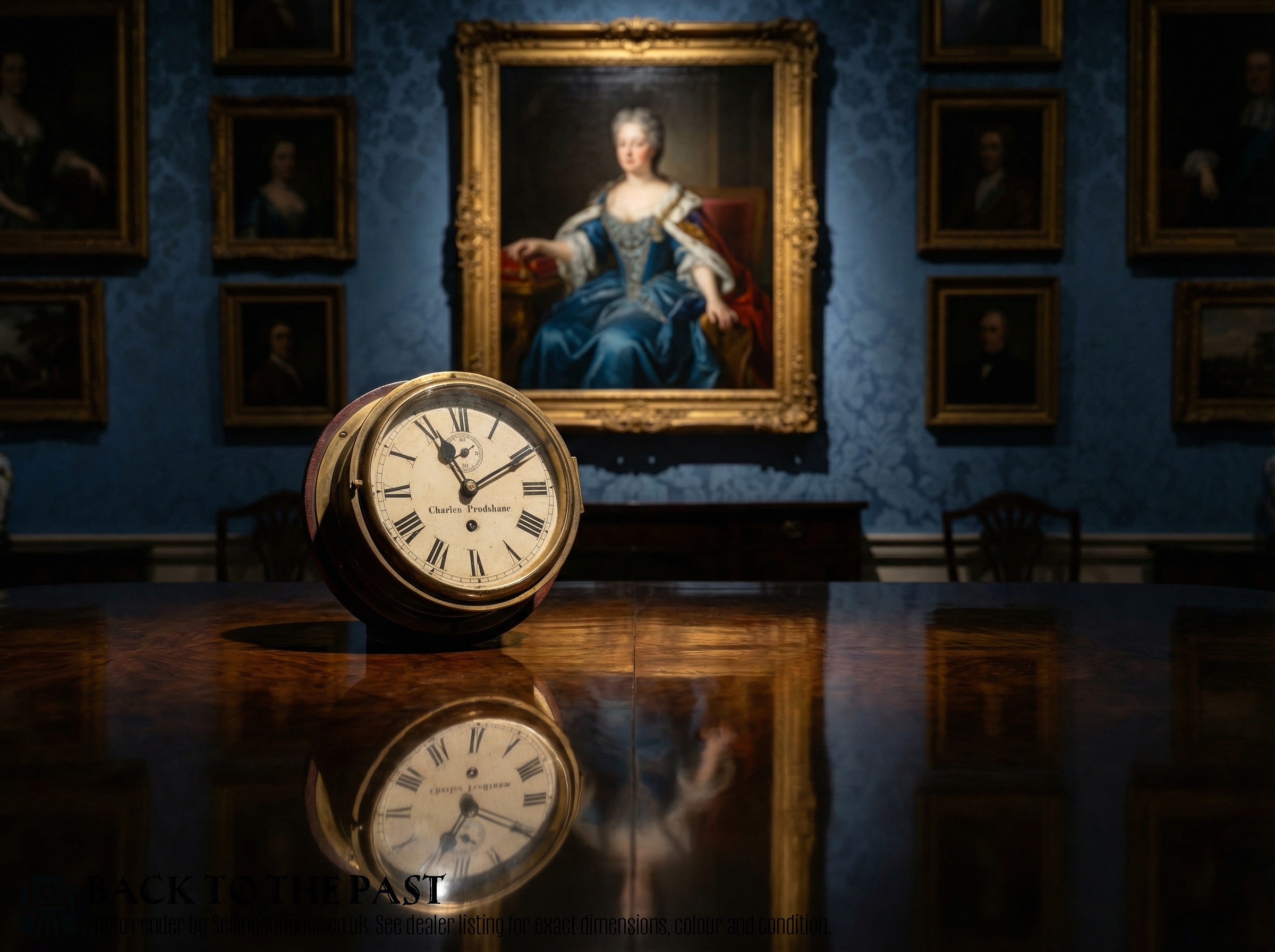
The construction centres on heavy cast brass cases designed to protect delicate mechanical movements from sea spray and vibration. Heavy glass bezels seal the dial face, secured by threaded bezels or hinged latches.
Dials are typically enamel or painted metal, featuring clear markings for legibility in poor light on board a vessel. Movements range from standard spring-driven mechanisms to precision chain fusee movements.
Materials such as nickel-plated brass, steel, and occasionally wood backplates appear across the inventory to suit different naval and civilian requirements.
Brass Bulkhead Clock Retail Price Guide 2026
Typical asking prices for brass bulkhead clock among the pieces listed under this phrase on Sellingantiques today, from the lower quarter to the upper quarter. They describe what is for sale here now, not the wider market.
Radio room clocks sport coloured segments so sailors knew precisely when to stop talking and listen for SOS calls.
What varies in quality
Quality rests in the precision of the movement and the weight of the casting rather than surface finish alone. Fusee movements with chain drive represent a higher grade of mechanical complexity than standard spring-driven equivalents.
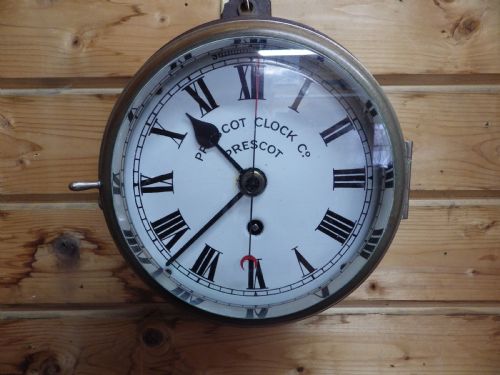
The thickness of the brass case and the clarity of the enamel dial distinguish standard commercial production from strict Admiralty pattern instruments. Maker signatures such as Sestrel or Prescot indicate specialised marine instrument making.
PRESCOT CLOCK CO PRESCOT·KELVIN WHITE HUTTON LONDON·Smiths Empire·Schatz of Germany·Sestrel
The Brass Bulkhead Clock Glossary
- Bulkhead
- A vertical partition dividing a ship into compartments. Clocks designed for these walls feature heavy mounting flanges and robust cases.
- Fusee movement
- A conical pulley mechanism used in clocks to equalise the declining power of the mainspring as it unwinds. This system delivers more even tension and better timekeeping over the running period.
- Enamel dial
- A metal face fused with powdered glass at high temperature. This creates a hard, glossy white surface that resists discolouration and wear.
- Admiralty pattern
- A design specification approved for use by the British Royal Navy. Such pieces adhere to strict standards of durability and legibility.
- Bezel
- The metal ring that holds the glass cover in place over the clock dial. On marine pieces, it often screws down tightly against a rubber or felt gasket.
Brass Bulkhead Clock: Frequently Asked Questions
How do you wind a brass bulkhead clock?
Most models require a dedicated winding key inserted directly into the dial face to tension the mainspring behind the movement. Care must be taken not to overwind the mechanism.
Fusee movements demand a steady hand when winding the chain drive to ensure the mechanism engages correctly without slipping.
Where were bulkhead clocks originally mounted?
These clocks were secured to the wooden or metal bulkheads of ships, specifically in navigation cabins, engine rooms, and radio communication spaces. Their heavy brass construction prevented salt air damage.
Domestic interiors later adopted them for studies, kitchens, and hallways due to their robust industrial aesthetic.
How do I date a brass bulkhead clock?
Dating relies on maker stamps, movement types, and stylistic indicators such as dial typography and case materials. Victorian and Edwardian examples often feature fusee movements and heavy cast brass bezels.
Mid-century models from the 1950s and 1960s introduce distinct radio room colour segments and simpler industrial brass or nickel-plated housings.