


French Ornamental Clock
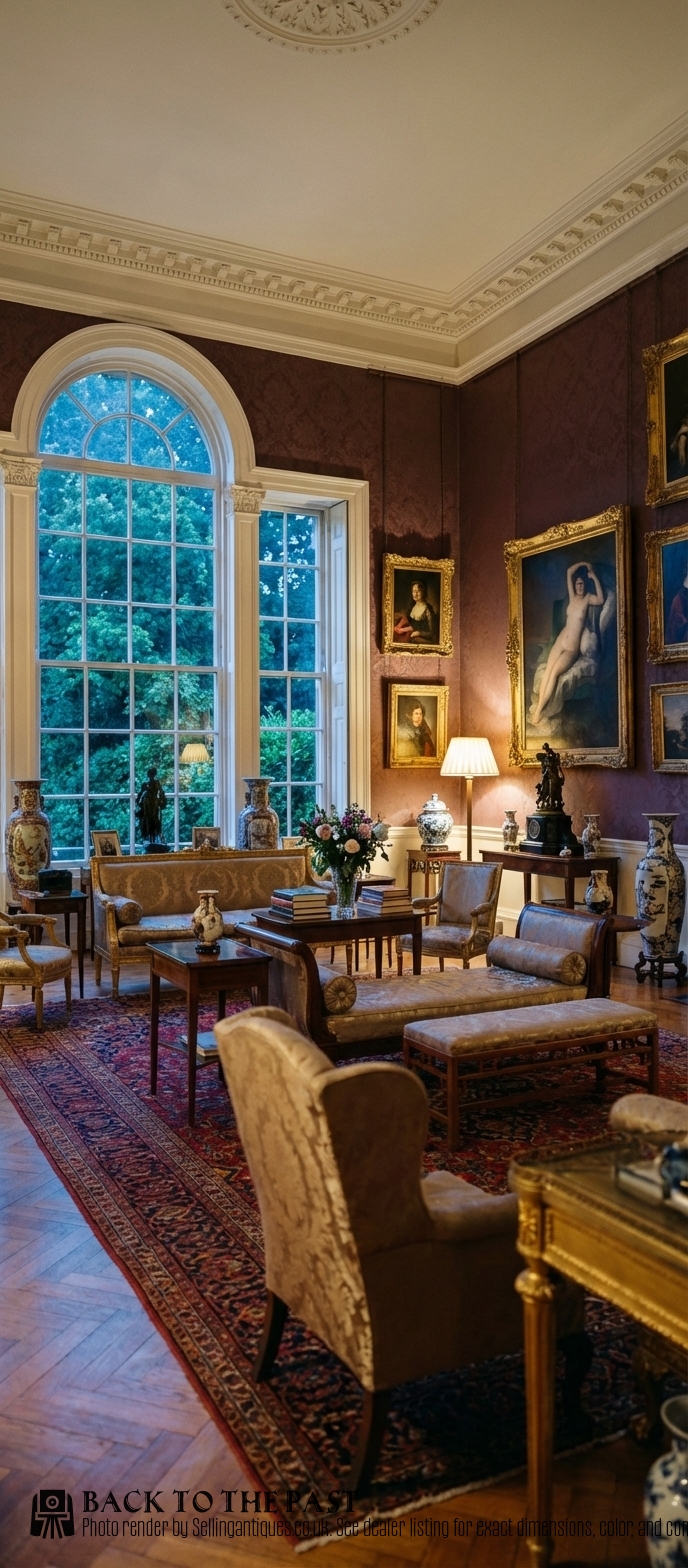
A french ornamental clock brings domestic grandeur into a room, combining sculptural bronze and marble with precise mechanical timekeeping.
French Ornamental Clock
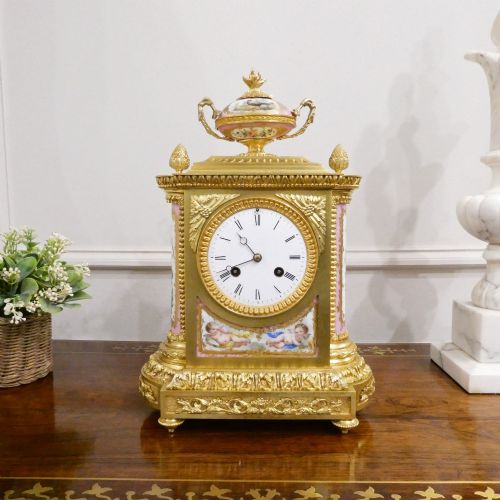
A french ornamental clock sits upon a mantelpiece or console table, functioning primarily as a decorative centrepiece with a dial. These pieces range from substantial architectural portico designs to delicate carriage clocks and multi-piece garnitures.
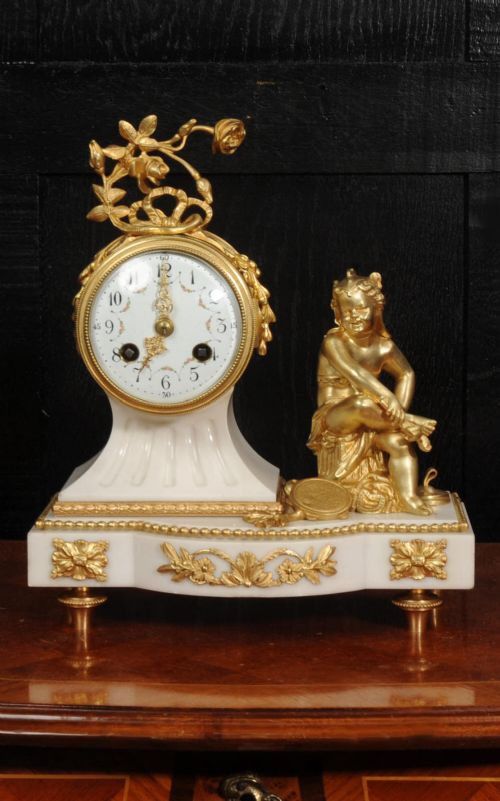
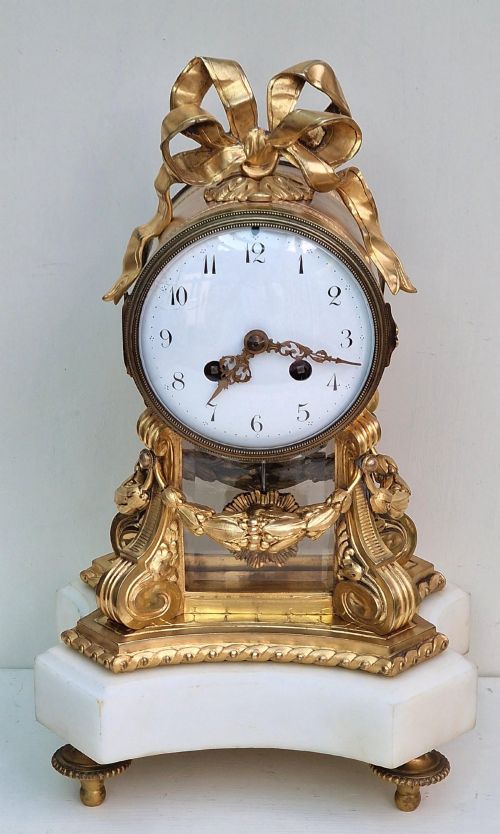
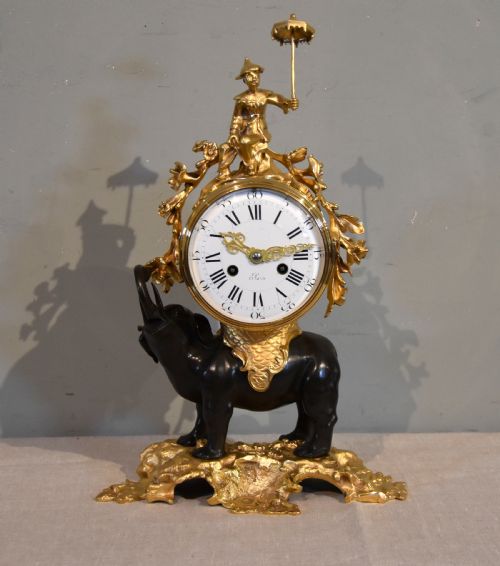
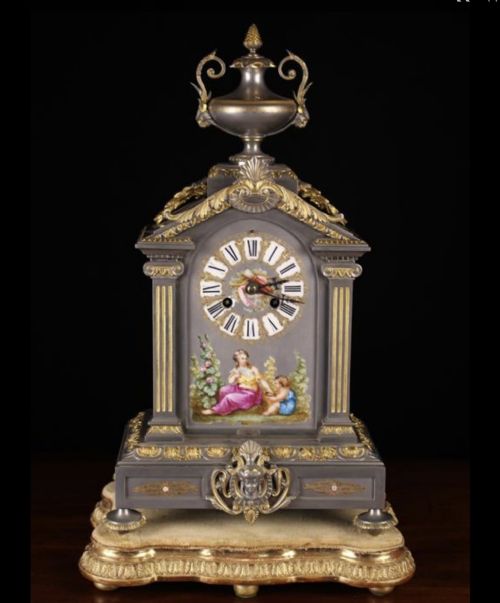
The objects seen here date predominantly from the nineteenth century, including periods associated with Victorian taste, Napoleon III, and Louis XVI revival styles. Forms vary widely, taking the shape of classical figures, animals such as elephants and lions, or symmetrical marble and porcelain structures.
Mantel clocks form the majority of available examples, often accompanied by matching side urns or candelabra in complete sets. Buyers frequently encounter gilt bronze and ormolu finishes housing enamel dials and visible pendulums.
Materials and construction methods
Foundry workers cast bronze and brass components, applying mercury gilding or ormolu to create brilliant metallic surfaces. Marble and alabaster served as heavy architectural bases, while carved oak and rosewood provided wooden frames for portico and cartel designs.
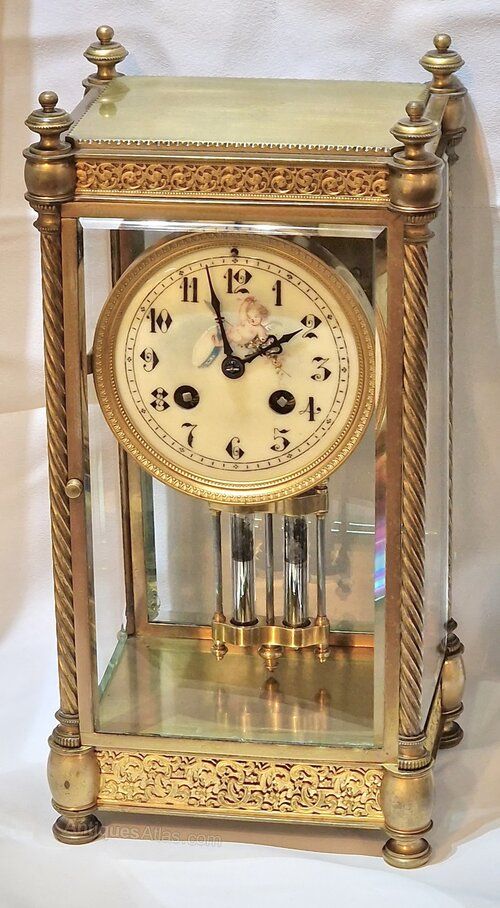
Craftspeople integrated hand-painted porcelain panels and enamel chapter rings into the metallic housings. Glass panels enclosed delicate movements in four-glass mantel clocks and portable carriage clocks.
Clockmakers fitted brass eight-day striking movements, sometimes utilising double fusee systems to maintain even tension on the gear train. Specialised makers produced sculptural figures and cast mounts that bolted directly to the stone or wooden chassis.
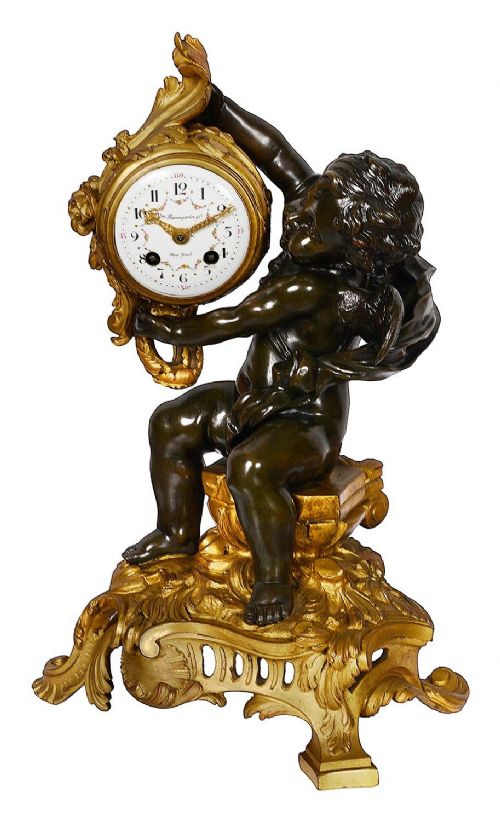
Elephants and cherubs appear unexpectedly supporting heavy bronze clock dials.
Distinctions in craftsmanship
The integration of materials determines overall refinement, where porcelain plaques feature finely detailed hand-painted scenes rather than transfer prints. Heavy marble bases with precise bevelling and tightly fitted glass panels indicate higher standards of workshop production.
Movement execution separates standard production from exceptional work. Signed brass backplates from recognised clockmakers indicate precision engineering and durability within the mechanical gear train.
Jean-Baptiste Delettrez·Japy Freres·Henry Dasson·Ravrio·Lemerle Charpentier·James Murray·F Marti
The French Ornamental Clock Glossary
- Ormolu
- Gilded bronze produced by applying a mercury and gold amalgam to a cast bronze base. This technique creates a rich golden finish characteristic of luxury French metalwork.
- Garniture
- A set comprising a central clock flanked by matching decorative objects such as urns or candelabra. These matched assemblies created symmetrical arrangements on nineteenth-century mantelpieces.
- Portico clock
- A clock housed within a architectural frame supported by four columns. This neoclassical form often incorporates wood veneers and hanging pendulums visible between the pillars.
- Cartel clock
- A wall clock mounted within an ornate, scrollwork frame of carved wood or gilt metal. The design integrates the case and dial into a single sculptural unit.
- Double fusee
- A mechanical system using conical pulleys and chains to equalize the pulling force of the mainspring as it unwinds. This mechanism improves timekeeping accuracy across the duration of the wind.
French Ornamental Clock: Frequently Asked Questions
How do four glass clocks work?
Four glass clocks feature glass panels on all sides and a glass door, allowing an unobstructed view of the mechanical movement inside. They often include an enamel dial and a mercury or temperature-compensated pendulum.
The transparent housing emphasises the brass gear train and escapement while resting on a stepped marble or gilt metal base.
What distinguishes Louis XVI style from Empire?
Louis XVI style relies on neoclassical restraint, featuring symmetrical urns, ribbons, floral swags, and delicate ormolu mounts on marble or porcelain bodies. Forms remain lighter and more architectural.
Empire style, influenced by Napoleonic military motifs, utilises heavier bronze casting with symbols of power, classical figures, and patinated dark bronze paired with bright ormolu.
Where were carriage clocks placed?
Carriage clocks served as portable timekeepers for travellers during the nineteenth century, housed in brass cases with bevelled glass panels and folding carrying handles. Owners transported them in fitted leather travel cases.
In the home, they sat on desks or bedside tables, functioning as reliable eight-day clocks that required no permanent wall or mantel installation.