




Cherub Gilt Clock
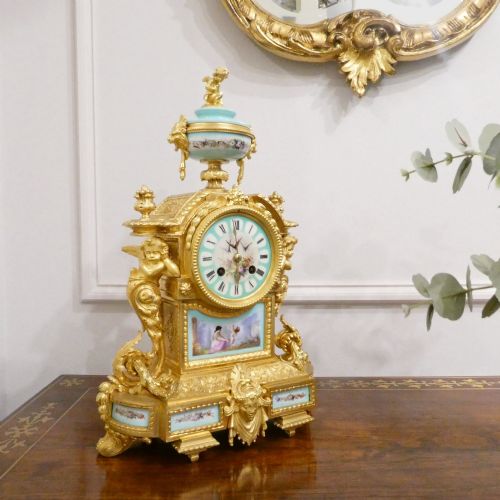
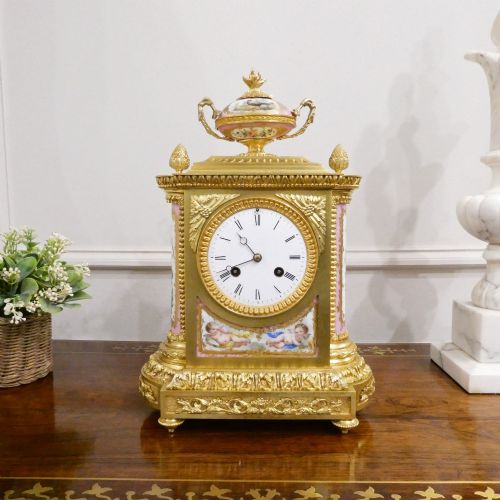
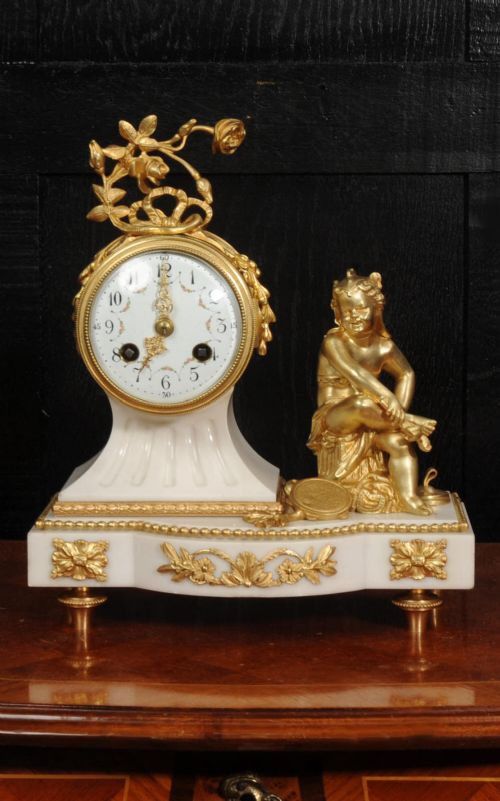
A cherub gilt clock brings nineteenth-century French domestic theatre to the mantelpiece, combining gilt bronze and marble with classical figures.
Cherub Gilt Clock
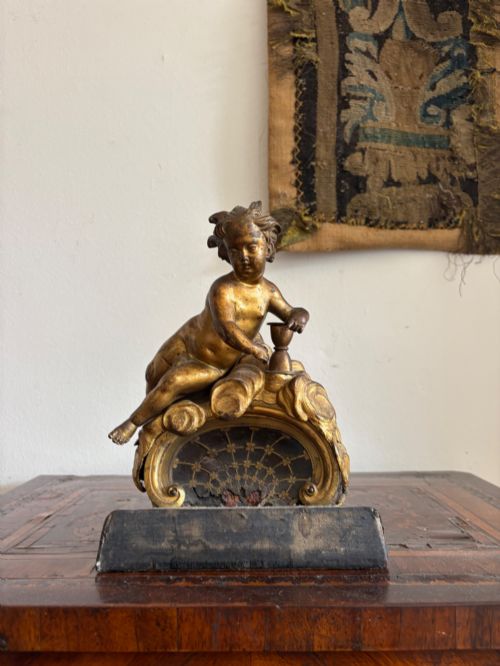
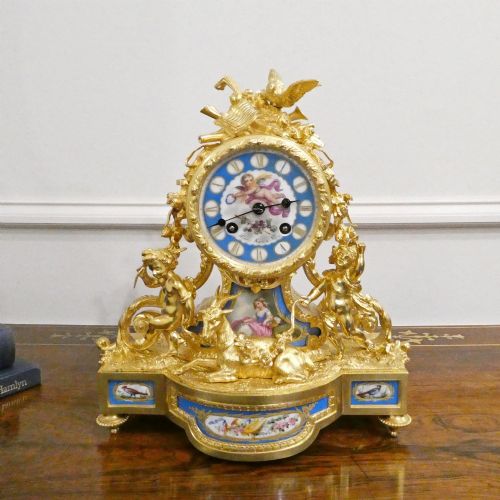
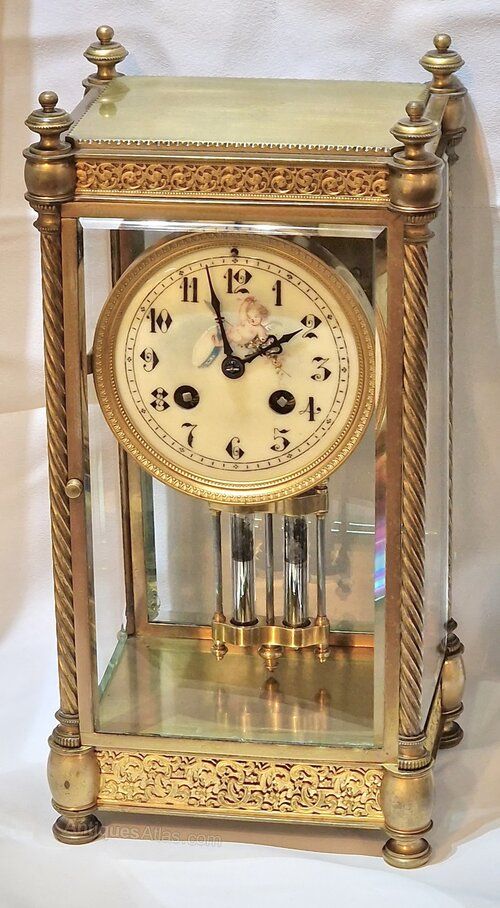
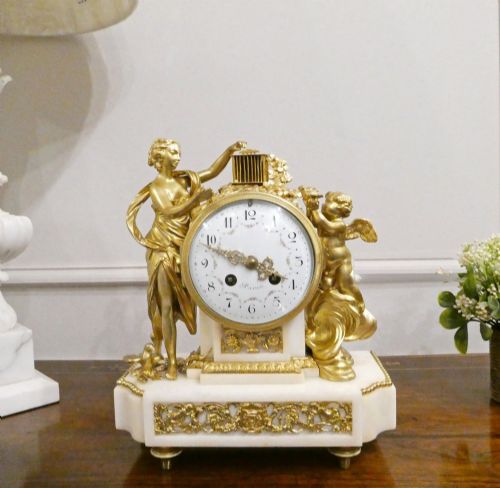
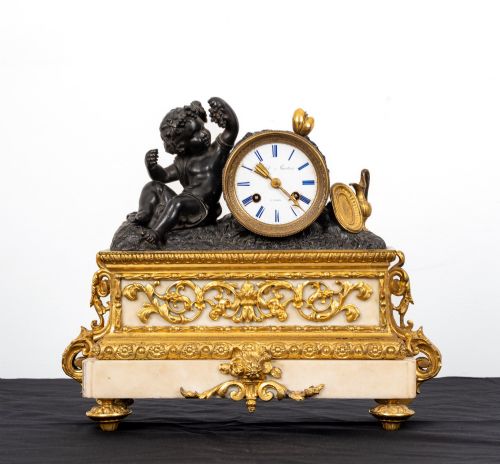
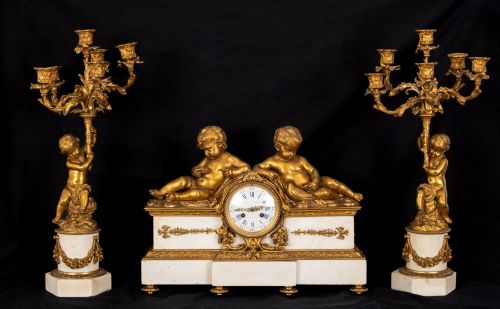
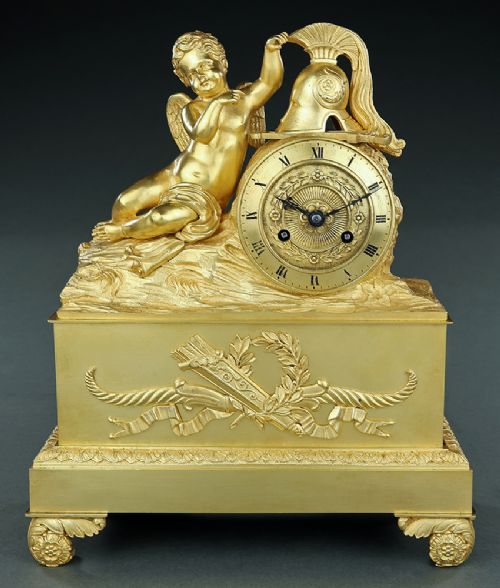
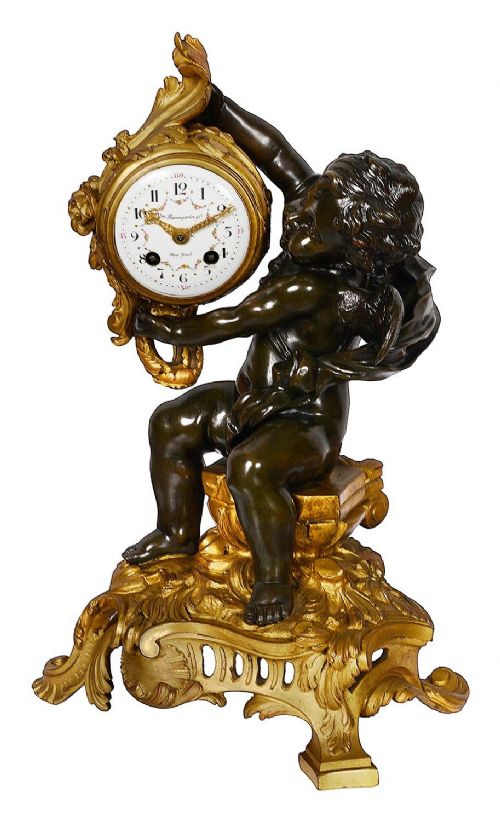
A cherub gilt clock is a domestic timekeeper shaped by nineteenth-century French and English design, frequently taking the form of a mantel clock or a larger garniture set complete with matching candelabras. The search phrase covers figural pieces where cast bronze putti, cherubs, or winged infants feature prominently beside the dial as finials, supports, or central motifs.
Most examples encountered on this page originate from the Victorian era and the broader nineteenth century, reflecting Louis-style revivals, Rococo excesses, or Empire classical restraint. The horological movement sits within ormolu, gilt bronze, marble, or porcelain housings, often paired with hand-painted enamel dials depicting floral garlands or Roman numerals.
Materials and construction methods
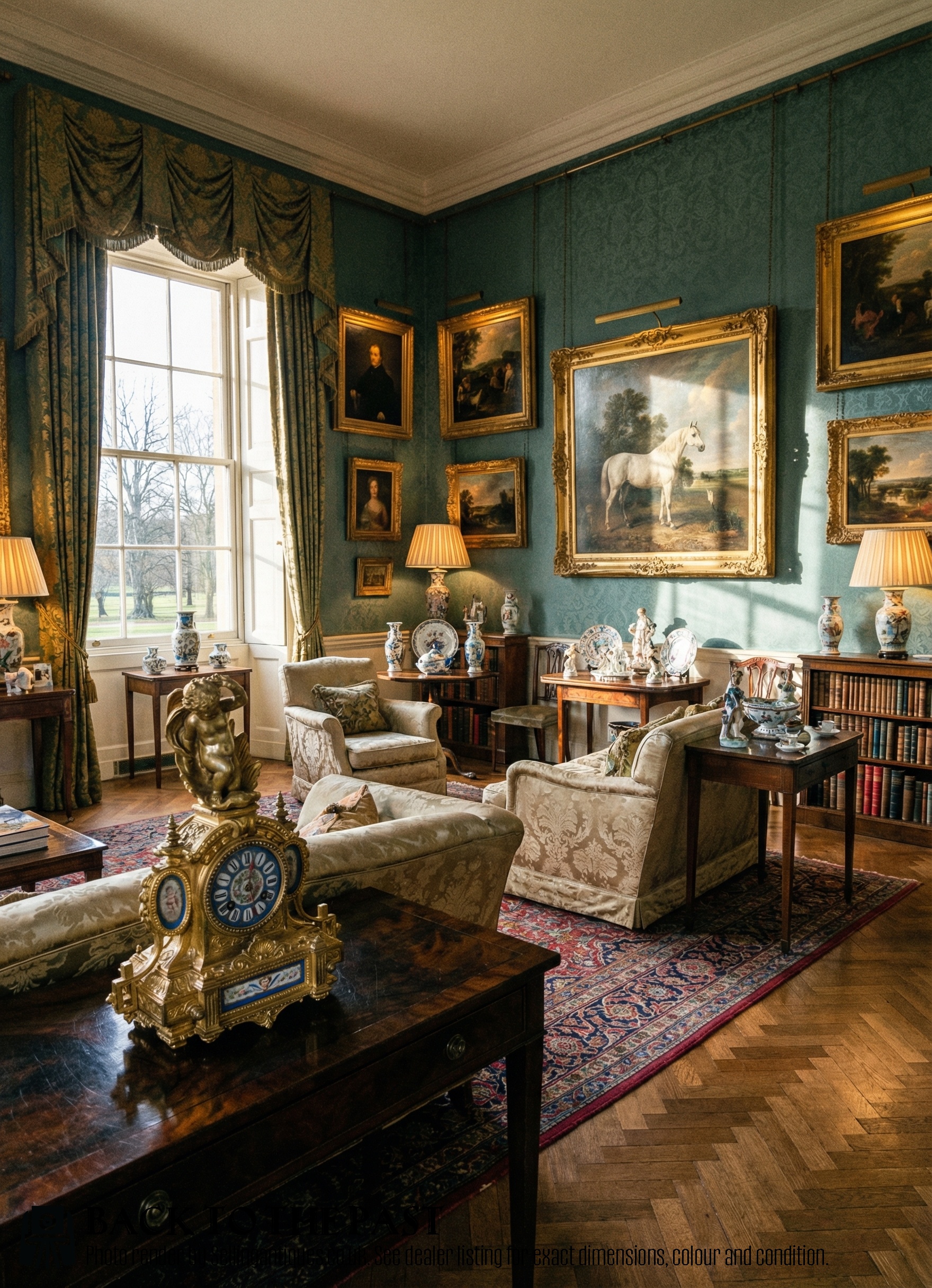
Foundries produced these works by casting bronze, brass, or copper alloys into intricate moulds, then applying mercury gilding or electroplating to achieve the distinctive ormolu finish. Ormolu, or ground gold suspended in mercury, created a deep, warm brilliance that required meticulous hand-chasing after firing to sharpen the feather details on wings and drapery.
Solid white marble, onyx, and porcelain panels from factories such as Sèvres provided contrasting architectural bases and clock face surrounds. Mechanical movements by makers like Japy Frères, Samuel Marti, or Vincenti et Cie were housed within these heavy metal and stone cases, driving eight-day striking trains.
Cherub Gilt Clock Retail Price Guide 2026
Typical asking prices for cherub gilt clock among the pieces listed under this phrase on Sellingantiques today, from the lower quarter to the upper quarter. They describe what is for sale here now, not the wider market.
Factors separating standard pieces from the finest works
Quality rests primarily on the depth and crispness of the bronze chasing, where superior workshops preserved the sharpness of facial expressions and feather textures rather than leaving soft, uniform surfaces. Heavier gauge metal castings and substantial marble plinths indicate higher tier production, distinguishing exceptional gallery pieces from lighter commercial variants.
The integration between the sculptural figures and the clock architecture also dictates grade. Top-tier examples unite the cherub motif organically with the dial housing or garniture ornaments, utilising signed movements from premier Parisian clockmakers.
Jean-Baptiste Delettrez·Henry Marc·Siffel and Cartier·Henry Dasson·Le Roy Paris·Japy Freres·Leon Message·Jollet et Cie·Samuel Marti·Achille Brocot·Ansonia of America·Le Roy and Fils·Gay Vicarino and Co·Vincenti et Cie
The Cherub Gilt Clock Glossary
- Ormolu
- Gilded bronze produced by applying a mercury and gold amalgam to a cast bronze base before heating. The process creates a rich, metallic golden lustre characteristic of nineteenth-century French luxury items.
- Garniture
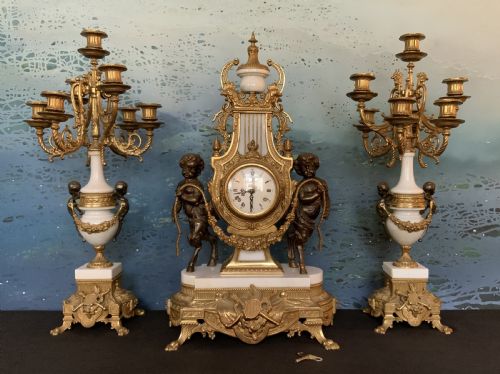
- A set of decorative matching objects designed for display together on a mantelpiece, usually comprising a central clock flanked by matching candelabras or urns.
- Putto
- A plump, naked male child figure frequently depicted in classical and Renaissance art, commonly referred to as a cherub on these clock cases.
- Japy Frères
- A prominent nineteenth-century French clockmaking dynasty known for producing reliable mechanical movements utilised across numerous decorative mantel clocks.
- Striking train
- The secondary gear train within a mechanical clock movement that controls the hourly or half-hourly chiming of a bell or gong.
Cherub Gilt Clock: Frequently Asked Questions
What is a garniture clock set?
A garniture clock set consists of a central timekeeper accompanied by matching side pieces such as candelabras or decorative urns. These matched suites were designed to create a balanced, symmetrical display across a fireplace mantel.
On this page, sets frequently incorporate bronze cherubs and marble plinths across all constituent items, maintaining a unified nineteenth-century aesthetic.
How do I wind an antique mantel clock?
Antique mechanical movements utilise a dedicated winding key inserted into small arbours on the enamel dial face. Turning the key tensions the internal springs cautiously until resistance indicates a full wind.
Care must be taken not to over-wind these historic mechanisms, and striking trains should be allowed to complete their cycle without interference.
Are these clocks fully working?
Operational condition varies across individual listings, with many movements professionally cleaned, serviced, and restored to working order. Some pieces are offered as decorative timepieces or require specialist horological attention before daily use.
Buyers should examine specific listing descriptions regarding whether the eight-day striking train and pendulum are currently operational.
How do I distinguish Louis XVI style from Rococo?
Louis XVI style relies on neoclassical symmetry, straight architectural lines, architectural marble columns, and restrained geometric or classical mounts. Rococo revival pieces embrace asymmetry, flowing C-scrolls, organic leaf motifs, and exuberant, swirling bronze ornamentation.
Cherubs appear in both traditions, but their surrounding frames shift from rigid classical geometry to fluid naturalistic cascades.