


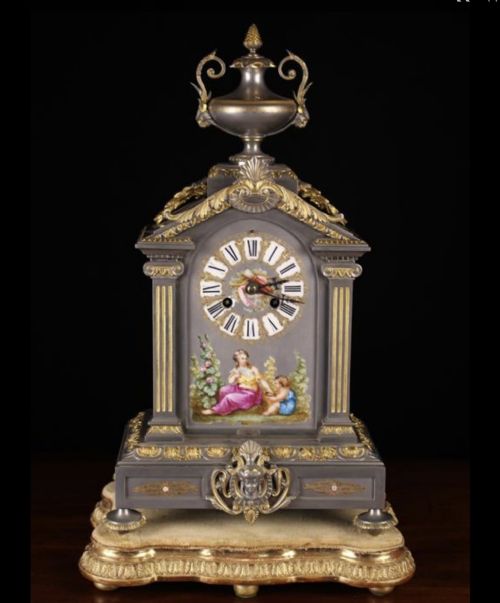


Louis XVI Revival Clock
These louis xvi revival clock pieces bring grand French Chateau elegance to a room, valued for their ornate ormolu and hand-painted porcelain mounts.
What these pieces are
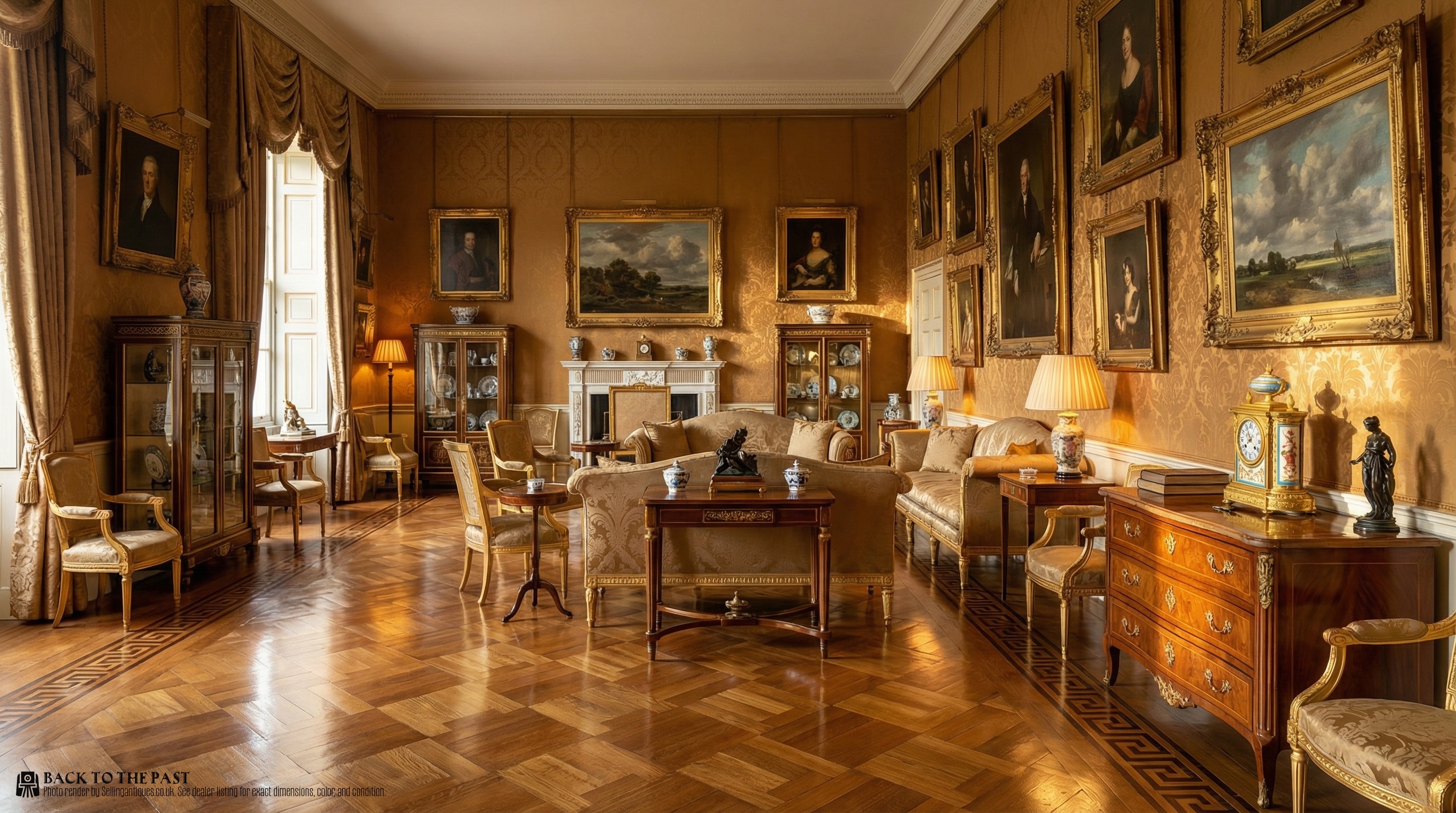
A louis xvi revival clock brings classical French design into nineteenth-century interiors through formal mantel clock formats. These pieces draw on eighteenth-century models, combining architectural bronze work with decorative arts.
The pieces on this page appear primarily from the nineteenth century and the Victorian era, executed in styles such as French Louis XVI Revival and French Rococo Revival. They function as striking mantel clocks designed to anchor a room.
How they were made
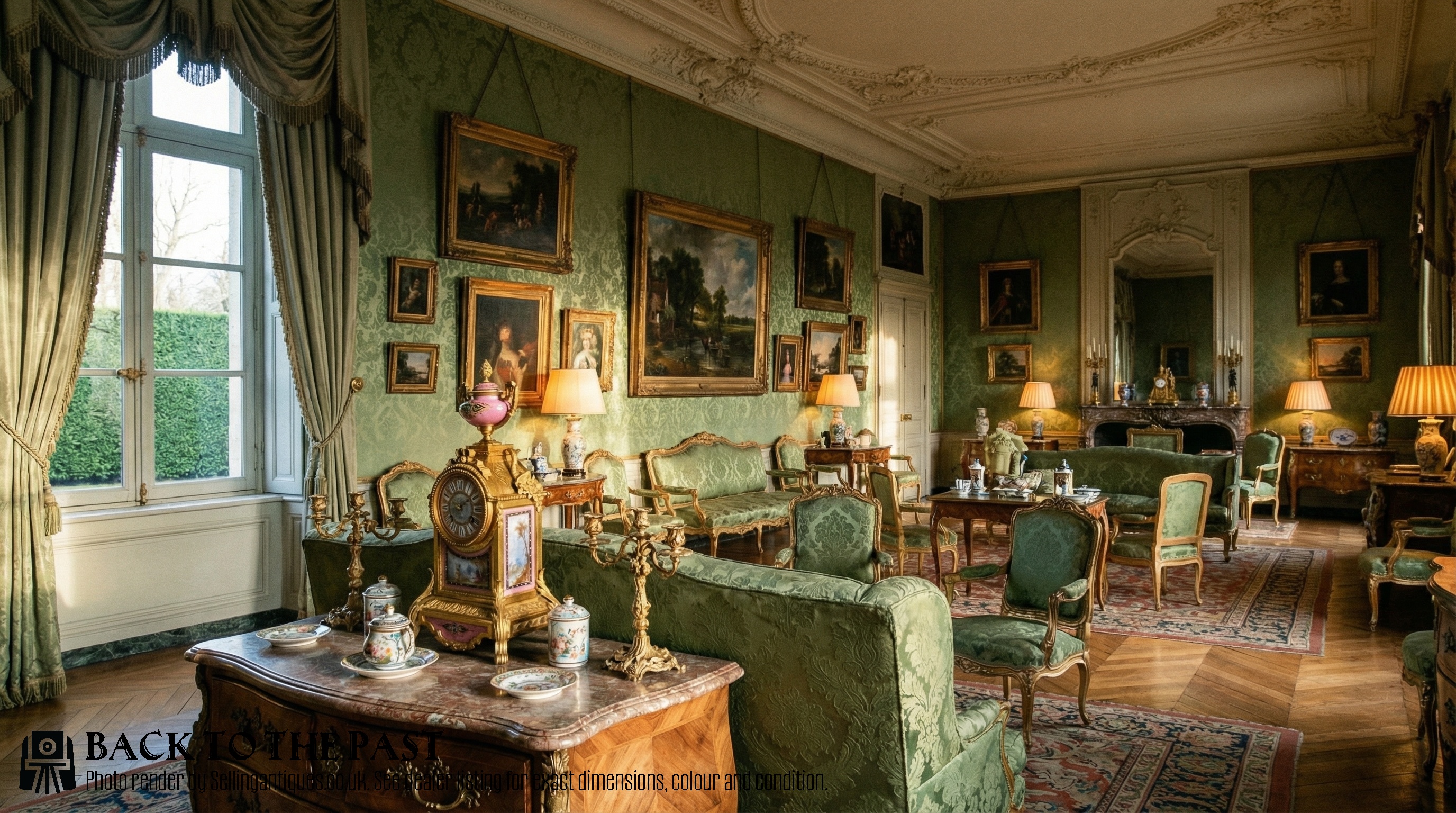
Materials span ormolu, gilt bronze, glass, porcelain, and enamel dials. Artisans combined cast metalwork with delicate hand-painted porcelain panels set directly into the clock cases.
Movements within these pieces generally run on an eight-day cycle. Workshops housed these mechanical workings inside heavy bronze or ormolu housings decorated with classical motifs.
Retail Price Guide 2026
Typical UK retail prices for louis xvi revival clock, calculated from the Sellingantiques database of over a million retail prices indexed since 2003. This retail price guide relies exclusively on Sellingantiques data; no external sources or auction records are used, so the figures do not describe the wider market.
Current listings feature nineteenth-century and Victorian pieces employing ormolu, gilt bronze, glass, and hand-painted porcelain.
What varies in quality
Quality rests in the crispness of the gilt bronze chasing and the precision of the hand-painted porcelain decoration. Finer examples display deeper relief and meticulous detail across every cast surface.
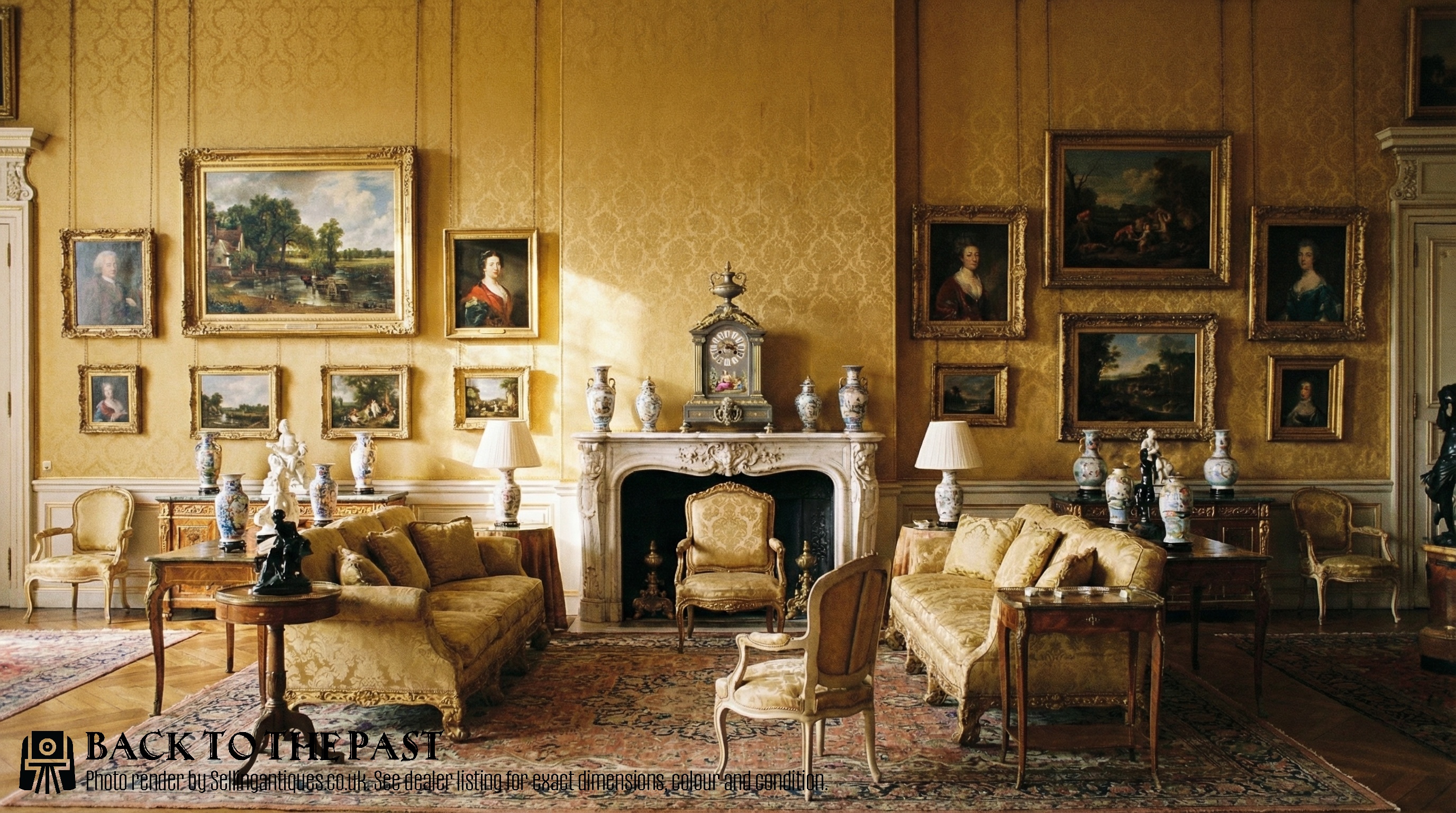
Signatures by established makers like Henry Dasson or JP Delettrez elevate a piece through documented workshop provenance. The execution of the enamel dial and the weight of the ormolu further separate standard production from masterwork.
Henry Dasson·JP Delettrez
The Louis XVI Revival Clock Glossary
- Ormolu
- Gilt bronze created by applying a mercury-gilding mixture to cast bronze. This technique produces a rich golden finish characteristic of French decorative arts.
- Enamel dial
- A clock face formed by fusing powdered glass to a metal substrate under high heat. These dials feature delicate hand-painted numerals and minute markers.
- Mantel clock
- A freestanding clock designed to sit upon a fireplace mantel or shelf. These objects combine timekeeping with sculptural presence.
- Eight day
- A clock movement mechanism that requires winding once every week. This mechanical standard allowed domestic clocks to run reliably with minimal attention.
Frequently Asked Questions
How do I wind an eight day mantel clock?
Use the designated key to turn the arbors located on the enamel dial until you feel resistance. Take care not to overwind the mainspring.
Ensure you keep the key in a safe place nearby so you do not lose it between weekly windings.
Where should I place a gilt bronze clock?
Position the piece on a stable, level mantelpiece or heavy sideboard away from direct sunlight and dampness. Heavy ormolu and porcelain bodies require solid support.
Allow adequate clearance around the case so the pendulum and movement can operate without obstruction from surrounding objects.
How do I distinguish nineteenth century pieces from earlier work?
Examine the construction of the movement plates, screw threads, and the composition of the dial enamel. Nineteenth-century revivals adapt eighteenth-century forms using Victorian manufacturing standards.
Look for maker signatures or stamps on the movement backplate to confirm the exact period of production.
What is the difference between ormolu and gilt bronze?
Ormolu specifically refers to mercury gilding on bronze, a process yielding a distinct golden lustre. Gilt bronze can encompass various modern or historical plating methods.
Both terms describe the golden metallic surfaces seen across French revival clock cases.