
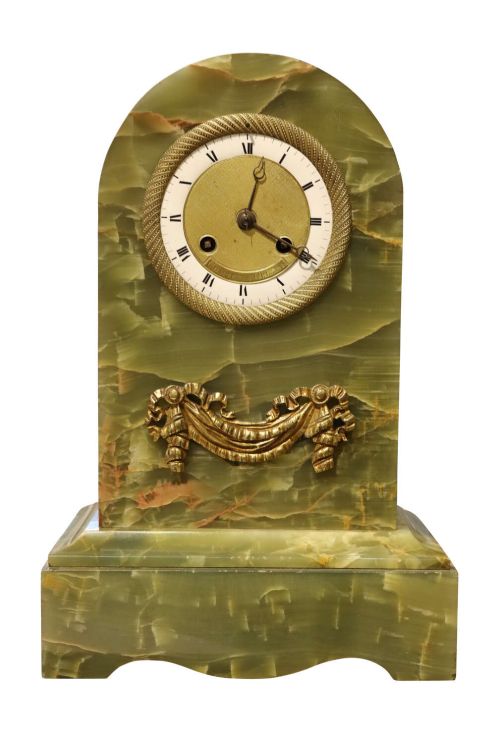


Green Onyx Mantel Clock
A green onyx mantel clock brings striking banded stone and mechanical precision together on a shelf or fireplace.

What these clocks are
A green onyx mantel clock combines heavy mineral stone with traditional timekeeping, originating largely from French and British workshops during the nineteenth and early twentieth centuries. These decorative timepieces span several distinct aesthetic movements, ranging from nineteenth century French designs to later Art Deco iterations.
The versions most commonly met on this page are French and British pieces featuring polished green onyx cases, frequently accompanied by metal mounts, garniture sets, or figural sculptures. They range in form from architectural nineteenth century clock garnitures to streamlined Art Deco creations.
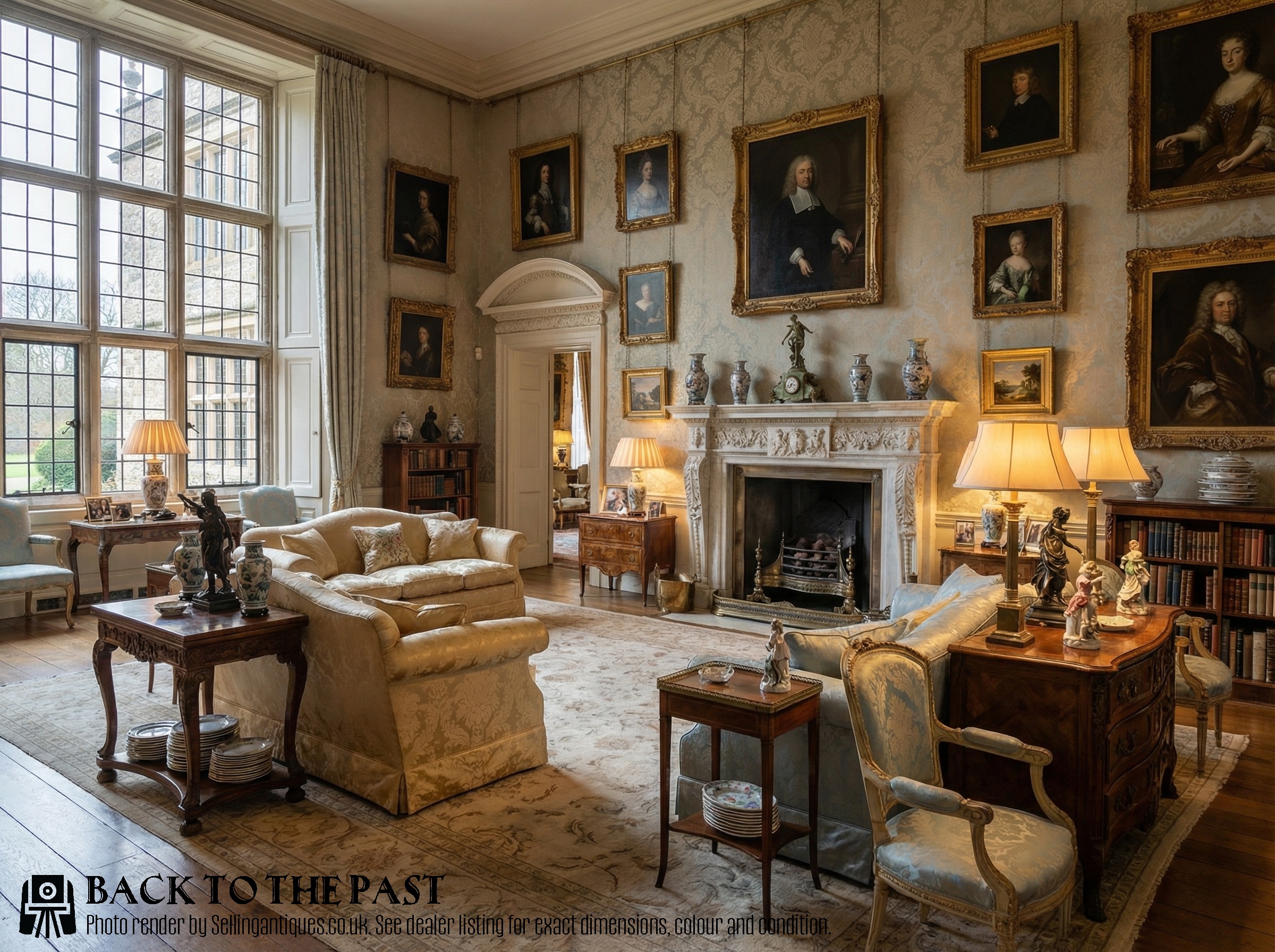
Materials and construction
Makers constructed these clocks using slabs of quarried green onyx, often combined with cast brass, gilt bronze, and ormolu mounts to accent the natural veining of the stone. Dials typically feature white enamel with distinct numerals, protected behind bevelled glass bezels.
Internal brass mechanical movements drove the timekeeping, while sculptural elements utilised spelter or bronze. The heavy stone cases required precise cutting and polishing to expose the translucent layers of the onyx.
Retail Price Guide 2026
Typical UK retail prices for green onyx mantel clock, calculated from the Sellingantiques database of over a million retail prices indexed since 2003. This retail price guide relies exclusively on Sellingantiques data; no external sources or auction records are used, so the figures do not describe the wider market.
Some models feature stone so heavily banded that the dial appears to float upon a stormy green sea.
Markers of quality
Quality in these clocks rests upon the depth of the green onyx and the crispness of the cast metal mounts, where hand-chiselled ormolu details elevate a piece far above standard production. The integration of sculptural figures, such as patinated bronzes by known modellers, also defines the upper tier.
The sophistication of the internal movement and the quality of the enamel dial further separate standard mantel timepieces from exceptional garniture sets. Pieces that retain their matching side ornaments display a higher level of original artistic intent.

Charles à Orléans·Elliott·Ferdinand Priess
The Green Onyx Mantel Clock Glossary
- Green Onyx
- A banded variety of chalcedony or calcite coloured by metallic oxides, highly prized for its rich green hues and polished finish. It forms the primary structural and decorative housing for these mantel clocks.
- Garniture Set
- A matching set of ornamental pieces comprising a central clock flanked by matching side vases or urns. These decorative ensembles were designed to sit symmetrically upon a mantelpiece.
- Ormolu
- Finely ground high-carat gold mercury-gilded to a bronze object, creating a bright golden finish. It frequently highlights the corners and bezels of nineteenth century clock cases.
- Spelter
- A zinc alloy used as a less expensive alternative to bronze for casting decorative figures and sculptural elements. It was often painted or electroplated to simulate bronze or gilt finishes.
- Enamel Dial
- A metal clock face fused with powdered glass melted at high temperatures to create a smooth, glossy white surface. Black painted numerals and delicate hands are typically fired onto this background.
Frequently Asked Questions
How do I wind a green onyx mantel clock?
Most mechanical versions utilise a key inserted into winding holes on the enamel dial to tension the internal springs. Care must be taken not to overwind the movement.
Regulating the pendulum ensures the clock keeps accurate time once placed on a stable mantel surface.
What is a clock garniture?
A clock garniture consists of a central timekeeper accompanied by matching decorative side pieces, such as urns or vases. These sets were designed to create a balanced display across a fireplace.
Finding a complete matching set remains a significant draw for collectors.
How do I distinguish Art Deco from Victorian models?
Victorian examples tend to feature ornate ormolu mounts, classical architectural motifs, and heavier classical proportions. They often form part of elaborate garniture sets.
Art Deco pieces embrace geometric lines, stylised figures, and streamlined silhouettes characteristic of the early twentieth century.
Where should I place these clocks?
These timepieces require a level, stable surface such as a mantelpiece, sideboard, or sturdy shelf to support their considerable stone weight. Keeping them away from direct sunlight and damp environments protects the delicate enamel dials and internal metals.
Allowing adequate clearance ensures the pendulum swings freely without obstruction.