




Brass Clock Under Dome
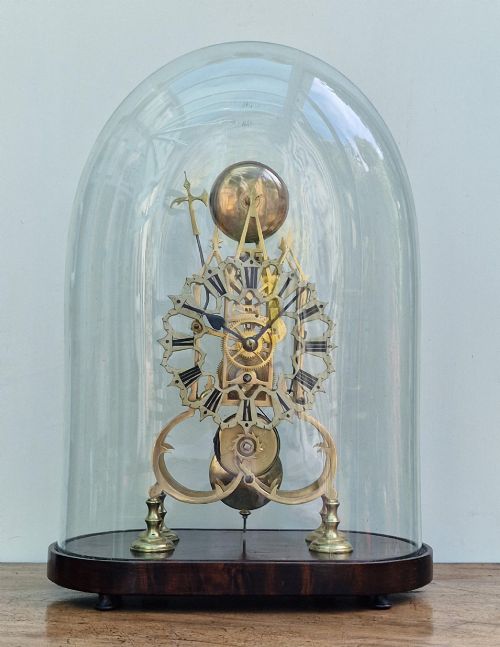
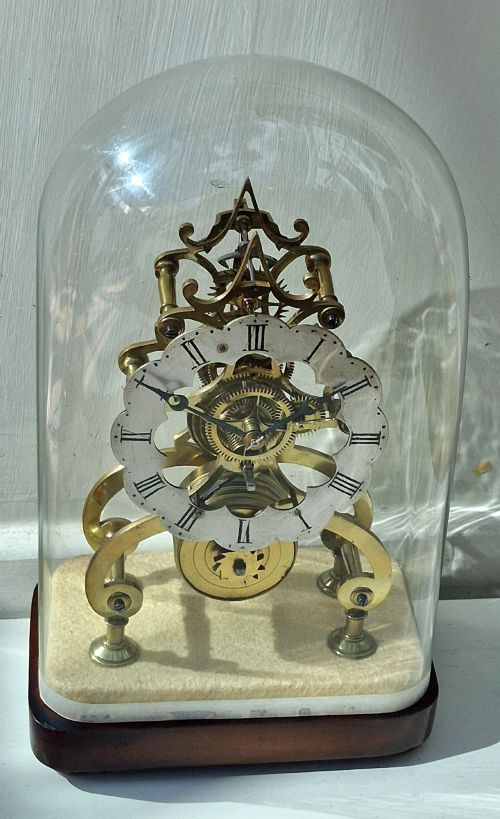
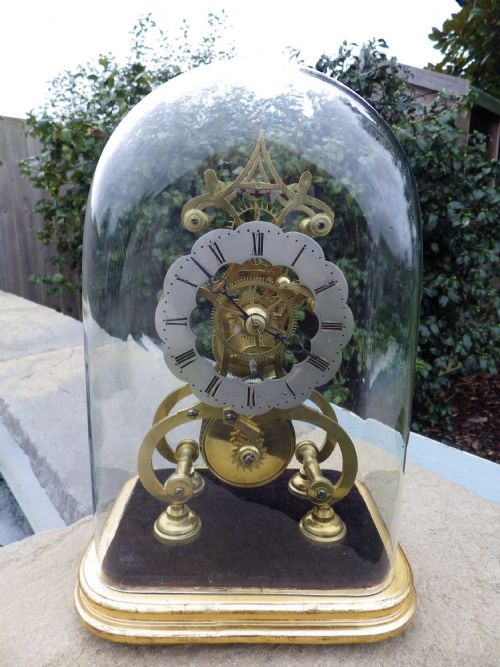
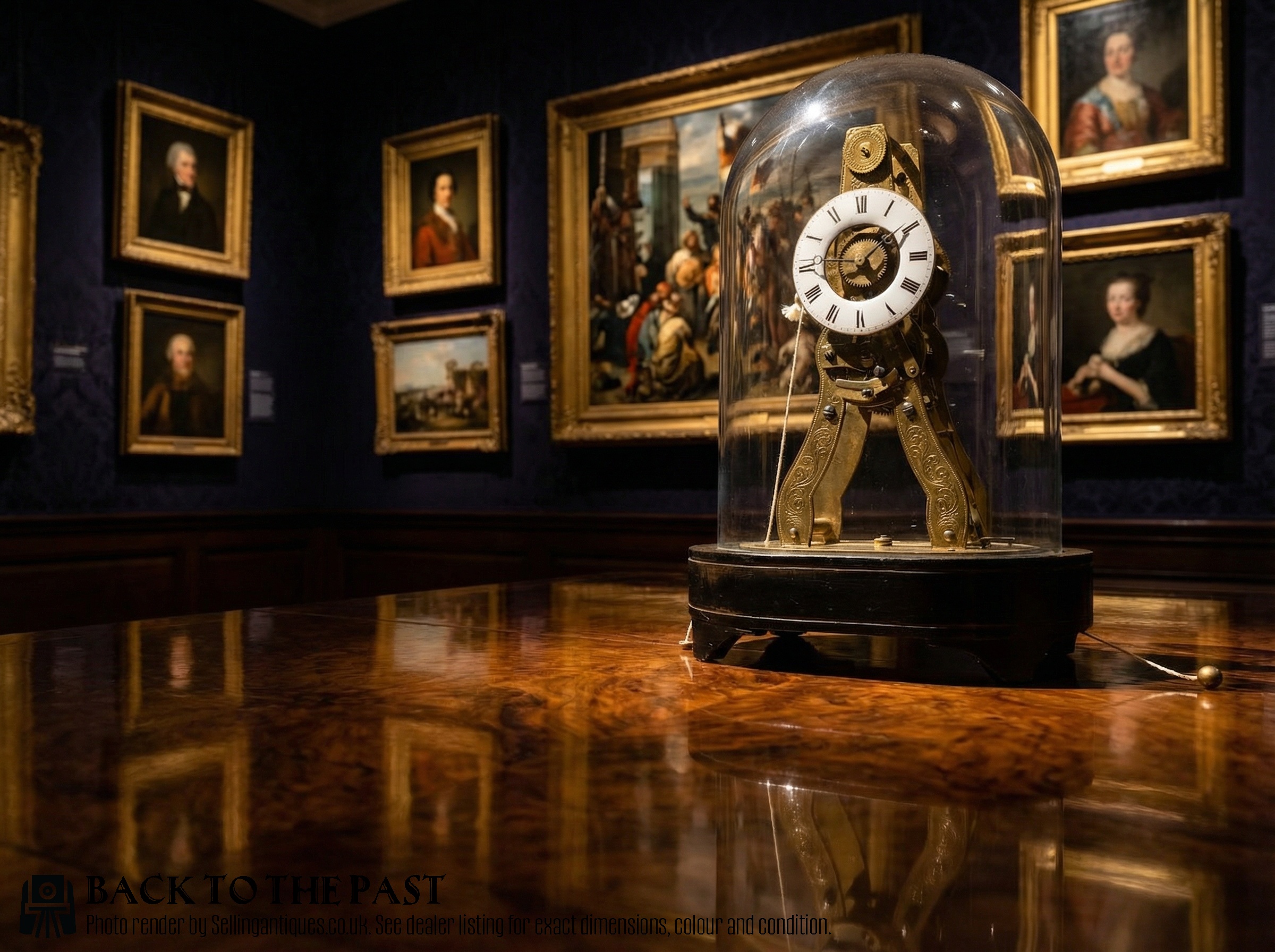
A brass clock under dome marries exposed brass mechanics with protective blown glass, offering a clear view of intricate wheel work.
Brass Clock Under Dome
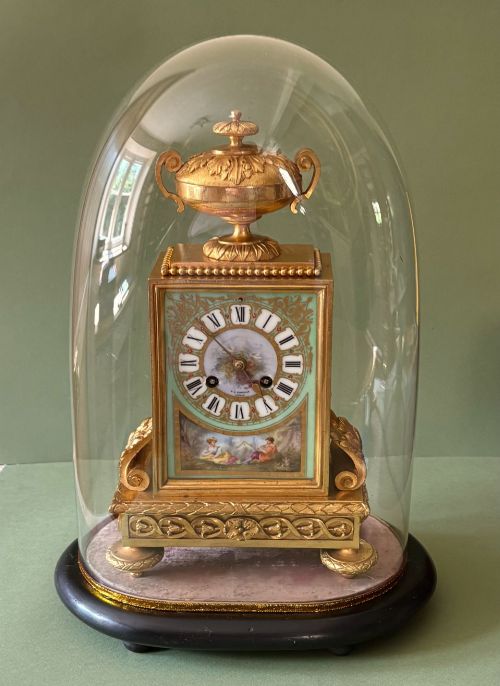
A brass clock under dome presents the horological movement directly to the eye, stripped of a traditional wooden case. These timepieces range from English fusee skeleton clocks to French portico and ormolu mantel designs.
Victorian examples dominate the selection, spanning decades from 1850 to 1950. Buyers frequently encounter delicate miniature versions alongside large exhibition pieces housed on wooden or ebonised bases.
Origin varies between English workshop production and French ornamental styling. Many pieces preserve their original hand blown glass covers, which protect the brass and ormolu surfaces from dust.
How they were made
Brass forms the structural core of these movements and frames, often gilded or cast as ormolu for French models. Steel components drive the gear trains, while fusee mechanisms regulate power delivery evenly across the run.
Glass covers are hand blown to enclose the entire assembly, resting securely upon wood, mahogany, or ebonised wood bases. Porcelain panels and carved alabaster occasionally supplement the metal framework for decorative effect.
Clocks span a production timeline from 1850 through the mid-twentieth century.
What varies in quality
Quality separates simple timepieces from elaborate skeleton clocks featuring six spoke wheel work or passing strikes. The presence of an original hand blown dome rather than a later replacement alters the integrity of the piece.
The refinement of the brass casting and the inclusion of painted porcelain or Sevres style panels distinguish standard production from exhibition grade work. French ormolu detailing and English fusee movements represent higher tiers of craftsmanship.
The Brass Clock Under Dome Glossary
- Fusee
- A conical pulley used in mechanical clocks to maintain constant driving force as the mainspring unwinds. This mechanism ensures more consistent timekeeping throughout the power reserve.
- Skeleton clock
- A timepiece designed with open brass plates and wheel work to reveal the internal mechanics. The architecture allows light to pass through the entire movement.
- Ormolu
- Gilded bronze or brass ornamentation applied to clock cases and mounts. The technique creates a rich golden finish popular in French decorative arts.
- Portico clock
- A architectural mantel clock styled with supporting columns reminiscent of classical buildings. These pieces frequently sit beneath glass domes on raised bases.
- Passing strike
- A clock mechanism that sounds the hour or half hour once without counting out the exact time. It provides an audible chime as the hours pass.
Brass Clock Under Dome: Frequently Asked Questions
Are the glass domes original?
Many Victorian pieces retain their original hand blown glass covers, which often display subtle imperfections, bubbles, or thickness variations typical of nineteenth century glassmaking. These characteristics help confirm period authenticity.
Replacement domes generally feature uniform modern glass without historical manufacturing traits. Inspect the fit against the wooden or ebonised base to judge originality.
How do skeleton clocks work?
Skeleton clocks expose the gear trains and escapement between open brass frames rather than hiding them behind a solid dial. A mainspring or fusee provides the driving power through the wheel work to move the hands.
Escapements regulate this energy release into steady increments, producing the characteristic ticking sound. The open layout allows observers to watch the entire mechanical operation.
Where should I place a glass domed clock?
Position the clock on a sturdy mantelpiece, desk, or table away from direct sunlight and high traffic areas. A stable surface prevents accidental vibrations that could disturb the delicate pendulum or balance wheel.
Ensure the room maintains a moderate temperature to protect the brass, wood, and glass materials from sudden environmental stress.