
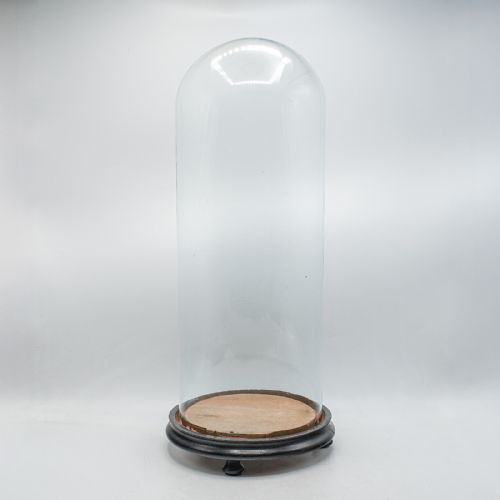


Ebonised Base Clock
An ebonised base clock pairing brings together a clear glass display dome and a dark wooden stand, protecting delicate mantel clocks and horological pieces.
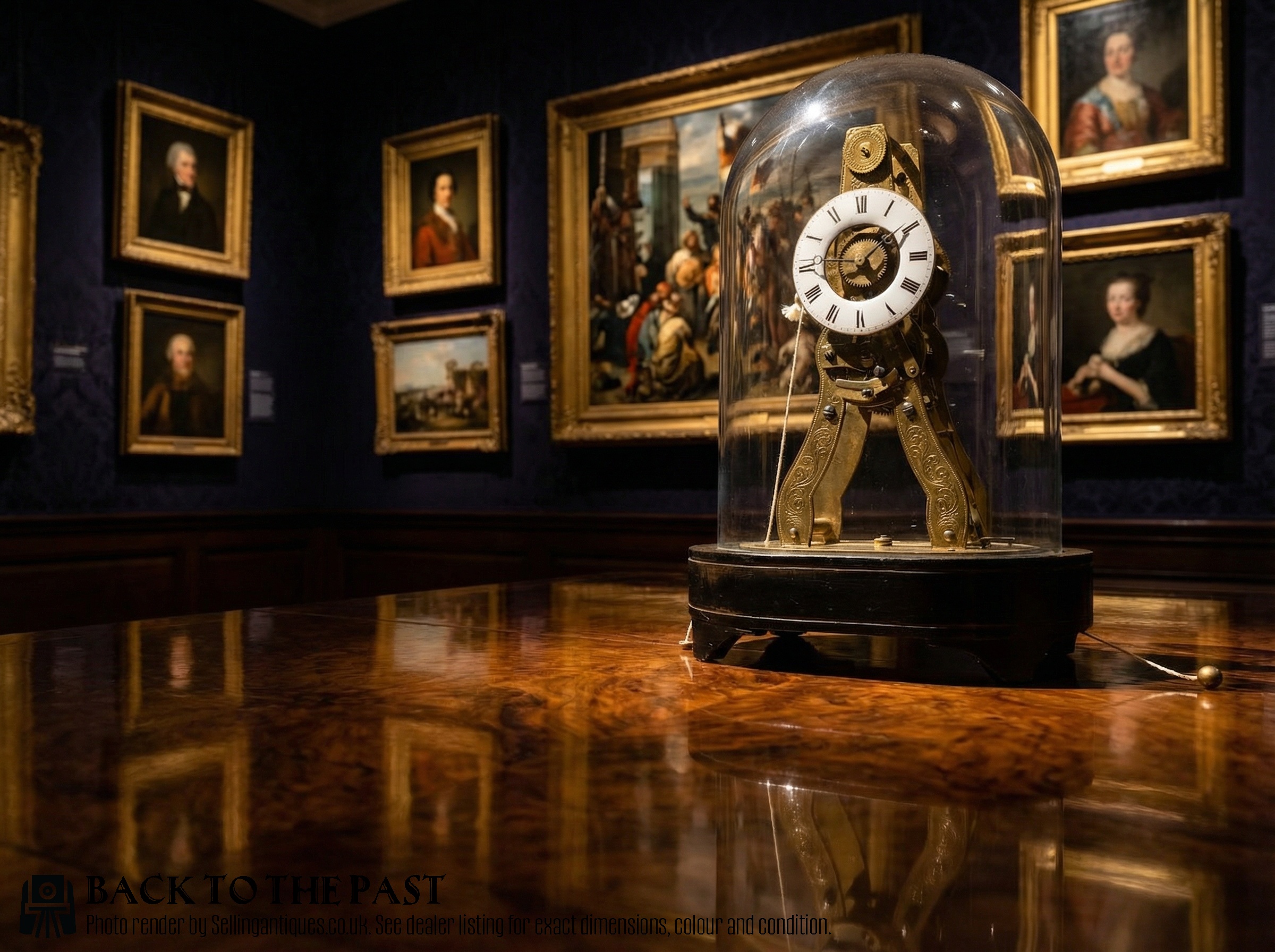
Ebonised Base Clock
When you search for an ebonised base clock display, you are looking at Victorian and Edwardian protective glass domes paired with dark wooden stands designed to house mantel timepieces and skeleton clocks.
The selections span English and French origins, featuring tall glass cloches, ovoid covers, and oval collector's domes resting upon heavy ebonised wood bases.
Many of these pieces double as taxidermy showcases and botanical displays, reflecting the nineteenth-century passion for housing intricate scientific and decorative objects under glass.
Materials and construction methods
The construction relies on mouth-blown glass domes paired with dense timber bases that receive a dark ebonised finish to mimic costly ebony.
Internal components incorporate brass movements, enamel dials, and occasionally velvet, fabric, or felt linings fitted to the wooden plinths to cushion the objects within.
French makers integrated cast ormolu mounts and porcelain plaques into their mantel timepieces, while English workshops focused on straightforward glass and pine configurations.
Ebonised Base Clock Retail Price Guide 2026
Typical asking prices for ebonised base clock among the pieces listed under this phrase on Sellingantiques today, from the lower quarter to the upper quarter. They describe what is for sale here now, not the wider market.
Listings feature Victorian and Edwardian periods with glass, ebonised wood, brass, and enamel materials.
Distinguishing quality across examples
Quality reveals itself in the clarity and thickness of the blown glass cover, where superior pieces display fewer air bubbles and minimal distortion.
The execution of the ebonised finish on the wooden base dictates the standard, alongside the precision of any fitted brass feet or velvet linings.
Horological examples depend heavily on the refinement of the brass skeleton movement and the crispness of the enamel dial markings.
Le Roy
The Ebonised Base Clock Glossary
- Ebonised wood
- Timber treated with stain or varnish to imitate true ebony, commonly used for the circular and oval display bases.
- Glass dome
- A blown glass cover, also known as a cloche, designed to protect delicate timepieces and specimens from dust.
- Skeleton clock
- A timepiece with an openwork brass movement that exposes the gear train and escapement mechanism to view.
- Ormolu
- Gilded bronze or brass ornamentation applied to French mantel clock cases and structural mounts.
- Taxidermy showcase
- A protective glass housing traditionally utilised for displaying preserved birds, insects, and botanical specimens.
Ebonised Base Clock: Frequently Asked Questions
What is an ebonised base clock?
It is a protective glass dome set upon a dark wooden plinth, frequently housing a Victorian mantel timepiece or skeleton clock.
These assemblies served to shield delicate metalwork and delicate clock movements from household dust and atmospheric moisture.
How do I date these glass domes?
Dating relies on the proportions of the glass, the thickness of the timber base, and associated materials such as velvet or felt linings.
Victorian and Edwardian examples exhibit distinct hand-blown glass characteristics that differentiate them from later reproductions.
Can I house any clock inside?
You can house any timepiece that fits within the interior clearance dimensions of the glass dome and matches the base proportions.
Ensure adequate space around the movement to prevent contact with the glass during winding and regulation.
Why use ebonised wood for bases?
Ebonised wood provided a dark, uniform surface that contrasted sharply with bright brass clock movements and gilt ormolu mounts.
This aesthetic matched the sombre, formal interiors popular throughout the nineteenth century.