




Antique Alarm Clock
An antique alarm clock brings mechanical precision and nineteenth-century craftsmanship directly to the mantelpiece.
Identifying an antique alarm clock
When searching for an antique alarm clock, buyers encounter an array of sophisticated timepieces spanning the eighteenth and nineteenth centuries. These objects primarily manifest as carriage clocks, lantern clocks, and mantel clocks originating from English and French workshops.
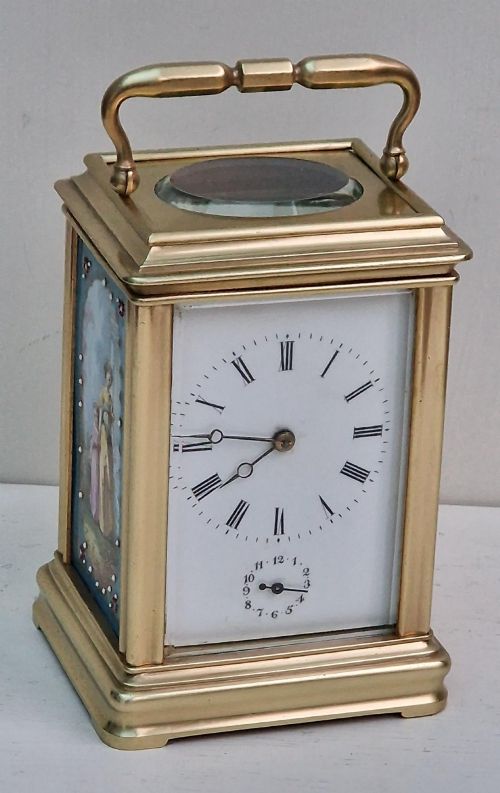
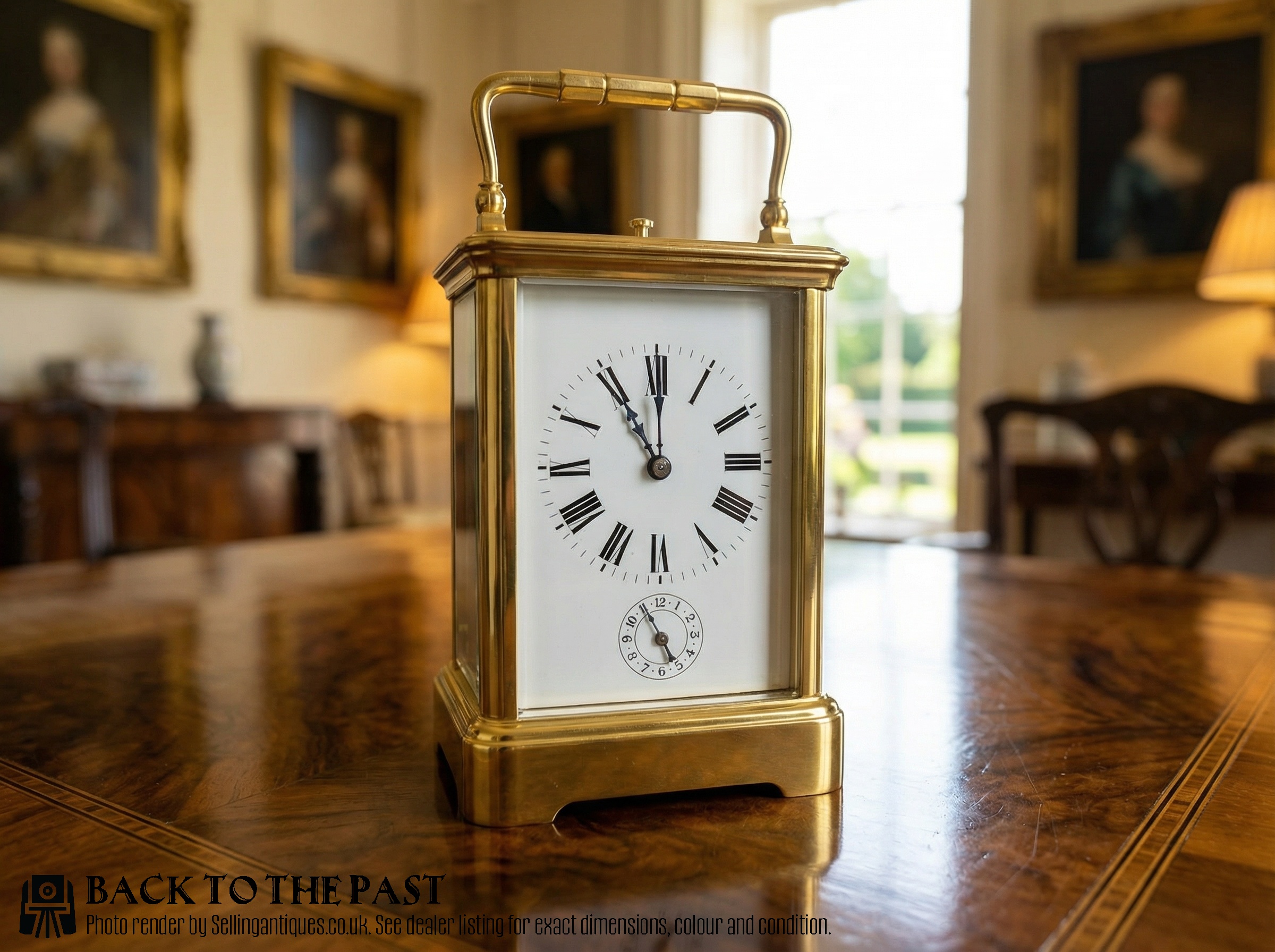
The most prevalent style on this page is the French carriage clock, often enclosed in a gorge case with gilded brass or gilt bronze framing. These domestic pieces combine portable utility with intricate mechanical complications.
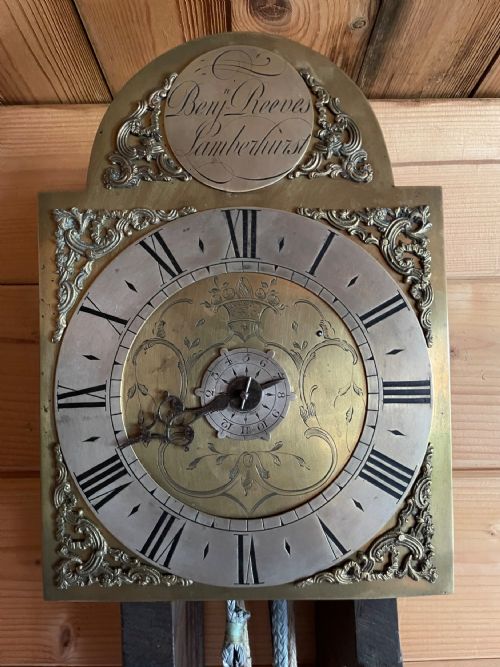
Earlier examples, such as the English lantern clock or mahogany miniature fusee designs, represent earlier centuries and demonstrate distinct regional methods of timekeeping and alarm integration.
Materials and construction
Construction relies heavily on brass, gilt brass, gilded brass, and gilt bronze, frequently paired with glass panels to reveal the internal movement. Iron and steel components form the robust escapements and striking trains within the cases.
Retail Price Guide 2026
Typical UK retail prices for alarm clock, calculated from the Sellingantiques database of over a million retail prices indexed since 2003. This retail price guide relies exclusively on Sellingantiques data; no external sources or auction records are used, so the figures do not describe the wider market.
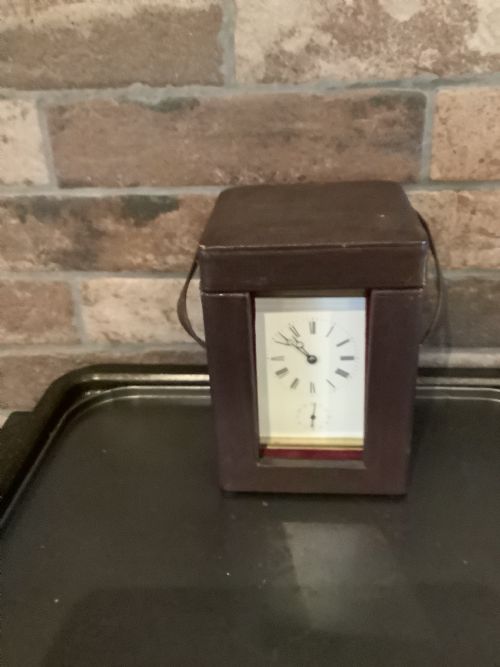
Some nineteenth-century travellers required an engraved metal box and an original key just to take their alarm on holiday.
Assessing quality
Quality reveals itself in the complexity of the movement, separating basic timepieces from examples equipped with grande sonnerie striking, quarter repeating, and pull alarm functions. The presence of original fitted boxes and matching keys elevates the standing of a piece.
The finesse of the engraving across the gilt bronze or brass case distinguishes ordinary production from masterwork execution. Heavier gilding and precision finishing on the gear train indicate higher grade manufacturing.
William Barrow·Drocourt·Gurdon Woodbridge·Le Roy et Fils·Dent
The Antique Alarm Clock Glossary
- Carriage clock
- A small, spring-driven timekeeper designed for travel, typically fitted with a carrying handle and glass viewing panels. These clocks gained popularity during the nineteenth century.
- Lantern clock
- An early brass chamber clock of English origin, usually hung on a wall or placed on a bracket with exposed counterweights. The design dates back to the seventeenth and eighteenth centuries.
- Gorge case
- A stepped, rectangular brass case style characteristic of fine French carriage clocks. This housing often holds bevelled glass panels.
- Grande sonnerie
- A striking mechanism that sounds both the hours and the quarters automatically with every passing interval. It represents a high degree of horological achievement.
- Verge escapement
- An early type of escapement mechanism that controls the release of power in a clock. It works in conjunction with a balance wheel or pendulum.
Frequently Asked Questions
What is a fusee movement?
A fusee is a conical pulley designed to maintain even force on the gear train as the mainspring unwinds. This mechanical addition improves timekeeping accuracy across the power reserve.
You will find fusee movements particularly in English mantel clocks and certain specialised carriage clocks from the period. It demonstrates advanced craftsmanship compared to standard barrel springs.
How do carriage clocks work?
Carriage clocks utilise a platform escapement and a coiled spring to measure time without relying on a fixed pendulum. This portable configuration allowed the clocks to function accurately while transported.
The inclusion of an alarm mechanism typically involves a separate gear train and a dedicated winding arbor. A small pointer or dial sets the specific time for the hammer to strike the bell or gong.
How should I care for my clock?
Place the clock on a stable, level surface away from direct sunlight, dampness, and extreme temperature fluctuations. Consistent environmental conditions protect delicate enamel dials and metal finishes.
Professional cleaning and lubrication by a specialist every few years keeps the historical components operating smoothly. Avoid using modern chemical polishes on gilt bronze or brass surfaces to preserve the original patination.