




Victorian Glass Cloche Clock
These victorian glass cloche clock pieces protect delicate movements and specimens beneath clear blown covers.
Victorian Glass Cloche Clock
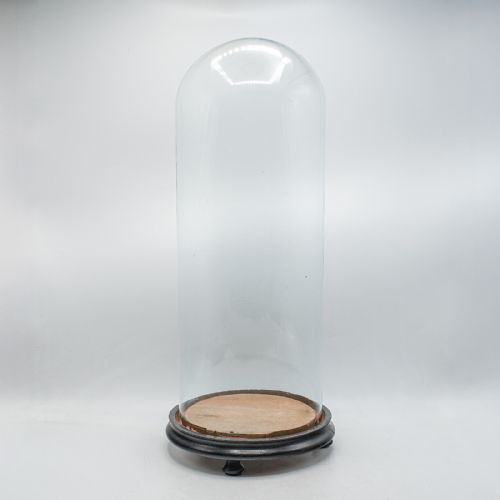
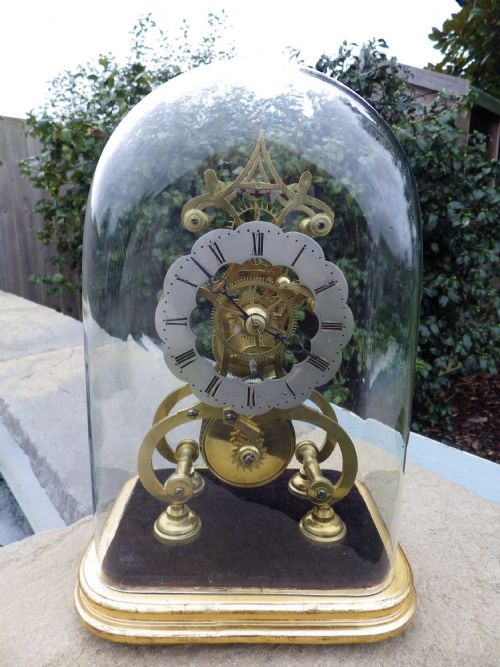
Most entries function as display domes and cloches that shelter fusee skeleton clocks, carriage clocks, and portico clocks. The forms range from tall vertical cylinders to wide ovoid and oval covers resting on ebonised wood or timber plinths.
Materials and construction
The primary material is clear glass, often hand-blown with minor bubbles and slight surface irregularities characteristic of the nineteenth and early twentieth centuries. Bases are typically fashioned from ebonised wood or timber, occasionally lined with velvet, felt, or fabric.
Internal mounting often incorporates brass components to secure the clock movements and skeleton wheel work safely beneath the protective cover.
Listings span Victorian, Edwardian, and mid-twentieth century periods, utilising glass, ebonised wood, brass, and velvet.
Assessing quality in cloche clocks
Quality rests upon the clarity and thickness of the glass dome, alongside the density and finish of the wooden base. Heavy, well-turned timber plinths paired with undamaged, clear glass covers represent the finer end of the range.
The presence of original fitted bases and untouched movement mechanisms inside the cloche elevates the integrity of the piece compared to later replacements.
The Victorian Glass Cloche Clock Glossary
- Cloche
- A bell-shaped glass cover used to protect delicate items from dust and damage. These transparent domes sit upon matching wooden bases.
- Skeleton clock
- A timepiece with an open framework that exposes the gear trains and wheel work. They require glass domes to protect their intricate brass mechanisms.
- Fusee
- A conical pulley mechanism used in clocks to maintain even power delivery as the mainspring unwinds. Many skeleton clocks housed under these domes utilise this movement.
- Ebonised wood
- Timber treated to resemble ebony, providing a dark, polished finish. This material frequently forms the base of Victorian display domes.
Victorian Glass Cloche Clock: Frequently Asked Questions
What is a glass cloche clock?
A glass cloche clock combines a timepiece with a transparent protective dome that covers the entire movement.
This enclosure shields delicate mechanical parts from dust and atmospheric moisture while allowing uninterrupted viewing.
How do you clean the glass dome?
The glass cover lifts away from the wooden base to allow careful cleaning with standard glass solution and a soft cloth.
Extra care is required near antique glass to avoid accidental tipping or striking the edge against hard surfaces.
Are the domes removable?
The glass covers simply rest upon the wooden bases without permanent fixings, allowing direct access to the clock inside.
Lifting the dome requires a steady grip with both hands, particularly on larger nineteenth-century examples.
What wood is used for bases?
Bases are commonly constructed from timber treated with an ebonised finish to provide a dark, uniform contrast to the clear glass.
Some plinths include interior linings of velvet, felt, or fabric to cushion the clock and display elements.