


Brass Repeating Carriage Clock
These brass repeating carriage clocks are mechanical travellers that chime the hours and quarters on demand.
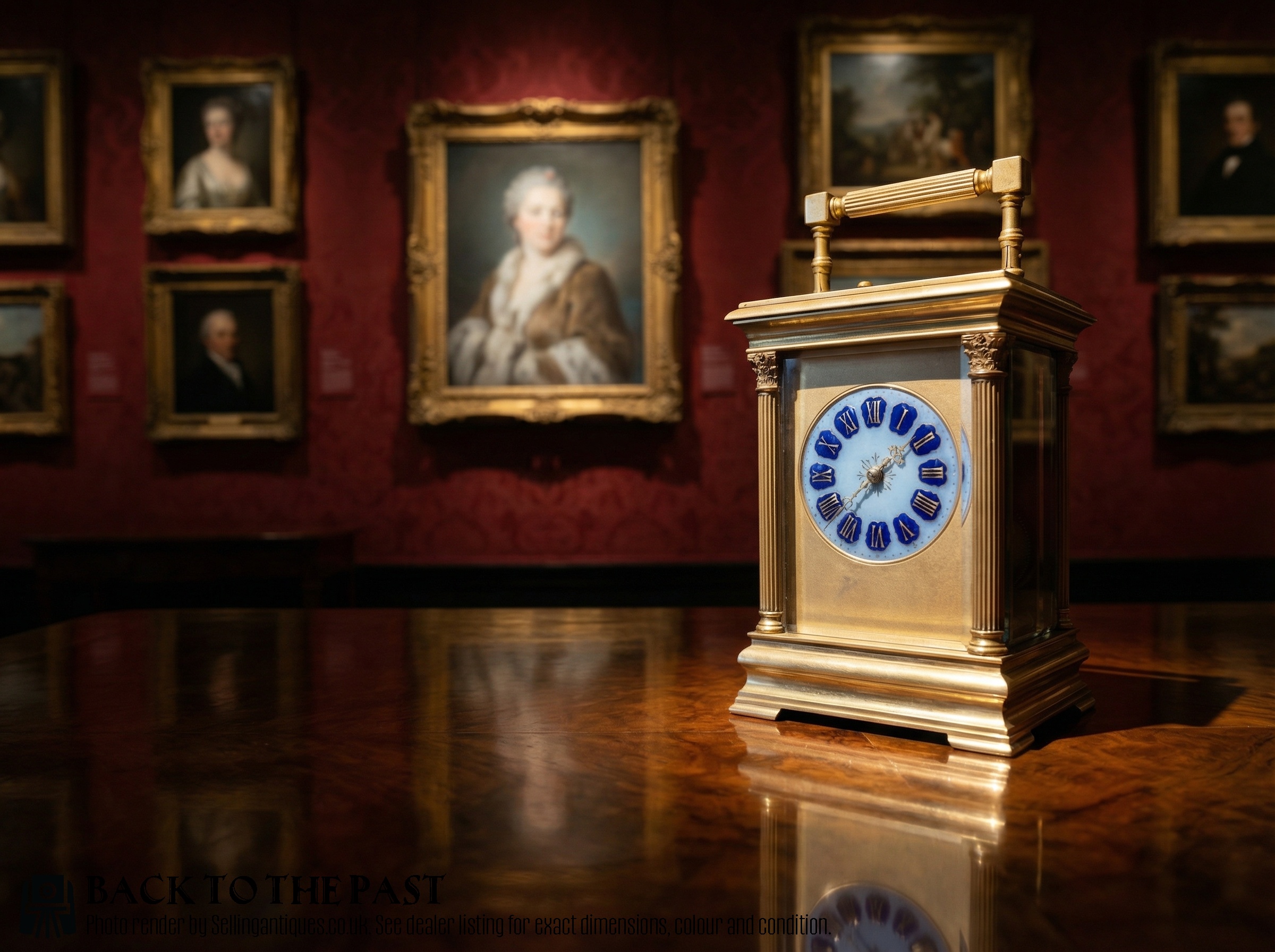
What brass repeating carriage clocks are
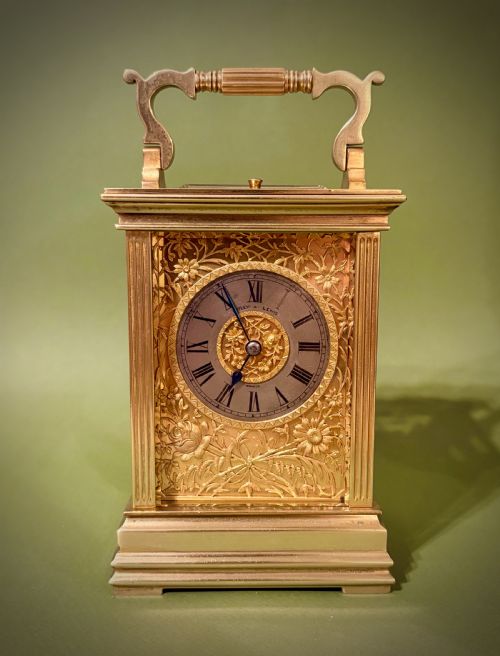
A brass repeating carriage clock is a portable timepiece designed for travel during the nineteenth century. These pieces originate predominantly from French workshops operating across the Victorian era, spanning from eighteen hundred through to nineteen hundred.
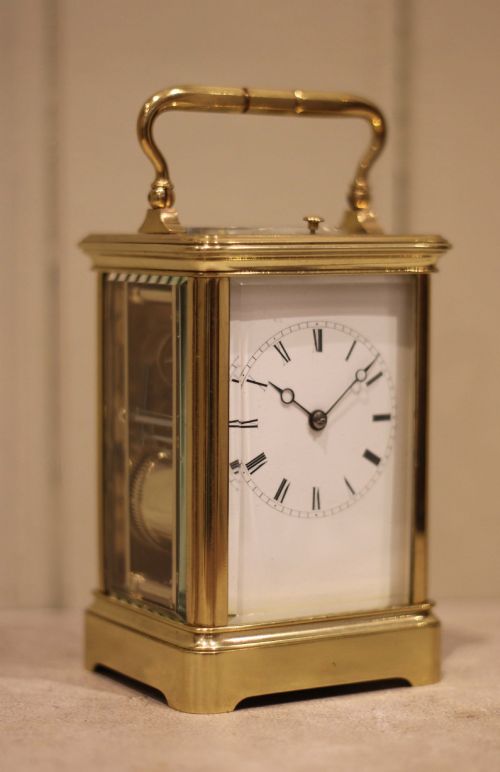
The standard form met on this page is a brass-framed case enclosing glass panels that reveal the internal movement. Many examples incorporate striking and alarm complications alongside the repeating mechanism.
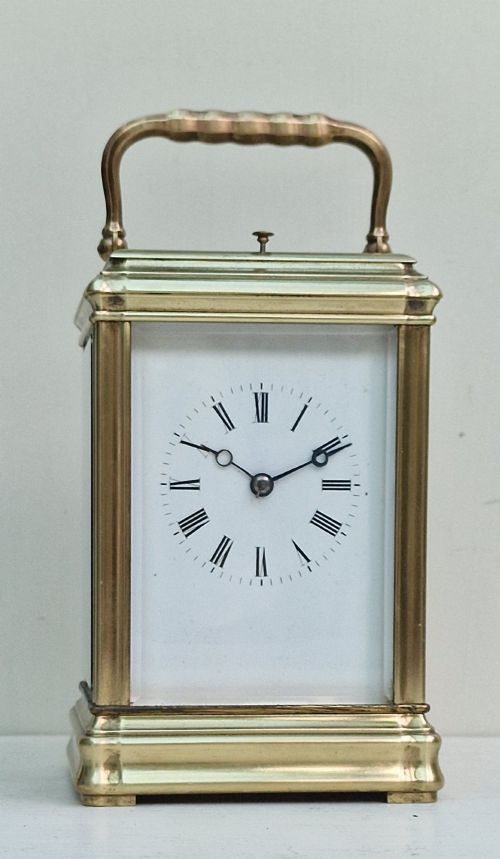
Surviving pieces reflect the design shifts of the period, moving from plain polished surrounds to engraved brass framing and specific case types such as the gorge design.
How they were made
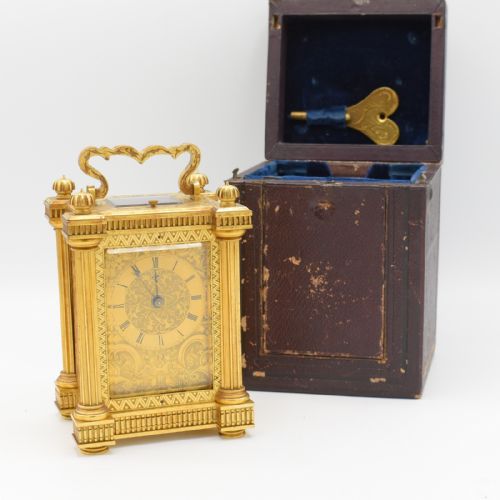
The construction relies on heavy brass and gilt bronze cast cases fitted with bevelled glass panels to protect the delicate mechanism within. Enamel dials carry the numerals, often framed by finely chased brass masks.
Movements incorporate complex gear trains for timekeeping, striking, and the repeating mechanism, which sounds the last hour and quarter upon depressing a plunger.
Retail Price Guide 2026
Typical UK retail prices for brass repeating carriage clock, calculated from the Sellingantiques database of over a million retail prices indexed since 2003. This retail price guide relies exclusively on Sellingantiques data; no external sources or auction records are used, so the figures do not describe the wider market.
Listings feature Victorian and nineteenth-century French pieces constructed from brass, gilt bronze, enamel, and glass.
What varies in quality
Quality rests in the crispness of the brass casting and the depth of the gilding across the case. Finer examples feature intricate hand engraving on the brass framing rather than plain polished surfaces.
The sophistication of the movement and the reputation of the maker distinguish superior pieces. Signed works by established makers demonstrate finer finishing in the internal gear trains and more robust repeating mechanisms.
Drocourt·E. White·A. Dumas·A. Margaine
The Brass Repeating Carriage Clock Glossary
- Repeating mechanism
- A complication operated by a button on the case that sounds the last hour and quarters without needing to wait for the next full hour.
- Gorge case
- A distinct rectangular brass case style featuring stepped mouldings to the top and base, typical of nineteenth-century French manufacture.
- Strike and repeat
- A movement function that sounds the hours audibly on a bell or gong in addition to the repeating function.
- Bevelled glass
- Thick window panes with angled edges fitted into the sides and top of the brass case to allow a view of the moving parts.
- Enamel dial
- A metal face coated with fused glass powder and fired to create a smooth white surface for painted numerals.
Frequently Asked Questions
How do I wind a brass repeating carriage clock?
Wind the mainsprings using a matching key inserted into the arbours on the backplate. Turn carefully until resistance is felt, avoiding over-winding.
Ensure you handle the movement gently and avoid touching the delicate escapement parts visible through the glass panels.
What does the repeating button do?
Pressing the plunger on top of the case activates a series of hammers and gongs inside. This causes the clock to chime the last elapsed hour and quarter.
This function was originally designed to tell the time in the dark during stagecoach or rail travel.
How do I date these clocks?
Examine the style of the brass case, the shape of the dial, and any signatures or maker marks stamped on the movement backplate. Victorian and late nineteenth-century French examples often display registration marks or serial numbers.
Stylistic shifts from plain brass frames to engraved gorge cases help narrow down the decade of production between eighteen hundred and nineteen hundred.
Where were these clocks made?
The vast majority of these pieces originated in French workshops, particularly in Paris, during the nineteenth century. Makers exported them widely for the British market.
Retailers such as E. White in London often retailed these French movements, sometimes adding their own signatures to the dials.