


Antique Repeating Clock
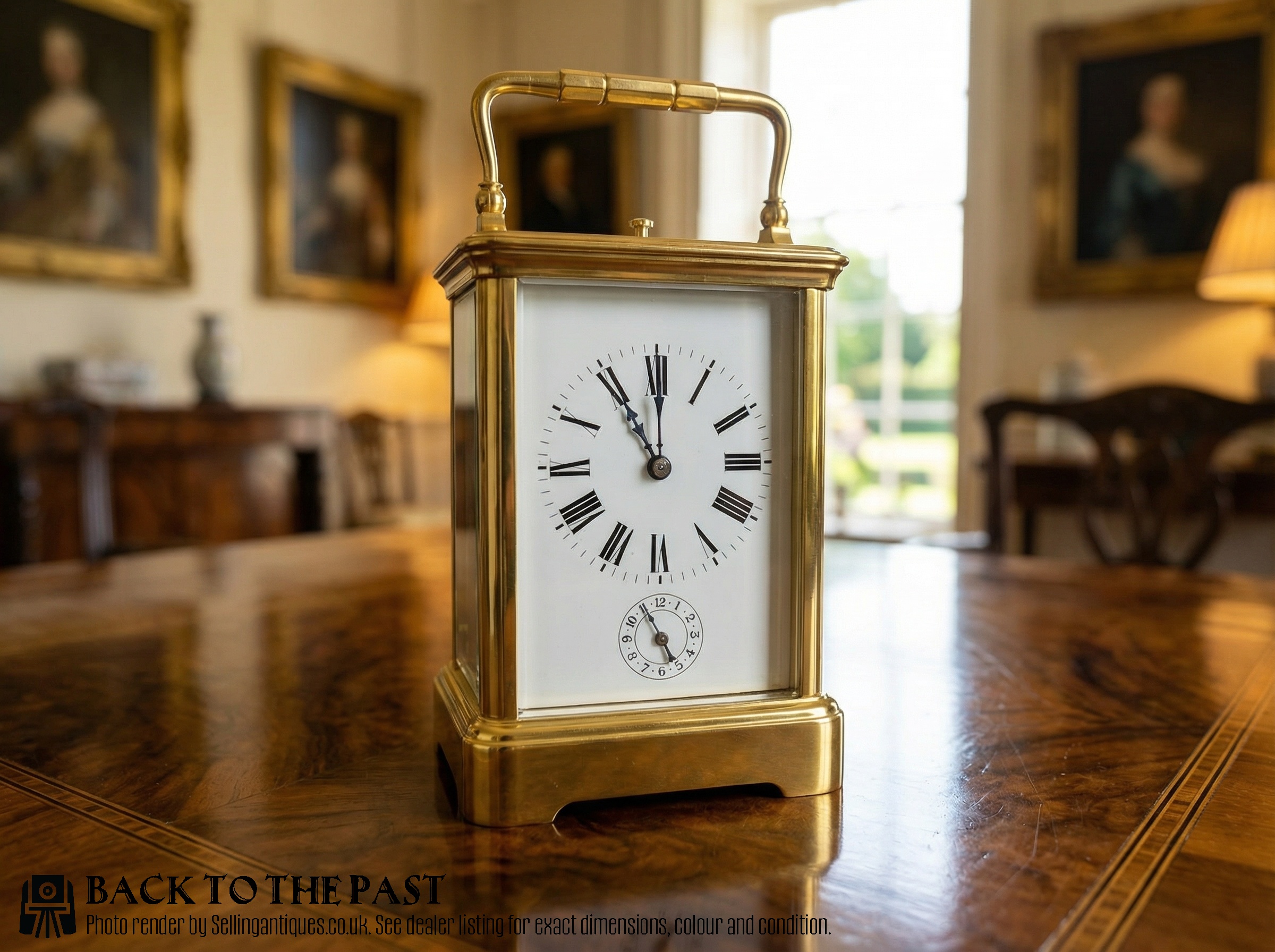
An antique repeating clock is a portable timepiece designed to chime the hours and quarters on demand, offering mechanical ingenuity in a brass and glass case.
What an antique repeating clock is
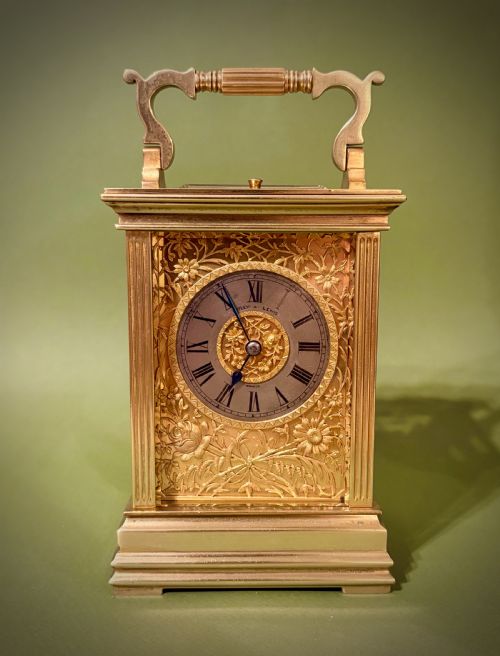
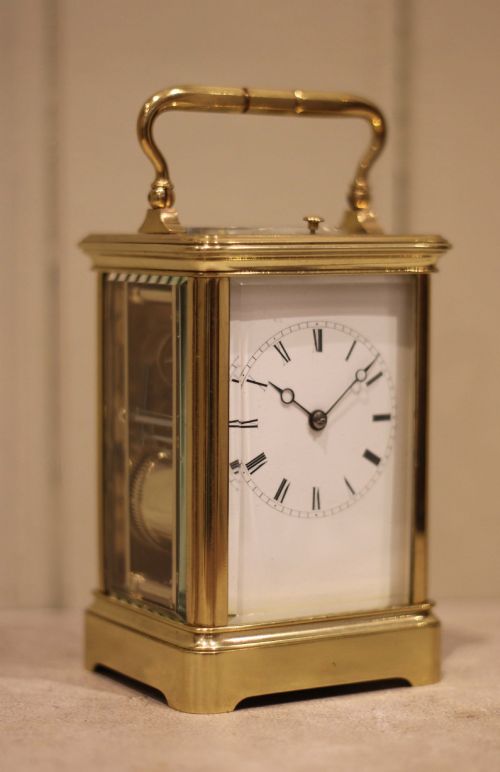
When you search for an antique repeating clock, you encounter portable timepieces designed to sound the time on demand via a button or plunger. The examples met on this page span the nineteenth century, including Victorian pieces and French Second Empire carriage clocks.
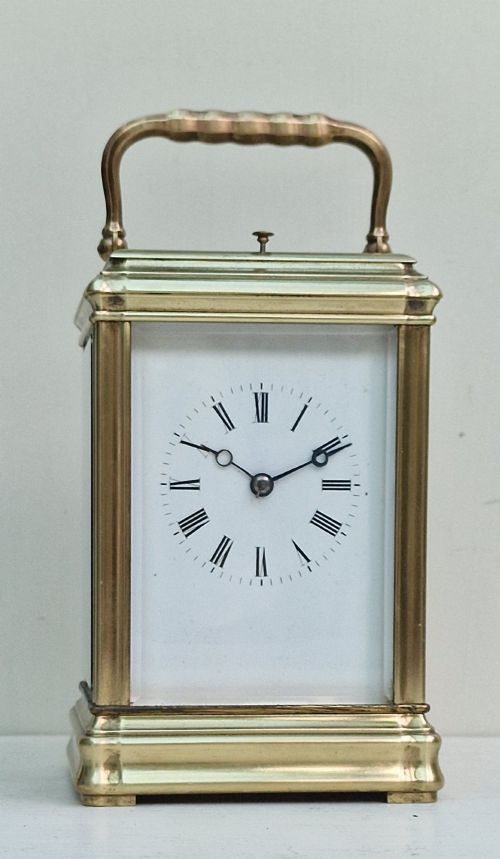
The forms recorded here range from standard carriage clocks in gorge cases to specialised pieces featuring alarms and sonnerie striking. Most originate from French workshops or London retailers of the period, housed in glazed brass and gilt bronze frames.
Materials and construction
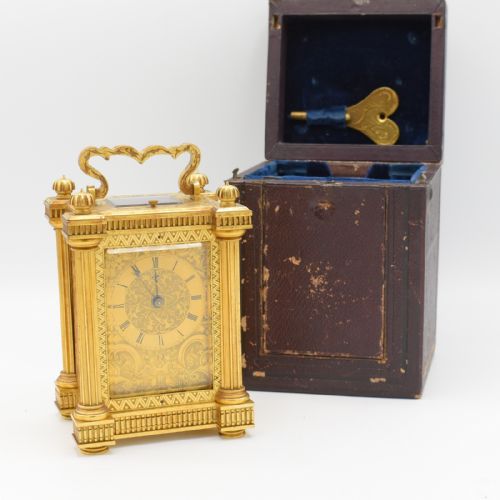
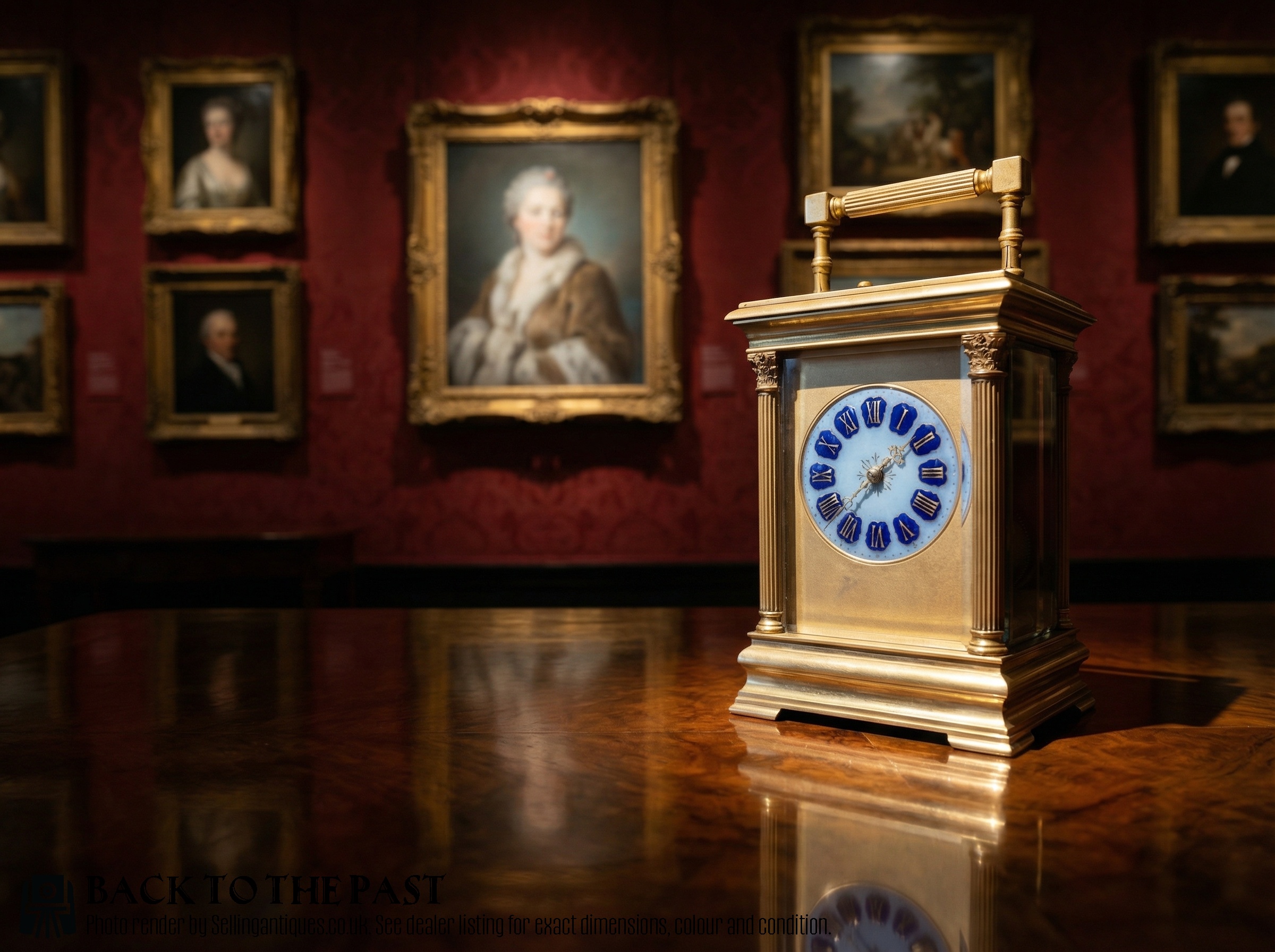
These timepieces utilise heavy brass, gilt bronze, and gilt brass for their structural cases, paired with bevelled glass panels that reveal the interior mechanics. Dials are typically formed of white enamel, while outer travel cases or presentation boxes are constructed from leather.
Movements are built with intricate gear trains to drive the timekeeping, alarm functions, and repeat strike mechanisms. Cases feature engraved or plain metalwork, designed to protect the delicate escapement while remaining portable.
Retail Price Guide 2026
Typical UK retail prices for repeating clock, calculated from the Sellingantiques database of over a million retail prices indexed since 2003. This retail price guide relies exclusively on Sellingantiques data; no external sources or auction records are used, so the figures do not describe the wider market.
Materials recorded across the inventory include gilt bronze, brass, bevelled glass, enamel, and leather.
Distinctions in quality
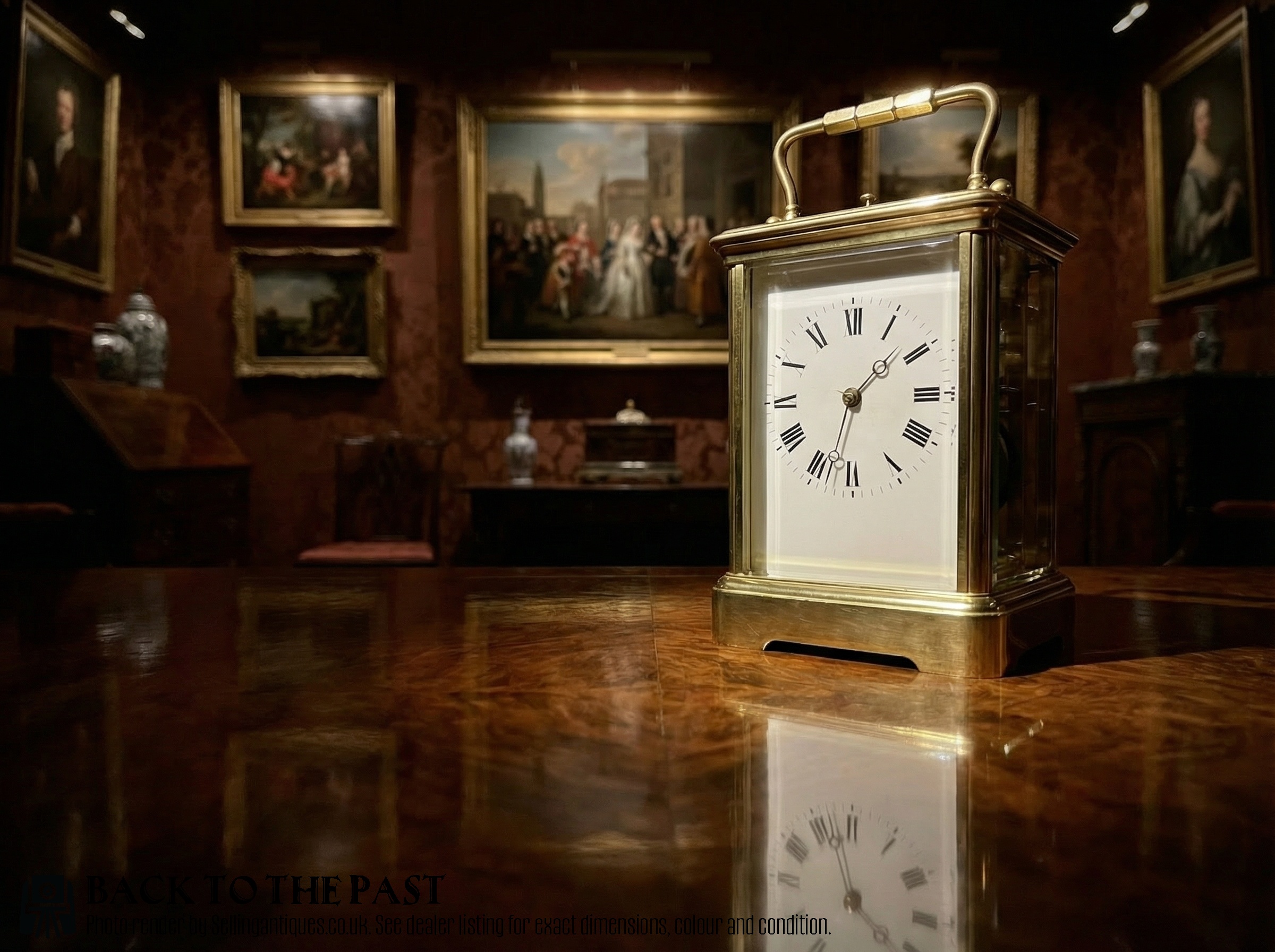
The refinement of the mechanical movement dictates the standard, distinguishing a basic timekeeper from a complex quarter-repeating clock with an alarm or sonnerie strike. Finer examples display meticulous depth in the case engraving and heavy cast gilt bronze rather than lighter sheet brass.
The preservation of the original mercury gilding or fire gold plating alters the visual presence of the metalwork. Additionally, cases retaining their matching leather outer travelling boxes represent a higher tier of completeness.
Howell & James London·Dent
The Antique Repeating Clock Glossary
- Carriage clock
- A small, portable spring-driven timepiece designed for travelling during the nineteenth century. These clocks usually feature a glass and brass housing with a folding handle on top.
- Quarter repeating
- A mechanism that sounds the last hour and the number of quarters past that hour when a button or pendant is depressed. This function allowed owners to check the time in darkness.
- Gorge case
- A distinct rectangular brass case style with stepped mouldings, commonly seen on French carriage clocks from the Victorian period. The design provides structural rigidity while framing the glass panels.
- Sonnerie
- A striking system that automatically chimes the hours and quarters as they pass, similar to a church tower clock. It differs from a standard striking movement which only sounds on the hour.
Frequently Asked Questions
How does the repeating function work?
The repeating function operates through a manually pressed button or plunger on the top or side of the case. This action releases gear trains that sound bells or gongs to indicate the exact hour and quarters.
Unlike standard clocks that only chime on the hour, this allows the owner to hear the time in total darkness. The mechanism relies on internal racks and snails to calculate the correct number of strikes.
What materials were used for these clocks?
The cases are constructed from brass, gilt brass, and gilt bronze, often referred to in periods as ormolu or fire gold plating. Bevelled glass panels are set into the sides and top to allow visibility of the escapement.
White enamel is standard for the clock dials, featuring Roman or Arabic numerals. Some higher-tier examples were also supplied with protective leather travel cases.
How do I care for a repeating clock?
Living with these mechanical items involves regular winding of the spring barrels for the time, strike, and alarm trains. Care must be taken when adjusting the hands and setting the repeating mechanism to avoid jamming the delicate gear wheels.
Placement away from direct heat sources and damp environments helps preserve the enamel dials and metal finishes. Professional servicing is recommended periodically to keep the brass pivots and escapements functioning correctly.