






8 Day Carriage Clock
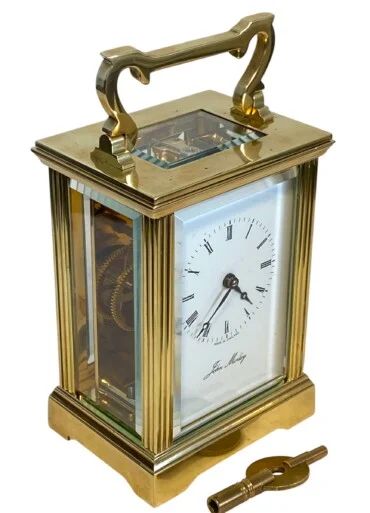
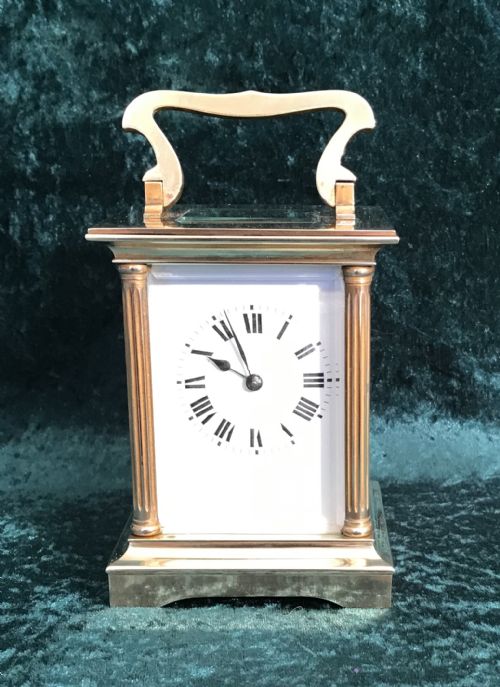
An 8 day carriage clock is a portable timepiece housed in a glazed metal case, sought after for its mechanical complexity and traditional desk presence.
8 Day Carriage Clock
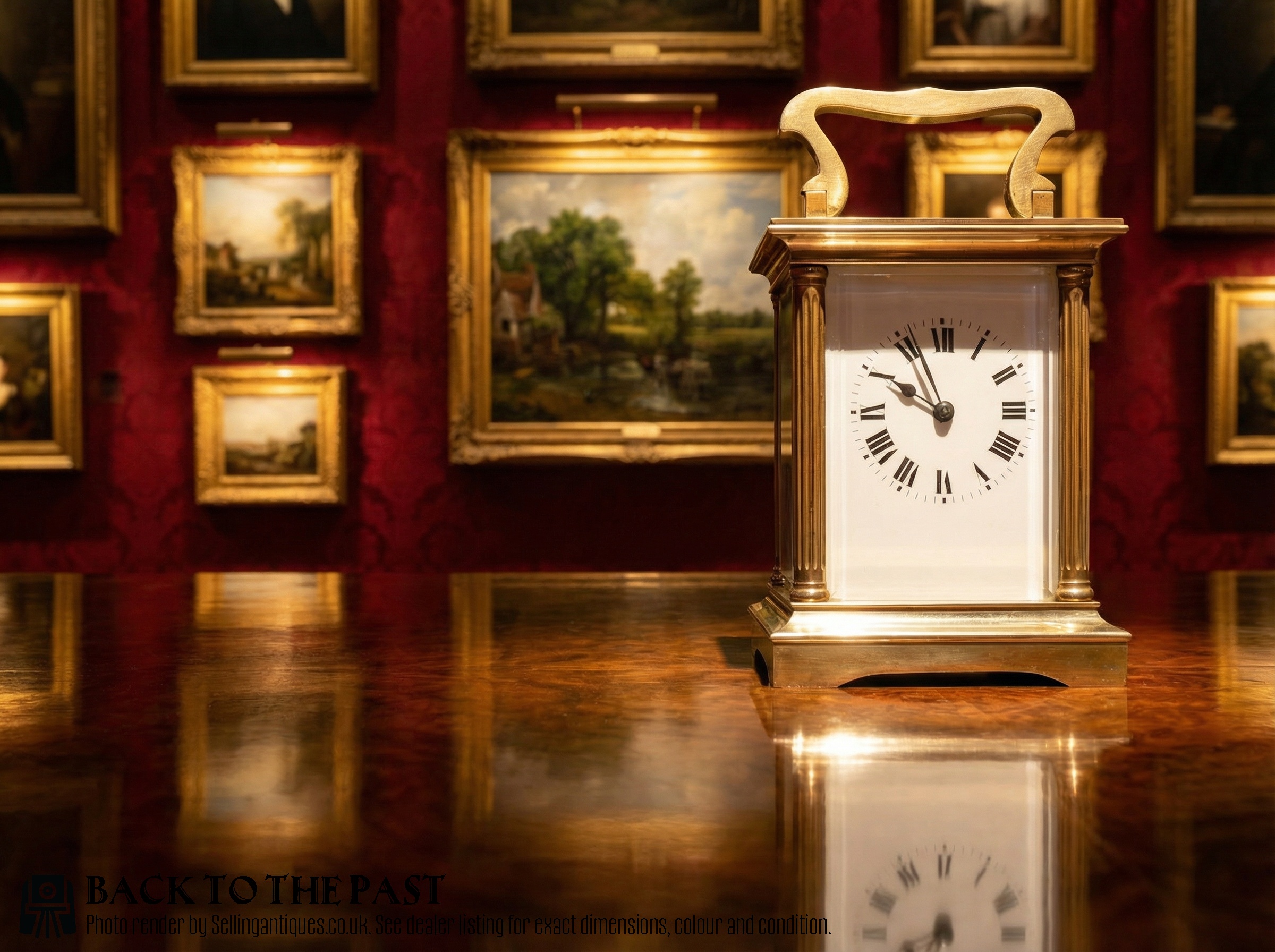
An 8 day carriage clock sits inside a glazed metal case designed for travel, requiring winding once a week. The version most commonly met on this page is the French brass or gilt brass design from the nineteenth century, often supplied with a leather travelling case.
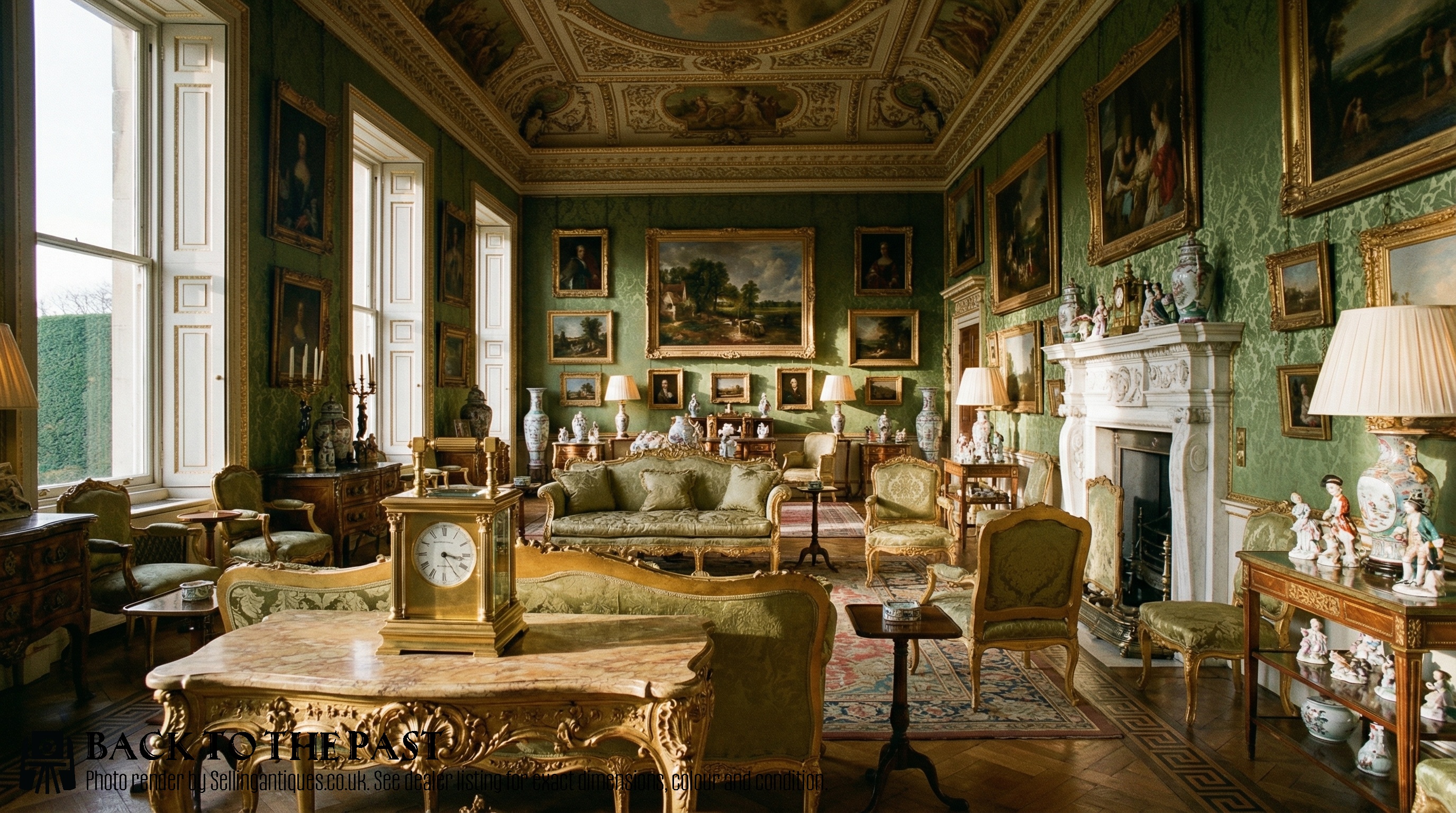
Makers housed these movements in various case forms, including gorge cases and serpentine shapes, drawing on Victorian and Edwardian tastes. English, Swiss, and French workshops produced them as functional items for travellers and domestic interiors alike.
How they were made
Craftsmen built these timepieces using brass, gilt brass, and sterling silver for the structural cases, incorporating bevelled glass panels to reveal the escapement and gear train. Dials typically feature white enamel with Roman or Arabic numerals, sometimes enhanced by hand engraving on the metal frame.
Movements were engineered to run for eight days between windings, frequently incorporating striking mechanisms, alarm functions, or repeating complications. Workshops housed them securely in fitted leather travel cases lined with velvet or silk.
8 Day Carriage Clock Retail Price Guide 2026
Typical asking prices for 8 day carriage clock among the pieces listed under this phrase on Sellingantiques today, from the lower quarter to the upper quarter. They describe what is for sale here now, not the wider market.
What varies in quality
The standard of an 8 day carriage clock depends on the crispness of the cast brass case, the depth of any hand engraving, and the reputation of the maker stamped on the movement. Signed pieces by established clockmakers command greater attention due to superior finishing and precision engineering.
John Morley·Henri Jacot·Mappin and Webb·Henry Matthews·Japy Freres·Drocourt·L'Epee·Asprey·Bernard Freres·Dent
The 8 Day Carriage Clock Glossary
- Gorge case
- A distinct rectangular carriage clock case style characterised by stepped mouldings at the top and base. It represents a classic French housing format from the nineteenth century.
- Strike-repeat
- A complication allowing the clock to repeat the last struck hour or quarter-hour when a button or pendant is pressed. This mechanism required precise additional gearing within the movement.
- Gong
- A curved metal rod struck by a hammer to sound the hours, replacing the older bell format in many nineteenth-century models. It produces a resonant tone when the movement activates.
- Timepiece
- A clock that indicates the time without striking the hours or chiming. Many examples on this page are simpler timepieces designed strictly for tracking hours.
- Escapement
- The internal mechanism that controls the release of power and maintains the swing of the balance wheel. It is often visible through the upper glass panel of the case.
8 Day Carriage Clock: Frequently Asked Questions
How often should I wind an 8 day carriage clock?
These movements run for approximately eight days on a single wind, so a weekly schedule keeps them operating steadily.
Careful winding using the correct key prevents over-tensioning the mainspring and preserves the historical mechanism.
Did these clocks actually travel in carriages?
Originating in the nineteenth century, they were originally constructed for officers and travellers who needed portable timekeeping on long journeys.
Their robust brass frames and dedicated leather travelling cases protected the delicate internal gears from the bumps of horse-drawn transport.
How do I identify the maker of my clock?
Maker signatures and stamps usually appear on the brass backplate of the movement rather than on the dial face.
Checking the interior brasswork often reveals engraved logos, serial numbers, or retailer names associated with French and English workshops.
What is the difference between a timepiece and a striking clock?
A timepiece simply indicates the hours and minutes without making any audible chime or strike.
Striking models include extra gear trains and hammers that sound the hours or quarters automatically or upon demand.