


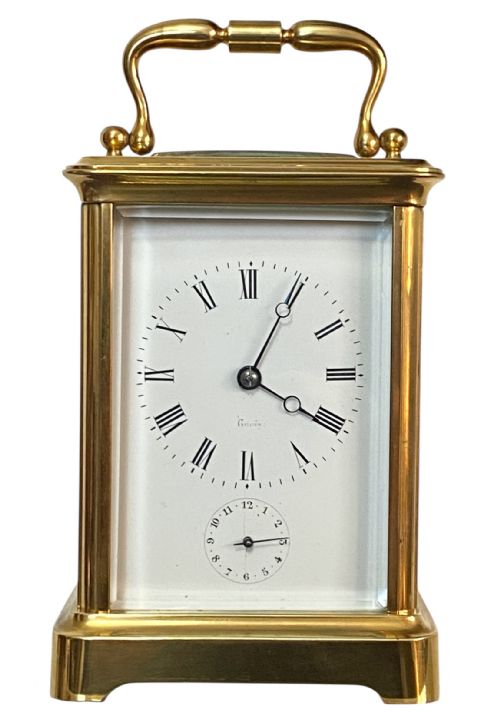
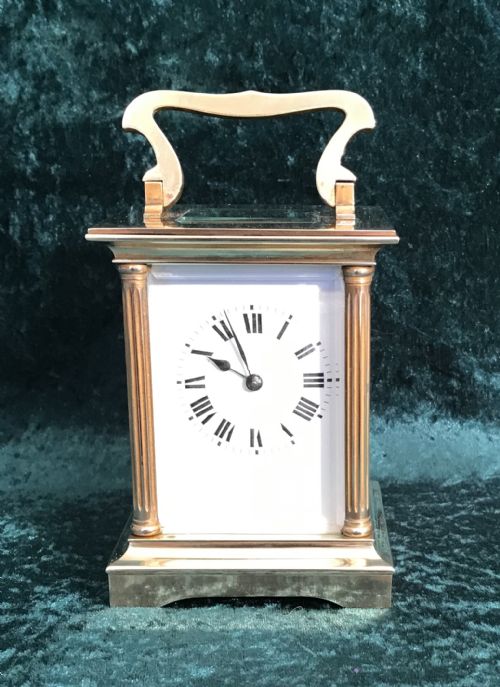
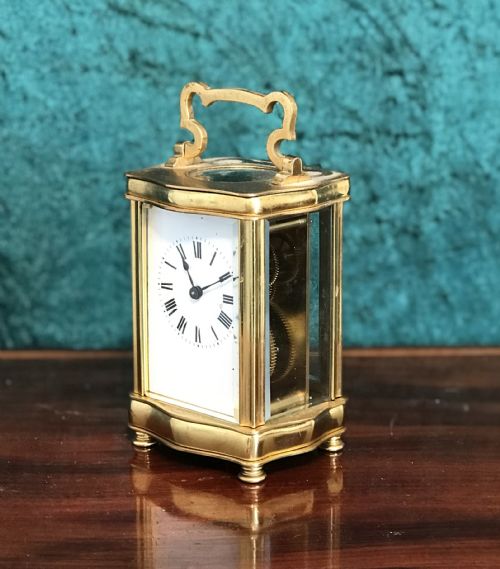


Eight Day Carriage Clock
An eight day carriage clock offers dependable mechanical timekeeping housed in brass and glass, built to travel through the nineteenth and twentieth centuries.
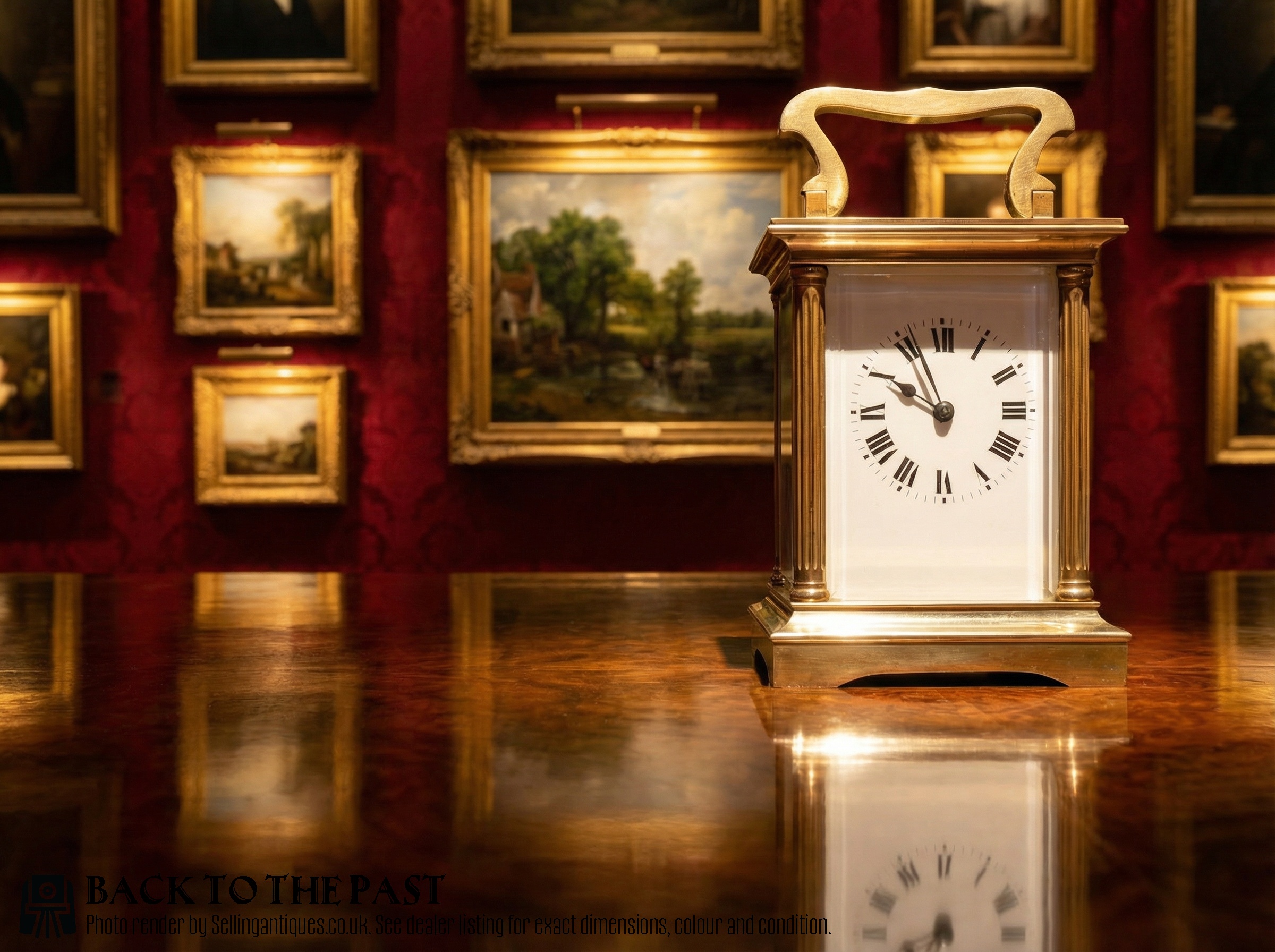
What these clocks are
An eight day carriage clock combines a portable brass and glass case with a mechanical movement designed to run for over a week on a single wind. When you search for an eight day carriage clock, you encounter portable timepieces originating primarily from the nineteenth century and the Edwardian era, alongside later twentieth century examples.
How they were made
Maker workshops constructed these movements from brass and steel components, housing them within cast or fabricated brass frames. Artisans fitted bevelled glass panels into the sides and top to protect the dial while revealing the movement inside.
Dials were commonly fashioned from white enamel with Roman or Arabic numerals, while outer cases utilised brass, gilt finishes, and occasionally fitted leather outer protective boxes.
Retail Price Guide 2026
Typical UK retail prices for eight day carriage clock, calculated from the Sellingantiques database of over a million retail prices indexed since 2003. This retail price guide relies exclusively on Sellingantiques data; no external sources or auction records are used, so the figures do not describe the wider market.
Listings feature Victorian, Edwardian, and nineteenth century periods alongside brass, glass, enamel, and leather materials.
What varies in quality
Quality reveals itself in the complexity and execution of the internal movement, separating a basic timepiece from a striking and repeating mechanism. Finer examples display meticulous gilt work on the brass case and carry signatures from established makers such as Henri Jacot.
The crispness of the enamel dial and the precision of the brass casting distinguish superior items from standard production pieces. Heavier gilt cases and fitted leather travel boxes further indicate a higher tier of original manufacture.
Henri Jacot Paris
The Eight Day Carriage Clock Glossary
- Carriage clock
- A portable mechanical timepiece with a glass and brass case designed during the nineteenth century for travel. These clocks utilise a spring-driven movement rather than a pendulum.
- Striking
- A mechanism that sounds the hours and sometimes the halves automatically on a bell or gong. This adds mechanical complexity to the standard movement.
- Repeating
- A complication that allows the clock to repeat the last struck hour and quarters at the press of a button. This was useful for checking the time in the dark.
- Gilt
- A thin layer of gold applied to the surface of the brass case. This finish provides a bright appearance and protects the underlying metal.
- Enamel
- A glassy substance fused to a metal dial substrate through firing. It creates a smooth, durable surface for painted numerals.
Frequently Asked Questions
How often do I wind an eight day carriage clock?
These movements run for approximately eight days before requiring a full wind via the back key.
Keeping to a consistent weekly schedule helps maintain steady tension on the mainspring.
Where were most of these clocks made?
Many examples originate from French workshops, particularly in Paris, during the nineteenth century.
British retailers often imported these movements and retailed them under their own names.
What is a repeating carriage clock?
A repeating movement sounds the most recent hour on demand when you press a button on top.
This feature allowed travellers to check the time during the night without striking lights.
How do I identify a Victorian carriage clock?
Victorian examples typically date between the mid nineteenth century and nineteen hundred, featuring heavy brass framing.
They often display white enamel dials with distinct Roman numerals and polished gilt surfaces.