21,349  PAGES BROWSED TODAY PAGES TODAY 71  ANTIQUES UPLOADED TODAY NEW ARRIVALS
ID #SA1090498
FOR SALE
£3,800
Email
Save
Baveux/jacot Carriage Clock for James Grohé
Leigh Extence Antique Clocks
for sale €4,446     $4,826
£3,800
Leigh Extence Antique Clocks

Leigh Extence Antique Clocks

Sellingantiques Verified Since Sep 2024
View Dealers Stock Page
  • About Us
    Specialists in fine antique clocks
  • Trade Associations
    Leigh Extence Antique Clocks is a registered member of BADA  CINOA
Relevant Links
Id #SA1090498
PDF SHARE
SAVE

Baveux/jacot Carriage Clock for James Grohé

19th century
Description

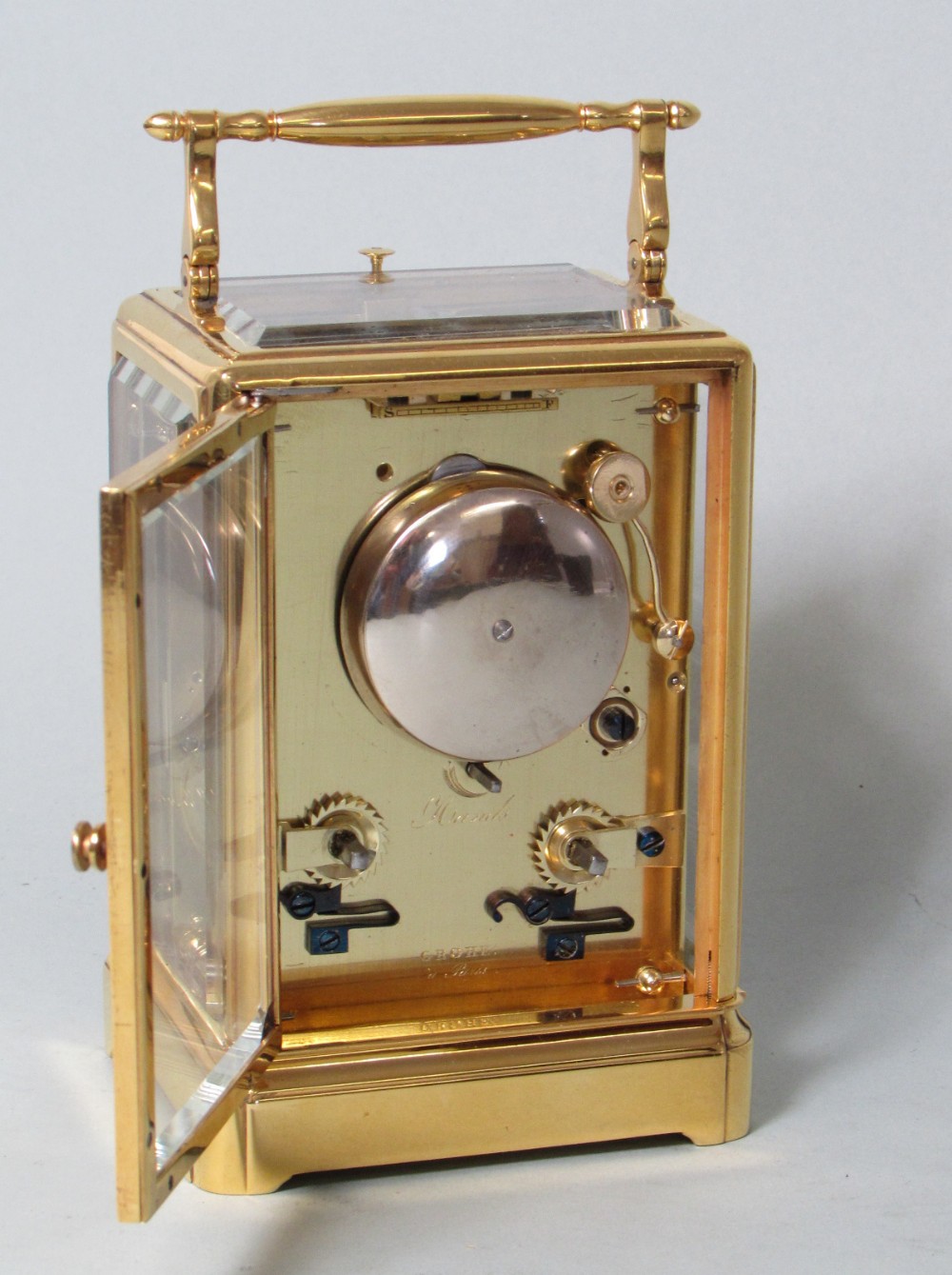
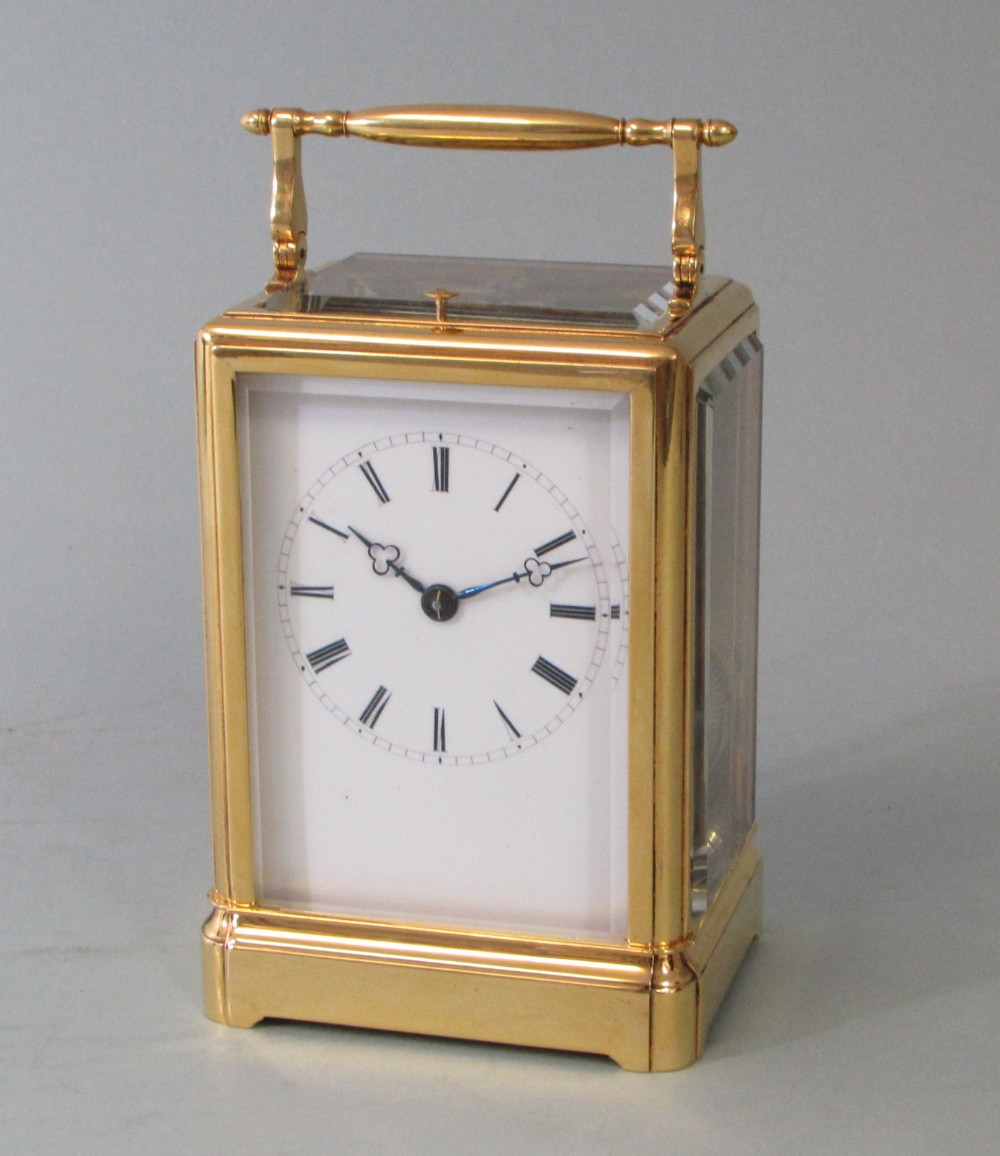
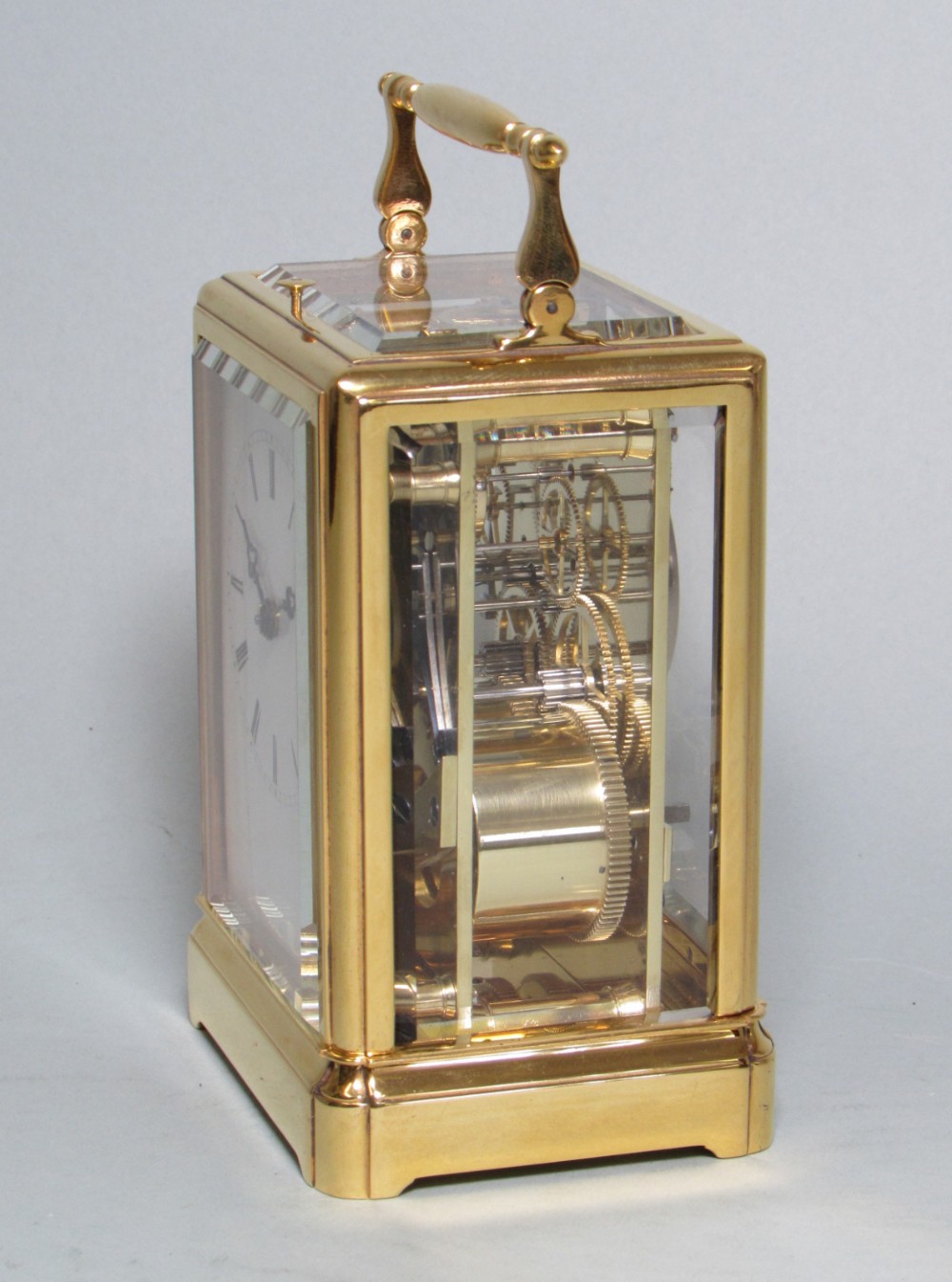
A one-piece carriage clock in the style of Garnier series I by the Baveux workshops for James Grohé, London.

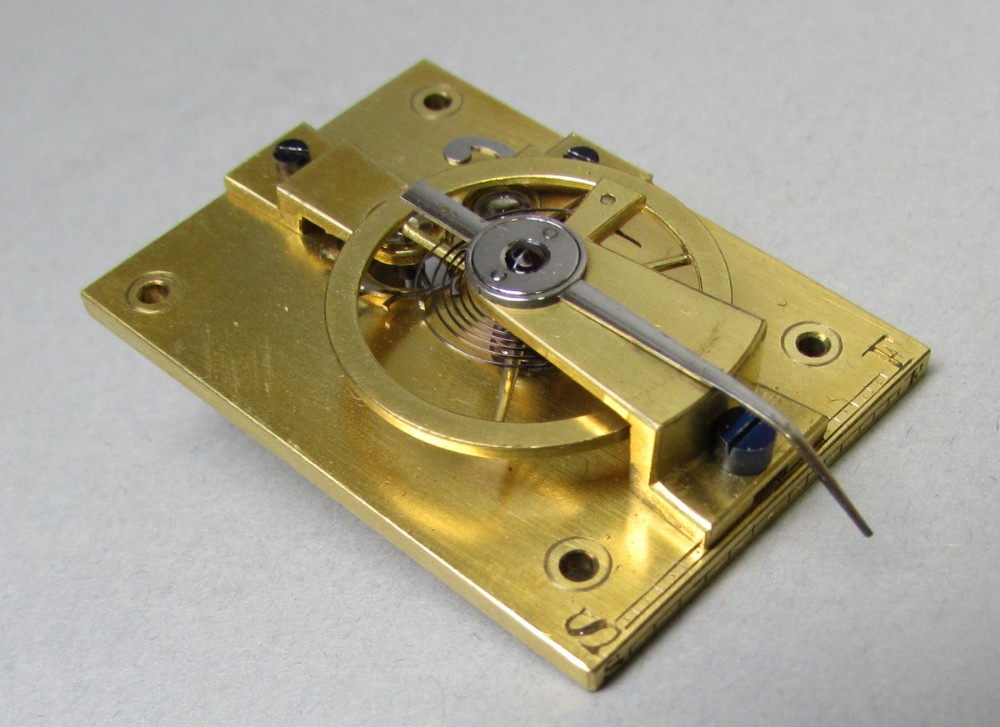
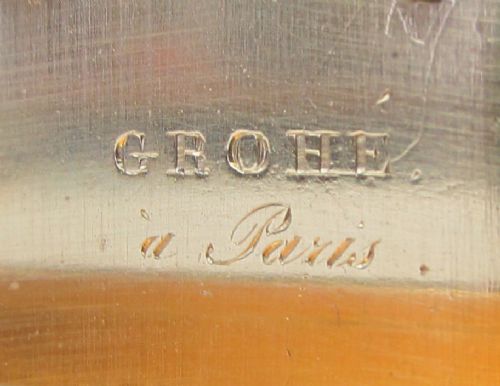
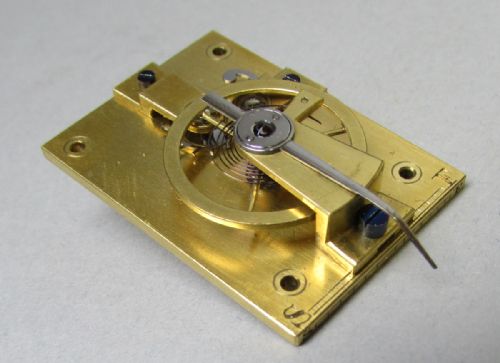
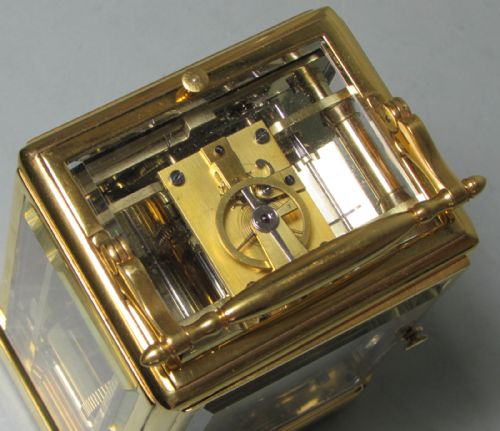
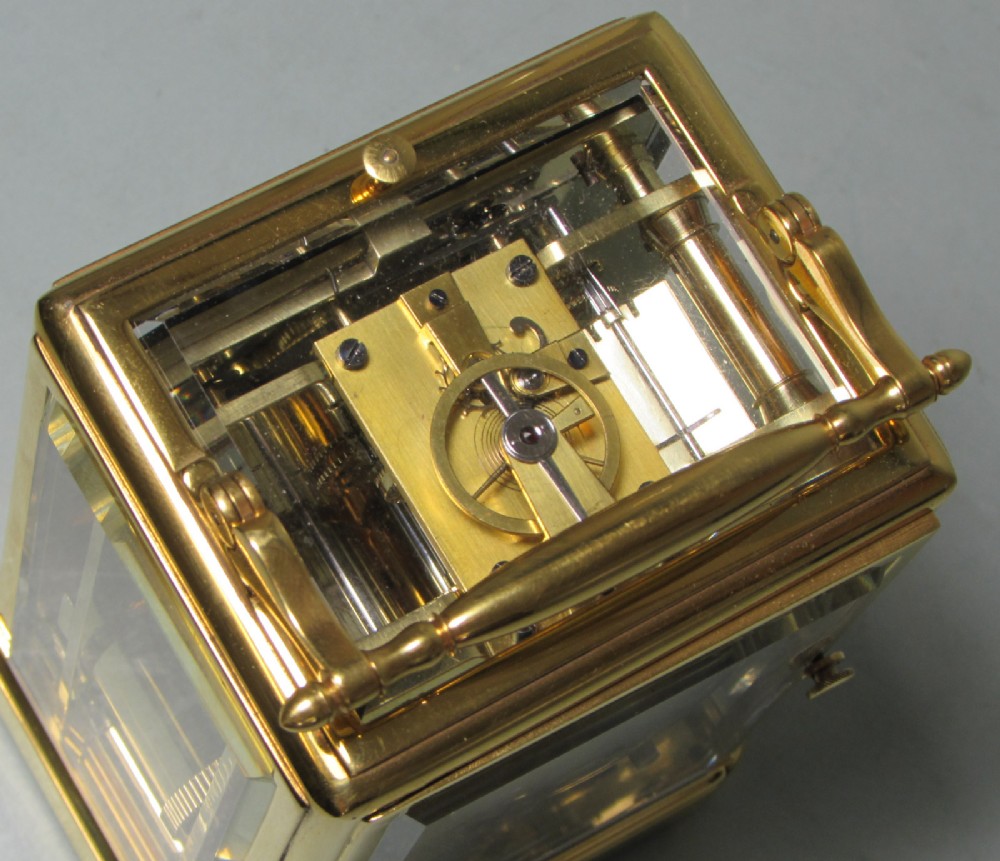
?The eight-day duration movement has a gilded platform lever escapement with plain brass balance and strikes the hours and half-hours on a bell, with push button repeat of the last hour at will. The movement backplate is stamped with the clock serial number 391 and engraved with the retailer's name Grohé, London.
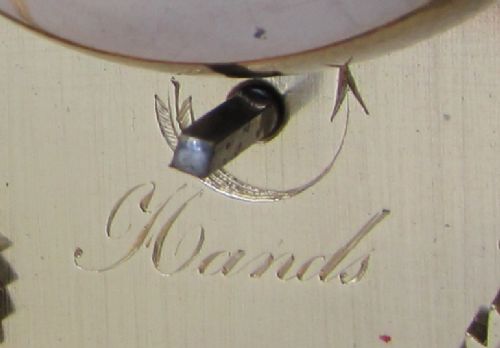
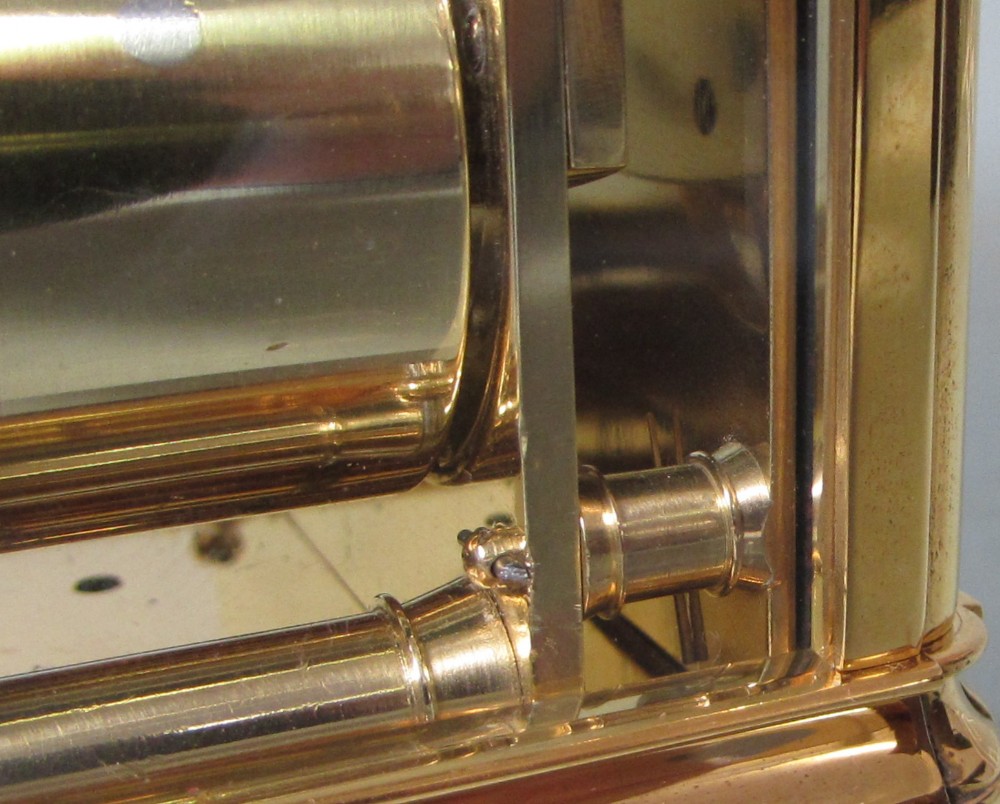
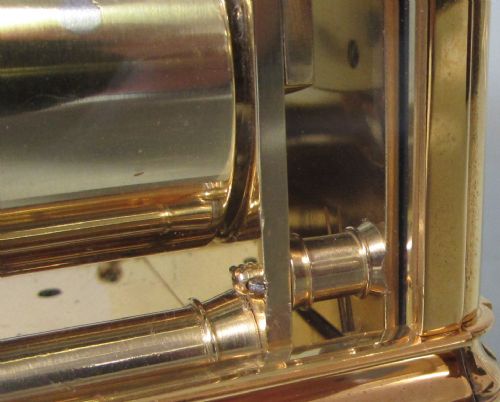
The movement can be firmly attributed to the workshops of Louis Baveux having all the unique features as seen on clocks from their Saint-Nicolas-d'Aliermont premises. Baveux were supplying Henri Jacot at this time and my research suggests that the workshop was a part of the Jacot concern, with this clock being a typical Jacot of the period. Unique movement features include the repeat work system; the contrate wheel depthing utilising a steel end-piece adjusted by screwing the plates so they become deeper or shallower; the double-finned dial-plate pillars, the curved underdial bridge; the distinctive hand-setting arrow style; the steel underdial strike-work; the pear-shaped cam for setting-off the strike along with the general wheel layout.
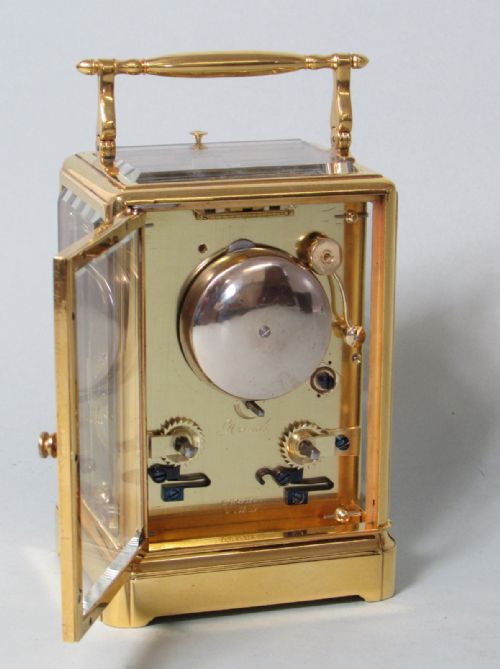
This case style is one used by both Baveux and Jacot at this period as noted by almost identical examples retailed by Dent in London and from the Baveux workshop. It is also near-identical to Series I Paul Garnier cases at a time when Garnier was supplied by Holingue Frères as mentioned in the notes below.
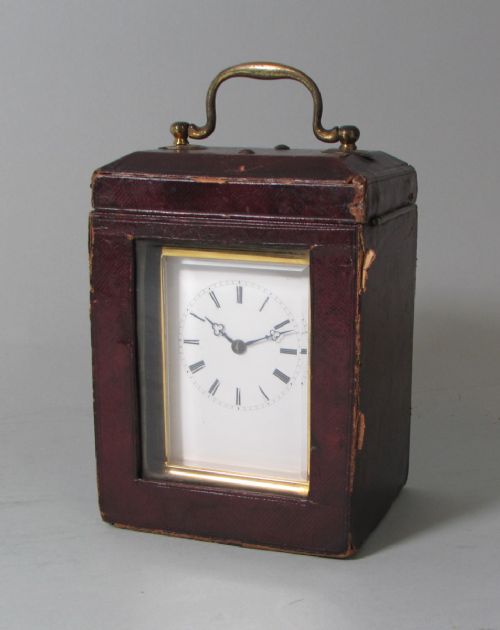
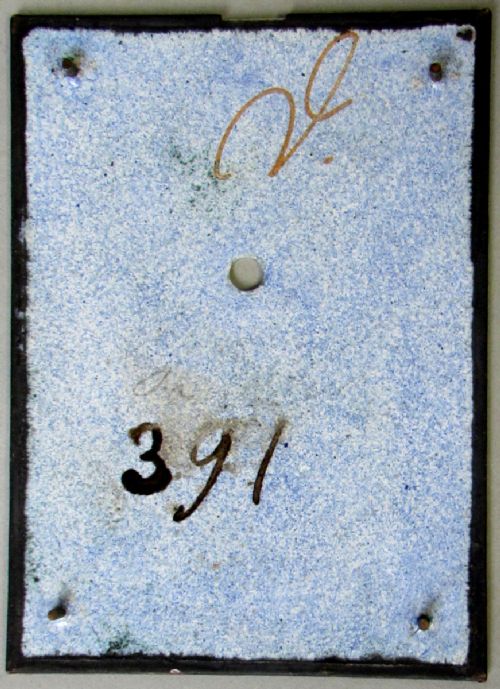
The white enamel dial has black Roman hour numerals, dots to the outer aspect and blued steel trefoil hands. The rear of the dial has a V written in red ink being that of the dial émailleur Etienne Valet and whose signature is also noted on clocks signed for Jacot at this time.
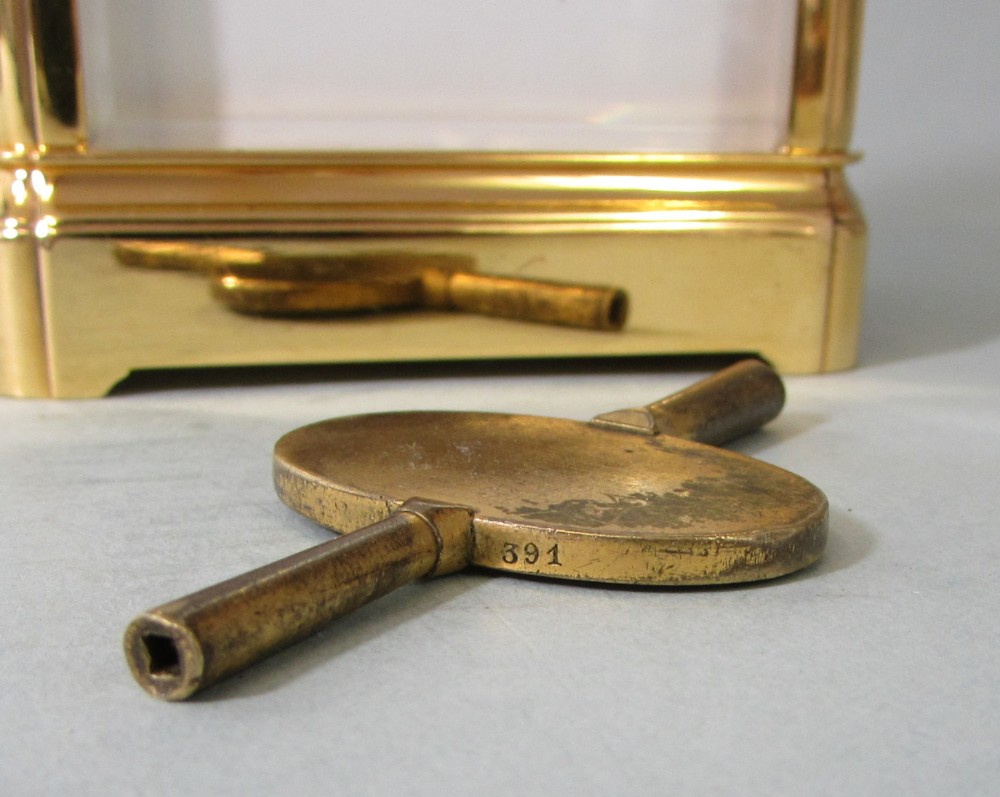
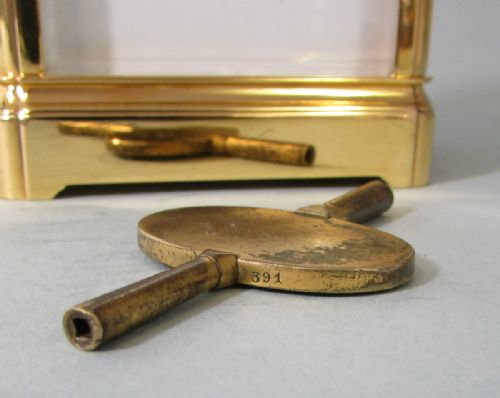
?Complete with the original early style travelling box and the Jacot-style numbered winding key.

?Grohé seems to have been supplied by Raingo Frères in the earlier years as noted by a letter in my archive sent from Grohé to them. This example would suggest that he then procured carriage clocks from Baveux/Jacot before switching to Holingue Frères and thereafter Alfred Drocourt following the latter's takeover of the Holingue business.
A letter I wrote to the Horological Journal in November 2019, in relation to a Grohé clock sold at auction, gives an outline of this arrangement and the numbering system used.

James Grohé, sometimes John James was born in Germany in 1803 but became a naturalised British citizen. He died in 1872.
He was the successor to the well-known chronometer maker Charles Haley, established in the late eighteenth century, at 7 Wigmore Street, Cavendish Square, London with Grohé known to have started in business in circa 1832. He often utilised both movements and clocks made by Dent.
About 1862, or 1863, the Pennington Typke workshop moved to the Grohé premises at 7, Wigmore Street when John Pennington and Herman William Typke (born 1821) bought the James Grohé business.

John Pennington of London (not the maker from Liverpool) is shown in the 1856 Post Office Directory in the Watch Makers and Chronometer Makers sections at 11 Portland Row, Camberwell Road, London.
Pennington had quite probably realised that marine chronometer sales had become stagnant and the competition to make them too fierce. As such, he began making and retailing other types of clocks which was boosted by the takeover of the Grohé business.
Pieces made after 1862 but before 1882 have various signatures such as Grohé, Pennington & Typke successors, but some may still have Grohé on them without the successors name.

After John Pennington’s death in 1882 the signature becomes Grohé H. W. Typke successor although the firm inherited maintenance work on some old Pennington chronometers which they worked on until Mr Typke’s retirement either post 1900, or his death in 1909.

He

Physical Dimensions
Height
16.2cm (6.38")
Declaration

Leigh Extence Antique Clocks has dated this Gilt Brass Carriage Clock to the 1860s.

Reference Numbers
Sellingantiques Reference
SA1090498
Dealers Internal Reference
1465
Dealers Notes

Leigh Extence offers for sale antique clocks that are fully researched and validated.

Leigh is acknowledged as the world's leading expert on French carriage clocks of the 19th century and has lectured both home and abroad on the subject for over ten years.

He has had many papers published on the subject and his research is used by many of the leading auction houses in their descriptions.

Research Articles and Exhibition Catalogues are available to view on our website:

www.extence.co.uk

Unless otherwise stated, all clocks have been fully overhauled and are guaranteed as such.

Description
A one-piece carriage clock in the style of Garnier series I by the Baveux workshops for James Grohé, London.
?The eight-day duration movement has a gilded platform lever escapement with plain brass balance and strikes the hours and half-hours on a bell, with push button repeat of the last hour at will.
Leigh Extence Antique Clocks

The movement backplate is stamped with the clock serial number 391 and engraved with the retailer's name Grohé, London.

fig 1. A rectangular gilt brass carriage clock featuring a top carrying handle, glass side panels, and a white enamel dial with Roman numerals.
fig 1. Baveux/jacot Carriage Clock for James Grohé

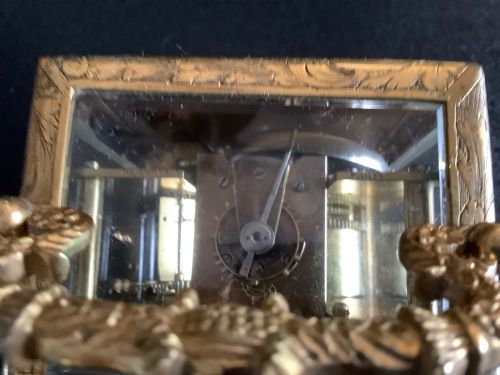
The movement can be firmly attributed to the workshops of Louis Baveux having all the unique features as seen on clocks from their Saint-Nicolas-d'Aliermont premises. Baveux were supplying Henri Jacot at this time and my research suggests that the workshop was a part of the Jacot concern, with this clock being a typical Jacot of the period. Unique movement features include the repeat work system; the contrate wheel depthing utilising a steel end-piece adjusted by screwing the plates so they become deeper or shallower; the double-finned dial-plate pillars, the curved underdial bridge; the distinctive hand-setting arrow style; the steel underdial strike-work; the pear-shaped cam for setting-off the strike along with the general wheel layout.

fig 2. A rectangular gilt brass carriage clock featuring a top carrying handle, glass side panels, and a white enamel dial with Roman numerals.
fig 2. Baveux/jacot Carriage Clock for James Grohé

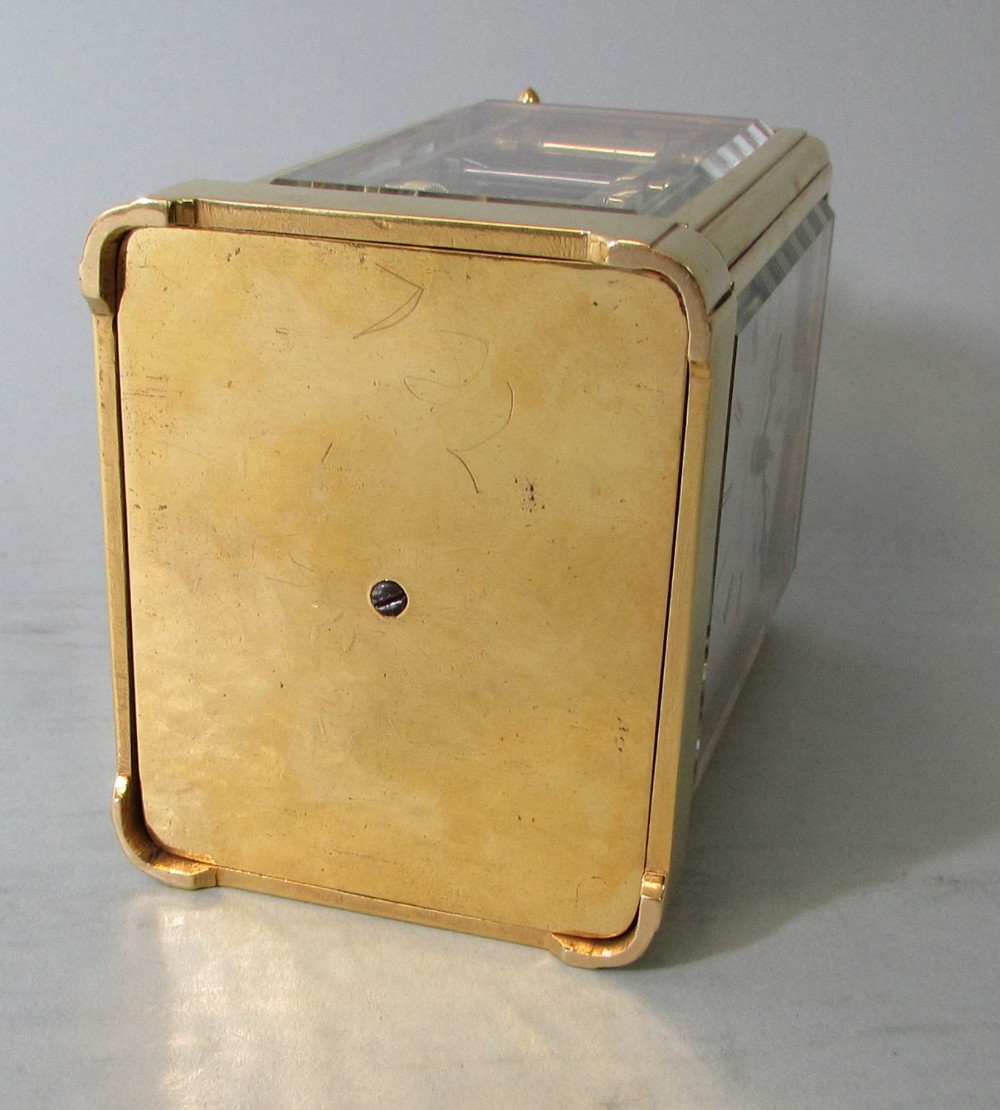
This case style is one used by both Baveux and Jacot at this period as noted by almost identical examples retailed by Dent in London and from the Baveux workshop. It is also near-identical to Series I Paul Garnier cases at a time when Garnier was supplied by Holingue Frères as mentioned in the notes below.

fig 3. A rectangular gilt brass carriage clock featuring a top carrying handle, glass side panels, and a white enamel dial with Roman numerals.
fig 3. Baveux/jacot Carriage Clock for James Grohé

The white enamel dial has black Roman hour numerals, dots to the outer aspect and blued steel trefoil hands. The rear of the dial has a V written in red ink being that of the dial émailleur Etienne Valet and whose signature is also noted on clocks signed for Jacot at this time.

fig 4. A rectangular gilt brass carriage clock featuring a top carrying handle, glass side panels, and a white enamel dial with Roman numerals.
fig 4. Baveux/jacot Carriage Clock for James Grohé

?Complete with the original early style travelling box and the Jacot-style numbered winding key.

?Grohé seems to have been supplied by Raingo Frères in the earlier years as noted by a letter in my archive sent from Grohé to them. This example would suggest that he then procured carriage clocks from Baveux/Jacot before switching to Holingue Frères and thereafter Alfred Drocourt following the latter's takeover of the Holingue business.

fig 5. A rectangular gilt brass carriage clock featuring a top carrying handle, glass side panels, and a white enamel dial with Roman numerals.
fig 5. Baveux/jacot Carriage Clock for James Grohé

A letter I wrote to the Horological Journal in November 2019, in relation to a Grohé clock sold at auction, gives an outline of this arrangement and the numbering system used.

James Grohé, sometimes John James was born in Germany in 1803 but became a naturalised British citizen. He died in 1872.

fig 6. A rectangular gilt brass carriage clock featuring a top carrying handle, glass side panels, and a white enamel dial with Roman numerals.
fig 6. Baveux/jacot Carriage Clock for James Grohé

He was the successor to the well-known chronometer maker Charles Haley, established in the late eighteenth century, at 7 Wigmore Street, Cavendish Square, London with Grohé known to have started in business in circa 1832. He often utilised both movements and clocks made by Dent.

fig 7. A rectangular gilt brass carriage clock featuring a top carrying handle, glass side panels, and a white enamel dial with Roman numerals.
fig 7. Baveux/jacot Carriage Clock for James Grohé

About 1862, or 1863, the Pennington Typke workshop moved to the Grohé premises at 7, Wigmore Street when John Pennington and Herman William Typke (born 1821) bought the James Grohé business.

John Pennington of London (not the maker from Liverpool) is shown in the 1856 Post Office Directory in the Watch Makers and Chronometer Makers sections at 11 Portland Row, Camberwell Road, London.

fig 8. A rectangular gilt brass carriage clock featuring a top carrying handle, glass side panels, and a white enamel dial with Roman numerals.
fig 8. Baveux/jacot Carriage Clock for James Grohé

Pennington had quite probably realised that marine chronometer sales had become stagnant and the competition to make them too fierce. As such, he began making and retailing other types of clocks which was boosted by the takeover of the Grohé business.

fig 9. A rectangular gilt brass carriage clock featuring a top carrying handle, glass side panels, and a white enamel dial with Roman numerals.
fig 9. Baveux/jacot Carriage Clock for James Grohé

Pieces made after 1862 but before 1882 have various signatures such as Grohé, Pennington & Typke successors, but some may still have Grohé on them without the successors name.

After John Pennington’s death in 1882 the signature becomes Grohé H. W. Typke successor although the firm inherited maintenance work on some old Pennington chronometers which they worked on until Mr Typke’s retirement either post 1900, or his death in 1909.

He

Height
16.2cm (6.38")
Date of Manufacture

Leigh Extence Antique Clocks has dated this Gilt Brass Carriage Clock to the 1860s.

Reference Numbers
Sellingantiques Ref
SA1090498
Dealers Internal Ref
1465
Leigh Extence Antique Clocks
Sellingantiques verified Since Sep 2024

Specialists in fine antique clocks

Dealer Profile

You can view the stock and full dealer information on the Leigh Extence Antique Clocks Profile Page

Trade Associations

Leigh Extence Antique Clocks is a registered member of BADA  CINOA
Relevant Links
PDF SHARE
SAVE
A rectangular gilt brass carriage clock featuring a top carrying handle, glass side panels, and a white enamel dial with Roman numerals.
1 / 12
Archive I A rectangular gilt brass carriage clock featuring a top carrying handle, glass side panels, and a white enamel dial with Roman numerals.

Baveux/Jacot Carriage Clock for James Grohé
Archive II A rectangular gilt brass carriage clock featuring a top carrying handle, glass side panels, and a white enamel dial with Roman numerals. View II
Archive III A rectangular gilt brass carriage clock featuring a top carrying handle, glass side panels, and a white enamel dial with Roman numerals. View III
Archive IV A rectangular gilt brass carriage clock featuring a top carrying handle, glass side panels, and a white enamel dial with Roman numerals. View IV
Archive V A rectangular gilt brass carriage clock featuring a top carrying handle, glass side panels, and a white enamel dial with Roman numerals. View V
Archive VI A rectangular gilt brass carriage clock featuring a top carrying handle, glass side panels, and a white enamel dial with Roman numerals. View VI
Archive VII A rectangular gilt brass carriage clock featuring a top carrying handle, glass side panels, and a white enamel dial with Roman numerals. View VII
Archive VIII A rectangular gilt brass carriage clock featuring a top carrying handle, glass side panels, and a white enamel dial with Roman numerals. View VIII
Archive IX A rectangular gilt brass carriage clock featuring a top carrying handle, glass side panels, and a white enamel dial with Roman numerals. View IX
Archive X A rectangular gilt brass carriage clock featuring a top carrying handle, glass side panels, and a white enamel dial with Roman numerals. View X
Archive XI A rectangular gilt brass carriage clock featuring a top carrying handle, glass side panels, and a white enamel dial with Roman numerals. View XI
Archive XII A rectangular gilt brass carriage clock featuring a top carrying handle, glass side panels, and a white enamel dial with Roman numerals. View XII
FURTHER BROWSING

Visitors also looked at these ⇣

Enlarged Archival View
Telephone 07967 802160
Location
Pavilion Place
Exeter
Devon
United Kingdom

By appointment only.
Verified Since Sep 2024
Items For Sale 23
Items Sold 6
Leigh Extence Antique Clocks
Verified Since Sep 2024
View Dealer Info
Location: Pavilion Place, Exeter, Devon, United Kingdom, , By appointment only.
Verified
Sep 2024
For Sale
23
Sold
6
A rectangular gilt brass carriage clock featuring a top carrying handle, glass side panels, and a white enamel dial with Roman numerals.
Baveux/Jacot Carriage Clock for James Grohé
Ref: SA1090498
A rectangular gilt brass carriage clock featuring a top carrying handle, glass side panels, and a white enamel dial with Roman numerals.
Detail View 1
Detail View 2
Detail View 3
Detail View 4
Detail View 5
Detail View 6
Detail View 7
Detail View 8
Detail View 9
Detail View 10
Detail View 11
Archival Detail
Every single antique dealer on our platform is individually approved by our internal team. We verify their professional trade history, ethical standards, and photographic quality to ensure a secure, high-standard buying environment. Upon joining, every dealer agrees to a strict 9-point code of conduct. While issues can occasionally arise, our dealers typically resolve them swiftly and directly with the buyer. In fact, since our founding in 2002, Sellingantiques has only had to step in to help resolve an issue on roughly five occasions—a true testament to the quality of our dealers and their dedication to your happiness.
Our dealers are highly experienced in packing and shipping fragile, high-value antiques. Because you are in direct contact with the dealer, you will be able to easily go through all available shipping and insurance options together to ensure your item arrives safely.
Antiques are the ultimate green purchase. By choosing historical pieces over newly manufactured goods, you completely eliminate the carbon footprint of modern mass production while preserving exceptional, timeless craftsmanship.

Originating in France during the early 19th century, carriage clocks were developed as durable, portable timepieces for travellers. Typically housed in rectangular gilt-brass cases with glass side panels and a folding carrying handle, they offered reliability on journeys while maintaining elegant proportions.

Most traditional carriage clocks feature heavy solid brass or gilt-brass cases fitted with bevelled glass panels to display the internal movement. The dials are typically crafted from white enamel, complemented by blued steel hands and precision spring-driven movement components.

Authentic 19th-century carriage clocks feature heavy gilt-brass cases, finely bevelled glass, hand-cut gear trains, and often maker stamps or serial numbers on the back plate. Dials are generally white enamel with hand-drawn Roman numerals and blue-tempered steel hands.

A gilt brass carriage clock serves as a sophisticated accent piece on a fireplace mantel, executive desk, or curated bookshelf. Placing it alongside dark wood, leather accessories, or modern glass objects creates a refined contrast between historic mechanical craftsmanship and contemporary decor.

Keep the clock in a dry, stable environment away from direct heat and humidity to prevent tarnish or oxidisation. Dust the brass exterior gently with a clean microfibre cloth without harsh chemical polishes, and have the mechanical movement serviced by a professional horologist every three to five years.
items
Add keywords to the filter
Price
£100
£250000
Era
Movements
Material
Origin
Stock Location
Freshness
Online Payments
Categories