



Roman Numeral Desk Clock
A roman numeral desk clock brings traditional timekeeping to a table or mantel, combining classic dial markings with portable or domestic utility.
Roman Numeral Desk Clock
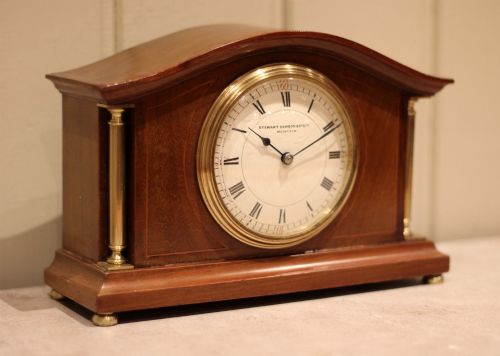
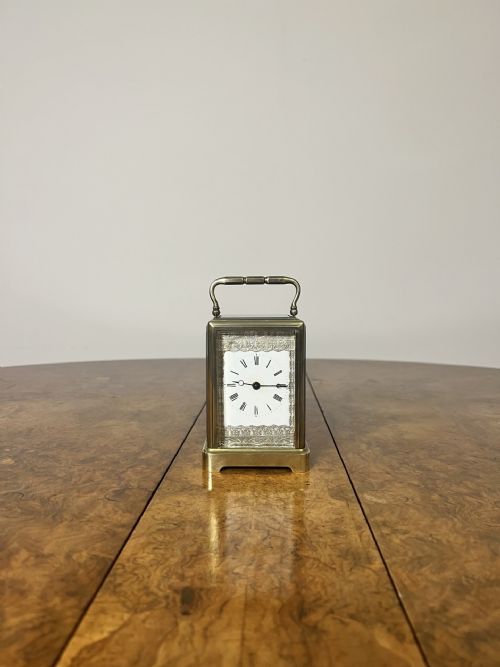
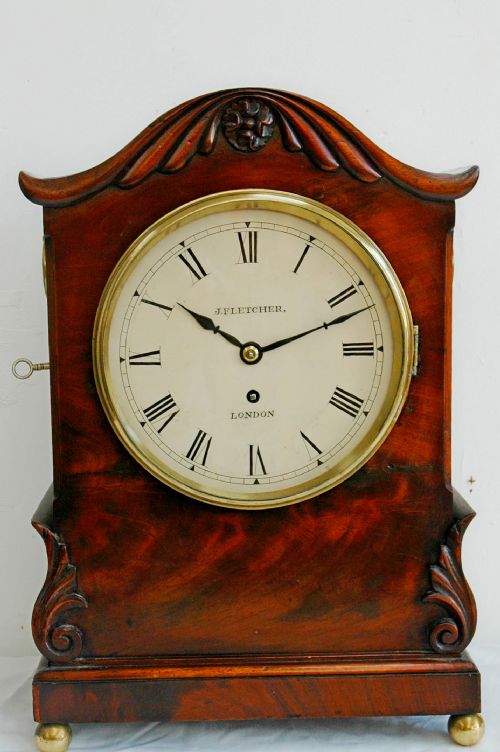
When you search for a roman numeral desk clock, you encounter a variety of domestic timepieces spanning the Victorian, Edwardian, and mid-century periods. These objects include carriage clocks, strut clocks, and smaller mantel or bracket clocks designed for desks and tables.
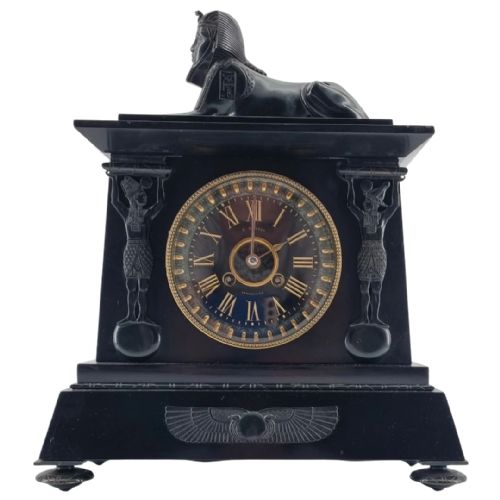
The pieces appearing on this page encompass traditional English, French, and Egyptian Revival styles, housed in materials such as brass, mahogany, marble, and silver. Most examples rely on clear dials marked with Roman numerals to display the time.
Carriage clocks and pocket watch conversions frequently represent the portable end of this phrase, while heavier wooden bracket clocks form the stationary desk and mantel varieties.
Distinctions in Quality
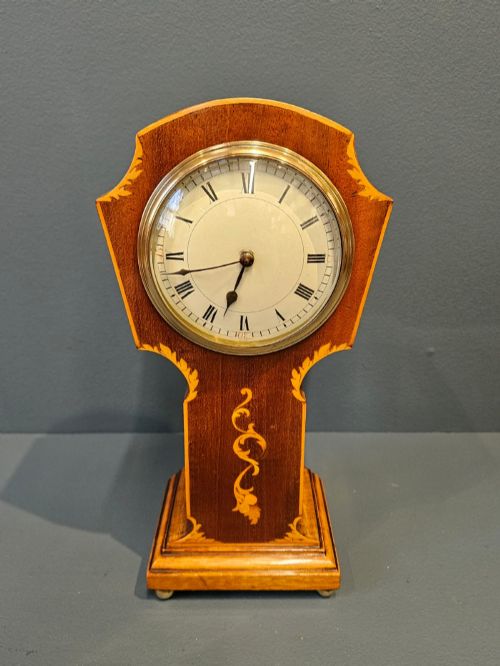
The standard of a clock depends on the precision of its case joinery, the quality of its metal casting, and the legibility of its enamel dial. Solid timber housings with inlaid details or heavy brass and marble structures indicate superior workshop output compared to plain alternatives.
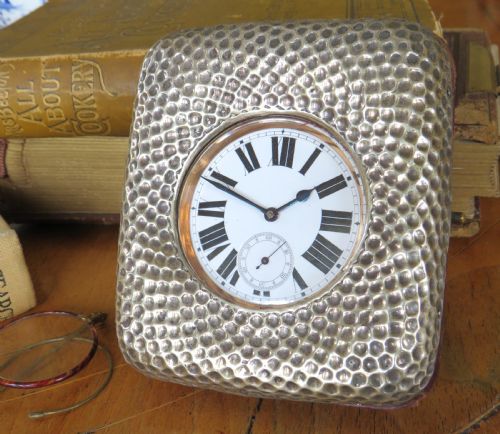
Signed works by known makers or retailers demonstrate higher standards of movement assembly and finishing. The integration of fine materials like silver cases or lapis blue finishes further separates standard timepieces from luxury productions.
Roman Numeral Desk Clock Retail Price Guide 2026
Typical asking prices for roman numeral desk clock among the pieces listed under this phrase on Sellingantiques today, from the lower quarter to the upper quarter. They describe what is for sale here now, not the wider market.
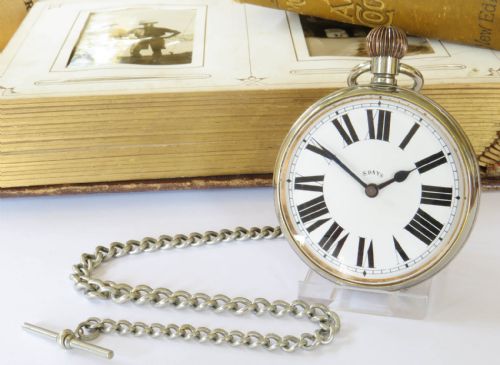
Several heavy goliath pocket watches traded their chains for desk stands to live second lives as oversized table clocks.
Piggin Norwich·D. Munsey of Cambridge·Henry Marc·Van Cleef and Arpels Paris·Luxor·Garrard and Co·Baldwin of Loughborough·Armstrong of Manchester
The Roman Numeral Desk Clock Glossary
- Carriage clock
- A portable spring-driven timepiece originally designed for travel, typically fitted with a brass case and a carrying handle. These often feature glass sides to view the internal mechanism.
- Bracket clock
- A traditional domestic clock designed to sit on a bracket or furniture surface, usually housed in a substantial wooden case such as mahogany or walnut.
- Strut clock
- A timepiece supported by a hinged prop or strut at the back, allowing it to stand upright on a desk or table.
- Goliath pocket watch
- An oversized pocket watch frequently paired with a stand or case to function as a desk or travel clock.
- Marquetry
- The art of applying pieces of veneer to a structure to form decorative patterns, seen on several wooden clock cases.
Roman Numeral Desk Clock: Frequently Asked Questions
What is a roman numeral desk clock?
A roman numeral desk clock is a portable or table-standing timepiece featuring a dial marked with Roman numerals rather than Arabic digits. These items encompass carriage clocks, strut clocks, and compact wooden mantel pieces.
They were designed for personal timekeeping on desks, tables, or during travel, merging functional mechanics with decorative cabinetwork.
How do I identify the period of a desk clock?
Period identification relies on examining the case materials, construction style, and dial characteristics. Victorian and Edwardian examples often employ heavy brass, mahogany, or inlaid wood.
Mid-century items introduce alternative finishes and modern forms, while specific maker signatures help narrow down the date of production.
Where were these clocks used?
These timepieces served as domestic accessories on writing desks, mantelpieces, and bedside tables. Travel variants accompanied owners on journeys.
Their compact size allowed them to move easily between rooms depending on where timekeeping was required.
What materials are common in these clocks?
Common materials include brass, mahogany, walnut, marble, and glass. Enamel frequently appears on the dial faces.
Finer examples incorporate silver cases, rosewood marquetry, or ebonised wood details.