
Victorian Brass Carriage Clock
A victorian brass carriage clock brings heavy gilt metal and bevelled glass together in a portable timepiece built to travel.
What They Are
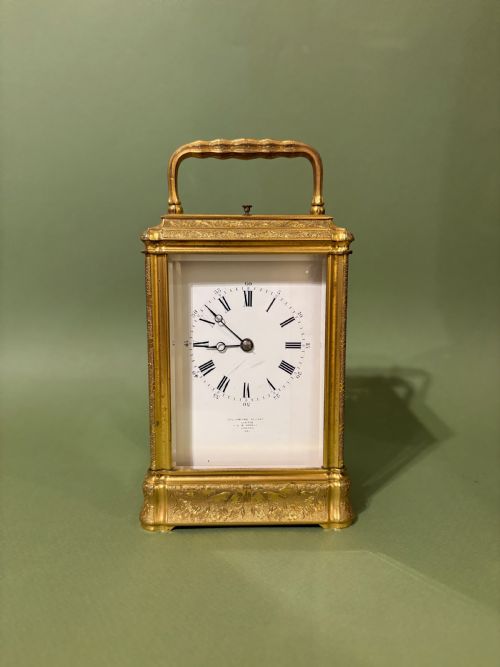
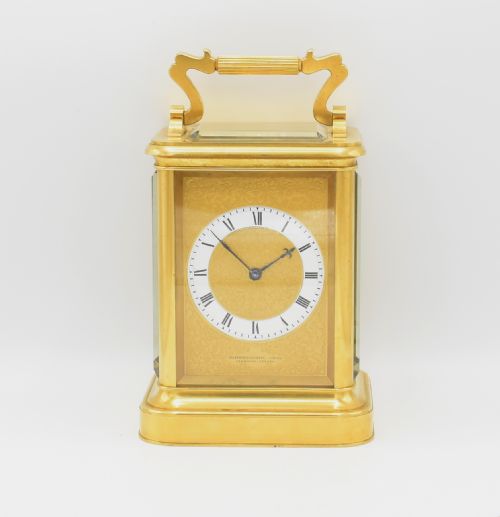
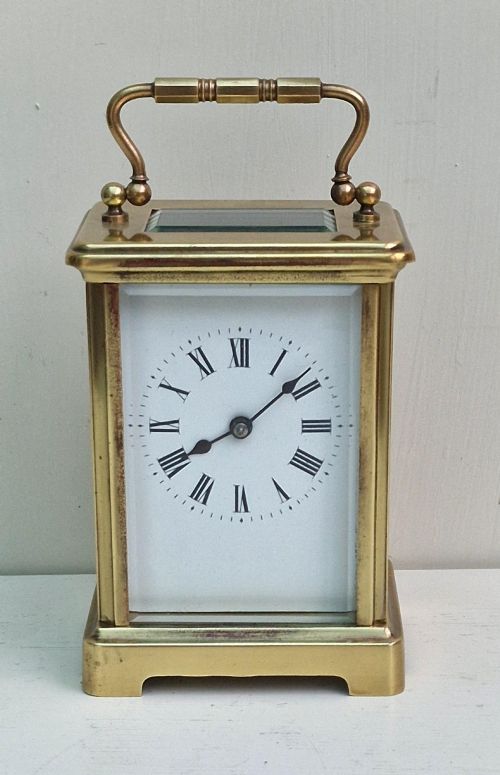
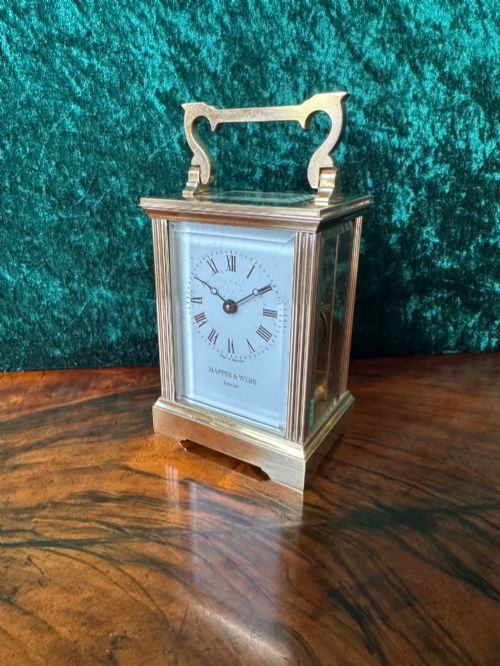
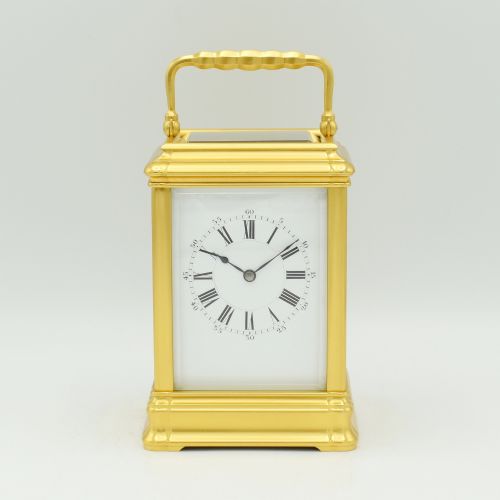
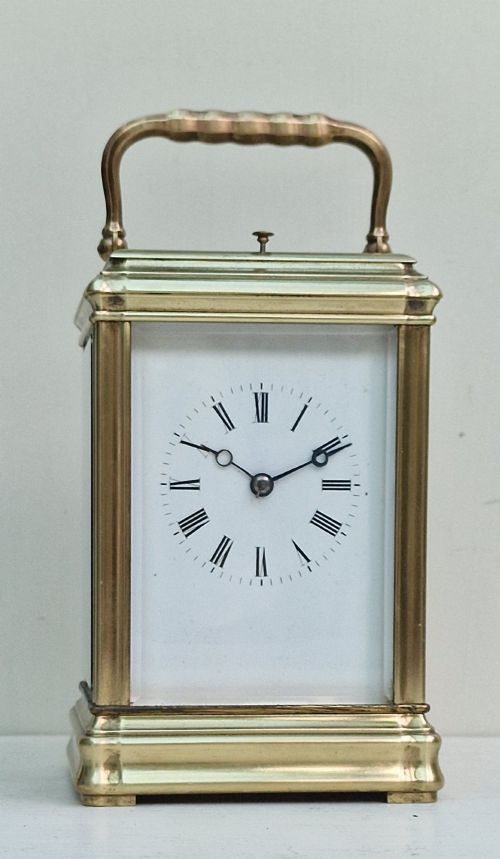
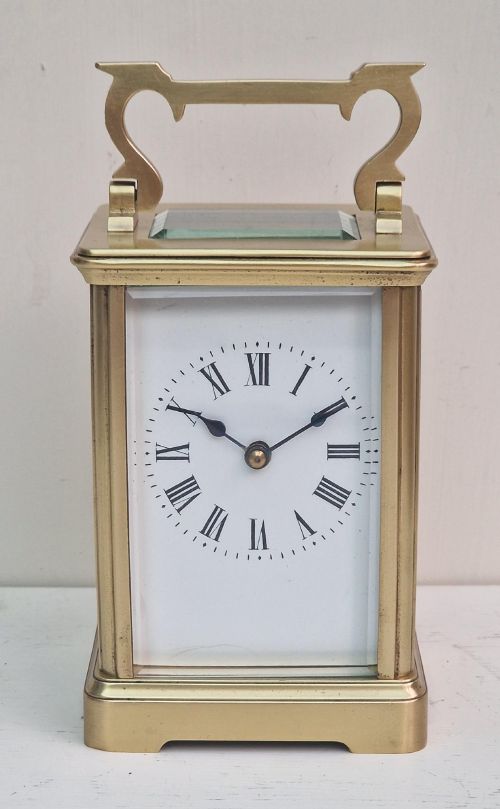
A victorian brass carriage clock represents a portable timepiece designed for travel during the nineteenth century. These objects combine heavy metal cases with bevelled glass panels to show the mechanical movement within.
Most examples found here date from the late nineteenth century and originate from French workshops. Collectors encounter standard sizes alongside miniature versions and pieces equipped with striking mechanisms or alarms.
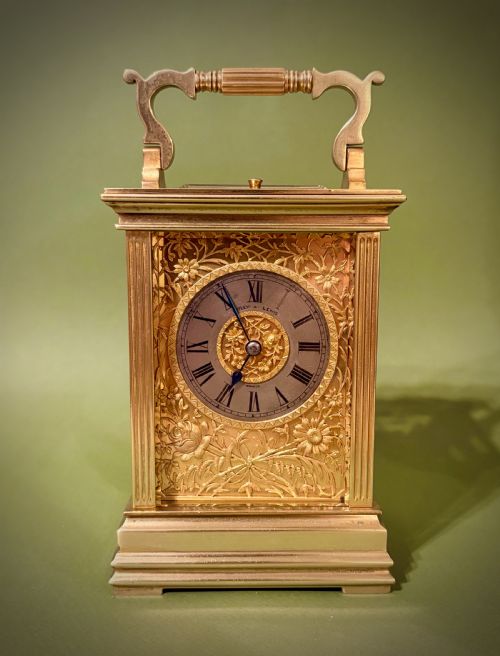
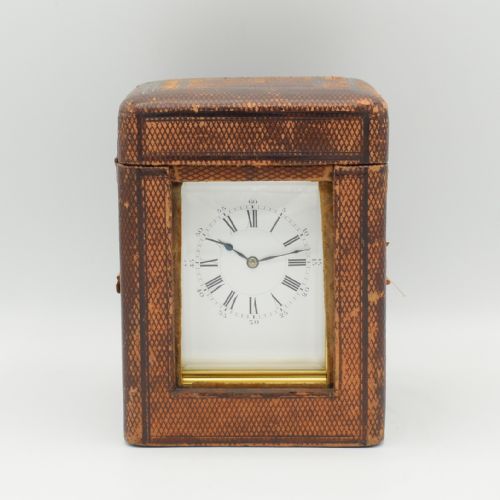
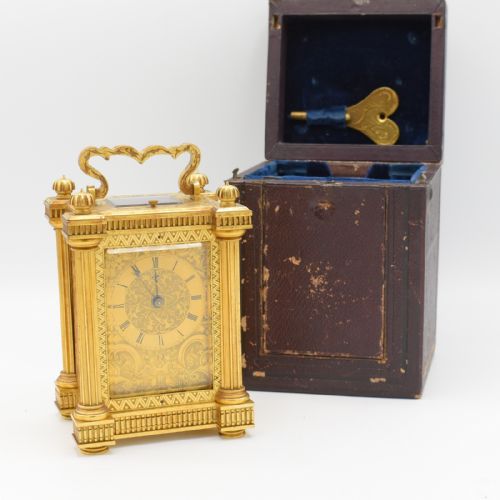
The aesthetic draws on Victorian and Georgian Revival styles, often featuring ornate cast brass framing. Many retain their original leather travel cases for protection on journeys.
How They Were Made
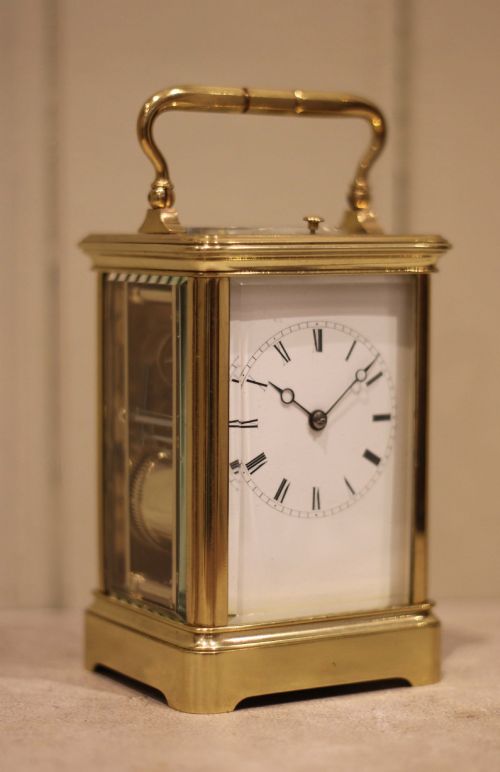
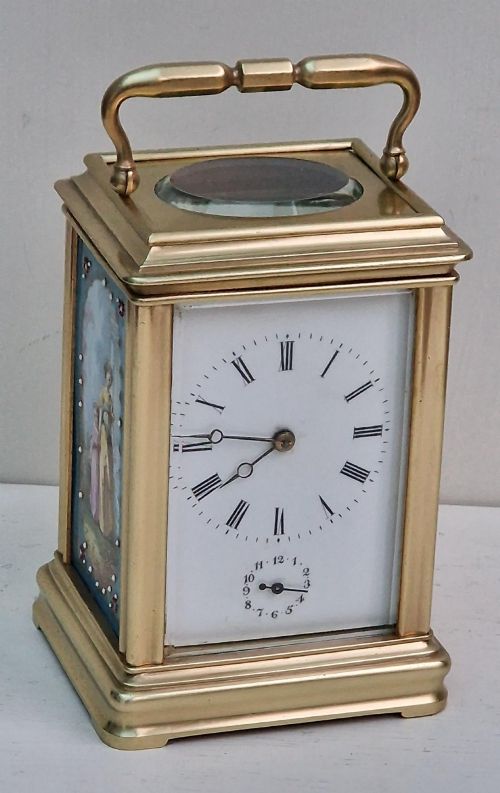
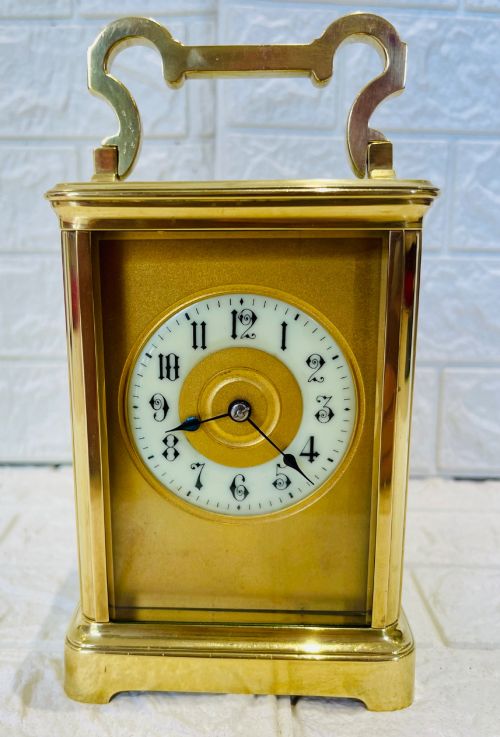
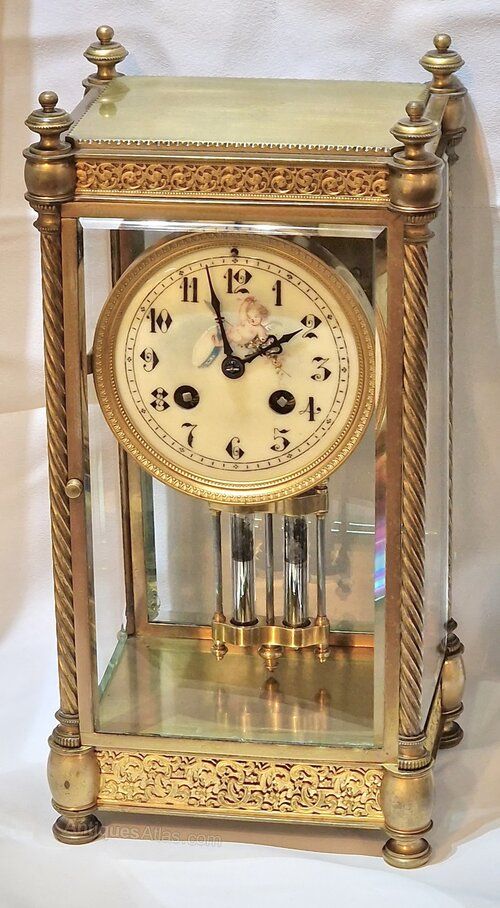
Maker workshops utilised heavy brass, often with gilt finishes, to construct the rigid frames and handles. Glass panels fitted into the top, sides and door allow a clear view of the escapement and gears.
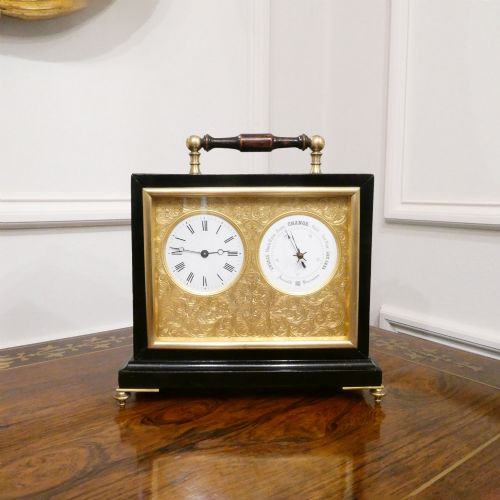
Dials typically consist of white enamel featuring roman numerals, housed behind protective crystal. Movement plates of brass hold the delicate steel wheels and springs necessary for eight-day operation.
Retail Price Guide 2026
Typical UK retail prices for victorian brass carriage clock, calculated from the Sellingantiques database of over a million retail prices indexed since 2003. This retail price guide relies exclusively on Sellingantiques data; no external sources or auction records are used, so the figures do not describe the wider market.
Some travellers needed a clock that could chime the hours in a pitch-black coaching inn.
What Varies In Quality
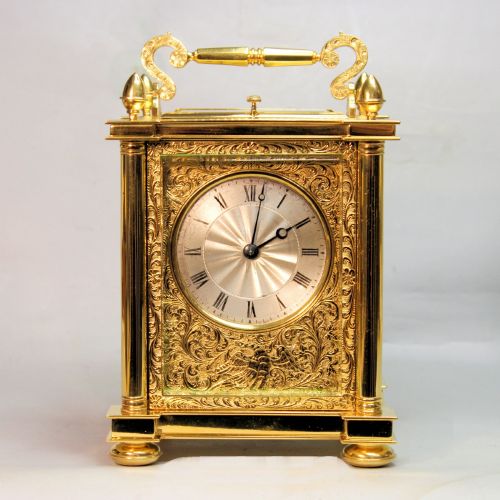
Subtlety of cast ornamentation on the brass case distinguishes standard examples from more elaborate pieces. Hand-finished engraving around the dial mask and the presence of gilt surfaces elevate the visual weight.
Complications within the movement, such as alarm functions, sweep seconds or grand-sonnerie repeating strikes, separate simpler timepieces from advanced mechanical achievements. The inclusion of a robust original leather travel case adds further distinction.
Mappin and Web·Richard co maker·Dent
The Victorian Brass Carriage Clock Glossary
- Gorge case
- A distinct rectangular brass case style with stepped mouldings at the top and base, common in nineteenth century French examples.
- Escapement
- The internal mechanism that controls the release of power to regulate the clock speed, often visible through an aperture in the top glass.
- Enamel dial
- A fused glass surface fired onto metal to provide a smooth white background for painted numerals.
- Grand-sonnerie
- A complex striking train that sounds both the hours and the quarters automatically without requiring a pull cord.
Frequently Asked Questions
How do I wind a carriage clock?
Insert the key into the arbour on the underside or backplate of the movement and turn it gently until resistance stops the motion.
Avoid over-winding the mainspring to prevent damage to the internal brass gears.
Were all carriage clocks made in France?
Many nineteenth century examples originated in French workshops before reaching the British market through retailers.
Some pieces bear signatures from British firms who retailed or finished the imported movements.
Why do some clocks have leather cases?
Original leather travel cases protected the gilt brass finish and glass panels during journeys in horse-drawn carriages or trains.
These fitted cases often feature velvet or silk linings and handle cutouts for carrying.
What is a miniature carriage clock?
A miniature version scales down the standard heavy brass frame to create a more compact, delicate desk or bedside ornament.
Despite their smaller size, these pieces house fully functioning mechanical escapements.