




Small Mantel Clock
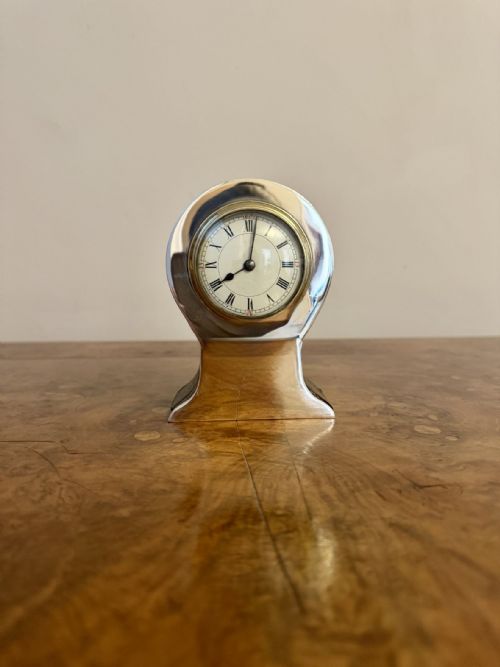
A small mantel clock measures time in miniature, bringing domestic engineering and polished wood or brass to a shelf or desk.
Small Mantel Clock
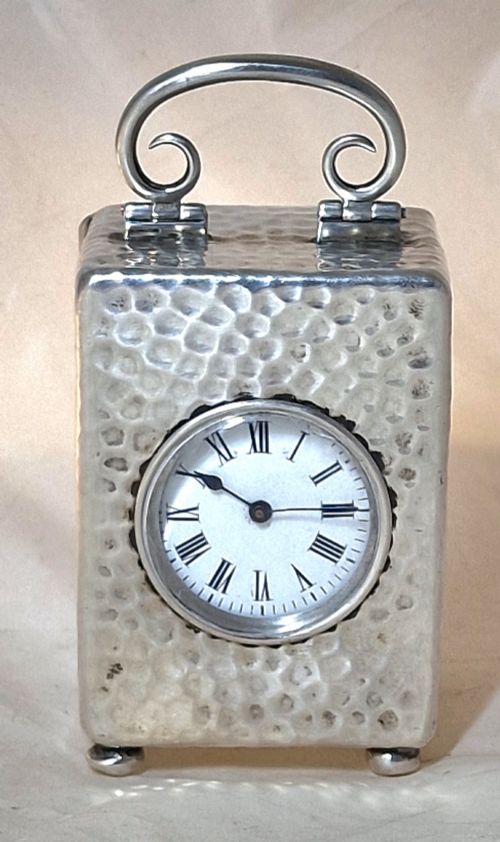
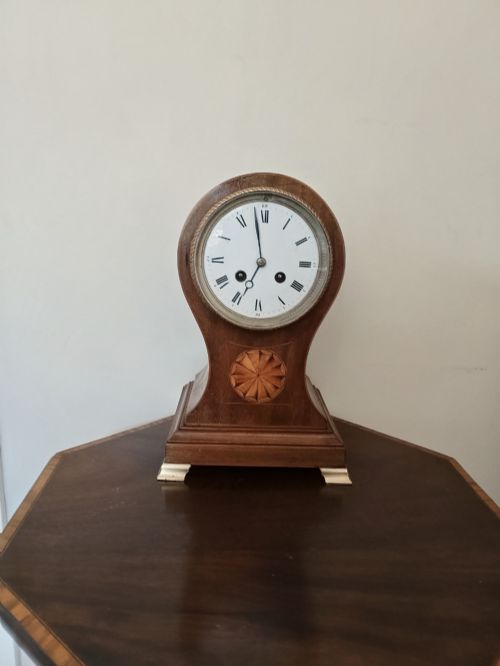
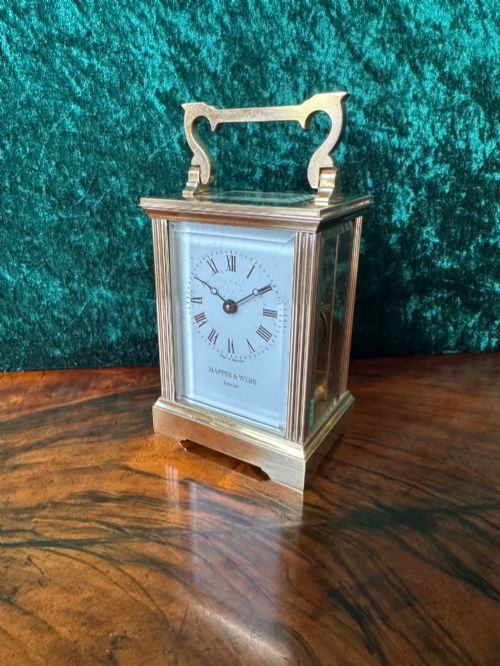
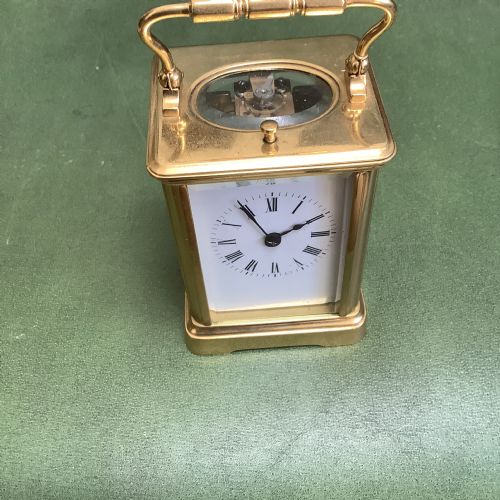
A small mantel clock appears in many guises, from French four-glass models and brass carriage clocks to English fusee bracket clocks and mahogany balloon shapes. The search for a small mantel clock leads through Victorian, Edwardian, and Regency periods, alongside earlier eighteenth-century examples.
Carriage clocks and miniature library timepieces dominate the selection, often housed in brass or silver cases with enamel dials. Walnut, mahogany, oak, and satinwood dominate the wooden cased items found in this category.
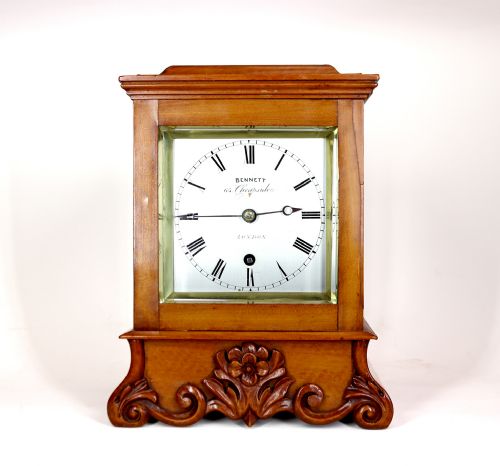
French makers contribute striking movements and gilt brass cases, while English workshops supply fusee movements within wood veneer cabinets. Chinoiserie lacquer and marble variations add distinct regional styles to the available repertoire.
Materials and Construction
Clockmakers utilised brass and bronze for internal gear trains and structural cases, frequently applying gilt or ormolu finishes to French examples. Silver and sterling silver appear on carriage clock and timepiece exteriors, hallmarked for domestic London markets.
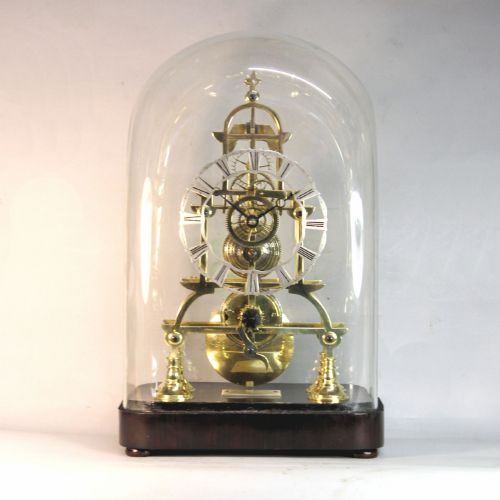
Cabinetmakers constructed wooden housings from mahogany, walnut, satinwood, oak, and ebony, often incorporating marquetry inlays or fruitwood stringing. Glass panels permit views of internal escapements, particularly in four-glass mantel clocks and library timepieces.
Several miniature clocks are small enough to pack in a travel bag, harking back to an era when travellers brought their own time across continents.
Craftsmanship and Proportion
Quality rests in the precision of the movement and the integrity of the case, where hand-engraved brass backplates and silvered dials denote higher production standards. Finely figured wood veneers and well-balanced miniature proportions distinguish superior pieces from standard workshop output.
Signed dials and engraved gilt brass work indicate collaboration with skilled horologists and metalworkers. Original escapements and clean, fully restored movements retain greater horological interest than altered examples.
Mappin and Web·Richard Winter of Chieveley·Sir John Bennett·William Comyns·Tiffany·J Batson and Son·Louis Recordon·WH and Sch·Lenzkirch·Payne and Co·Perigal of London·Joseph Jump·Richard Co·J C Vickery·McCabe·John Durden·Arnold and Frodsham·Hatton·Robert Wood·Samuel Jefferson·Barraud and Lund·F Baetens·Victor-Athanase Pierret·Japy Freres·Richard Ganthony
The Small Mantel Clock Glossary
- Fusee
- A conical pulley used in older clocks to maintain even tension on the gear train as the mainspring unwinds. This mechanism helps ensure steady timekeeping throughout the power reserve.
- Carriage clock
- A portable spring-driven timepiece designed for travel, typically fitted with a carrying handle and a glass-panelled brass case. Many originate from nineteenth-century French workshops.
- Four-glass clock
- A mantel clock featuring glass panels on the front, back, and sides, revealing the mechanical movement within. They are often French in origin and house mercury pendulums or platform escapements.
- Bracket clock
- A portable table clock historically placed on a matching wall bracket or mantel shelf. They frequently feature mahogany or ebony cases with brass carrying handles.
- Timepiece
- A clock that tells the time without incorporating a striking mechanism or chiming train. This layout results in a simpler internal architecture.
Small Mantel Clock: Frequently Asked Questions
What is a fusee movement?
A fusee movement uses a conical drum to equalise the pull of the mainspring as it winds down. This mechanical arrangement ensures consistent power delivery to the escapement.
Such movements are characteristic of better quality English table and bracket clocks from the eighteenth and nineteenth centuries.
How do I wind a carriage clock?
Carriage clocks use a dedicated winding key inserted into arbors located on the underside or backplate of the movement. Care must be taken not to over-wind the mainspring.
Most eight-day carriage clocks require attention once a week to maintain accurate operation.
What is a platform escapement?
A platform escapement is a small, self-contained regulating assembly fitted to portable clocks like carriage timepieces. It replaces the traditional pendulum.
This innovation allows the clock to keep accurate time while resting on a mantel or being carried.
Are these clocks suitable for daily use?
Antique mechanical clocks function well in modern homes when handled with care and placed away from direct heat or drafts. Professional servicing every few years keeps the gear trains running smoothly.
Regular gentle winding preserves the longevity of brass wheels and steel pivots.