
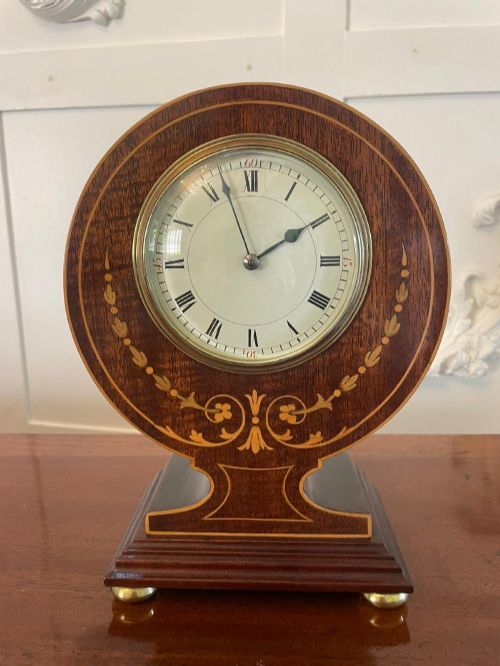
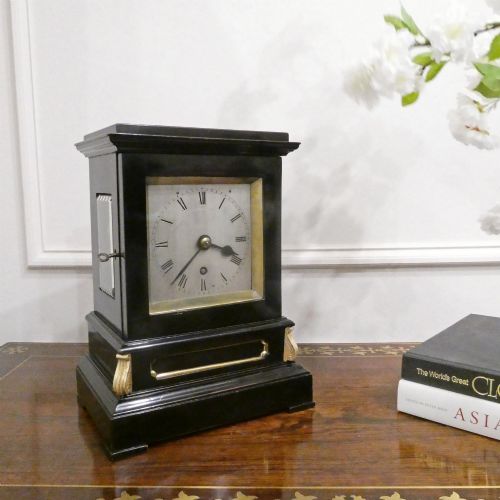
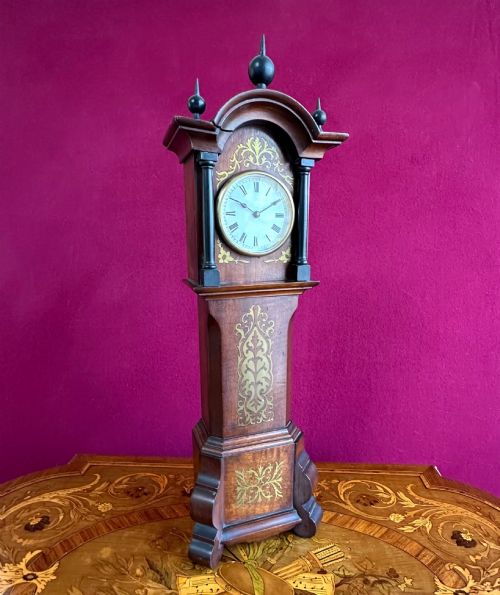
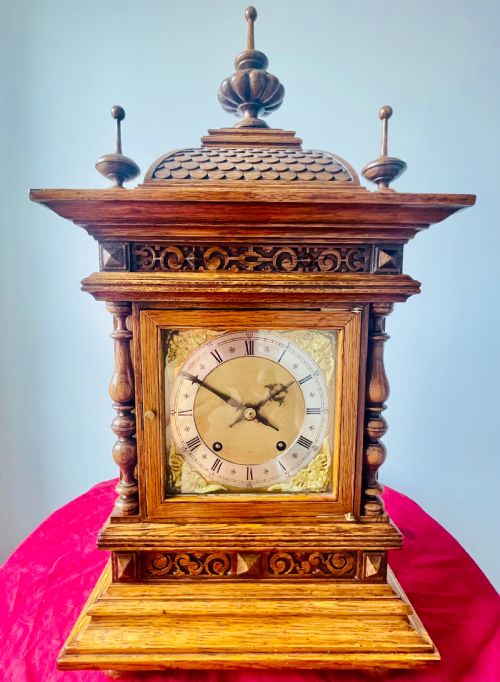
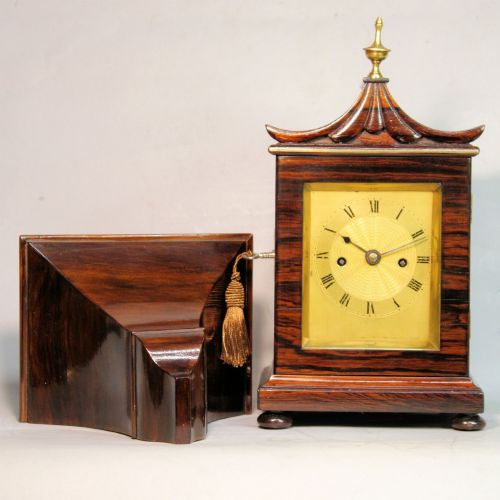


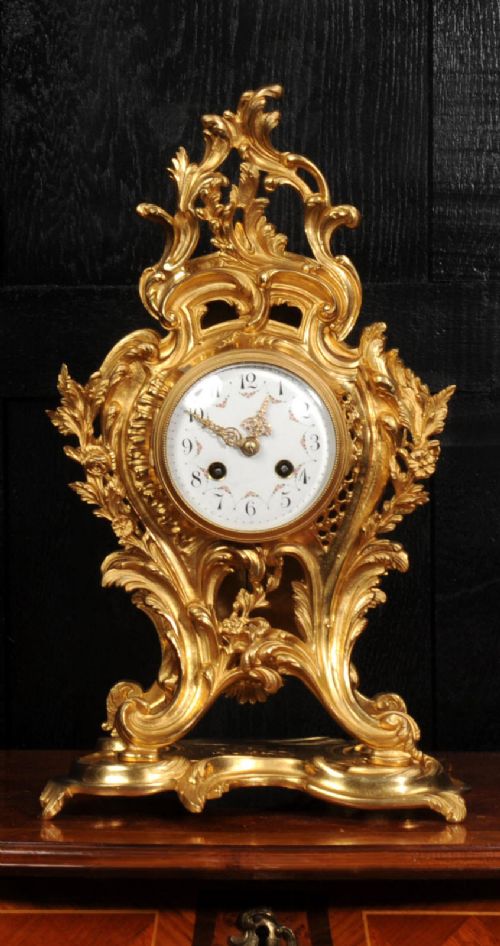


Brass Case Table Clock
When you search for a brass case table clock, you are looking at portable mechanical timepieces housed in metal and glass.
Brass Case Table Clock
A brass case table clock encompasses a varied selection of antique timepieces, including carriage clocks, bracket clocks, and four-glass mantel designs. You will frequently encounter nineteenth-century French carriage clocks and English bracket clocks featuring brass framing on this page.
The objects originate from multiple eras, spanning eighteenth-century workshops through to mid-century Swiss production. Formats range from miniature travel timepieces to large architectural mantel clocks housed in glass and gilt metal.
Materials and construction
Cases combine heavy cast or polished brass, ormolu, and gilt frames with bevelled glass panels that reveal the internal mechanical movement. Makers frequently mounted these metal housings upon wooden bodies constructed from mahogany, rosewood, oak, walnut, or ebonised timber.
Dials display contrasting surfaces of white enamel, silvered metal, or engraved brass plates. Movements utilise steel gear trains, escapements, and pendulum or balance wheel regulation systems driven by mainsprings or fusee mechanisms.
Listings feature brass, gilt brass, ormolu, and glass alongside mahogany, rosewood, walnut, and ebonised wood cases.
Distinctions in quality
Quality rests in the intricacy and execution of the mechanical movement, ranging from standard timepieces to complex striking, repeating, or alarm mechanisms. Prominent makers sign their work on the backplates or dials, marking superior workshop production.
The refinement of the metal casting, hand-engraving on the brass case, and the clarity of the bevelled glass windows separate standard examples from finer luxury items. Original fitted boxes and matching wall brackets elevate the completeness of surviving pieces.
Antoine Redier·Samuel Marti·Paul Garnier·Drocourt·Louis Recordon·Richard Rooker·Perigal of London·Joseph Jump·William Evans of Handsworth·Luxor·Walker and Hall·Thomas Gammage·Fritz Marti·Winterhalder and Hofmeier
The Brass Case Table Clock Glossary
- Fusee
- A conical pulley used in older clocks to maintain even power as the mainspring unwinds. This mechanism helps regulate the force delivered to the gear train.
- Carriage clock
- A small, portable spring-driven timepiece designed for travel, typically featuring a brass case with a glass viewing panel and a folding handle on top.
- Gorge case
- A stepped brass carriage clock case style with characteristic fluted or moulded pillars at the corners. It represents a standard housing format for nineteenth-century French makers.
- Bracket clock
- A portable table clock historically placed upon a wooden wall bracket or furniture surface. Many examples house single or double fusee movements within wooden or ebonised housings.
- Four-glass clock
- A mantel clock featuring glass panels on all four sides to display the swinging pendulum and brass movement. They frequently appear in Victorian French designs.
- Escapement
- The mechanical linkage that controls the release of power from the gear train and gives impulses to the pendulum or balance wheel. Various configurations govern timekeeping precision.
Brass Case Table Clock: Frequently Asked Questions
What is a brass case table clock?
These pieces are portable mechanical timekeepers enclosed in metal frames with glass panels. They encompass diverse formats including carriage clocks for travel and bracket clocks for interior surfaces.
Most examples rely on mainspring power rather than falling weights. Their metal housings protect the delicate gear trains while displaying the internal mechanics.
How do you wind a brass case table clock?
Winding typically requires a dedicated key inserted into winding squares on the dial or backplate. Care must be taken not to overwind the mainspring.
Many antique movements require a specific key size matching the maker's original design. Some delicate escapements also require careful handling during setting.
Where should I place a table clock?
These clocks suit stable horizontal surfaces such as mantelpieces, desks, shelves, or dedicated wall brackets. Placement should avoid direct sunlight and damp environments.
Level surfaces are essential for pendulum-regulated models to beat evenly. Travel clocks with balance wheels tolerate minor movement better than pendulum clocks.
How do I tell an English clock from a French one?
English examples frequently employ fusee movements housed in mahogany, rosewood, or ebonised wood cases with brass details. Their signatures often appear on the silvered brass dials.
French pieces commonly feature gilt brass gorge cases or four-glass housings containing platform escapements. Maker signatures typically appear stamped on the rear movement backplates.