




Brass Alarm Clock
A brass alarm clock brings mechanical timekeeping and an audible morning bell to a desk or bedside, combining period brasswork with practical utility.
Brass Alarm Clock
When you search for a brass alarm clock, you encounter portable French carriage clocks, English bracket clocks, and desk pieces dating from the eighteenth century to the mid-twentieth century.
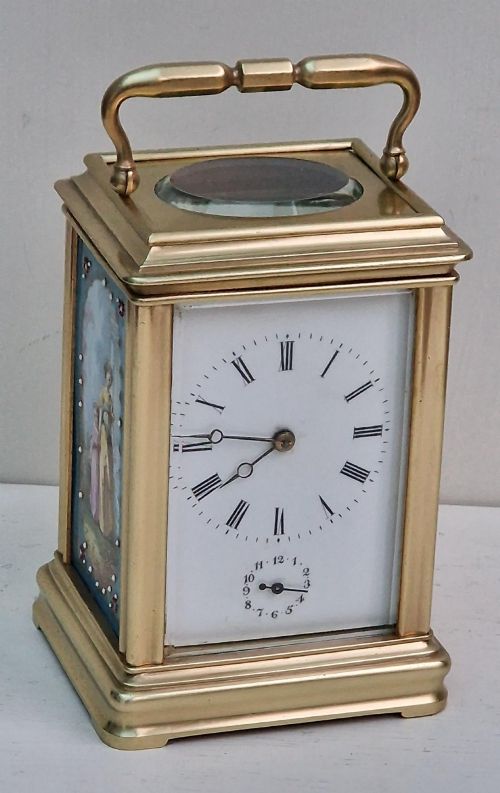
The most common version on this page is the nineteenth-century French carriage clock housed in a polished brass or gilt bronze gorge or corniche case, equipped with a mechanical alarm function.
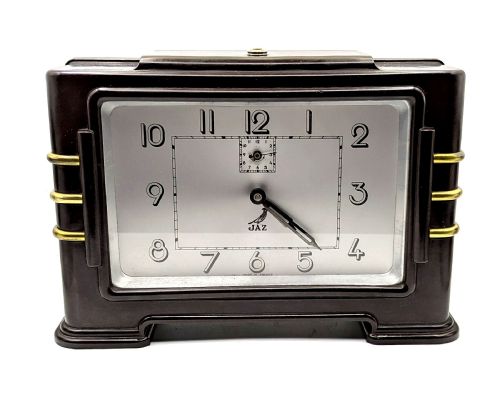
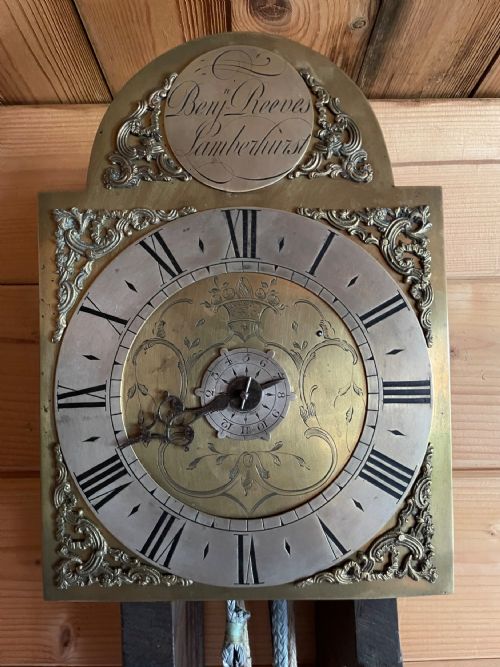
Earlier examples span eighteenth-century English lantern and bracket clocks featuring verge escapements alongside later Swiss and Art Deco desk designs.
How they were made
Makers constructed these mechanisms using brass, steel, and gilt bronze, often housing the portable models within bevelled glass panels that reveal the gear train.
Dials typically feature white enamel with Roman or Arabic numerals, sometimes surrounded by finely engraved gilt brass masks or set with painted porcelain panels.
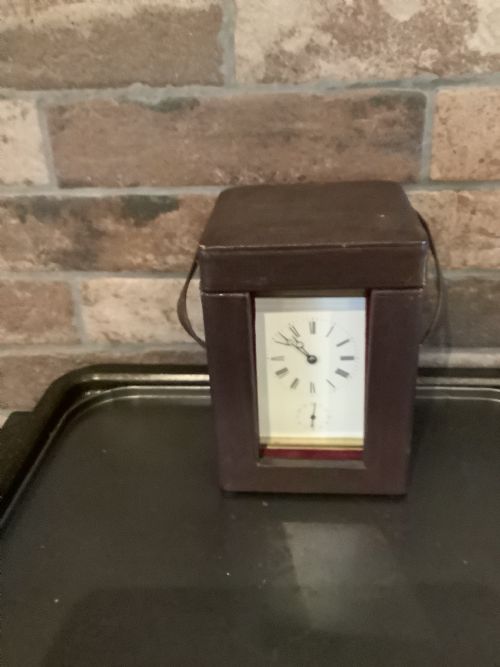
Portable versions frequently utilised original leather or fitted wooden travel cases to protect the polished metal and glass housing during transit.
Listings demonstrate longcase, bracket, desk, and carriage clock forms across Victorian, Georgian, and Art Deco styles.
What varies in quality
The sophistication of the movement dictates the standing of a piece, ranging from standard timepieces with an alarm to complex grand sonnerie and quarter-repeating mechanisms.
Case execution separates ordinary examples from exceptional ones, seen in deep hand-engraving across the brass frame, corniche mouldings, and the presence of original signed boxes and keys.
The survival of undamaged bevelled glass panels and crisp, unblemished enamel dials preserves the integrity and visual weight of the clock.
Antoine Redier of Paris·Benj Reeves Lamberhurst·William Barrow London·Drocourt·Van Cleef Arpels Paris·J F Bautte Et Cie·John Taylor London·James Smith London·Chater Son London·Hunt Roskell·E White·Iames Richards Liverpool·Jaz
The Brass Alarm Clock Glossary
- Carriage clock
- A small, spring-driven portable clock designed for travel during the nineteenth century. These feature glass panels and a swinging handle on top.
- Corniche case
- A classic carriage clock housing with simple rounded pillars at the corners and flat top and bottom plates. It provides a clean architectural outline.
- Verge escapement
- An early mechanical escapement using a crown wheel and pallet arrangement to control the release of power. It represents traditional seventeenth and eighteenth-century clockmaking.
- Grande sonnerie
- A striking train complication that sounds both the hours and the quarters automatically on every quarter hour. It is a mark of high horological achievement.
Brass Alarm Clock: Frequently Asked Questions
How do you wind a brass alarm clock?
Most mechanical brass alarm clocks feature separate arbours on the back plate for the time, strike, and alarm trains. You insert a matching key into each square drive and turn it gently clockwise until resistance is felt.
Care should be taken not to overwind the mainsprings, as this can strain the internal teeth and disrupt the ticking of the escapement.
How does a mechanical alarm function?
The alarm train draws power from its own dedicated spring barrel, released by a pre-set indicator hand on the dial. When the hour hand reaches the selected alarm time, a detent trips the gear train.
This release allows hammers to strike internal gongs or bells rapidly until the spring unwinds or the stop lever is engaged.
Why do some clocks have repeating buttons?
A repeating button on the top of a carriage case allows the owner to sound the last elapsed hour and quarter-hour on demand in the dark. Pressing the plunger activates the striking train without needing to wait for the exact top of the hour.
This complication was especially valued by travellers needing to check the time during the night before personal illumination was common.
How do I care for an antique clock movement?
Keeping the clock on a stable, level surface ensures the pendulum or balance wheel beats evenly. Regular professional servicing every few years prevents old oils from gumming up the delicate brass pivots.
Avoid placing the piece in direct sunlight or damp environments to protect the polished brass case and fragile enamel dial from deterioration.