


Gold Tone Travel Clock
These gold tone travel clock pieces are portable timepieces housed in protective cases, prized by collectors for their intricate brass work and mechanical precision.
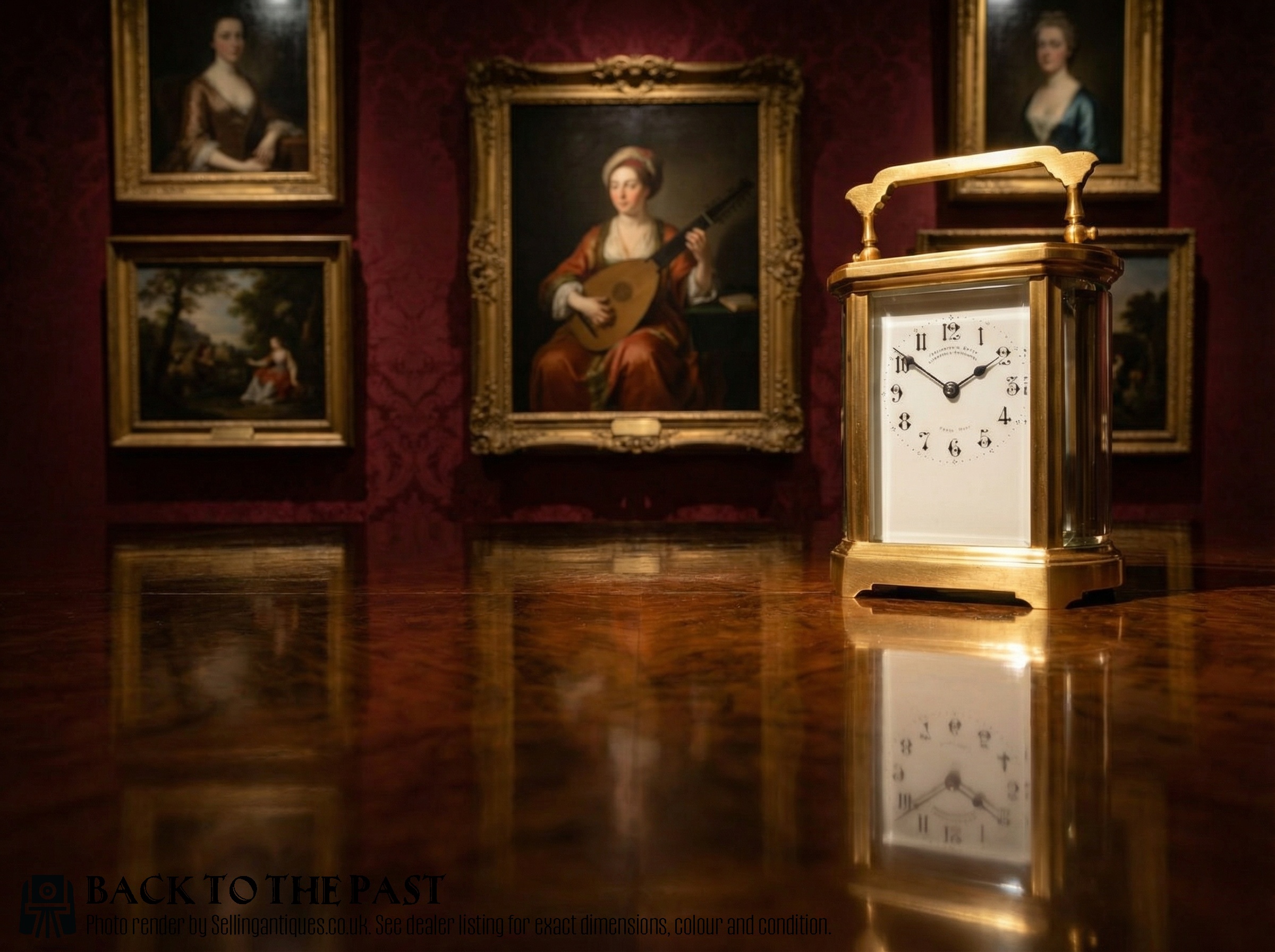
Gold Tone Travel Clock
A gold tone travel clock brings together portable horology and decorative metalwork across periods ranging from the Victorian era through to Art Deco. Buyers searching for a gold tone travel clock typically encounter brass and gilt metal carriage clocks designed for mobility, often complete with original protective cases.
The selections span late nineteenth century French pieces, Edwardian designs, and distinctive novelty formats such as prayer book shapes or race horse themes. Most examples originate from French workshops or feature Swiss movements housed in heavy gilt brass frames with glass panels.
Forms vary from standard miniature carriage clocks with alarm complications to gorge case repeaters and fully engraved travel pieces. Each item reflects the portable timepiece requirements of nineteenth and early twentieth century travellers.
How they were made
Makers utilised brass, gilt brass, gilt metal, and bronze as the primary structural and decorative metals for these travel clocks. Glass panels were fitted to allow visibility of the mechanical movement from multiple angles.
Intricate hand engraving often adorned the gilt brass cases, while leather provided the protective exterior for accompanying travel cases. Enamel dials and steel components completed the complex internal mechanisms of these portable clocks.
Gold Tone Travel Clock Retail Price Guide 2026
Typical asking prices for gold tone travel clock among the pieces listed under this phrase on Sellingantiques today, from the lower quarter to the upper quarter. They describe what is for sale here now, not the wider market.
The listings on this site span the Victorian era, 1890, 1910, and Art Deco periods, utilising materials such as brass, gilt metal, leather, and glass.
What varies in quality
Quality in a gold tone travel clock is determined by the crispness of the gilt brass engraving and the complexity of the internal movement, such as repeater or alarm functions. Fully engraved cases and specialised forms like prayer book shapes demonstrate higher levels of artisanal skill.
The presence of an original leather travel case significantly enhances the integrity of the piece. Superior examples retain their original glass panels and bear signatures from esteemed makers on the movement plates.
Antoine Redier of Paris·Henry Jacot·Penlington & Batty
The Gold Tone Travel Clock Glossary
- Carriage clock
- A small, spring-driven clock designed for travellers in the nineteenth century. These pieces usually feature a carrying handle and glass sides to view the movement.
- Gilt brass
- Brass that has been treated with a thin layer of gold or gold-coloured wash to provide a bright metallic finish. This material forms the primary structure of many antique travel clocks.
- Repeater
- A mechanical complication that chimes the hours and quarters when a lever or button is pressed. Such movements represent a higher tier of watchmaking expertise.
- Gorge case
- A specific style of carriage clock case featuring a stepped, stepped-moulded top and a folding handle. It is characteristic of fine nineteenth century French horology.
- Alarm complication
- A built-in mechanism that sounds an alert at a pre-set time, frequently found in portable clocks intended for journeys.
Gold Tone Travel Clock: Frequently Asked Questions
What is a carriage clock?
A carriage clock is a portable spring-driven timepiece developed in the nineteenth century for people on the move. They typically feature glass panels and a handle on top.
These clocks were constructed to withstand the rigours of travel while maintaining accurate timekeeping through complex internal mechanical movements.
How do I date a travel clock?
Dating relies on stylistic clues, case designs, and maker signatures found on the movement or dial. Victorian, Edwardian, and Art Deco periods each display distinct aesthetic choices.
Examining the engraving style and the type of escapement mechanism also helps narrow down the decade of manufacture.
Did these clocks travel well?
Yes, they were specifically engineered for portability during the nineteenth and early twentieth centuries. Many were housed in sturdy leather travel cases for extra protection.
The inclusion of robust platforms and folding handles ensured they could endure the journeys of the period.
What is an alarm travel clock?
An alarm travel clock includes an internal mechanism designed to sound an audible alert at a designated time. This feature made them practical for waking travellers on the road.
Such pieces often combine standard timekeeping with secondary gear trains dedicated solely to the alarm function.