




Brass Tabletop Timepiece
These brass tabletop timepiece examples bring mechanical precision and refined metalwork to a desk or mantel.
Brass Tabletop Timepiece
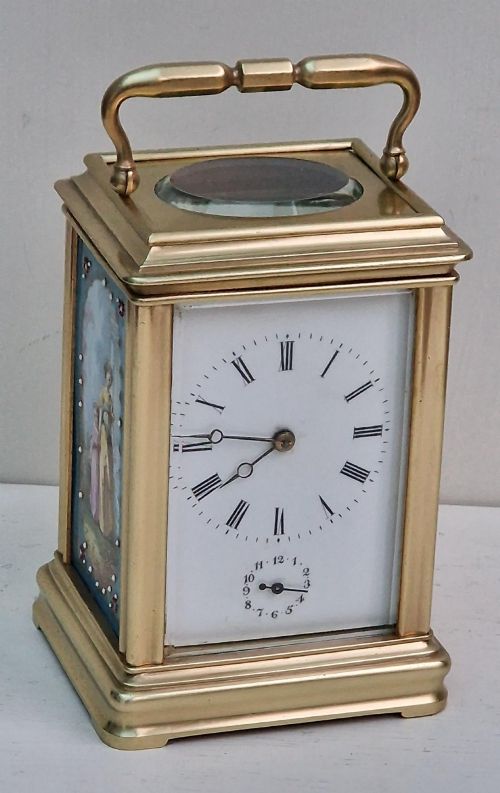
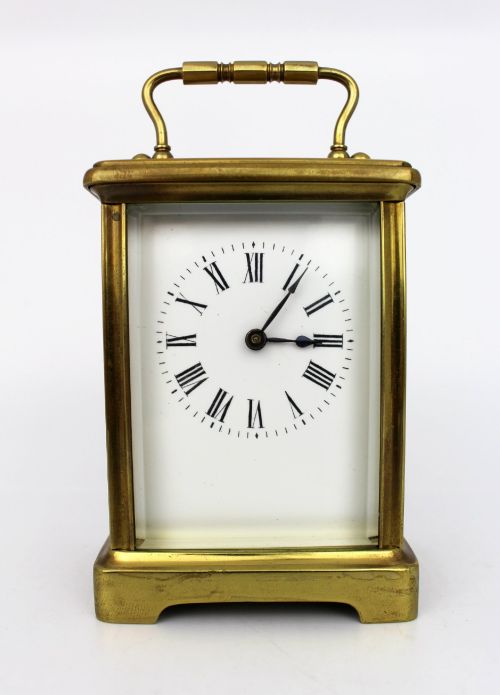
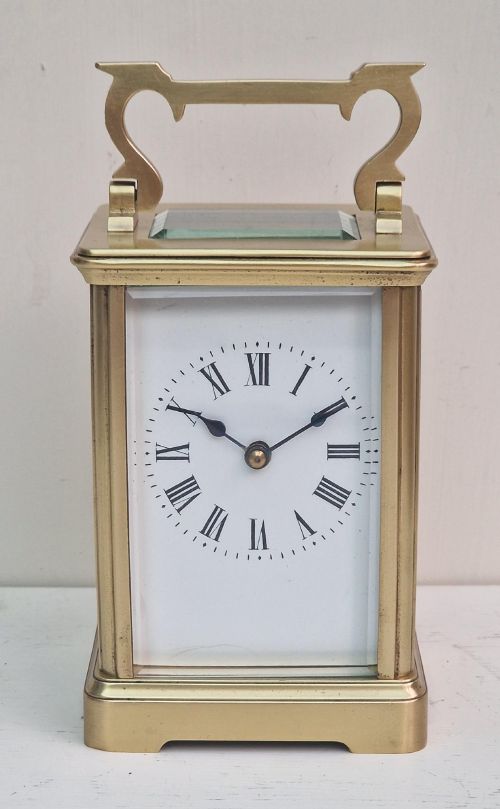
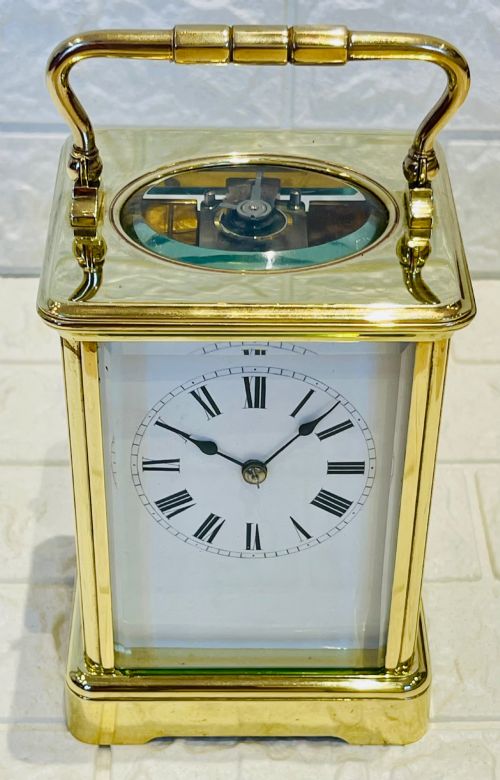
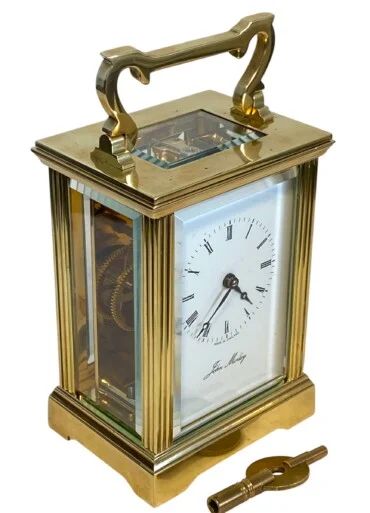
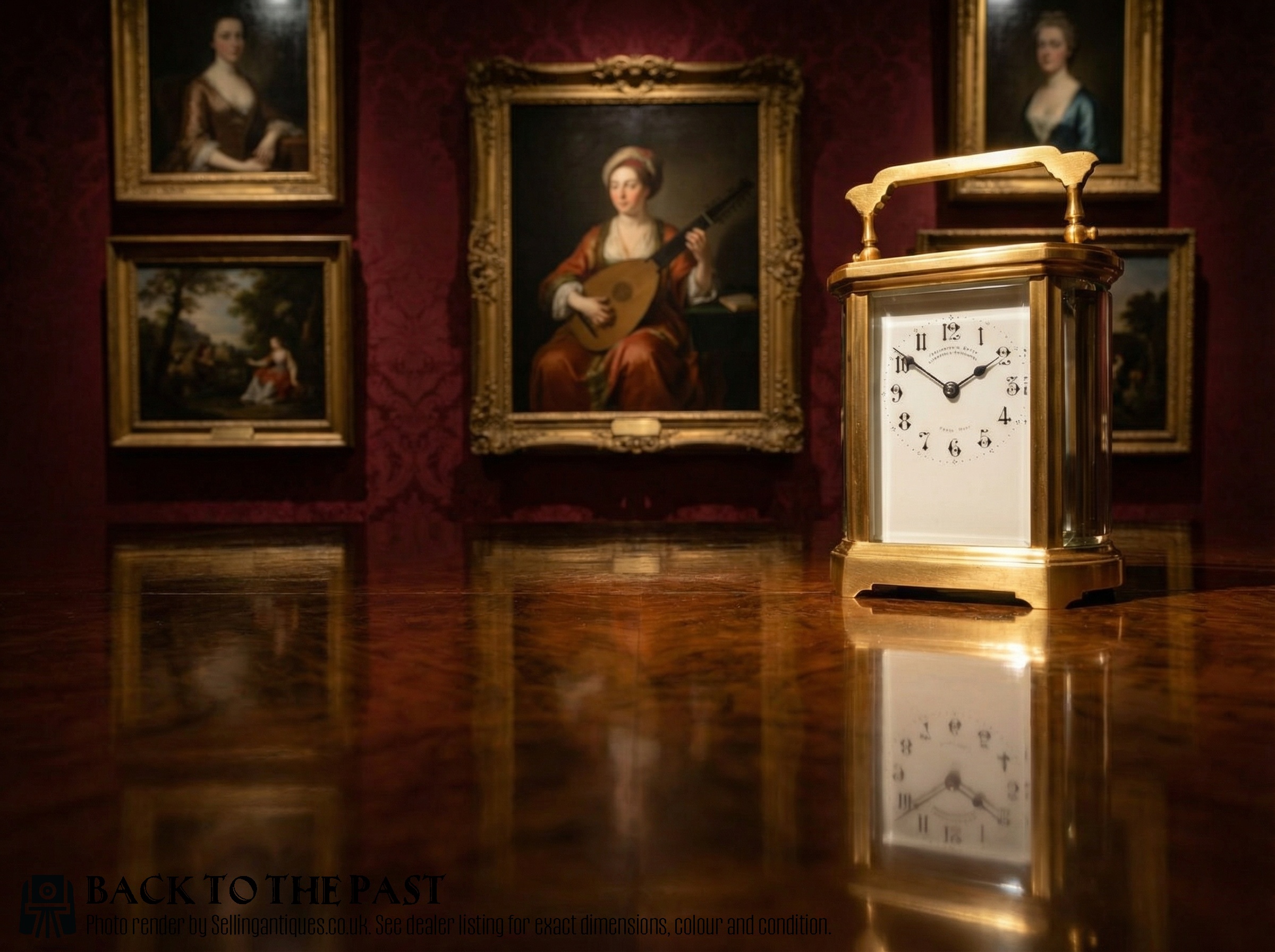
A brass tabletop timepiece comprises portable carriage clocks, desk clocks, and small mantel clocks designed to sit securely on flat surfaces. These objects serve as functional timekeepers that combine metal frames with glass panels, enamel dials, and occasionally porcelain or mahogany elements.
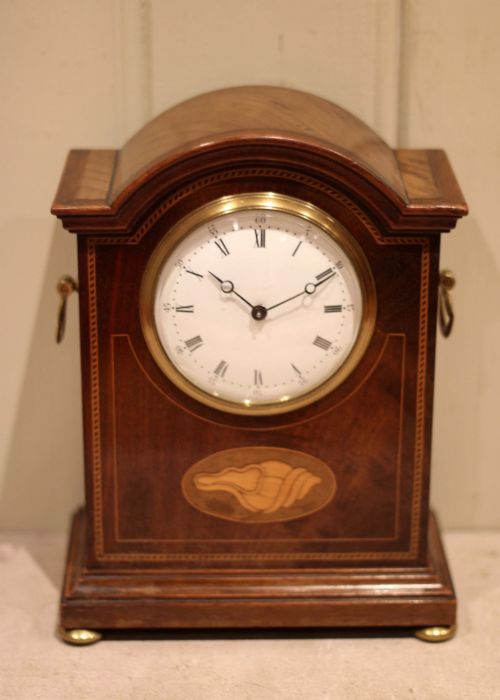
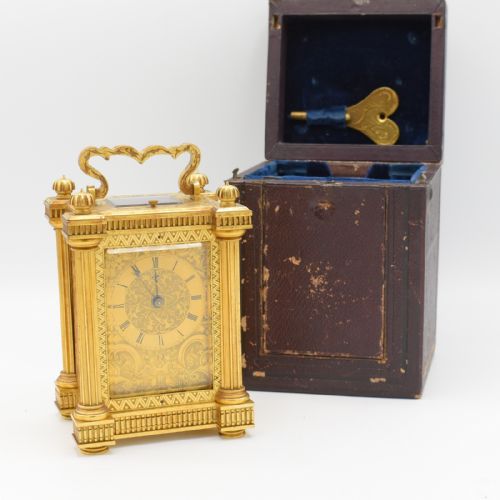
The versions most frequently met on this page originate from the Victorian, Edwardian, and mid-century periods, spanning English, French, and Swiss workshops. Examples range from miniature silver-mounted travel pieces to ornate gilt bronze models and architectural mahogany mantel designs.
Makers and retailers such as Howell & James London, John Morley, Dent, Alfred Hollinge, Penlington & Batty, and Jaeger LeCoultre appear across the selections. Buyers encounter both striking mechanisms and simple timepieces across these diverse categories.

Materials and technique
Constructors utilised brass, gilt bronze, gilt brass, and silver to form the structural cases, often pairing these metals with bevelled glass panels to reveal the internal movements. Dials were frequently fashioned from white enamel with painted numerals, while select pieces incorporated porcelain panels or inlaid mahogany surrounds.
Movements relied on mechanical gear trains, including Swiss escapements, eight-day mechanisms, repeater functions, and bell strikes. Cabinetmakers and metalworkers shaped timber lancet tops and cast bronze or ormolu mounts to achieve distinct stylistic forms from Neoclassical Revival to Art Nouveau and Art Deco.
One giant carriage clock stands ready for a traveller with remarkably large baggage.
What varies in quality
Quality rests in the crispness of the cast metal ornamentation, the clarity and legibility of the enamel or porcelain dial, and the complexity of the internal movement such as repeaters or bell strikes. Weight, proportion, and the retention of original travel cases or fitted desk struts separate standard production items from finer workshop output.
The integration of materials also defines the tier of the piece, where precision joinery in mahogany or finely chased gilt bronze and ormolu demonstrates superior craftsmanship. Signed movements by notable makers generally indicate higher manufacturing standards.
Howell & James London·John Morley·Dent·Alfred Hollinge·Penlington & Batty·Jaeger LeCoultre
The Brass Tabletop Timepiece Glossary
- Carriage clock
- A portable spring-driven timepiece originally designed for travel, typically featuring a brass case with glass panels and a swing handle on top.
- Repeater
- A mechanical complication in a clock that chimes the hours and quarters upon pressing a button or lever.
- Gilt bronze
- Copper alloy covered with a thin layer of gold, providing a rich, durable metallic finish often seen in ornate clock cases.
- Strut clock
- A timepiece supported by a hinged prop or leg at the back for angled display on a desk or table.
- Atmos clock
- A mechanical timepiece driven by changes in atmospheric temperature and pressure, eliminating the need for manual winding.
Brass Tabletop Timepiece: Frequently Asked Questions
What is a carriage clock?
A carriage clock is a portable mechanical timepiece enclosed in a brass frame with glass panels. They were originally built for travellers to carry in protective leather cases.
Most examples feature a hinged handle on top and a visible escapement through the glass, allowing the owner to view the moving balance wheel.
How do repeater movements work?
A repeater movement includes an internal mechanism that sounds the time acoustically when a small lever is pushed or a button is depressed. These mechanisms chime the last hour and quarters on gongs or bells.
This function allowed owners to check the time in the dark without striking a match or lighting a candle.
Where should I place a desk clock?
Desk clocks suit flat, stable surfaces such as office desks, library tables, bedside cabinets, or mantelpieces. They require a location free from excessive vibration and direct moisture.
Pieces with strut backs stand securely at an angle on flat writing surfaces for easy reading throughout the day.
How do I date a brass timepiece?
Dating relies on stylistic clues, case materials, dial typography, and any signatures inscribed on the movement plates or enamel faces. Victorian, Edwardian, and Art Deco design cues provide broad chronological brackets.
Some pieces feature specific dates or hallmarked silver mounts that pinpoint their exact year of manufacture.